
Lithuania Extends Hand to Philippines in Fight Against Disinformation and Hybrid Threats
In a world where fake news can sway elections and spark conflicts, Lithuania offers the Philippines a proven playbook against hybrid threats and disinformation from powerful neighbors. The Baltic nation is sharing counter-disinformation tools and maritime security technologies tested in Ukraine t...
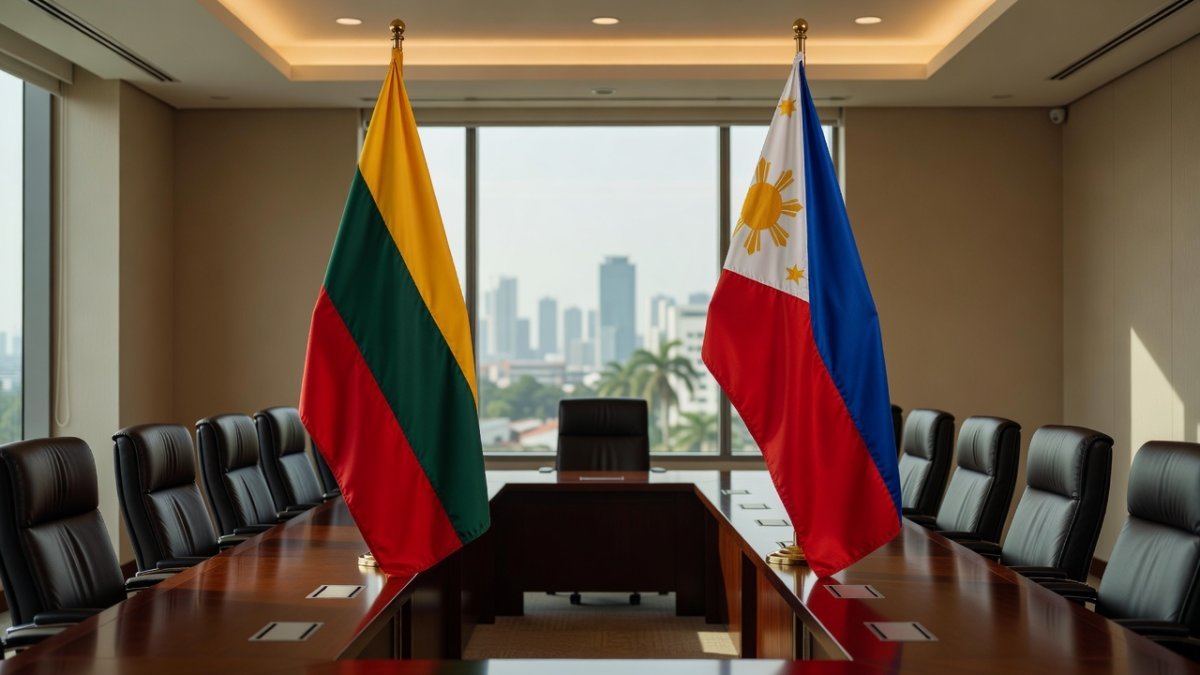
In a world where fake news can sway elections and spark conflicts, Lithuania's recent visit to Manila offers the Philippines a proven playbook against hybrid threats from powerful neighbors. The Baltic nation's decades of resisting Russian and Chinese influence operations provide timely lessons for protecting democratic institutions and coastal livelihoods alike. This partnership could reshape how ordinary Filipinos navigate viral claims and foreign pressure in the West Philippine Sea.
Lithuania-Philippines Alliance Targets Disinfo and Cyber Risks
MANILA, Philippines — Article continues...
Lithuania's Offer Builds on Shared Concerns Over Information Warfare
Lithuanian Foreign Minister Kestutis Budrys arrived in Manila this July with a clear message of partnership. His country stands ready to share the tools and methods it has developed over decades of facing Russian and Chinese hybrid threats. The offer comes at a time when the Philippines grapples with online campaigns that target elections and democratic institutions, leaving many communities uncertain about what news to trust.
Ordinary Filipinos feel the effects in their daily lives. In barangays across the country, sari-sari store owners and tricycle drivers discuss viral claims that sow confusion about government programs. Families worry whether their children are absorbing false narratives on social media. Budrys spoke directly with local reporters about how Lithuania can help strengthen defenses without overhauling existing systems.
Decades of Experience Countering Foreign Propaganda Narratives
Lithuania gained independence from the Soviet Union in 1990-1991 and has since built layers of protection against disinformation. More recently, it has confronted Chinese propaganda efforts in the Baltic region. Budrys noted that this long history gives his country practical frameworks worth sharing, including ways to map how state institutions, media, and even organized crime actors coordinate influence operations.
The Philippines faces similar pressures in the West Philippine Sea, where tensions run high. Budrys met with Philippine Coast Guard officials and condemned China's harassment of Philippine vessels as a breach of international law. He also offered maritime security technologies tested during the war in Ukraine, which could support the Coast Guard's operations and protect the livelihoods of fishing communities who depend on those waters. Technologies refined during the Ukraine war include unmanned aerial and surface drones for persistent surveillance, encrypted satellite communications resistant to jamming, and AI-driven radar systems that detect small vessel incursions in contested waters. Lithuania offers these tools to the Philippine Coast Guard to enhance monitoring without relying on expensive foreign hardware. Recent confrontations at Ayungin Shoal and Sabina Shoal have seen Chinese vessels deploy water cannons and blocking maneuvers against Philippine resupply missions, escalating tensions that violate the 2016 arbitral ruling on maritime rights.
These incidents directly harm Filipino fishermen in coastal communities like those in Palawan and Zambales, where lost fishing days due to harassment cut household incomes by up to 40 percent according to local reports, forcing families to seek alternative livelihoods amid rising fuel costs. Lithuania's experience securing the Baltic Sea against Russian naval probes provides parallels, as both regions face gray-zone tactics that test alliances without triggering open conflict. Philippine analysts note that adopting these Ukraine-tested systems could deter similar actions in the West Philippine Sea while preserving the livelihoods of thousands dependent on marine resources. This partnership underscores Manila's strategy to diversify security ties beyond traditional allies, fostering resilience that protects sovereignty and daily economic activities in frontline communities.
Whole-of-Government Strategy With Civil Society at the Core
Budrys stressed that effective counter-disinformation work requires a whole-of-government approach. Everyone holds responsibility, yet tasks must be clearly assigned rather than scattered. Lithuania has placed core duties with its defense and strategic communications agencies while drawing heavily on civil society groups. Volunteer online networks run by NGOs track and debunk pro-Kremlin narratives, providing what Budrys called the highest added value component of the model. Lithuania's volunteer networks operate through NGO coordination where groups like Debunk EU train citizens to monitor social media for pro-Kremlin content, using standardized workflows to verify claims within hours and amplify corrections via community channels. This model relies on decentralized reporting that feeds into government alerts without centralizing control, achieving high debunking rates during election periods. In the Philippine context, similar structures could leverage existing barangay information networks and local fact-checking initiatives to counter foreign influence operations targeting elections and territorial disputes.
Groups such as VERA Files, Rappler's fact-checking unit, and MindaNews already run verification desks that expose manipulated narratives on West Philippine Sea issues, yet scaling them requires broader volunteer recruitment inspired by Lithuania's approach. The bayanihan spirit, rooted in communal cooperation during typhoons and crises, could amplify these efforts by mobilizing neighborhood captains to host weekly truth-sharing sessions, turning passive social media users into active defenders of accurate information across urban and rural areas. Filipino journalists observe that embedding civil society at the core would strengthen democratic participation, ensuring that ordinary voices shape responses to disinformation rather than leaving the task solely to overburdened state agencies.
This structure could resonate in Philippine settings where barangay captains and local government units already serve as first responders to community concerns. The Department of Information and Communications Technology leads the National Cybersecurity Plan 2023-2028, which aims to lift the country further in global rankings. Lithuania sits in Tier 1 of the ITU Global Cybersecurity Index from 2024, while the Philippines has moved from Tier 3 in 2020 to Tier 2, labeled advancing. Lithuania's Tier 1 status in the ITU Global Cybersecurity Index 2024 reflects its advanced operational capabilities in protecting national digital infrastructure through integrated policies, rapid incident response teams, and widespread adoption of secure e-governance platforms. This ranking means the country maintains real-time monitoring of cyber threats, enforces strict data protection laws, and achieves near-universal digital literacy among citizens. In contrast, the Philippines' Tier 2 advancing position indicates solid progress in basic frameworks but gaps in coordinated defense mechanisms and private sector integration that leave systems vulnerable to sophisticated attacks from state actors.
Lithuania has pioneered e-governance tools such as its digital ID system used by over 90 percent of residents for secure voting and public services, alongside cyber defense centers that thwarted Russian-linked intrusions during the 2022 energy grid probes. These achievements stem from post-Soviet reforms that prioritized resilience against hybrid warfare. For the Philippines to reach Tier 1, the DICT must expand its National Cybersecurity Plan 2023-2028 by investing in nationwide security operations centers, mandatory critical infrastructure audits, and public-private partnerships modeled on Lithuania's approach, which could elevate rankings within five years while addressing local challenges like rural connectivity gaps. From a Philippine perspective, aligning the National Cybersecurity Plan with Lithuania's standards would safeguard the millions of daily online transactions by overseas workers and students, reducing risks that erode public trust in institutions amid ongoing disinformation waves.
Practical Tools for Cybersecurity and Digital Public Services
Beyond commercial software, Lithuania is prepared to share operational frameworks for security operations centers, cyber legislation, e-governance infrastructure, and digital public services. Budrys expects more Lithuanian firms specializing in cyber tools and counter-propaganda to set up operations in the Philippines. These partnerships could support the work already underway at the DICT and help protect critical systems that serve millions of citizens.
Overseas Filipino Workers often rely on digital channels to send remittances and stay connected with loved ones. Stronger cybersecurity measures would reduce risks of scams and data theft that target OFWs and their families back home. Students and teachers using online platforms for learning would also benefit from clearer safeguards against manipulated content that disrupts classrooms.
Human Stories Behind the Technical Exchange
Consider a typical household in a coastal province where fishermen check weather apps and news feeds before heading out. Disinformation about vessel movements or foreign incursions can create unnecessary fear or false confidence. When Lithuania shares its mapping of influence networks, Philippine agencies gain clearer pictures of how narratives spread, allowing faster responses that protect both safety and livelihoods.
Jeepney drivers in urban areas already navigate traffic while fielding questions from passengers about the latest viral posts. A more organized national approach, informed by Lithuania's volunteer networks, could empower local leaders to counter falsehoods at the kapitbahay level. This community focus aligns with the bayanihan spirit that has long helped Filipinos pull together during crises.
Lithuania's Strategic Position as NATO Frontline State
As a NATO frontline state bordering Russia and Belarus, Lithuania faces constant hybrid threats including airspace violations and energy infrastructure sabotage, experiences that inform its outreach to partners like the Philippines facing parallel pressures from assertive neighbors. The Russia-China alignment amplifies risks across regions, with coordinated propaganda and technology transfers enabling influence campaigns that undermine alliances in both the Baltic and Indo-Pacific theaters.
The EU's Indo-Pacific strategy positions Lithuania as a bridge for sharing Baltic security lessons, emphasizing rules-based order and diversified partnerships that counterbalance dominant powers. This collaboration extends beyond technology to strategic dialogues that reinforce multilateral forums, helping Manila navigate great-power competition while advancing its own defense modernization goals. From the Philippine viewpoint, such ties enhance national resilience by connecting local security concerns to global democratic networks, ultimately safeguarding the information environment that shapes daily decisions for families and communities nationwide.
Looking Ahead to Strengthened Democratic Resilience
The visit occurs amid growing awareness that disinformation campaigns do not stop at borders. By learning from Lithuania's experience, the Philippines can refine its own methods while keeping the focus on protecting ordinary people. The National Cybersecurity Plan continues to advance, and fresh international input may accelerate progress without rushing timelines.
Budrys emphasized that success comes from clear divisions of labor across government, supported by active civil society. For Filipino families, this could mean more reliable information during election seasons and fewer attempts to undermine trust in institutions. As partnerships develop, the emphasis remains on practical steps that reach barangays and workplaces where daily life unfolds.
By Bella Reyes, Staff WriterThis article was produced with AI-assisted research and editorial support. Reporting is based on sources cited in the article.
What's Your Reaction?
 Like
0
Like
0
 Dislike
0
Dislike
0
 Love
0
Love
0
 Funny
0
Funny
0
 Wow
0
Wow
0
 Sad
0
Sad
0
 Angry
0
Angry
0

Philippines/Southeast Asia Correspondent at Global1.News. Manila-based journalist covering Philippine politics, environment, maritime security, and social issues. Passionate about marine conservation and the communities protecting the Philippines' natural heritage.















Comments (0)