
US Retail Sales Fall 1% in March as Consumers Tighten Belts
US Retail Sales Fall 1% in March as Consumers Pull Back After Banking Crisis; IRS Refunds Drop $25 Billion Consumer Spending Stumbles in March Amid Lingering Banking Turmoil In a stark signal that the financial shockwaves from last month’s banking crisis are still reverberating through the econom...
Consumer Spending Stumbles in March Amid Lingering Banking Turmoil
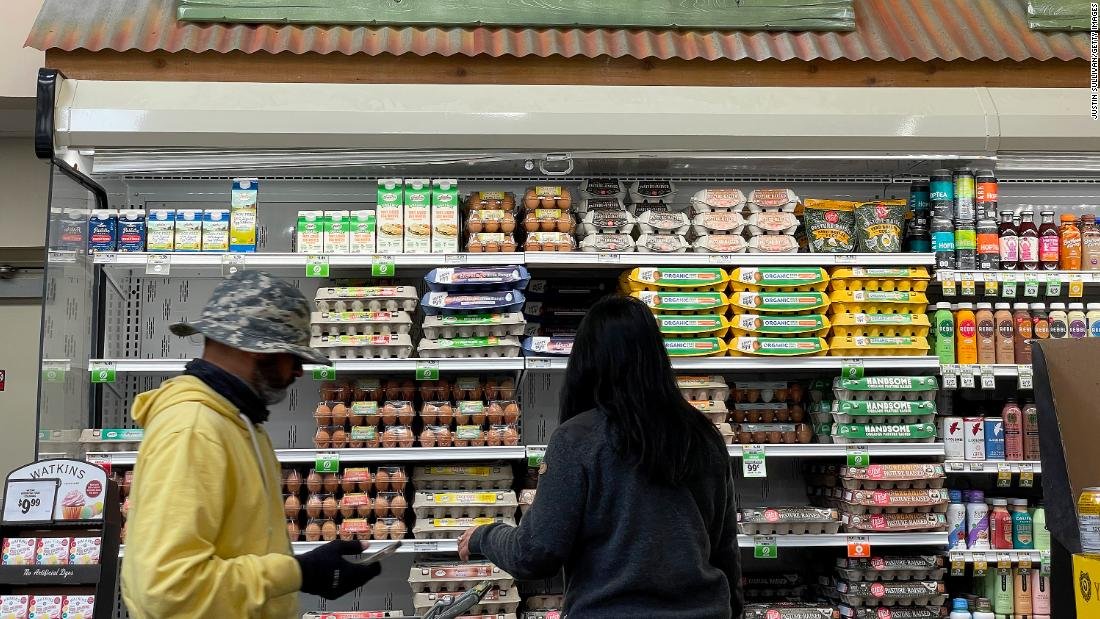
In a stark signal that the financial shockwaves from last month’s banking crisis are still reverberating through the economy, the Commerce Department reported Friday that U.S. retail sales fell 1% in March from February. The decline, which came in weaker than economists had anticipated, marks the first monthly drop in retail sales since November and adds to a growing body of evidence that American consumers are tightening their belts. The pullback was broad-based, with gas station sales plunging 5.5% and merchandise stores down 3%, while the IRS revealed it had issued $84 billion in refunds through early April — a staggering $25 billion less than the same period in 2022. The data, released alongside a still-resilient labor market report showing 236,000 jobs added in March, paints a picture of an economy at a crossroads: hiring remains strong, but consumer confidence is fragile and inflation expectations are creeping higher.
Retail Sales Plunge as Consumers Rethink Spending Post-Banking Crisis
The 1% month-over-month decline in retail sales was steeper than the 0.4% drop forecast by economists surveyed by Dow Jones. Excluding autos and gasoline, sales still fell 0.3%, indicating that the slowdown is not merely a reflection of lower fuel prices or supply-chain normalization. “The March retail sales report confirms that the banking turmoil in mid-March has had a tangible impact on consumer behavior,” said Aditya Bhave, senior U.S. economist at Bank of America. “People became more cautious about big-ticket purchases and discretionary spending after the collapses of Silicon Valley Bank and Signature Bank. Even though the immediate panic subsided, the psychological effect is lingering.” Credit card data from Bank of America shows that spending on dining, travel and luxury goods slowed noticeably in the second half of March, a pattern that appears to have persisted into early April. “We are seeing a pullback that goes beyond just seasonal adjustments,” Bhave added. “The consumer is still spending, but with more hesitation.”
IRS Refunds Drop $25 Billion — Less Cash in Pockets Hurts Demand
Compounding the retail sales weakness, the Internal Revenue Service reported that it had issued about $84 billion in tax refunds through the first week of April, compared with $109 billion over the same period last year. That $25 billion shortfall means millions of households have less disposable income to spend on goods and services this spring. “Tax refunds are often used by lower- and middle-income families to pay down debt or make a large purchase,” explained Michelle Meyer, chief economist at the Mastercard Economics Institute. “When those refunds are smaller — either because of changes in withholding or because people owed more this year — it takes away a key source of liquidity.” The drop in refunds is partly attributable to the expiration of pandemic-era tax credits and a return to more normal withholding schedules after the IRS adjusted its tables. But the effect is real: smaller refunds translate directly into lower spending at retailers, auto dealers and home improvement stores. “This is a headwind that wasn’t there a year ago,” Meyer noted. “And it's showing up in the hard data.”
Gas Station Sales Tumble 5.5% — But It’s Not All About Falling Prices
Gas station sales fell 5.5% in March, the largest decline among all retail categories. While lower gasoline prices — the national average fell about 15 cents per gallon during the month — accounted for some of that drop, analysts say the volume of fuel sold also declined. “People are driving less, combining errands and cutting back on road trips,” said Meyer. “It’s not just that gas is cheaper — it’s that people are making conscious choices to reduce spending.” The weakness extended to general merchandise stores, which saw a 3% decline in sales. Department stores, electronics retailers and furniture outlets all reported contractions. Analysts pointed to a shift in spending toward services — such as travel and entertainment — but noted that even service spending may be cooling. “We are seeing a rotation from goods to services, but that rotation is now faltering because consumers don’t have as much extra cash,” Bhave said. “The services sector is still growing, but at a slower pace.” The data provides fresh evidence that the post-pandemic “revenge spending” boom is fading, replaced by a more frugal consumer mindset.
Labor Market Remains Resilient — 236,000 Jobs Added in March
In contrast to the gloomier consumer reports, the Labor Department announced Friday that employers added 236,000 jobs in March, a solid figure that underscores the continued strength of the labor market. The unemployment rate ticked down to 3.5%, near a historic low, and the labor force participation rate rose to 62.6%, its highest level since before the pandemic. “The job market is still humming along, and that is the main buffer against a deeper economic downturn,” said Michelle Meyer. “As long as people have jobs and wages are rising, they will eventually start spending again — but the question is how long the adjustment period will be.” The payroll gains were broad-based, with leisure and hospitality adding 72,000 jobs, health care adding 48,000, and construction up by 24,000. However, the pace of hiring is clearly decelerating from the torrid 300,000-plus monthly averages seen in 2022. The three-month average for payroll gains now stands at 345,000, down from more than 400,000 at the end of last year. “The labor market is normalizing after two years of extraordinary demand,” Bhave said. “But normalizing doesn’t mean collapsing. It still looks very healthy by historical standards.”
Wage Growth Slows to 4.2% — A Welcome Sign for the Fed
Alongside the jobs report, the Bureau of Labor Statistics said that average hourly earnings rose 4.2% year-over-year in March, down from 4.6% in February and significantly lower than the 5.1% peak reached in March 2022. The slowdown in wage growth is a key metric for the Federal Reserve, which has been trying to cool an overheating labor market without causing mass layoffs. “Slower wage growth is exactly what the Fed wants to see,” said Bhave. “It eases pressure on businesses to raise prices, and it reduces the risk of a wage-price spiral.” Still, 4.2% annual wage growth remains above the Fed's comfort zone — inflation is currently running at about 6% on the consumer price index — and many economists expect the central bank to raise interest rates by another quarter of a percentage point at its May meeting. “The jobs report is a Goldilocks scenario: not too hot, not too cold,” Meyer added. “But the retail sales data is the cold side. The combination points to a slowing but not collapsing economy.”
Consumer Sentiment Steady, but Inflation Expectations Jump to 4.6%
Perhaps the most concerning data point for policymakers came from the University of Michigan’s consumer sentiment survey, which showed that while sentiment held steady at 63.5 in March, inflation expectations for the year ahead jumped to 4.6% from 3.6% in February. That marks the highest one-year inflation expectation since November 2022. “Consumers are clearly worried that inflation will remain elevated, and that worry is being reinforced by higher gas prices in recent weeks and the lingering effects of the banking crisis,” said Joanne Hsu, director of the University of Michigan Surveys of Consumers. Hsu noted that lower-income households, in particular, expressed sharp declines in their personal financial outlook. “The bottom third of the income distribution reported the largest drop in sentiment in March,” she said. “These are the folks who are most sensitive to higher food and energy costs, and they are also the ones who are most likely to factor in the news about bank failures.” The 4.6% reading is well above the Fed’s 2% inflation target, and higher long-term inflation expectations can become self-fulfilling if consumers and businesses start building those expectations into their pricing and wage decisions.
Experts Weigh In: A ‘Wait-and-See’ Economy with Risks Ahead
The conflicting signals have left economists divided over the near-term outlook. Aditya Bhave of Bank of America characterizes the current moment as a “wait-and-see” period. “We are in a phase where consumers are cautious, but not panicking,” he said. “The banking crisis created a shock that accelerated a trend already underway — a shift from excess savings to more normal spending patterns. The risk is that if credit conditions tighten further, that could tip the economy into a mild recession later this year.” Michelle Meyer at Mastercard takes a slightly more optimistic view, pointing to the strength of the job market. “Jobs are the anchor. As long as people are working, they will find ways to spend. But the road will be bumpy. We may see a few more months of weak retail sales before the impact of lower inflation and stable employment reasserts itself.” Joanne Hsu, meanwhile, cautioned that consumer psychology is fragile. “The fact that inflation expectations jumped even as sentiment held steady shows that people are more aware of price pressures. That awareness can make them more reluctant to spend, especially on credit. It’s a warning sign that the Fed cannot ignore.” All three experts agreed on one point: the data from March represents a clear inflection point. “The easy days of the recovery are over,” said Bhave. “Now we get to see whether the economy can achieve a soft landing or whether we are headed for a harder one.”
Outlook: Summer Spending Could Determine Next Phase
As the April data trickles in, economists will be watching three key indicators: credit card spending, jobless claims and the April consumer confidence report. An early read from Bank of America credit card data suggests that spending in the first two weeks of April has stabilized, but remains below the pace seen in late February. “We are not seeing a free fall, but we are also not seeing a rebound,” Bhave reported. “Consumers are taking a pause.” The retail sales report for April, due out mid-May, will be the next major data point. If it shows another decline, the narrative of a slowdown will solidify. If it bounces back, the March figure may be written off as a temporary blip caused by the banking panic and tax refund timing. For now, the combination of a 1% retail sales drop, a $25 billion shortfall in IRS refunds, and rising inflation expectations creates an uncomfortable mix for policymakers. The Fed is expected to raise rates again in May, but the decision for June will hinge on the next round of economic data. “This is a critical juncture,” said Michelle Meyer. “The economy is sending mixed signals. But one thing is clear: the consumer is not as strong as they were six months ago. And that changes the calculus for everyone.”
By Jessica Ali, Staff Writer
This article was produced with AI-assisted research and editorial support. Reporting is based on sources cited in the article.
What's Your Reaction?
 Like
0
Like
0
 Dislike
0
Dislike
0
 Love
0
Love
0
 Funny
0
Funny
0
 Wow
0
Wow
0
 Sad
0
Sad
0
 Angry
0
Angry
0

Editor-in-Chief at Global1.News. Atlanta-based journalist who cuts through the BS and tells it like it is. Lead anchor, host, and the voice you hear when the spin stops and the truth starts.














Comments (0)