
Free AI Image-to-Video Goes Viral: Minutes-Long Clips From a Single Photo
The open-source AI image-to-video sector has advanced rapidly in 2025-2026, with models including LTX-Video (v0.9.8+), Wan2.1, CogVideoX, and Hunyuan Video now capable of producing 30-60+ second clips from a single input image. These tools operate entirely locally on consumer GPUs requiring 8-12 GB VRAM via GGUF and distilled optimizations, eliminating cloud API costs and data-
The open-source AI image-to-video sector has advanced rapidly in 2025-2026, with models including LTX-Video (v0.9.8+), Wan2.1, CogVideoX, and Hunyuan Video now capable of producing 30-60+ second clips from a single input image. These tools operate entirely locally on consumer GPUs requiring 8-12 GB VRAM via GGUF and distilled optimizations, eliminating cloud API costs and data-sharing requirements. This directly challenges paid platforms such as Runway, Pika, Sora, and Kling by delivering comparable image-to-video, video extension, keyframe animation, and text-to-video functions without recurring fees.
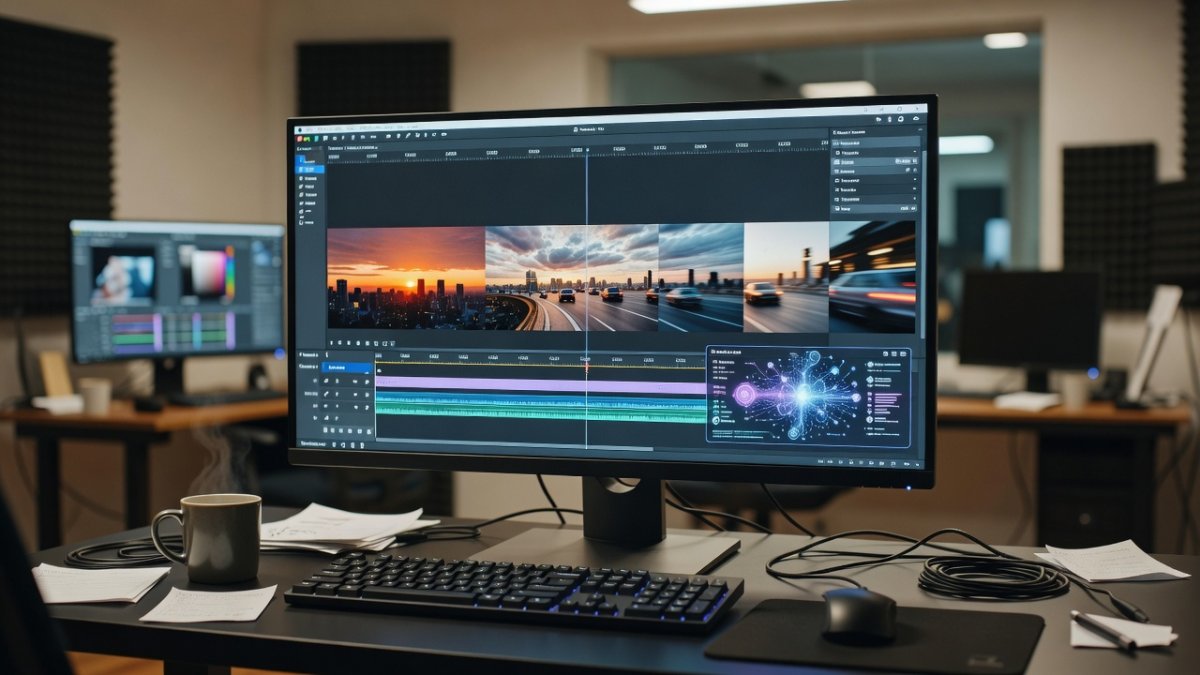
Free AI Image-to-Video Goes Viral: Minutes-Long Clips From a Single Photo
Atlanta, GA – July 11, 2026 — Open-source image-to-video models have reached a point where single-image inputs can yield extended clips measured in minutes rather than seconds when users apply video-extension techniques. LTX-Video v0.9.8 and subsequent releases, Wan2.1, CogVideoX, and Hunyuan Video form the core of this shift, each supporting generation lengths of 30-60 seconds or more on hardware limited to 8-12 GB VRAM through GGUF quantization and distillation methods. The Aitrepreneur tutorial titled “GENERATE MINUTES-LONG IMAGE TO VIDEO NOW!” (5:33) demonstrates these workflows, confirming that no cloud services or API keys are required.
The Open-Source Image-to-Video Explosion
Between 2025 and 2026 the open-source community released successive iterations of LTX-Video, Wan2.1, CogVideoX, and Hunyuan Video that collectively moved the field from short 4-8 second outputs to sustained 30-60+ second sequences. Each model accepts a single reference image and produces temporally coherent motion while preserving subject identity across frames. LTX-Video v0.9.8 introduced improved motion priors that allow consistent camera movement and object trajectories without additional conditioning. Wan2.1 added native support for longer context windows, enabling the model to maintain scene consistency over extended durations. CogVideoX and Hunyuan Video contributed refined latent diffusion schedules that reduce flickering when users chain multiple generations. These four models now constitute the primary free alternatives to proprietary systems that previously required paid subscriptions for comparable lengths.

Consumer Hardware, Professional Results
All listed models run on GPUs with 8-12 GB VRAM once converted to GGUF or distilled formats. Quantized checkpoints reduce memory footprint by approximately 40-60 percent while retaining motion fidelity sufficient for most creative and commercial uses. Users report stable 30-second generations at 720p on RTX 3060 12 GB cards and 60-second outputs on RTX 4070 12 GB cards when employing the distilled variants. No data-center GPUs or cloud instances are necessary, removing both monetary and latency barriers. Because inference occurs locally, source images and generated video remain on the user’s machine, satisfying privacy requirements that cloud services cannot guarantee. The Aitrepreneur demonstration confirms these VRAM thresholds on standard consumer builds without custom cooling or overclocking.
Key Features That Changed the Game
Image-to-video remains the baseline function, yet the same model weights also enable video extension by feeding the last frame of one clip as the conditioning image for the next segment. Keyframe animation allows users to supply multiple images at chosen timestamps, guiding the model to interpolate motion between them. Text-to-video is accessible by combining an initial image with a descriptive prompt that steers camera direction, object actions, and lighting changes. All operations execute inside the same local inference stack, so switching between modes requires only different input parameters rather than separate services. These capabilities appear in the current releases of LTX-Video v0.9.8+, Wan2.1, CogVideoX, and Hunyuan Video, each distributed under open licenses that permit unrestricted local use.
The Bottom Line
The combination of 30-60+ second generation lengths, 8-12 GB VRAM compatibility, and zero ongoing costs positions these open-source models as direct competitors to Runway, Pika, Sora, and Kling. Organizations and individuals can now produce extended video content while retaining full control over data and eliminating subscription expenses. Continued community updates to LTX-Video, Wan2.1, CogVideoX, and Hunyuan Video are expected to further increase maximum clip duration and motion quality on the same hardware class.
Local execution of LTX-Video v0.9.8+, Wan2.1, CogVideoX, and Hunyuan Video has removed the financial and privacy trade-offs previously associated with cloud-based image-to-video services. Viewers seeking the exact setup steps shown in the 5:33 Aitrepreneur tutorial can replicate the workflow on any GPU meeting the stated VRAM range.
By Jessica Ali, Staff Writer META_TITLE: Free Local AI Image-to-Video 2026: LTX-Video, Wan2.1 Run Minutes-Long Clips on 8-12GB GPUs META_DESCRIPTION: Open-source models LTX-Video v0.9.8+, Wan2.1, CogVideoX and Hunyuan Video now generate 30-60+ second videos from one image on consumer GPUs under 12GB VRAM with zero cloud costs. KEYWORDS: free local AI image to video, LTX-Video, Wan2.1, CogVideoX, Hunyuan Video, minutes long image to video, 8GB VRAM AI video, GGUF image to video, open source Runway alternative 2026This article was produced with AI-assisted research and editorial support. Reporting is based on sources cited in the article.
What's Your Reaction?
 Like
0
Like
0
 Dislike
0
Dislike
0
 Love
0
Love
0
 Funny
0
Funny
0
 Wow
0
Wow
0
 Sad
0
Sad
0
 Angry
0
Angry
0

Editor-in-Chief at Global1.News. Atlanta-based journalist who cuts through the BS and tells it like it is. Lead anchor, host, and the voice you hear when the spin stops and the truth starts.














Comments (0)