
Springboks 45-21 England: Nations Championship Masterclass at Ellis Park
**Keywords:** Springboks, South Africa, Nations Championship, Ellis Park, England, Rassie Erasmus, Pieter-Steph du Toit, Loftus Versfeld, Scotland, Embrose Papier, Vincent Tshituka, rugby transformation, Handre Pollard Springboks 45-21 England: Nations Championship Masterclass at Ellis Park The Springboks sent a thunderous message to the rugby world on July 4, 2026, running in
Springboks 45-21 England: Nations Championship Masterclass at Ellis Park
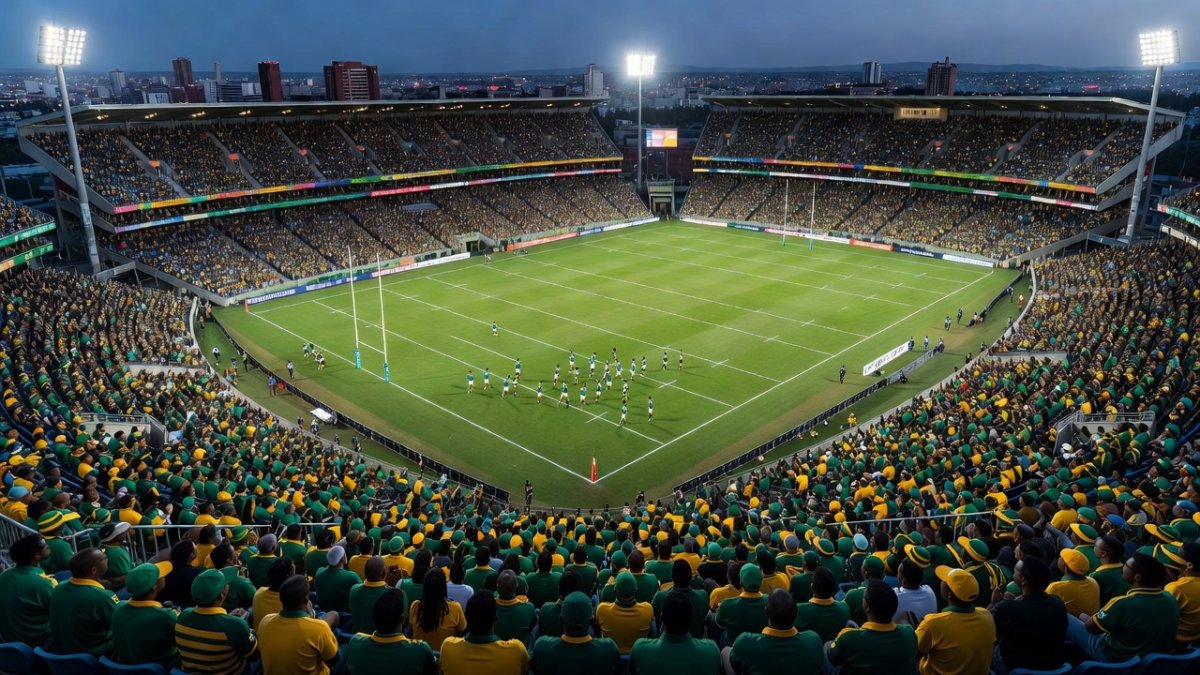
The Springboks sent a thunderous message to the rugby world on July 4, 2026, running in seven tries to dismantle England 45-21 at a packed Ellis Park in Johannesburg. In front of 52,870 fans on a cool Highveld evening, South Africa's world champions showed precisely why they remain the benchmark side in global rugby — even while missing two of their most iconic leaders.
Tags: Springboks, Nations Championship, South Africa rugby, Pieter-Steph du Toit, Ellis Park, Loftus Versfeld, Handre Pollard, Vincent Tshituka, Rassie Erasmus, Scotland rugby, Embrose Papier, rugby transformation
The Blitzkrieg Start That Shook England
The match began at a ferocious pace that left England scrambling from the opening whistle. Inside the first 12 minutes, the Springboks had already crossed the whitewash three times. Pieter-Steph du Toit opened the scoring, crashing over after sustained pressure at the breakdown. Cheslin Kolbe followed with a brilliantly worked try, his nimble footwork leaving defenders grasping at shadows. Kurt-Lee Arendse added the third, finishing a sweeping move that exposed England's defensive alignment out wide.
The 17-0 lead inside the opening quarter was no accident. South Africa's blitz defence wreaked havoc on England's attacking structure, forcing errors and turnovers in dangerous areas. Grant Williams, starting at scrum-half, was a livewire around the fringes, while Damian Willemse patrolled the backfield with authority. The Springboks had clearly done their homework on England's patterns, and it showed in every defensive read.
Yet credit where it is due — England refused to fold. Through the tireless work of Ben Earl at the breakdown and the powerful carries of George Martin in the second row, England battled their way back into the contest. Ellis Genge crashed over from close range, and Martin himself powered through two defenders in the left corner just before the interval. Fin Smith's conversion sent England down the tunnel trailing just 17-14. The Ellis Park crowd, despite the nearly 33 percent unemployment rate squeezing household budgets across the country, had been treated to a proper Test match.
Second-Half Ruthlessness From the World Champions
Whatever Rassie Erasmus said in the changeroom worked. The Springboks emerged for the second half with renewed purpose and a clinical edge that had been missing in the final moments of the first period. Grant Williams, the livewire Sharks scrum-half, sliced through to extend the lead. Jesse Kriel followed soon after, the powerful centre finishing a well-executed backline move that split England's defensive line wide open.
With England chasing the game, opportunities opened up. Malcolm Marx, the veteran hooker who had been a menace at the breakdown all evening, burrowed over from a driving maul. BJ Dixon added the seventh try in the final quarter as England's discipline crumbled — Tommy Freeman and Guy Pepper both spent time in the sin bin, reducing the visitors to 13 men. It was a harsh ending for an England side that had shown genuine resolve in the first half but simply could not match the Boks' power and precision over 80 minutes.
Kurt-Lee Arendse did spend 10 minutes in the bin during the first half, and Cheslin Kolbe landed five of seven conversions — a solid return that could have been even more clinical. But the headlines belong to the collective: seven tries, a 24-point winning margin, and a statement that South Africa's squad depth runs deeper than any other nation in the competition.
Ten Changes and a Statement of Intent
If the England victory sent one message, Rassie Erasmus's team selection for the second round against Scotland sent another entirely. Ten changes to the starting XV. Only five players retained: Jesse Kriel, Damian Willemse, Pieter-Steph du Toit, Paul de Villiers, and Ruan Nortje. This is rotation on a scale that would terrify most international coaches, but for Erasmus it is by design.
"We have good depth in our squad, and this will be a great test for the team," Erasmus said, and he meant every word. The new-look starting XV reads like a who's who of South African rugby talent: Aphelele Fassi at fullback, Edwill van der Merwe and Canan Moodie on the wings, Handre Pollard and Embrose Papier in the halfbacks, an entirely new front row of Boan Venter, Johan Grobbelaar, and Wilco Louw, Cobus Wiese in the second row, and Evan Roos joining du Toit and de Villiers in the back row.
The selection tells us something important: this Nations Championship is not just about winning. It is about building. Erasmus is using this competition to blood the next generation, to test combinations, and to ensure that when the Rugby Championship arrives and World Cup cycles loom, South Africa will not be scrambling for depth. They will already have it in place, tested at the highest level, hardened by the fires of international competition.
Embrose Papier and the Power of Persistence
Few stories in this squad capture the imagination quite like that of Embrose Papier. The 29-year-old scrum-half earns his first Springbok cap in eight years when he takes the field at Loftus Versfeld. Eight years. A lifetime in professional rugby. Most players would have given up hope, settled into a comfortable provincial career, and accepted that the green and gold jersey was a memory rather than a destiny.
But Papier kept working. Week after week in the Currie Cup and the United Rugby Championship, he performed. He served as the reliable halfback option that every coach wants — consistent, sharp, tactically aware. And when Erasmus decided to rest Grant Williams and give opportunities to players further down the depth chart, Papier's phone finally rang.
His selection sends a message to every young scrum-half grinding away at school level, at club level, in the provincial set-ups: the pathway is not closed. If you are good enough, if you keep performing, the Springboks will find you. The Bulls halfback returns to Loftus Versfeld — his home stadium — for this moment. If the scriptwriters had drafted this, it could not have been more perfectly timed.
Vincent Tshituka: From Refugee to Springbok
Vincent Tshituka's name on the bench carries weight far beyond the match-day 23. The flanker, who fled the Democratic Republic of Congo with his family as refugees in 2002, represents everything that makes South African rugby special. His story — and that of his brother Manu, also a Springbok — is the embodiment of transformation in action.
Together, Vincent and Manu Tshituka recently played alongside each other for the South Africa 'A' team against Zimbabwe in Gqeberha. Two brothers, born in a country ravaged by conflict, now wearing the green and gold of their adopted homeland. Minister of Home Affairs Leon Schreiber has publicly praised Vincent's journey, particularly his naturalisation as a South African citizen. The Tshituka brothers have also signed a blockbuster commercial deal, proving that their on-field achievements translate into recognition beyond the rugby pitch.
Their story connects directly to the transformation targets set by SARU and the grassroots development programmes operating in townships and rural communities across every province. When young players in Soweto, Katlehong, or Khayelitsha see Vincent Tshituka running out at Loftus Versfeld, they see a path. They see a version of themselves that is possible. That is the power of sport in South Africa — not just the scoreboard, but the stories that inspire the next generation to lace up their boots and dream.
The Scotland Threat and Loftus History
Make no mistake — Scotland arrive in Pretoria with genuine belief. Gregor Townsend's side have had a strong Six Nations campaign and opened their Nations Championship account with a impressive 47-38 victory over Argentina in Cordoba. Sione Tuipulotu was outstanding, scoring a try and setting up another, while the Scots' attacking structure caused the Pumas all kinds of problems.
Scotland are a quality outfit. Erasmus acknowledged as much: "They are a quality team, who will test us in all areas of the game." The numbers back him up — Scotland's last nine Tests against South Africa have all ended in Springbok victories, but the margins have been tightening. The Scots play with tempo, they have dangerous backs, and their forward pack has matured significantly under Townsend's system.
This weekend's fixture also carries historical weight. It is the first ever Test match between South Africa and Scotland in Pretoria. Loftus Versfeld, with its altitude and its raucous atmosphere, is a fortress that visiting teams rarely conquer. Handre Pollard, who made his Springbok debut at this very stadium against Scotland in 2014, returns to the scene of that milestone. Pieter-Steph du Toit, captaining the side on his 97th Test appearance, closes in on the coveted 100-cap milestone. The narrative threads are rich, and the occasion demands a performance worthy of the occasion.
What This Campaign Means for SA Rugby
The Nations Championship represents far more than four match results for South African rugby. It is a window into the future. Erasmus is using this tournament to test his squad depth in a competitive environment, giving opportunities to players who would normally wait years for their shot. Papier, Tshituka, Fassi, Moodie, van der Merwe, Roos, Venter — these are names that South African rugby will be built around in the years ahead.
For supporters across the country, the sight of a transformed Springbok squad taking the field at Loftus is a reminder of what makes this team special. Rugby in South Africa has always been more than a sport — it is a unifying force, a space where the divisions of everyday life can be set aside for 80 minutes. When Vincent Tshituka runs onto the field, he carries the hopes of every refugee family that has rebuilt their lives in this country. When Embrose Papier pulls on the green and gold after eight years of waiting, he validates every player who has ever been told their chance would come.
The Springboks lead the overall Nations Championship table after round one. A victory over Scotland at Loftus Versfeld would solidify that position and send another message to the rugby world: South Africa are not just defending champions. They are building something that will last.
Whether you watch from a shebeen in Soweto, a sports bar in Cape Town, or a fan park in Durban, this Springboks side is worth your attention. They play with fire, with pride, and with a connection to the country that transcends the scoreboard. The Nations Championship is here, and the Boks have arrived in style.
By Dante Williams, Staff Writer
This article was produced with AI-assisted research and editorial support. Reporting is based on sources cited in the article.
What's Your Reaction?
 Like
0
Like
0
 Dislike
0
Dislike
0
 Love
0
Love
0
 Funny
0
Funny
0
 Wow
0
Wow
0
 Sad
0
Sad
0
 Angry
0
Angry
0

West Africa/Sahel Correspondent at Global1.News. Dakar-based journalist covering politics, security, climate, and development across Francophone and Anglophone West Africa. Tells the stories of a region undergoing profound transformation.














Comments (0)