
US and Iran Strike for Second Night as Ceasefire Collapses
In a recent BBC News report, the scale of the renewed confrontation between the United States and Iran became starkly clear as Washington and Tehran exchanged strikes for a second consecutive night, shattering the fragile ceasefire that had briefly held since June. US and Iran Trade Strikes for Second Night as Trump Declares Ceasefire 'Over' Tehran – 9 July 2026 — The United St
In a recent BBC News report, the scale of the renewed confrontation between the United States and Iran became starkly clear as Washington and Tehran exchanged strikes for a second consecutive night, shattering the fragile ceasefire that had briefly held since June.
US and Iran Trade Strikes for Second Night as Trump Declares Ceasefire 'Over'
Tehran – 9 July 2026 — The United States has struck 90 military targets across Iran in a second night of coordinated airstrikes after President Donald Trump declared the June ceasefire "over," prompting Tehran to retaliate against American assets in Kuwait, Bahrain and Qatar. At least 14 people have been killed and 78 wounded across five Iranian provinces, according to Iran's Ministry of Health, as the Strait of Hormuz — through which one-fifth of the world's oil passes — sees shipping traffic plummet to "single figures."
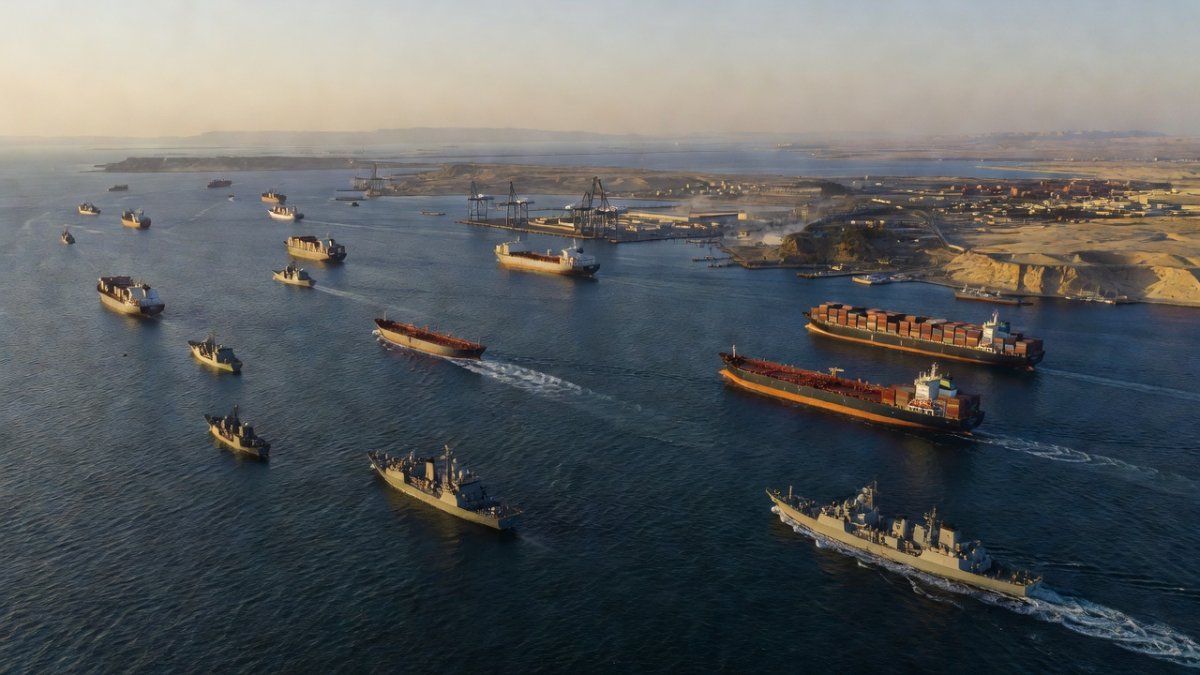
The Collapse of the June Ceasefire
The ceasefire agreement — formally a memorandum of understanding signed on 17 June between Washington and Tehran — had included 14 points, among them a 60-day period for negotiations, safe passage of vessels through the Strait of Hormuz, and a commitment by the United States to begin lifting sanctions on Iran. For a brief period, the arrangement held. The number of ships transiting the Strait had stabilised, and diplomatic channels remained open, with Iran's parliamentary speaker Mohammad Bagher Ghalibaf serving as the country's chief negotiator.
But the ceasefire was fragile from the start. On 26 June, the US launched strikes after an Iranian projectile hit a cargo ship in the Strait. Further strikes followed on 27 June after an attack on a tanker. Both sides had agreed to "stand down" later that month, but the underlying tensions — over freedom of navigation, sanctions relief, and regional military postures — had never been resolved. The collapse accelerated this week when three tankers came under attack in quick succession inside the Strait of Hormuz. Shipping companies immediately diverted vessels, and insurance premiums spiked overnight.
President Donald Trump declared the agreement "over" on Wednesday. He called Iran "scum" and stated that further talks would be a "waste of time." The statement ended any remaining diplomatic momentum. Iran's Foreign Minister Abbas Araghchi responded on X with measured language: "We do not answer vulgarity with vulgarity, but with action: fearlessly and with great valour." The exchange underscored how quickly personal rhetoric from Washington can close doors that negotiators such as Ghalibaf had worked to keep open. Ordinary Iranians, already facing currency pressure and fuel shortages, now confront the prospect of renewed isolation as sanctions relief evaporates.
The June memorandum's erosion followed a familiar pattern seen in earlier breakdowns, such as the 2018 U.S. withdrawal from the JCPOA and the 2019 tanker incidents, where incremental violations of navigation and sanctions clauses rapidly undermined trust. Each step—from initial compliance on vessel transit to renewed attacks—eroded the credibility of future U.S.-Iran frameworks, leaving negotiators with diminished leverage and raising doubts about whether any new agreement could survive similar rhetorical escalations.
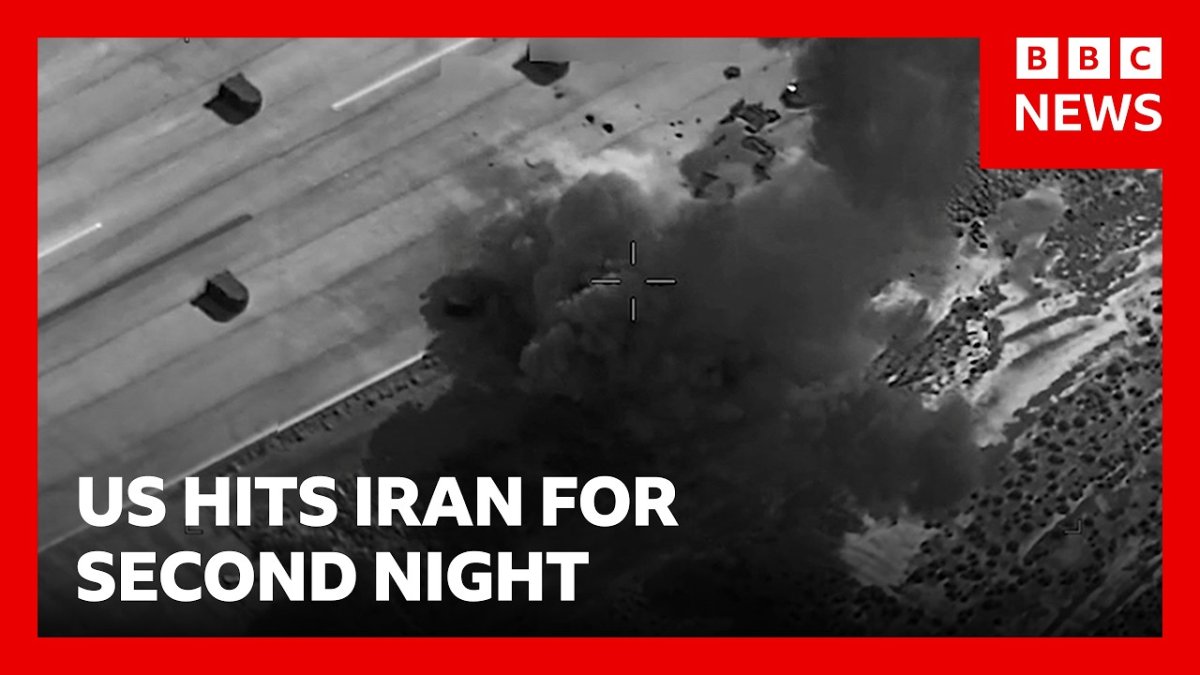
The Second Night of Strikes — 90 Targets and a Region on Edge
Centcom confirmed that US forces struck 90 military targets across Iran during the second night of operations. The list included air defence systems, missile launchers, and military logistics infrastructure along the coastline from Bandar Abbas westward. Iranian state television reported eight separate explosions in Bandar Abbas itself, with additional missiles striking the ports of Sirik and Jask. Two projectiles hit Abu Musa island, a territory disputed between Iran and the UAE, raising immediate concerns in Abu Dhabi.
Air defence systems activated across southern Iran as sirens sounded in multiple cities. Power cuts struck Chabahar, disrupting water supplies and hospital generators. A fire broke out at an IRGC barracks in Bushehr, though Iranian authorities have not released casualty figures from that site. The railway route connecting Tehran to Mashhad suffered damage, complicating plans for the late supreme leader's funeral scheduled for Thursday in Mashhad. Iran's Foreign Ministry described the US administration as "evil and psychopathic" and denounced the strikes as a "gross war crime" targeting civilian infrastructure. These statements were carried on state media and shared widely inside Iran, where residents already coping with economic strain now face fresh uncertainty over basic services.
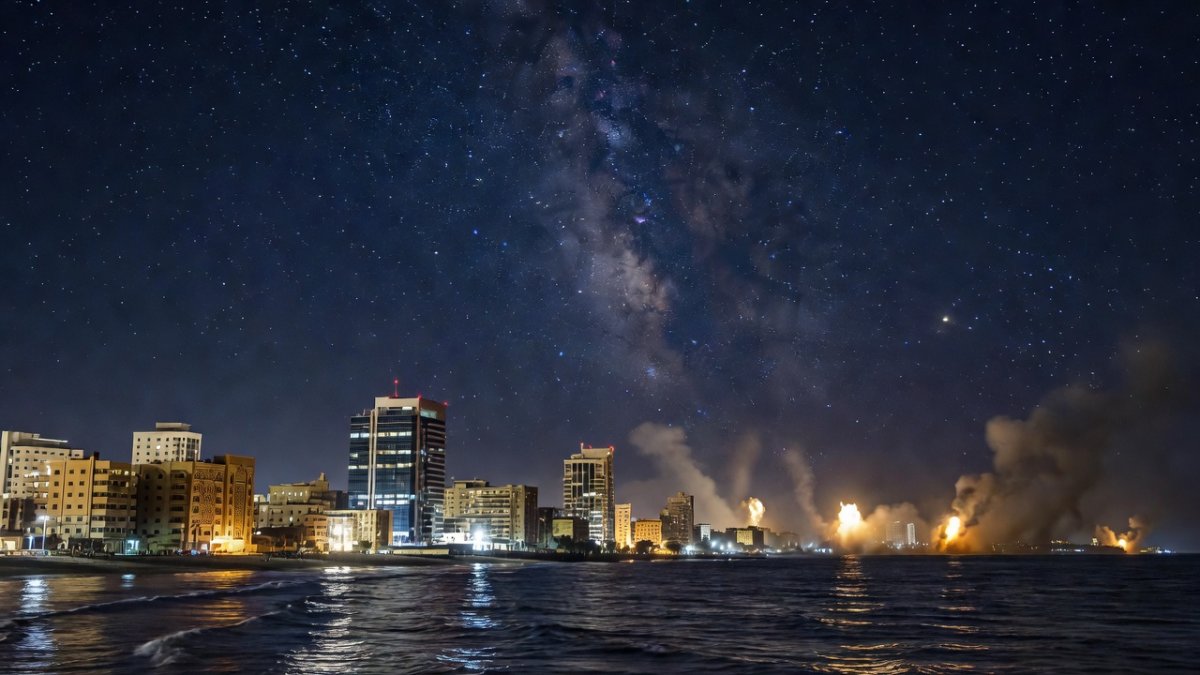
Iran's Retaliation — Missiles Towards Kuwait, Bahrain and Qatar
The IRGC confirmed retaliatory strikes on US military bases in Kuwait and Bahrain. Explosions were reported in Bahrain's capital Manama, while Kuwaiti forces intercepted several incoming missiles and drones. Qatar issued a security alert and temporarily restricted airspace around Doha. The IRGC described the launches as the "first phase of the punitive response against the American treaty-breakers." Parliamentary speaker Mohammad Bagher Ghalibaf stated, "If you strike, you'll get hit," and added that the Strait of Hormuz will only open under Iranian arrangements.
Iran's Ministry of Health released updated casualty figures through Hossein Kermanpour, head of public relations, confirming 14 killed and 78 injured across five provinces. These numbers reflect strikes on both military and dual-use sites. Gulf citizens in Kuwait and Bahrain now weigh the reliability of US security guarantees against the immediate risk of further Iranian retaliation. The pattern echoes earlier post-Soviet energy disputes in which Moscow leveraged regional chokepoints; here, Tehran appears to be testing similar leverage while ordinary families across the Gulf prepare for possible supply disruptions and higher living costs.
The Strait of Hormuz — Shipping in Freefall
Phil Belcher, marine director at Intertanko, told BBC Radio 4 that daily traffic through the southern route is now in "single figures," down from about 30 a week ago and 130 before the Iran conflict began. Roughly 20 ships continue to use a northern route overseen by Iran. Belcher described the "exuberance of optimism" that followed the June memorandum of understanding, now replaced by a markedly darker mood. He noted that "this cycle of violence" is having "an enormous impact both on business and on the seafarers themselves."
Insurance markets have responded sharply, with war-risk premiums for very large crude carriers and Suezmax tankers tripling within days and prompting many operators to anchor vessels rather than risk transit. Alternative routes via the Bab el-Mandeb strait or longer voyages around the Cape of Good Hope add weeks to delivery times and raise costs, disproportionately affecting laden tankers that cannot easily absorb such delays while lighter product carriers face fewer immediate constraints.
Global energy markets have reacted with sharp oil price volatility. Tanker operators face insurance costs that have tripled in recent days, forcing many vessels to remain anchored. Gulf states, whose budgets depend heavily on steady hydrocarbon exports, are exposed to prolonged revenue shortfalls. The situation also affects post-Soviet energy politics: Russia watches the disruption closely, calculating how reduced Iranian exports might strengthen its own position with European and Asian buyers. For ordinary citizens in the region, the immediate result is higher fuel and food prices at a time when inflation already strains household budgets.
Analysis — Can the Ceasefire Be Rescued?
The 60-day negotiation period outlined in the June memorandum has not yet expired, yet President Trump has signalled he views further talks as a "waste of time." BBC diplomatic correspondent Jeremy Bowen argues in analysis referenced in the video that "for all his bluster, Trump has no better option than talks with Iran." A purely military approach carries enormous risks of protracted conflict across the Middle East, drawing in additional actors and stretching supply lines. Gulf states remain caught between longstanding US security guarantees and the demonstrated reach of Iranian retaliation.
Russia's calculus favours elevated oil prices that bolster its export revenues yet stops short of welcoming nuclear escalation near its southern periphery, prompting Moscow to quietly encourage de-escalation. China's energy security hinges on rapid diversification away from Hormuz-dependent supplies, accelerating timelines for overland pipelines and long-term contracts with alternative producers. European diplomats, drawing on past mediation successes during JCPOA talks, are exploring backchannel efforts to restore limited navigation guarantees before further strikes compound humanitarian strains on Iranian households and Gulf consumers alike.
The humanitarian toll on ordinary Iranians continues to mount through power outages, damaged transport links, and renewed sanctions pressure. Moscow has historically opposed US military action against Iran and may use the current escalation to deepen energy relationships with Gulf states wary of instability. China's position hinges on stable oil flows through the Strait; any prolonged closure would force Beijing to accelerate alternative supply routes. The coming days will determine whether the region slides back into full-scale war or whether diplomatic channels can be reopened before the funeral in Mashhad and the broader regional calendar add further complications.
By Irina Volkov, Staff Writer
This article was produced with AI-assisted research and editorial support. Reporting is based on sources cited in the article.
What's Your Reaction?
 Like
0
Like
0
 Dislike
0
Dislike
0
 Love
0
Love
0
 Funny
0
Funny
0
 Wow
0
Wow
0
 Sad
0
Sad
0
 Angry
0
Angry
0
Russia/Eastern Europe Correspondent at Global1.News. Covering Russian politics, energy, security, and the shifting dynamics of the post-Soviet space. Provides clear-eyed analysis on one of the world's most opaque regions.










Comments (0)