
Has Anyone Won the Iran War? A Reckoning After 100 Days of Conflict
In a recent BBC News report from The Global Story podcast, correspondents examined a question that hangs over the signing ceremony in Geneva this week: after more than 100 days of direct conflict between the United States, Israel and Iran, has anyone actually won? Has Anyone Won the Iran War? A Reckoning After 100 Days of Conflict Moscow – 16 June 2026 — The signing ceremony in
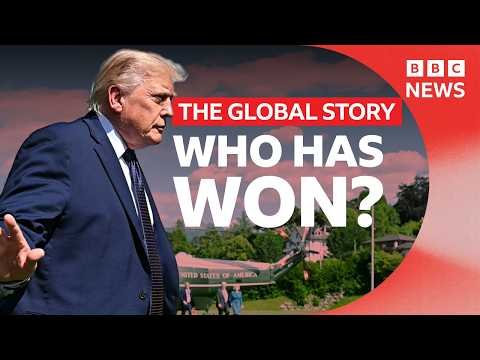
In a recent BBC News report from The Global Story podcast, correspondents examined a question that hangs over the signing ceremony in Geneva this week: after more than 100 days of direct conflict between the United States, Israel and Iran, has anyone actually won?
Has Anyone Won the Iran War? A Reckoning After 100 Days of Conflict
Moscow – 16 June 2026 — The signing ceremony in Geneva on Friday represents a formal end to more than 100 days of US-Israeli military operations against Iran, but the deeper question posed by The Global Story podcast — whether any party achieved a strategic victory — remains unsettled.
The Fragile Architecture of the Iran-US Deal
The agreement brokered by Pakistan and Qatar represents a diplomatic achievement in one sense: it stopped active hostilities between two nuclear-capable states after more than three months of direct and proxy warfare.
Iran's Supreme National Security Council confirmed that the MOU includes an immediate and permanent suspension of military operations on all fronts, explicitly including Lebanon, where Iran-backed Hezbollah has been engaged in heavy fighting with Israeli forces since March.
For the Kremlin, watching from Moscow, the deal presents a mixed picture. On one hand, a US-Iran de-escalation reduces the risk of a wider Middle Eastern conflagration that could draw in Russia's southern flank. On the other, it removes a major source of pressure on Washington's attention and resources — pressure that had given Moscow some breathing room in its own geopolitical contest with the West.
Pakistan Prime Minister Shehbaz Sharif announced the breakthrough on Sunday, June 14, after intensive mediation alongside Qatar. The resulting Memorandum of Understanding was signed electronically by President Trump, Vice President JD Vance, and Iranian Parliament Speaker Mohammad Bagher Ghalibaf. A formal signing ceremony is scheduled for Friday, June 19 in Geneva, followed by a 60-day negotiation period to finalize details on nuclear enrichment limits, sanctions relief, and the release of tens of billions in frozen Iranian oil revenues. Iran's Deputy Foreign Minister Kazem Gharibabadi has emphasized that the framework requires verifiable steps before any sanctions are lifted. European powers including the United Kingdom under Prime Minister Keir Starmer, along with France, Germany, and Italy, issued a joint statement insisting Iran must never acquire a nuclear weapon, positioning the E3+Italy group as key monitors during the coming weeks. Analysts suggest this MOU structure remains fragile because it defers the hardest concessions to the 60-day window, leaving room for domestic hardliners in Tehran or Washington to derail progress before a comprehensive accord emerges. Observers note that the involvement of Pakistan and Qatar marks a shift toward regional actors assuming greater responsibility for conflict resolution, potentially reducing reliance on traditional Western-led formats.
Who Claims Victory, and Who Actually Won?
Both sides are declaring victory, which in diplomatic terms usually means neither side achieved its maximal objectives. Iran's top military command, the Khatam al-Anbiya Central Headquarters, issued a statement portraying the outcome as a strategic triumph, asserting that the United States and Israel had "no option but to accept defeat and surrender." Tehran's state media has framed the reopening of the Strait of Hormuz as a concession extracted from Washington, while simultaneously claiming that Iran's nuclear infrastructure remains intact and unsanctioned.
On the American side, President Trump presented the deal as a fulfillment of his pledge to end wars rather than start them. "It's signed, the deal is all signed," he told French President Emmanuel Macron during a bilateral meeting this week. The White House narrative emphasizes that Iran has agreed — at least on paper — to never pursue a nuclear weapon, a condition that Vice President JD Vance told Fox News was "built into this agreement" with verification mechanisms.
Israeli perspectives reveal deeper fractures. Defence Minister Israel Katz opposed any withdrawal from the five percent of Lebanese territory still held by Israeli forces, while National Security Minister Itamar Ben Gvir declared that "Trump's agreement does not bind us." Opposition figure Yair Golan publicly complained the deal was negotiated "over Israel's head." An Israeli drone strike on Kfar Tebnit in south Lebanon after the ceasefire announcement underscored the risk that Jerusalem may continue limited operations. Lebanese President Joseph Aoun has urged all parties to respect the permanent halt to hostilities. This lack of Israeli buy-in could render the framework unstable, as analysts suggest sustained US pressure on Israel will be required to prevent violations that provoke Iranian retaliation and collapse the 60-day talks. This could indicate that internal Israeli political divisions may continue to influence regional stability long after the Geneva ceremony concludes.
The Energy Dimension: Oil, the Strait of Hormuz, and Global Markets
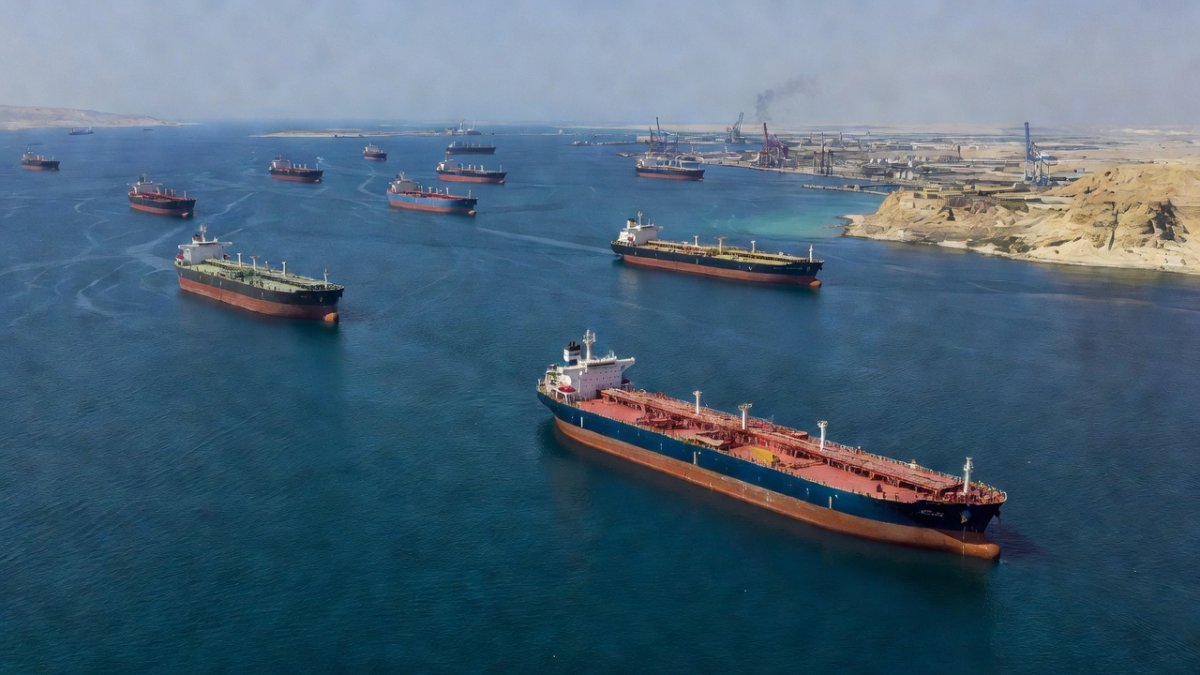
The reopening of the Strait of Hormuz is arguably the most tangible and immediate outcome of the agreement. The waterway, through which approximately 20 percent of the world's oil passes, had been effectively closed by Iran since March, triggering the worst global energy crisis since the 1973 oil embargo. Brent crude spiked to levels not seen in decades, and gasoline prices at American pumps surged to their highest since 2022 — creating acute political vulnerability for the Trump administration ahead of the midterm elections.
Brent crude fell 3.6 percent to $84.21 per barrel immediately after the announcement, easing some pressure on global markets. Europe, already strained by post-Ukraine energy costs, welcomed the prospect of stabilized supplies, though dependence on alternative LNG routes remains high. China, the world's largest oil importer, stands to benefit from lower prices that support its manufacturing sector. For Russia, the episode proved double-edged: elevated prices during the conflict boosted Gazprom and Rosneft revenues in the short term, yet a sustained reopening of Hormuz risks driving Brent lower and eroding Moscow's energy leverage. Kremlin officials in Moscow are now reassessing export strategies, recognizing that any durable de-escalation in the Gulf could intensify competition with Iranian crude once sanctions relief timelines advance. Analysts suggest that prolonged volatility in energy markets may accelerate Russia's pivot toward Asian buyers, altering long-term pricing dynamics in ways that extend beyond the immediate ceasefire.
Russia's Strategic Calculus: Watching From the Sidelines
Moscow has maintained diplomatic ties with Tehran throughout the conflict, positioning itself as a potential mediator while carefully avoiding direct involvement. The Kremlin's relationship with Iran is complex — both countries face Western sanctions, both have an interest in challenging the US-led global order, but they also compete in energy markets and have diverging interests in the Caucasus and Central Asia.
The Iran deal affects Russia's position in Syria, where Russian and Iranian forces have operated alongside each other since 2015; any reduction in Iranian regional influence could shift the balance toward Damascus relying more heavily on Moscow. Arms sales to Iran may face new scrutiny if the 60-day talks produce tighter non-proliferation language. Russia's relationship with Israel, already tense over Ukraine, could improve if Jerusalem views Moscow as a stabilizing voice. Pakistan's emergence as a mediator challenges the traditional Russian role in Middle Eastern diplomacy, prompting Foreign Ministry officials in Moscow to consider whether similar quiet channels could be cultivated with Gulf states. Analysts suggest the Kremlin may draw lessons from Iran's experience: direct confrontation with the United States proved costly in casualties and expenditure without delivering regime change, reinforcing Moscow's preference for proxy strategies over open warfare. This could indicate that Russia will prioritize indirect influence operations in future regional engagements rather than overt military commitments.
What Happens Next: The 60-Day Window and the Risks Ahead
The 60-day negotiation period opens on Friday with the Geneva signing ceremony. During this window, both sides must translate the MOU's framework into a comprehensive final agreement. The key unresolved issues are deeply contentious: the precise limits on Iran's nuclear enrichment program, the scope and timeline of sanctions relief, the release of tens of billions of dollars in frozen Iranian oil revenues, and the mechanism for verifying compliance on both sides.
Israeli opposition could manifest through continued military actions that test the ceasefire spirit, while hardliners in Tehran may demand concessions Washington cannot deliver. The European powers have stated they will lift sanctions only in response to clear, verifiable steps. Hezbollah has not formally endorsed the deal, and Israeli operations in south Lebanon persisted after the announcement. The 60-day timeline appears ambitious when compared with the JCPOA negotiations, which required years of detailed talks. Any single violation risks unraveling the entire process, leaving ordinary citizens in Iran, Israel, and Lebanon facing prolonged uncertainty over energy prices, security, and economic recovery. Observers note that the structural parallels to the JCPOA highlight recurring challenges in building durable verification regimes acceptable to all parties.
Analysis and Implications
The fundamental question posed by The Global Story podcast — has anyone won this war? — may not have a satisfying answer. Neither the United States nor Iran achieved a decisive strategic victory. The US-Israel coalition failed to dismantle Iran's nuclear infrastructure or topple the regime. Iran failed to expel American forces from the Gulf or break the sanctions regime. Both sides inflicted enormous damage on each other while demonstrating the limits of their military power.
The war has reshaped the Middle East's balance of power — Iran's proxies in Yemen, Iraq, Syria, and Lebanon have been weakened but not destroyed. The Abraham Accords proved durable and functioned as a hidden alliance system. The global energy architecture has been stress-tested and found dangerously vulnerable to a single chokepoint. For ordinary people in Iran, Israel, Lebanon, and Yemen, the cost has been measured in lives lost, economies shattered, and futures uncertain. For Moscow, the lesson may be that even a costly, inconclusive war with a superpower does not necessarily end in regime change — a calculation that resonates in the Kremlin's own strategic thinking. Analysts suggest the emerging framework could indicate a more multipolar diplomatic order in which regional mediators play expanded roles, potentially diluting traditional great-power dominance over Middle Eastern security arrangements.
By Irina Volkov, Staff Writer
This article was produced with AI-assisted research and editorial support. Reporting is based on sources cited in the article.
What's Your Reaction?
 Like
0
Like
0
 Dislike
0
Dislike
0
 Love
0
Love
0
 Funny
0
Funny
0
 Wow
0
Wow
0
 Sad
0
Sad
0
 Angry
0
Angry
0
Russia/Eastern Europe Correspondent at Global1.News. Covering Russian politics, energy, security, and the shifting dynamics of the post-Soviet space. Provides clear-eyed analysis on one of the world's most opaque regions.










Comments (0)