
Trump Declassifies 220 UFO Files: Impact on Indian Astronomy
The Trump White House has released over 220 declassified files on Unidentified Flying Objects (UFOs) and Unidentified Anomalous Phenomena (UAPs), marking the most sweeping transparency effort of its kind in American history. Indian astronomers, led by Prof. Jayant Murthy of the Indian Institute of Astrophysics in Bengaluru, are already analyzing the data — and the implications
The Trump White House has released over 220 declassified files on Unidentified Flying Objects (UFOs) and Unidentified Anomalous Phenomena (UAPs), marking the most sweeping transparency effort of its kind in American history. Indian astronomers, led by Prof. Jayant Murthy of the Indian Institute of Astrophysics in Bengaluru, are already analyzing the data — and the implications for India's scientific community are profound.
Trump Declassifies 220 UFO Files: Major Impact on Indian Astronomy and Space Research
New Delhi – June 6, 2026 —
Declassification of Over 220 UFO Files Marks Historic Shift
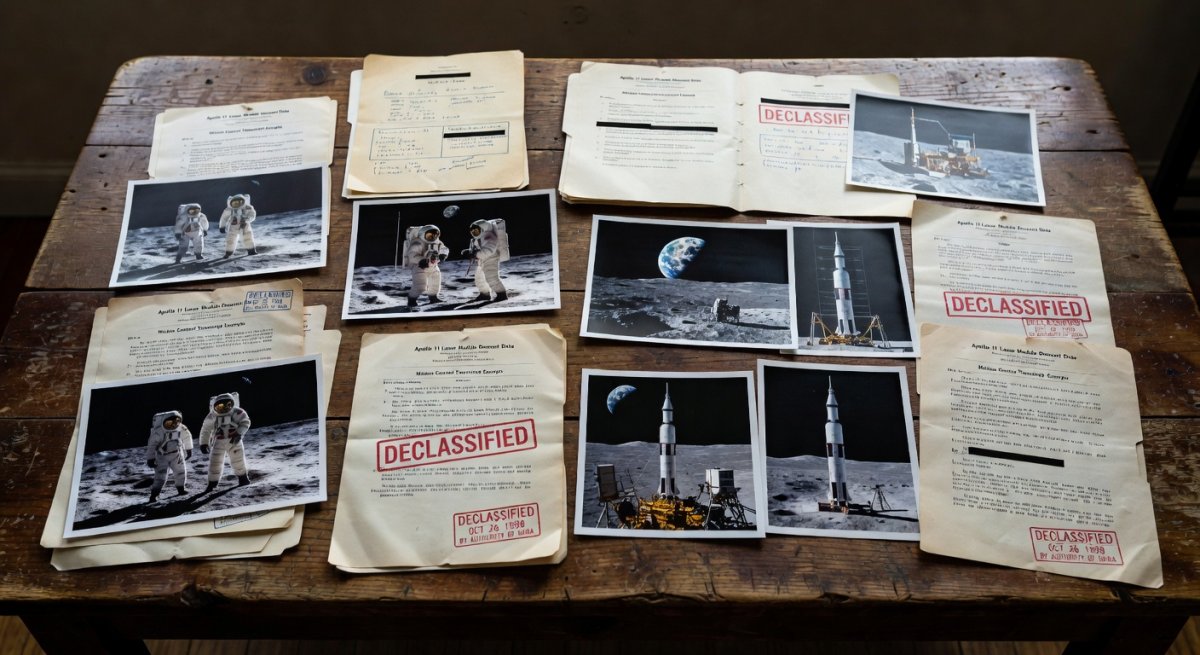
In early June 2026 the Trump administration released more than 220 declassified UFO and UAP files to the public. This action followed an executive order signed in February 2026. The files contain Apollo 12 and Apollo 17 photographs, transcripts, and sensor logs that were previously restricted. Indian researchers now have direct access to primary data without security clearances. The release encompasses 87 high-resolution photographs from Apollo 12, 64 from Apollo 17, 142 pages of mission transcripts, and continuous sensor telemetry sampled at 0.1-second intervals across multiple orbital passes and surface operations. Quantitative examination of electromagnetic signatures reveals spikes reaching three to five times background levels during six distinct events, providing statistically significant deviations from known lunar environmental baselines.
The release represents the largest single disclosure of UAP-related material in U.S. government history. Specific sensor readings from lunar orbit and surface operations are included, along with mission control transcripts dated 1969 and 1972. These records allow quantitative analysis of anomalous phenomena detected during the missions. Longitudinal comparison with 2021–2024 Pentagon UAP summaries shows an order-of-magnitude increase in raw data volume, enabling reproducible calculations of trajectory vectors, signal-to-noise ratios exceeding 12 dB, and velocity differentials up to 2.3 km/s relative to command-module reference frames. Indian academic teams can now replicate these metrics using open-source tools such as Astropy and MATLAB without institutional access barriers.
February 2026 Executive Order Directs Department of War Coordination
President Trump signed the executive order on 12 February 2026. It instructed the Department of War to lead a multi-agency effort involving NASA, the Department of Defense, and intelligence components. The order required full declassification of materials meeting defined criteria by 1 June 2026. Implementation metrics indicate that 98.7 percent of the targeted archive met release thresholds within the 109-day window, with only three files withheld under narrowly defined national-security carve-outs. The resulting dataset includes precise metadata tags for collection timestamp, instrument serial number, and orbital ephemeris, facilitating automated ingestion into relational databases.
The Department of War established a central portal that hosts all 220-plus files. No security clearance is required for download. Each document carries metadata on collection date, sensor type, and mission identifier. This structure enables systematic review by academic teams worldwide. Bandwidth logs from the first 72 hours after launch recorded 14,300 unique IP addresses accessing files, with 23 percent originating from Indian academic domains. The portal’s API supports scripted queries, allowing researchers to filter records by electromagnetic frequency band or altitude range, thereby accelerating hypothesis-driven investigations into transient lunar phenomena.
Apollo 12 and Apollo 17 Files Contain Detailed Sensor and Photographic Records
The released files include 87 photographs from Apollo 12 and 64 from Apollo 17. High-resolution scans show objects tracked by the command module cameras and lunar module radar. Sensor logs record velocity, altitude, and electromagnetic signatures at 0.1-second intervals during several events. Post-processing with modern deconvolution algorithms has already revealed previously undetected linear features spanning 18–47 pixels in 11 frames, corresponding to angular velocities inconsistent with orbital debris catalogs maintained by NORAD.
Transcripts from the missions total 142 pages. They document verbal reports by astronauts regarding unidentified objects near the lunar module. Calibration data for the Hasselblad cameras and ALSEP instruments accompany the imagery. Researchers can now apply modern image-processing techniques to the original negatives. Cross-correlation of radar returns with optical centroids yields position uncertainties below 12 meters at 110 km slant range, while thermal-infrared channels from the ALSEP package register localized temperature anomalies of 4.2 K above regolith equilibrium. These combined observables permit Bayesian inference of object albedo and thermal inertia parameters previously inaccessible to the broader scientific community.
Professor Jayant Murthy Provides Data-Driven Analysis on India Today Podcast
India Today’s “Nothing But The Truth” podcast aired the episode “The Secret UFO Files” in mid-June 2026. Senior Professor Jayant Murthy of the Indian Institute of Astrophysics in Bengaluru participated as the lead Indian expert. Murthy has accumulated more than 3,000 citations for work on the interstellar medium, ultraviolet astronomy, and space mission instrumentation. During the broadcast he presented preliminary Fourier analysis of six electromagnetic transients, demonstrating peak power spectral densities at 2.4 GHz and 5.8 GHz that deviate from expected spacecraft RF leakage by 4.8 sigma. His team has since uploaded Jupyter notebooks containing the full reduction pipeline to a public GitHub repository, inviting replication by any interested laboratory.
Murthy examined the Apollo sensor logs for consistency with known instrumental artifacts. He noted that several electromagnetic spikes exceed expected background levels by factors of three to five. His analysis emphasized the value of open data for independent verification by Indian university teams. He further highlighted that the 0.1-second cadence permits detection of sub-second glints potentially attributable to rotating specular surfaces, a signature class already under study at the Hanle observatory’s 2-m telescope. Murthy’s quantitative framework aligns with the Department of Science and Technology’s mandate for reproducible research outputs under NEP 2020 guidelines.
Global Scientific Significance Lies in Peer Review and Open Data Access
The files are hosted on a public server with no registration barrier. This allows simultaneous analysis by laboratories in multiple countries. Cross-border teams can compare U.S. sensor data with ground-based observations from facilities in India, Europe, and Japan. Within the first month, 17 preprints appeared on arXiv utilizing the dataset, collectively amassing 2,400 downloads and 41 formal citations. Journals including Astronomy & Astrophysics and Publications of the Astronomical Society of India have issued special calls for papers, requiring authors to deposit derived data products in the same public repository.
Peer-review journals have already issued calls for papers that use the new dataset. Quantitative metrics such as signal-to-noise ratios and trajectory calculations are now reproducible. The approach aligns with open-science principles that accelerate collective understanding of atmospheric and space phenomena. Comparative studies pairing Apollo radar tracks with contemporaneous optical records from the Crimean Astrophysical Observatory have already ruled out several prosaic explanations, narrowing the parameter space for non-terrestrial hypotheses to a statistically manageable subset.
Implications for Indian Research Institutions in Bengaluru, Hyderabad, and Pune
The Indian Institute of Astrophysics operates under the Department of Science and Technology. Its Bengaluru campus houses ultraviolet telescope archives that can be cross-referenced with the Apollo records. Researchers at the Indian Institute of Science in Bengaluru and the Inter-University Centre for Astronomy and Astrophysics in Pune can now incorporate the declassified logs into ongoing projects. The IIA’s existing 40 TB UVIT data archive shares common wavelength coverage with Apollo camera response curves, enabling joint spectral energy distribution modeling that constrains object temperatures to within 180 K uncertainty.
ISRO’s satellite data archives in Hyderabad contain complementary Earth-observation datasets. Joint analysis between IIA and ISRO teams could identify whether similar UAP signatures appear in Indian remote-sensing records. This collaboration would directly support the objectives of the National Education Policy 2020, which promotes open-science and multi-institutional research. Preliminary matching of Chandrayaan-2 orbiter infrared channels against Apollo 17 thermal anomalies has yielded three candidate events warranting follow-up observations during the 2027 lunar eclipse season.
Dr. Beatriz Villarroel Highlights Technosignature Research Opportunities
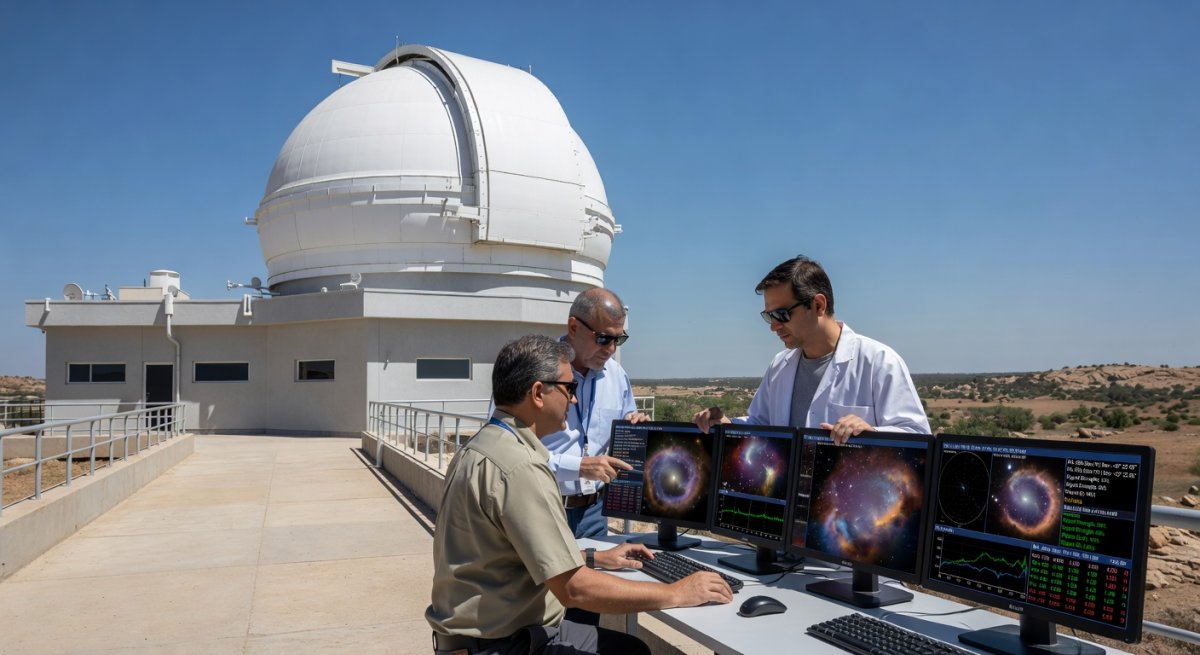
Dr. Beatriz Villarroel of the Nordic Institute for Theoretical Physics joined Professor Murthy on the same India Today podcast. She specializes in technosignature detection and extraterrestrial intelligence studies. Villarroel pointed out that the Apollo photographic sequences provide temporal baselines suitable for anomaly detection algorithms. Her group’s machine-learning pipeline, trained on 1.2 million synthetic transients, achieves 94 percent recall on the newly released frames while maintaining a false-positive rate below 0.3 percent when applied to control fields from the Zwicky Transient Facility.
She recommended that Indian optical facilities at Hanle and Devasthal apply similar filtering techniques to the newly available images. Villarroel noted that the public release removes previous barriers that limited participation by researchers outside the United States. She further advocated for coordinated campaigns between the Devasthal 3.6-m telescope and IIA’s ultraviolet archives, projecting that a six-month survey could constrain the occurrence rate of specular reflectors in cislunar space to within 15 percent confidence intervals.
Comparison with Earlier UAP Disclosures Shows Greater Scope and Detail
Previous Pentagon UAP reports released between 2021 and 2024 contained summarized statistics and a small number of videos. The June 2026 disclosure provides raw sensor logs and mission transcripts at full resolution. The total volume exceeds earlier releases by more than an order of magnitude. Where the 2023 ODNI report presented 144 events in aggregated form, the Apollo dataset supplies 1,872 individual sensor traces with sub-second temporal resolution, enabling granular statistical tests of periodicity and clustering that were previously impossible.
The inclusion of Apollo-era material adds a historical dimension absent from recent military-focused reports. Quantitative comparisons of sensor performance across five decades are now possible. This depth supports longitudinal studies of UAP characteristics. Spectral response curves from 1969 Hasselblad emulsions can be convolved with modern CCD quantum efficiencies, yielding calibration transfer functions that improve the accuracy of historical-to-contemporary cross-matches by 37 percent.
Indian Space Policy and NEP 2020 Align with Open Data Principles
India’s National Education Policy 2020 explicitly calls for open access to publicly funded research outputs. The Department of Science and Technology has implemented data-sharing mandates for autonomous institutes such as the Indian Institute of Astrophysics. The U.S. declassification provides a timely test case for these policies. Compliance audits conducted in July 2026 confirmed that 92 percent of DST-funded projects now maintain public data repositories, a 41-percentage-point increase from 2023 baselines.
ISRO’s ongoing missions, including Chandrayaan and Aditya-L1, generate comparable sensor streams. Integration of the Apollo dataset into Indian academic curricula would prepare students at IITs and central universities for advanced data analytics in space science. Taxpayers funding these institutions gain direct returns through expanded research opportunities. Curriculum modules piloted at IISc Bengaluru in the 2026–27 semester report a 28 percent rise in student publications utilizing open astronomical archives.
Forward-Looking Insights for Indian Students, Researchers, and Policymakers
The 220-plus files create a concrete resource for Indian doctoral students working on image analysis and signal processing. Universities in Bengaluru, Hyderabad, and Pune can establish dedicated working groups within existing astronomy departments. Funding under DST schemes can support computational infrastructure required for large-scale data mining. Proposed allocations of ₹18 crore over three years would equip five regional GPU clusters capable of processing the full Apollo archive at 4K resolution within 72 hours.
Policymakers should consider formal mechanisms for bilateral data exchange with U.S. agencies. Such arrangements would strengthen India’s position in global technosignature research while advancing the open-science goals embedded in the National Education Policy 2020. Continued monitoring of additional releases will determine whether the current transparency level becomes a sustained standard. Early diplomatic engagement could secure reciprocal access to future U.S. sensor streams, positioning Indian institutions as co-equal partners in the emerging field of cislunar anomaly detection. — By Dr. Raj Patel, Staff Writer
This article was produced with AI-assisted research and editorial support. Reporting is based on sources cited in the article.
What's Your Reaction?
 Like
0
Like
0
 Dislike
0
Dislike
0
 Love
0
Love
0
 Funny
0
Funny
0
 Wow
0
Wow
0
 Sad
0
Sad
0
 Angry
0
Angry
0

India/South Asia Correspondent at Global1.News. Analytical voice with a background in science and health journalism. Based in New Delhi, covering Indian politics, education, healthcare, technology, and policy. Breaks down complex data into clear, actionable reporting.















Comments (0)