
Alberta man told to take taxi to ER despite emergency bleeding after knee surgery
Alberta man told to take taxi to ER despite emergency bleeding after knee surgery An Edmonton man is raising serious concerns about Alberta's emergency response protocols after he says he was advised to take a taxi to hospital while experiencing life-threatening bleeding from a recent knee replacement surgery. The case has renewed debate about the province's alternative transpo

Alberta man told to take taxi to ER despite emergency bleeding after knee surgery
An Edmonton man is raising serious concerns about Alberta's emergency response protocols after he says he was advised to take a taxi to hospital while experiencing life-threatening bleeding from a recent knee replacement surgery. The case has renewed debate about the province's alternative transportation policy and the pressures facing Canada's provincial healthcare systems.
Tags: Alberta healthcare, Edmonton emergency services, knee surgery complication, ambulance alternatives, provincial health system
Incident Details — A Ruptured Surgical Wound
Edmonton, Alberta – June 5, 2026 — Bruce Tuchsen underwent knee replacement surgery on May 11. Last Friday, after returning home from visiting friends, he struck his knee against a nightstand, causing the surgical wound to burst open. "Tons of blood. It was really horrific. The knee literally exploded," Tuchsen told Global News on Friday.
His partner immediately called 911. The response from emergency services presented limited options: a potential six-hour wait for a standard ambulance or approximately one hour for a non-emergent team to assess the injury. The alternative offered was to take a taxi. With blood loss mounting, Tuchsen and his partner wrapped the wound in towels and proceeded by cab to hospital.
"What would have happened if I bled out in the cab?" he said. Upon arrival at the emergency department, Tuchsen bypassed triage and received immediate attention from a physician. He underwent further surgery the following morning after doctors determined the incision had failed to heal properly, leading to pressure buildup and rupture. The blood loss left him in shock.
Strains on Alberta's Emergency Medical Services
Tuchsen is now questioning ambulance availability across the province. "I'd like to know where all the ambulance drivers were. Are we that short? If we're that short, let's change that," he said. His experience reflects broader pressures within Alberta's healthcare delivery, where emergency medical services face high demand in urban centres such as Edmonton and Calgary.
Healthcare in Canada falls under provincial jurisdiction, and Alberta has navigated significant challenges in recent years related to staffing shortages and resource allocation. The situation in Edmonton illustrates how these systemic pressures can directly affect individual patients seeking timely emergency care.
Alberta's Alternative Transportation Policy Since 2022
Alberta has used alternative transportation, including taxis, for non-emergent cases since December 2022 in an effort to reduce pressure on ambulance services. ALTA Paramedic Health stated that such options are applied only when patients are assessed as low acuity, stable, and not requiring paramedic care or stretcher transport.
The agency noted that a shared response system launched in 2023 allows some 911 callers to be redirected to Health Link 811 for assessment and appropriate care pathways. In the most recent seven-day reporting period, more than 900 low-acuity events were assessed, with many directed to alternative care, including taxis. Of 150 alternative transport outcomes during that period, 65 involved taxi transportation.
ALTA Paramedic Health maintains that the approach helps preserve ambulances for higher-acuity, time-sensitive emergencies, and that patients who require ambulance-level care continue to receive it. Tuchsen said he considers himself fortunate to have reached hospital safely. "I don't really want to think about that. Because the fact I was losing so much blood … who knows."
Expert Views — Emergency Room Overcrowding
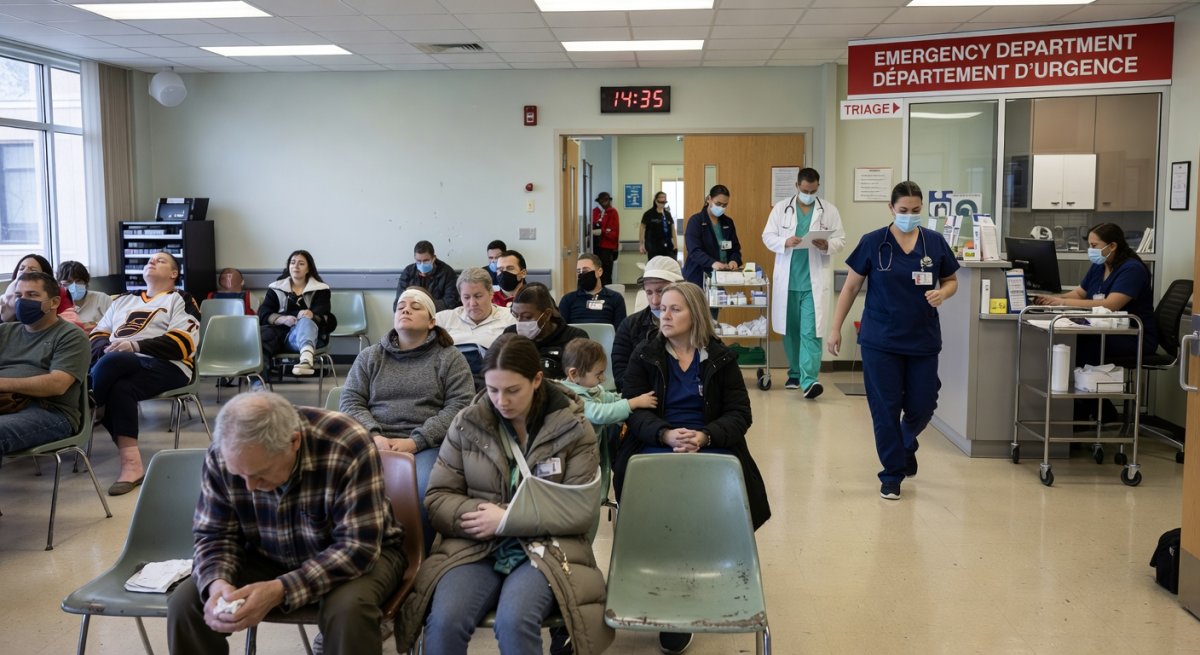
Dr. Raj Sherman, an emergency room physician in Edmonton who has been outspoken about the state of Alberta's strained healthcare system, said situations like Tuchsen's are emergencies but not uncommon. He pointed to overcrowded hospitals as a contributing factor. "As a result, your waiting room's packed with sick people whose care is delayed, and the whole EMS fleet ends up stuck in emergency, because they can't just put people on the floor and leave," Sherman said.
These observations align with ongoing discussions about emergency department capacity in major Alberta cities. The interplay between hospital bed availability and ambulance offload times remains a key operational concern for paramedic services across Canada, particularly in provinces facing population growth and infrastructure constraints.
Implications for Medicare and Provincial Care Delivery
Canada's medicare system emphasises timely access to essential services, yet provincial systems like Alberta's must balance demand with available resources. Tuchsen's case illustrates potential gaps when alternative transport options intersect with what patients perceive as urgent medical needs.
Federal health transfers support provincial health budgets, but day-to-day management of emergency services rests with provincial and territorial authorities. The Alberta government has faced ongoing scrutiny over wait times, staffing levels, and emergency department closures in rural and urban areas. The province's approach to ambulance redirection is part of a broader effort to manage system capacity that has drawn both support and criticism.
What Happens Next — Calls for Greater Transparency
Tuchsen's experience has prompted him to advocate for greater transparency around ambulance staffing levels. While ALTA Paramedic Health emphasises protocols for low-acuity redirection, the distinction between perceived and assessed urgency can create difficult decisions for callers facing what they believe are life-threatening situations.
Continued monitoring of the shared response system and its impact on both patient experiences and ambulance availability will be important as Alberta works to refine emergency care pathways. The provincial government may face renewed questions about the policy in light of Tuchsen's account, which underscores the real-world stakes involved in operational triage decisions. For Canadians in similar situations, the case serves as a reminder to advocate clearly about the urgency of their condition when contacting emergency services.
By Alex Thompson, Staff Writer
This article was produced with AI-assisted research and editorial support. Reporting is based on sources cited in the article.
What's Your Reaction?
 Like
0
Like
0
 Dislike
0
Dislike
0
 Love
0
Love
0
 Funny
0
Funny
0
 Wow
0
Wow
0
 Sad
0
Sad
0
 Angry
0
Angry
0

Canada Correspondent at Global1.News. Based in Toronto, covering Canadian politics, energy, trade, and US-Canada relations. Provides the Canadian perspective on North American and global affairs.














Comments (0)