
Thai Government's 1.62 Billion Baht AI Contract Faces Transparency Questions
The TH-AI Passport Forum and its significance The TH-AI Passport Forum took place on 11 June 2026 at the Ministry of Digital Economy and Society headquarters in Bangkok, drawing lawmakers, civil servants, and members of the public to discuss the new artificial intelligence initiative. Organised directly by the Ministry of Digital Economy and Society, the event focused on gather
The TH-AI Passport Forum and its significance
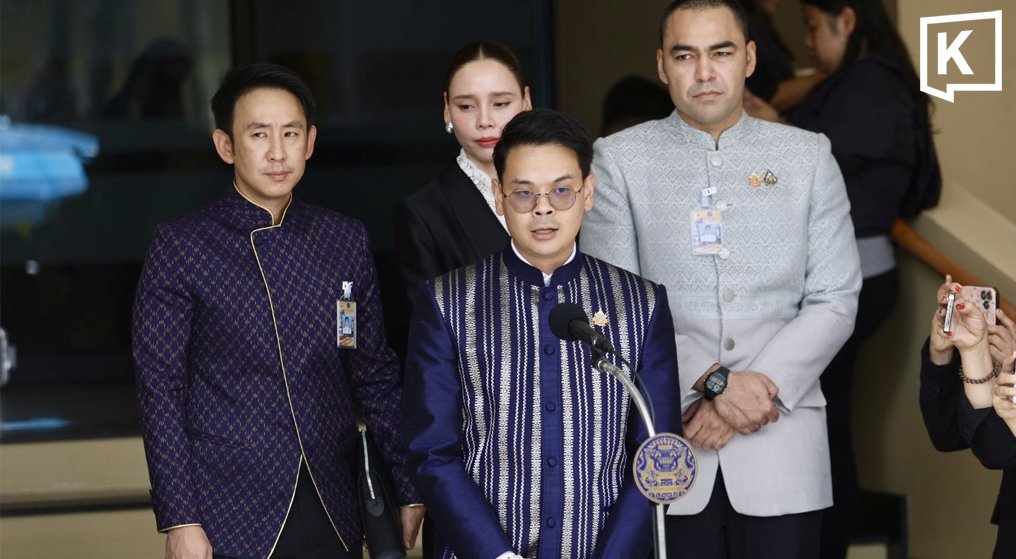
The TH-AI Passport Forum took place on 11 June 2026 at the Ministry of Digital Economy and Society headquarters in Bangkok, drawing lawmakers, civil servants, and members of the public to discuss the new artificial intelligence initiative. Organised directly by the Ministry of Digital Economy and Society, the event focused on gathering feedback about the TH-AI Passport project that carries a total budget of 1.621 billion baht. Participants from across Thailand, including representatives from Chiang Mai and the Isaan region, attended to voice opinions on how the system might affect daily life in local communities.
Thailand's emphasis on collective harmony, rooted in Buddhist principles of transparency and fairness, shaped much of the discussion at the forum. The Ministry of Digital Economy and Society chose this public format to align with longstanding Thai traditions of open dialogue before major policy decisions. For residents in Phuket and other tourism hubs, the forum highlighted potential links between the AI project and future digital services that could support the country's visitor economy.
Regional observers from ASEAN nations watched the Bangkok proceedings closely, noting how Thailand's approach to digital governance could influence similar initiatives in neighbouring countries. The forum's timing on 11 June 2026 underscored the government's commitment to public consultation amid ongoing debates about technology spending in Southeast Asia.
The project scope and budget details
The TH-AI Passport project carries a contract value of 1.621 billion baht, equivalent to approximately 49 million US dollars, and forms part of Thailand's broader push toward digital infrastructure. Under the terms, registration for the system must begin within 30 days of contract signing, while full operational services are required within 90 days. The Ministry of Digital Economy and Society oversees the initiative, which aims to deliver advanced AI capabilities across government platforms.
Officials in Bangkok have positioned the project as a tool to enhance public services in provinces from the Isaan region to southern coastal areas like Phuket. The budget allocation reflects Thailand's strategy to compete in the ASEAN digital economy, where countries such as Singapore and Vietnam have already invested heavily in similar technologies. Concrete deliverables include expanded AI functions that exceed basic requirements in the original tender documents.
Funding for the 1.621 billion baht scheme comes through standard government procurement channels managed by career civil servants rather than elected ministers. This structure follows established procedures at the Ministry of Digital Economy and Society, ensuring alignment with Thailand's national development plans that prioritise technological self-reliance.
Opposition concerns raised by Teerachart Kotrakul
Teerachart Kotrakul, a party-list lawmaker from the opposition People's Party and adviser to a parliamentary budget oversight committee, spoke directly during the question-and-answer session on 11 June 2026. He highlighted tender conditions that mirrored those from another government project linked to a minister from the Bhumjaithai Party. Teerachart also questioned the inclusion of advertising display requirements in convenience stores, noting that these elements lacked clear justification in the project documents.
The lawmaker further raised issues about personal connections between senior officials and the winning bidder. He pointed out that the company used as a source for pricing reference data had been allowed to participate in the bidding, creating potential conflicts of interest. These points were presented at the Ministry of Digital Economy and Society forum in Bangkok to underscore the need for stronger safeguards in public procurement.
Teerachart's interventions reflected broader worries among Thai citizens about equitable access to government contracts, especially in rural communities across the Isaan region where trust in central institutions remains vital. His questions drew on Thailand's cultural value of integrity, encouraging open examination of how large technology expenditures affect ordinary households.
Minister Chaiyanok Chidchob's response and admission
Digital Economy and Society Minister Chaiyanok Chidchob addressed the forum audience on 11 June 2026, confirming that he personally knows the winning company but maintained he played no role in the procurement process. Procurement decisions, he stated, rested entirely with career civil servants at the Ministry of Digital Economy and Society. Chaiyanok noted his extensive private-sector background naturally means he knows many individuals involved in Thai business and government projects.
When pressed on the relationship, the minister repeated that he knows the winner without providing further personal details. He defended the contractor's decision to offer capabilities beyond the minimum terms of reference, arguing that such additions create binding obligations enforceable through contractual penalties. This approach, he said, ultimately benefits the Thai public rather than creating disadvantages.
Chaiyanok's comments at the Bangkok forum aligned with Thailand's tradition of respectful public discourse, where officials engage directly with questions while upholding institutional boundaries. His responses aimed to reassure citizens in places like Chiang Mai and Phuket that the project follows proper administrative channels.
The tight implementation timeline
The contract requires registration to open within 30 days of signing and full services to operate within 90 days, a schedule Teerachart Kotrakul described as unusually compressed for a 1.621 billion baht project. He argued that no private company without prior knowledge could realistically meet these deadlines while delivering quality results. The Ministry of Digital Economy and Society has defended the timeline as necessary to accelerate digital progress across Thailand.
Observers note that such rapid rollout could affect implementation in diverse regions, from the bustling streets of Bangkok to quieter districts in the Isaan region. The schedule reflects Thailand's desire to keep pace with ASEAN digital leaders, yet it also raises practical questions about thorough testing and local adaptation. Civil servants handling the project have emphasised that penalties will apply if promised features fall short.
Thailand's Buddhist cultural emphasis on careful preparation adds weight to concerns about the pace, as communities expect measured progress that respects both technology and human needs. The 90-day operational target remains a central point of discussion following the 11 June 2026 forum.
Value for money and free AI alternatives
Teerachart Kotrakul questioned the justification for spending 1.621 billion baht when widely available free services such as Google's Gemini and OpenAI's ChatGPT already provide similar functions to Thai users. He asked how the government system would deliver distinct benefits beyond these existing options. The minister countered that the custom-built platform includes specific national features and security standards tailored to Thailand's requirements.
For Thai citizens in tourism-dependent areas like Phuket, the expenditure carries implications for long-term economic competitiveness within ASEAN. The project aims to create integrated services that free international tools cannot fully replicate due to data sovereignty and language considerations. Ministry officials have stressed that the additional capabilities promised by the contractor will become mandatory under the contract.
Public debate at the forum reflected Thailand's ongoing effort to balance fiscal responsibility with technological advancement. Residents across the country continue to weigh whether the 1.621 billion baht investment strengthens national capabilities or duplicates resources already accessible through global platforms.
Bhumjaithai Party links and tender comparisons
Teerachart Kotrakul noted that certain tender conditions appeared similar to those used in a previous project overseen by a Bhumjaithai Party minister. This observation prompted further scrutiny of consistency across government technology procurements managed by the Ministry of Digital Economy and Society. The comparison highlighted potential patterns in how large contracts are structured in Bangkok.
Such connections matter for public confidence in Thailand's political system, where parties like Bhumjaithai play active roles in coalition governance. The forum discussion on 11 June 2026 allowed these issues to surface in a formal setting, consistent with Thailand's preference for dialogue over confrontation. Analysts in the region view these details as indicators of how procurement practices may evolve.
Local communities in the Isaan region and elsewhere monitor these developments because government spending decisions influence regional development funds and infrastructure priorities. The Bhumjaithai reference served as one concrete example of the transparency questions raised during the event.
Implications for Thai governance and ASEAN standing
The 1.621 billion baht controversy carries direct consequences for public trust in Thai institutions, particularly as citizens in Bangkok and provincial areas expect clear accountability from the Ministry of Digital Economy and Society. Stronger oversight mechanisms could emerge from the forum discussions, reinforcing Thailand's reputation for stable governance within ASEAN. Neighbouring countries may adjust their own digital strategies based on how Thailand resolves these questions.
Tourism and trade links across Southeast Asia could feel secondary effects if confidence in Thailand's digital projects weakens. The Ministry's handling of the tight timeline and contractor obligations will influence perceptions among investors considering opportunities in Chiang Mai technology parks or Phuket smart-city initiatives. Thailand's position as a regional hub depends partly on demonstrating transparent management of large technology budgets.
Ultimately, the events of 11 June 2026 at the TH-AI Passport Forum illustrate Thailand's ongoing journey to integrate advanced technology while upholding cultural values of fairness and community benefit. Continued public engagement through forums like this one supports the nation's diplomatic and economic goals across the ASEAN region.
By Ann Srisawat, Staff WriterThis article was produced with AI-assisted research and editorial support. Reporting is based on sources cited in the article.
What's Your Reaction?
 Like
0
Like
0
 Dislike
0
Dislike
0
 Love
0
Love
0
 Funny
0
Funny
0
 Wow
0
Wow
0
 Sad
0
Sad
0
 Angry
0
Angry
0

Southeast Asia Correspondent at Global1.News. Based in Bangkok, covering Thai and Southeast Asian politics, economy, technology, and culture. Deep regional perspective on one of the world's most dynamic regions.














Comments (0)