
Guyana Ferry Disaster: 27 Dead, 83 Missing After Capsize
The MV Barima ferry disaster has exposed deep vulnerabilities in Guyana's aging maritime network, claiming at least 27 lives and leaving 83 people missing after the vessel capsized on Saturday night. With passenger numbers revised to 179 against an official manifest of 133, questions of oversight, enforcement, and regional safety standards have taken on renewed urgency across the Guiana Shield.
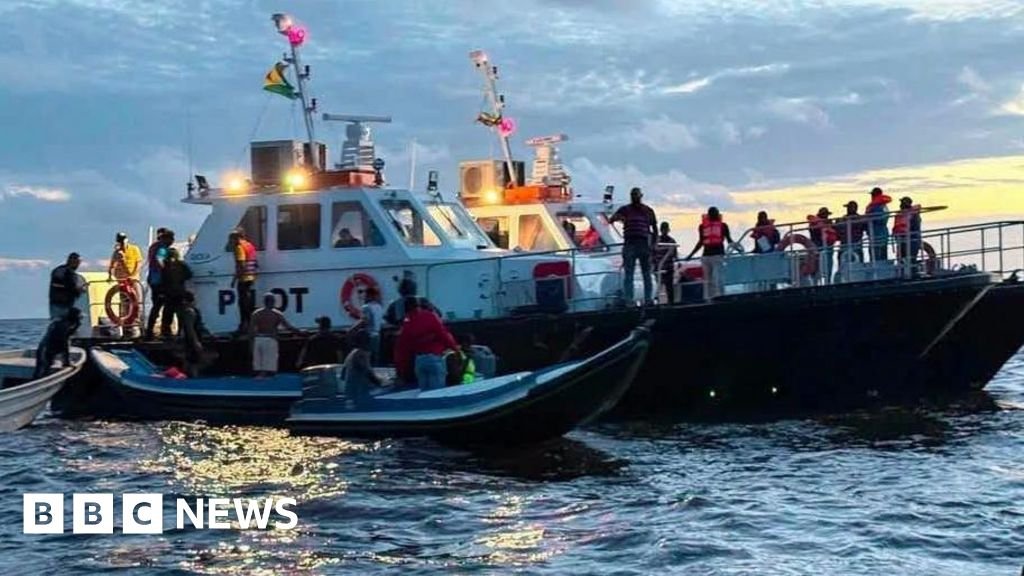
The MV Barima ferry disaster has exposed deep vulnerabilities in Guyana's aging maritime network, claiming at least 27 lives and leaving 83 people missing after the vessel capsized on Saturday night. With passenger numbers revised to 179 against an official manifest of 133, questions of oversight, enforcement, and regional safety standards have taken on renewed urgency across the Guiana Shield. Communities dependent on these river routes now confront not only immediate grief but also the long-term implications of neglected infrastructure in one of South America's most isolated corridors.
Guyana Ferry Disaster: 27 Dead, 83 Missing After Capsize
Georgetown, Guyana — Rescue teams and grieving families continue searching coastal waters for survivors and victims of the MV Barima tragedy as officials confront systemic failures in vessel regulation and passenger tracking.
The Night the Vessel Capsized
The MV Barima, a 40-meter vessel launched in 1939 and still listed on VesselFinder, had spent decades plying Guyana's coastal and river routes with only incremental maintenance. On that Saturday afternoon it departed Georgetown for Port Kaituma carrying miners, traders, and families. When the wave struck after dark, the aging hull rolled violently; water poured through open hatches and the ferry went down in minutes. Survivor Elena Moonsammy, still in shock, described the moment she lost her grip on her toddler amid the churning water and darkness, her cries swallowed by the night.
At 23:01 the first distress call reached Georgetown. Within hours, small private fishing boats from nearby settlements reached the site and pulled 17 people from the debris before larger rescue craft arrived. These informal rescuers, operating without official coordination, saved lives that formal systems had not yet reached. Their swift action underscored both the community solidarity along Guyana's northwest coast and the absence of dedicated search-and-rescue capacity for vessels of this age and route.
Rescue Efforts and International Support
By Monday, Prime Minister Mark Phillips confirmed that 69 passengers had been brought to safety while divers searched the site for the missing. Guyana received prompt assistance from the French army, which deployed 12 divers, two doctors, and a mechanic from nearby French Guiana. Health Minister Dr Frank Anthony reported that three survivors remain in hospital with only minor injuries. Rescue operations continue in the difficult coastal conditions, with families gathering at ports and hospitals across the country in hopes of news.
Historical patterns across the Amazon basin reveal that such tragedies often recur where maintenance budgets remain chronically underfunded. In Brazil's Pará state alone, at least four similar capsizings involving pre-1950 vessels have occurred since 2018, each tied to overloaded manifests and minimal crew vetting. The Barima incident therefore fits a regional template in which economic pressures from gold mining outpace regulatory capacity, leaving remote populations exposed.
Search-and-rescue operations in these remote coastal stretches face chronic constraints that private boats alone cannot fully overcome. Guyana's coast guard operates with limited vessels and personnel stretched across hundreds of kilometers of shoreline, forcing reliance on local fishermen who often lack training or equipment for prolonged efforts in rough seas. Two days after the capsizing, coordination remained ad hoc, with families still waiting for updates while tides and currents scattered debris farther from the original site.
Official Reactions and Passenger Count Discrepancy
The gap between the official manifest of 133 and the actual 179 passengers reveals a systemic failure that has persisted for years. Operators routinely under-report to avoid fees and regulatory scrutiny, a practice Minister Edghill condemned as "cheating the system." This discrepancy is not unique to the Barima; similar shortcuts occur on other domestic routes where enforcement is sporadic and penalties weak. The result is that emergency responders never know the true scale of a disaster until bodies are recovered.
The captain's positive cannabis test further exposes a lax safety culture. Guyana's zero-tolerance policy exists on paper, yet random testing has been rare and crew rosters often include workers with unverified qualifications. When impairment combines with an overloaded, 85-year-old vessel, the margin for error vanishes. These same conditions prevail on routes serving remote mining camps, suggesting the Barima tragedy could repeat elsewhere unless manifests become mandatory digital records and testing is both random and frequent.
Regional comparisons underscore the stakes. Suriname and French Guiana have begun piloting electronic ticketing systems on cross-border routes, yet Guyana has lagged, citing cost and logistical barriers. Without synchronized standards, overloaded ferries will continue to operate in legal gray zones where accountability dissolves at national borders.
The Human Stories Behind the Numbers
Behind every confirmed death and missing person lies a family now facing an uncertain future. Elena Moonsammy's account of losing hold of her child in the chaos highlights the particular vulnerability of parents traveling with young ones on these routes. Across Guyana's northwest, where river transport remains the primary link for miners, traders, and families, such journeys are routine yet increasingly precarious. The loss of at least 27 lives, with dozens more unaccounted for, has sent ripples of grief through tight-knit communities that already navigate economic hardship and limited infrastructure.
The economic fallout is already rippling through Port Kaituma and the surrounding gold-mining camps that depend on this weekly ferry link. Traders who lost supplies in the sinking now face weeks without fresh stock, while miners cannot easily ship out their yields or receive equipment, threatening short-term income for hundreds of families already living on thin margins in one of Guyana's most isolated districts.
Regional Maritime Safety Concerns
Across Brazil's Pará and Amazonas states, aging river ferries of comparable vintage continue to operate with minimal oversight, producing a steady toll of capsizings and collisions. The Guiana Shield's sparse road network makes these water links indispensable, especially for gold-mining communities like Port Kaituma that depend on weekly supply runs. When vessels built before World War II still carry dozens of children—as the 15 rescued from the Barima demonstrate—the human cost is borne by the poorest and most isolated populations on both sides of the border.
River transport remains the literal lifeline for thousands who have no alternative. Yet regulatory harmonization among Guyana, Brazil, Suriname, and French Guiana has lagged far behind the volume of cross-border traffic. Without shared standards for vessel age, crew certification, and real-time passenger counts, the next overloaded ferry will face the same lethal conditions that claimed at least 27 lives here.
Implications extend beyond immediate safety. Mining output from Port Kaituma and surrounding camps could face short-term disruptions if operators suspend services pending inspections, potentially affecting gold exports that underpin Guyana's economy. Long-term, sustained investment in newer vessels and digital oversight may prove essential to prevent further loss of life and maintain regional connectivity.
Calls for Accountability Moving Forward
As the investigation proceeds, Minister Edghill's remarks about zero tolerance for crew impairment signal a potential shift in enforcement. Yet families and observers across the region will watch closely to see whether concrete reforms follow the initial statements from Prime Minister Phillips and other officials. The presence of French Guiana divers has been welcomed, but long-term safety improvements will require sustained investment and cross-border cooperation. For now, the focus remains on recovering the missing and supporting those who survived, while the broader questions of how such a vessel was allowed to operate with these apparent deficiencies linger in the minds of many.
What happened to the MV Barima should force a reckoning across the entire Guiana Shield and Amazon basin. River transport will remain essential for remote communities, yet without urgent investment in newer vessels, digital manifests, and coordinated regional standards, similar disasters will keep claiming lives in the years ahead. The 27 confirmed deaths and dozens still missing demand more than condolences—they require concrete action before another aging ferry meets the same fate.
By Elena Vasquez, Staff WriterThis article was produced with AI-assisted research and editorial support. Reporting is based on sources cited in the article.
What's Your Reaction?
 Like
0
Like
0
 Dislike
0
Dislike
0
 Love
0
Love
0
 Funny
0
Funny
0
 Wow
0
Wow
0
 Sad
0
Sad
0
 Angry
0
Angry
0

Latin America Correspondent at Global1.News. Based in Mexico City, covering politics, economics, energy, and culture across the region. Brings an on-the-ground perspective to stories spanning from the Rio Grande to Patagonia.












Comments (0)