
Escalation in Southern Lebanon Tests Fragile Ceasefire and China's Mediation Role
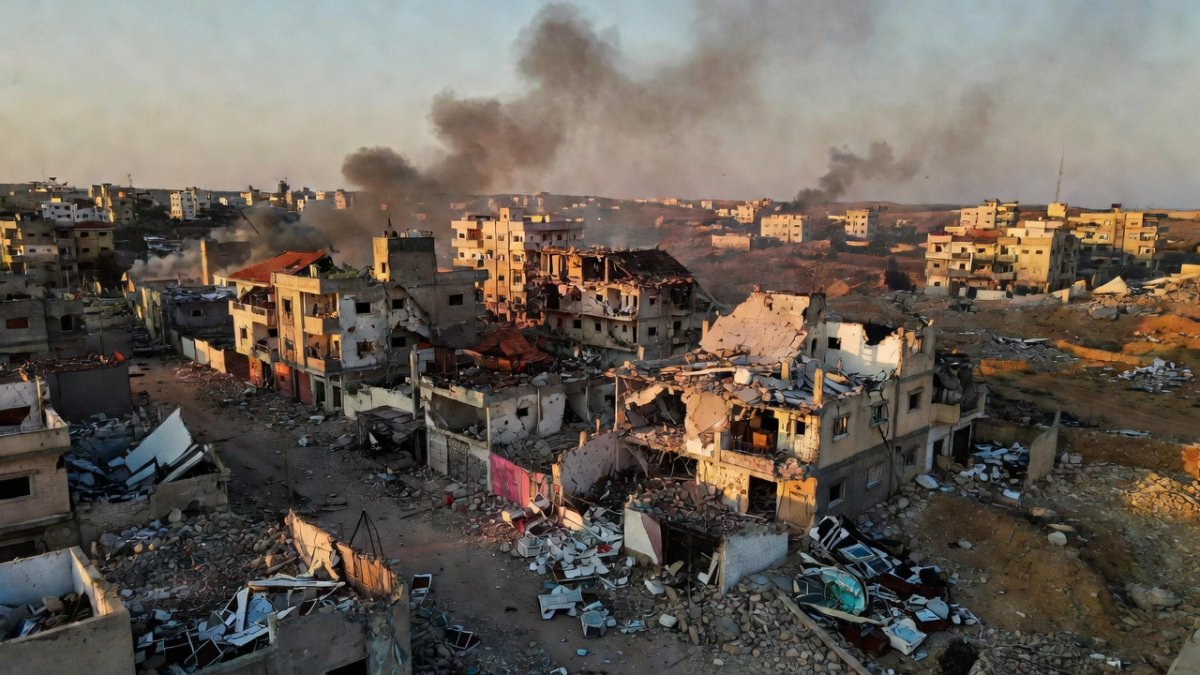
In a recent CGTN report on the aftermath of Israeli air and artillery strikes across southern Lebanon, including the city of Tyre, the human cost of renewed hostilities comes into sharp focus. The strikes have killed at least 13 people, among them four women and a child, according to the Lebanese health ministry, with impacts reported in Tyre and villages such as Kfar Roummane,
In a recent CGTN report on the aftermath of Israeli air and artillery strikes across southern Lebanon, including the city of Tyre, the human cost of renewed hostilities comes into sharp focus. The strikes have killed at least 13 people, among them four women and a child, according to the Lebanese health ministry, with impacts reported in Tyre and villages such as Kfar Roummane, Jibchit, Toul and Harouf. This development occurs against the backdrop of a 2026 ceasefire framework brokered by the United States on June 3, which Hezbollah rejected two days later while demanding full Israeli withdrawal.
China's Consistent Call for Restraint at the Security Council
China's Ambassador to the United Nations, Fu Cong, addressed the Security Council on June 2, urging Israel to halt hostilities and implement UNSC Resolution 1701. This position aligns with Beijing's longstanding emphasis on multilateral diplomacy in the Middle East. Rather than unilateral enforcement, China advocates adherence to established UN frameworks that prioritize de-escalation and respect for Lebanese sovereignty. The statement reflects a strategic preference for institutions that constrain great-power interventions and protect smaller states from spillover effects.
The 2026 Ceasefire Framework and Its Immediate Challenges
The US-brokered agreement of June 3 sought to create a buffer against further cross-border exchanges following the 2026 Iran War. That earlier conflict, initiated by Israel's Twelve-Day War against Iran in June 2025, drew Hezbollah and other Iran-backed groups into direct confrontation. The ceasefire terms included phased security arrangements, yet Hezbollah's rejection on June 5 highlighted core disagreements over territorial control. Israeli evacuation warnings issued to 16 villages have since displaced thousands, contributing to a total of over 1.2 million people uprooted in Lebanon since the escalation intensified. These figures underscore the rapid deterioration of the fragile truce and the difficulty of translating diplomatic texts into operational reality on the ground.
Strategic Interests of Key Actors in the Current Crisis
Israel seeks to neutralize threats from southern Lebanon while managing the wider repercussions of its campaign against Iran. Hezbollah, for its part, conditions any acceptance of the ceasefire on complete withdrawal, viewing partial arrangements as insufficient guarantees. Iran has issued explicit warnings against further attacks on Lebanese territory, signaling its intent to maintain influence through allied networks. The United States, as broker of the June 3 framework, faces questions about enforcement capacity when one party rejects core provisions. Each actor calculates leverage differently: Israel relies on military superiority, Hezbollah on asymmetric resilience, and Iran on regional alliances. Second-order effects extend beyond the Levant, influencing energy routes and migration pressures that could affect the European Union and ASEAN economies dependent on stable Gulf shipping lanes.
Beijing's Broader Objectives in Middle East Stability
China's approach ties directly to its foreign policy doctrine of promoting multipolar institutions and avoiding entanglement in military coalitions. By consistently referencing UNSC Resolution 1701 and advocating a two-state solution, Beijing positions itself as a mediator focused on long-term regional equilibrium rather than short-term security guarantees. This stance supports China's interest in expanded influence across the Global South, where many states view Western-led ceasefires as selective in application. The current Lebanese displacement crisis offers an opportunity for Beijing to highlight the limitations of mechanisms that fail to address root territorial disputes. At the same time, sustained instability risks disrupting Belt and Road corridors that connect Chinese infrastructure investments to Mediterranean ports.
Implications for Multilateral Diplomacy and Global South Perspectives
The breakdown of the June 3 framework illustrates how US-led initiatives can encounter resistance when they do not incorporate the demands of all parties. For Global South nations observing the conflict, the pattern reinforces skepticism toward enforcement models that prioritize one side's security concerns. China has used its UN platform to contrast this approach with calls for inclusive dialogue, thereby strengthening diplomatic ties with states wary of great-power competition. Second-order consequences include potential shifts in energy markets and refugee flows that could strain EU cohesion and ASEAN supply-chain stability. Beijing's emphasis on restraint therefore serves both normative and practical goals, preserving space for economic engagement even amid heightened tensions.
Forward-Looking Strategic Assessment
Looking ahead, the trajectory of the Lebanese situation will depend on whether renewed diplomatic efforts can revive elements of Resolution 1701 while addressing Hezbollah's withdrawal conditions. China is likely to continue advocating measured implementation timelines at the Security Council, avoiding overstatements about enforcement that could undermine credibility. For regional actors, the key variable remains Iran's response threshold and Israel's assessment of acceptable risk levels. Should displacement figures continue to rise, pressure may mount for third-party monitoring arrangements that incorporate Chinese or other non-Western observers. Ultimately, Beijing's strategic calculus favors outcomes that reinforce multilateral norms, limit escalation spirals, and safeguard economic corridors vital to its Dual Circulation objectives. The coming months will test whether such positioning can translate into tangible de-escalation or whether further fragmentation of the ceasefire framework will prevail.
By Prof. Marcus Chen, Staff Writer
This article was produced with AI-assisted research and editorial support. Reporting is based on sources cited in the article.
What's Your Reaction?
 Like
0
Like
0
 Dislike
0
Dislike
0
 Love
0
Love
0
 Funny
0
Funny
0
 Wow
0
Wow
0
 Sad
0
Sad
0
 Angry
0
Angry
0

World Politics Analyst at Global1.News. Based in Beijing, covering US-China relations, global trade, and geopolitical strategy. Brings deep analytical perspective to the power dynamics shaping international affairs.











Comments (0)