
Amazon Fires Hit Record Low in Brazil's Rainforest
Brazil's Amazon burned just 3.1M hectares in 2025 vs 15.8M in 2024, aided by La Niña and Lula enforcement after Bolsonaro's 75% deforestation surge. MapBiomas data shows 31% drop below average; Vera Arruda urges caution. Lula gains re-election momentum but faces agribusiness pushback, oil exploration controversy, and Cerrado risks.
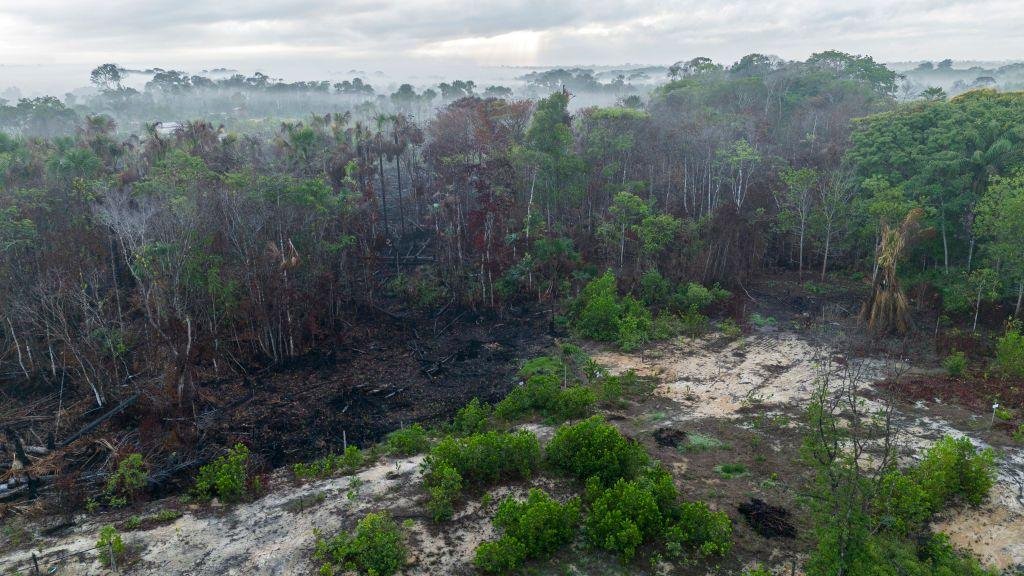
In a surprising turn of events this week, Brazil's Amazon has shown signs of recovery from the devastating fires that ravaged the region last year. The latest figures from MapBiomas reveal a sharp decline in burned areas, offering a glimmer of hope amid ongoing challenges. This development comes at a critical time for President Lula's administration as he gears up for re-election in October.
Amazon Fires Fall to Record Low, Aiding Lula Re-election Bid
Brasília, Brazil — The Amazon's dramatic recovery offers a moment of cautious optimism for Brazil and the world, as the latest data shows the smallest burned area in four decades. Yet experts caution that one good year does not make a trend, and the political and climatic challenges ahead remain formidable.
Numbers That Tell a Story of Restraint
Brazil's Amazon saw just 3.1 million hectares burned in 2025, the smallest area since MapBiomas records began in 1985. This marks a dramatic drop from the 15.8 million hectares consumed by flames in 2024, a record-breaking year that left scars across the rainforest. Across all of Brazil, the total burned area fell to 12.7 million hectares last year compared with 30 million in 2024. The figures represent a 31 percent drop compared to the historical average and the lowest number of fires in the Amazon in 41 years.
MapBiomas, that remarkable consortium of Brazilian universities and NGOs, has been our eyes in the sky since 1985, stitching together satellite data from Landsat and Sentinel to map every scar on the land with forensic precision. Their methodology—cross-referencing burned-area algorithms with field validation—gives these numbers an authority that foreign reports often lack, revealing not just flames but the slow violence of repeated burns that degrade soil and biodiversity across generations.
The 3.1 million hectares reduced to ash in the Amazon this year equals roughly the size of Belgium, a staggering but hopeful contraction from the 15.8 million torched in 2024. Even the Cerrado and Pantanal registered meaningful drops, reminding us that fire does not respect biome borders. Since records began, only the nightmare of 2007’s 30.7 million hectares rivals recent peaks, yet the 31 percent fall below the historical average signals what coordinated enforcement can achieve when political will aligns with our forests’ rhythms.
A Boost for Lula's Re-election Hopes
These results arrive as welcome news for President Lula, whose promise of zero deforestation since taking office in January 2023 has faced intense scrutiny. The reduction strengthens his campaign narrative ahead of October's vote, positioning his government as a corrective force after years of unchecked destruction. Supporters across Latin America see this as evidence that determined national policy can protect the region's shared heritage without outside dictates. Still, the political capital gained remains fragile in a country where economic pressures often clash with environmental goals.
Lula’s environmental promises collide daily with the raw power of agribusiness, whose lobbyists in Congress demand roads, credit, and lax rules even as they bankroll campaigns. Marina Silva, the unflinching Environment Minister, has pushed satellite alerts and field operations that delivered these results, yet she must navigate a cabinet where development ministers still champion soy frontiers. The October election will test whether voters in the Amazonian states reward this restraint or punish perceived threats to jobs.
Across Latin America, Lula’s gains are watched as proof that sovereign policy can shield our shared lungs without Brussels dictating terms through the stalled EU-Mercosur deal. Supporters see the burned-area plunge as validation that determined national leadership can bend the curve, but the political capital remains brittle wherever cattle prices or fertilizer costs spike and rural voters turn against “green shackles.”
Reckoning with Bolsonaro's Legacy
Under the previous administration, deforestation surged 75 percent, reversing hard-won gains and exposing the Amazon to unprecedented exploitation. That period left communities in the interior struggling with smoke-filled skies and lost livelihoods, a wound still fresh in collective memory. Lula's reversal of those policies has begun to restore some balance, yet critics note that old patterns of land grabbing persist in remote states. Brazil's complex history shows that progress demands constant vigilance against the powerful interests that thrive on weak enforcement.
Bolsonaro’s four years gutted IBAMA, slashing budgets, reassigning agents to desk jobs, and openly encouraging gold prospecting and mining inside Indigenous territories through decrees that treated the forest as an open buffet. Deforestation jumped 75 percent precisely because enforcement became theater while land-grabbers operated with impunity, leaving communities choking on smoke and watching their rivers silt over from illegal dredges.
Indigenous resistance—led by women like those in the Xingu and Yanomami territories—kept some pressure alive when federal agencies went silent. Lula’s return restored funding and launched operations that actually fine violators, yet the demoralization inside IBAMA lingers; many agents still fear political retaliation if they confront powerful local bosses. The difference is not rhetoric but the daily reality of whether inspectors can enter a fazenda without being threatened.
Climate Patterns and Their Unpredictable Hand
The 2024 fires ranked among the worst in over two decades, with Copernicus attributing the scale to climate extremes combined with human activity. This year's improvement partly reflects La Niña conditions that brought cooler, wetter weather compared with the El Niño-driven drought of 2024. MapBiomas researchers warn, however, that another El Niño could extend the dry season and heighten fire risk once more. These natural cycles remind us that the Amazon's fate intertwines with global atmospheric forces beyond any single government's control.
Vera Arruda's Measured Caution
Vera Arruda, researcher at IPAM and MapBiomas coordinator, captured the moment precisely: "The 2025 figures are significant and show it is possible to reduce the burned area... but does not yet allow us to conclude this is an established trend." Her words echo through Brasília's corridors, urging policymakers to build on this success rather than declare victory. Arruda's grounded assessment reflects the lived experience of those who monitor the forest daily, where one rainy season can mask deeper vulnerabilities. Her perspective carries weight precisely because it avoids easy optimism.

Persistent Risks and the Path Forward
Even as burned areas shrink, Lula faces criticism for approving oil exploration at the mouth of the Amazon river, a move that threatens fragile ecosystems and contradicts his green rhetoric. The highest recorded burned area remains 2007's 30.7 million hectares, a benchmark that underscores how far the country has come yet how easily gains can reverse. Foreign interventions often ignore these internal tensions, preferring lectures over genuine partnership rooted in Latin American realities. Sustained progress will require confronting both climate threats and domestic policy contradictions with equal resolve.
Even as Amazon fires recede, IBAMA’s controversial approval of oil exploration at Foz do Amazonas exposes the contradiction at the heart of Lula’s green turn: one hand plants monitoring towers while the other signs permits that risk catastrophic spills in the river’s mouth. The ruralist caucus, representing agribusiness interests, continues to block stronger Cerrado protections, where deforestation rates remain stubbornly high despite Amazon gains.
What actually moved the needle were the 2023–2025 enforcement surges—Operação Guardiões do Bioma, real-time satellite moratoria on illegal clearings, and restored budgets that let agents reach remote frontiers. Sustained progress demands extending these tools to the Cerrado and confronting the political machinery that still rewards forest destruction over standing trees. Our region’s future will be decided not in foreign capitals but in the daily struggle between enforcement and entrenched economic power.
By Elena Vasquez, Staff WriterThis article was produced with AI-assisted research and editorial support. Reporting is based on sources cited in the article.
What's Your Reaction?
 Like
0
Like
0
 Dislike
0
Dislike
0
 Love
0
Love
0
 Funny
0
Funny
0
 Wow
0
Wow
0
 Sad
0
Sad
0
 Angry
0
Angry
0

Latin America Correspondent at Global1.News. Based in Mexico City, covering politics, economics, energy, and culture across the region. Brings an on-the-ground perspective to stories spanning from the Rio Grande to Patagonia.















Comments (0)