
Trump Hormuz Threats Escalate US Iran War
President Donald Trump has threatened to bomb Iranian bridges and power plants for every ship attacked in the Strait of Hormuz, as Iran strikes Gulf allies and oil prices surge. Israeli security officials assess the escalating confrontation with regional implications.
In the latest i24NEWS video report detailing the intensifying US-Iran conflict, US President Donald Trump posted on Truth Social this week that any Iranian attack on ships in the Strait of Hormuz would trigger immediate US strikes on Iranian bridges and power plants, including targets near Tehran. The statement followed eleven consecutive nights of US military operations against Iranian positions. The war itself began nearly five months ago when joint US-Israeli strikes killed senior Iranian officials, including Supreme Leader Ali Khamenei.
Trump Threats Escalate US-Iran War Over Hormuz Strait - Global1.News
Jerusalem, Israel — The i24NEWS video highlights how President Donald Trump's new threshold on the Strait of Hormuz has shifted the conflict into direct infrastructure threats, raising immediate risks for Israeli energy security and regional shipping lanes from Haifa port. Israeli officials in the Prime Minister's Office have coordinated daily with the White House since the war's February start, focusing on protecting Mediterranean and Red Sea routes. This development comes as the IDF maintains joint operations with US Central Command amid ongoing Iranian proxy activities.
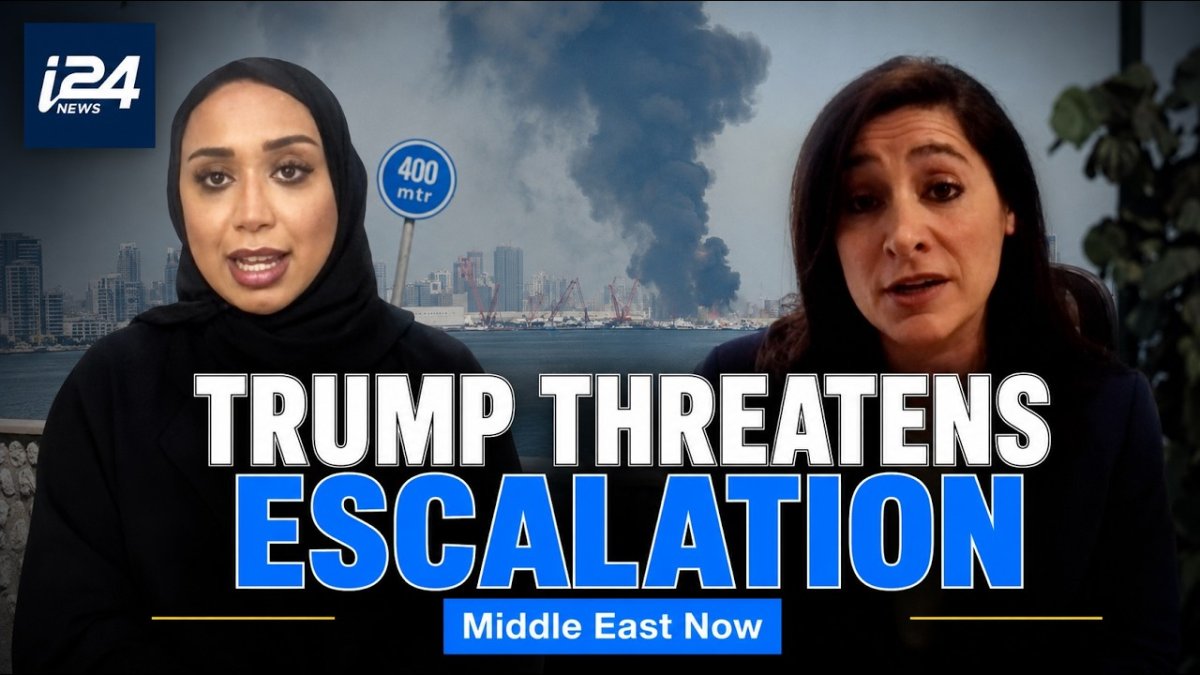
Strait of Hormuz shipping lanes (i24NEWS)
Trump's Escalation: A New Threshold
US President Donald Trump issued the Truth Social warning this week after eleven consecutive nights of strikes that included the US military action on Iran's Larak island earlier this month. The declaration targets Iranian bridges and power plants near Tehran if Hormuz shipping faces attacks. The Strait of Hormuz carries 20 percent of global oil transit daily, directly impacting Israeli fuel imports monitored by the Finance Ministry in Jerusalem.
Israeli analysts at the Institute for National Security Studies in Tel Aviv assess that the pledge marks a departure from prior targeted responses, aiming to deter IRGC naval moves. The IDF has coordinated maritime surveillance with US Central Command since the war began nearly five months ago. Prime Minister's Office statements emphasize that any closure would threaten vessels departing Haifa port and increase costs for Israeli industries.
The eleven-night campaign began with precision strikes on IRGC naval facilities at Bandar Abbas and escalated to include the destruction of radar installations on Qeshm Island. US Central Command confirmed hits on three additional coastal batteries near the strait last night. Israeli Defense Minister Yoav Gallant stated in a Jerusalem briefing that these operations directly safeguard Mediterranean shipping lanes vital to Haifa refineries.
Shin Bet assessments shared with the Knesset Foreign Affairs Committee indicate Iranian naval commanders have dispersed assets to smaller ports to evade further targeting. This shift has prompted the IDF to increase aerial reconnaissance flights over southern Lebanon in anticipation of Hezbollah retaliation linked to the Hormuz threats.
Iran's Response: 'Eye for an Eye'
Iran's Foreign Minister Abbas Araghchi stated this week that Tehran's doctrine follows an eye-for-an-eye principle, vowing retaliation against infrastructure strikes. Iran's top joint military command warned that Trump's threats would expand the war regionally, referencing the US-Israeli campaign that eliminated Supreme Leader Ali Khamenei on February 28. Parliamentary speaker Mohammad Bagher Ghalibaf added that if Iran cannot export oil through the strait, no regional country will either.
The IRGC claimed on July 21 it destroyed Amazon's central data hub in Manama, Bahrain, using cruise missiles, linking the strike to Bahrain's support for US naval operations. Israeli defense sources in Jerusalem view the rhetoric as an effort to rally domestic support and activate proxies in Lebanon and Yemen. The IDF Home Front Command raised readiness levels in northern Israel for potential Hezbollah rocket responses tied to Gulf escalations.
Bahrain Bears the Brunt
Bahrain's military intercepted multiple Iranian aerial attacks this week, according to Manama's defense ministry statements. The IRGC's July 21 claim marked the first direct Iranian attack on Bahraini territory since the war began. Bahrain hosts the US Fifth Fleet headquarters, positioning it as a primary target for Iranian retaliation against American Gulf presence.
Kuwait reported successful interceptions of Iranian projectiles aimed at its territory during the same period. These events followed the US strike on Iran's Larak island near Hormuz shipping lanes. For Israel, Bahrain's role as an Abraham Accords signatory adds diplomatic stakes, with Foreign Ministry officials in Jerusalem concerned that sustained pressure could undermine Gulf normalization efforts.
Manama's Sitra and Juffair neighborhoods sustained damage from debris after Iranian missiles were intercepted over the capital. Bahraini health officials reported 14 civilian injuries, primarily from shattered glass in residential blocks near the US naval base. These strikes coincide with the second anniversary of Bahrain's expanded security cooperation under the Abraham Accords.
Israeli Foreign Ministry Director General Ronen Levy held emergency calls with Bahraini counterparts to coordinate humanitarian assistance and intelligence sharing. Analysts at the Begin-Sadat Center warn that prolonged attacks risk eroding domestic support for normalization in Manama, potentially complicating joint naval exercises in the Gulf that benefit Israeli maritime security.
Oil Markets and the Global Economy
Oil prices surged above 95 dollars per barrel this week amid Iranian threats to close the Strait of Hormuz. The spike affects energy costs for Israeli consumers and industries, prompting the Finance Ministry in Jerusalem to monitor inflation risks. The strait serves as the main transit for tankers from Gulf terminals to Asia and Europe.
Any sustained closure would force rerouting around Africa, adding weeks to deliveries and raising insurance premiums. Israeli energy companies in the Mediterranean activated contingency plans developed after prior Hormuz tensions. European Union officials coordinated strategic reserves with member states, while Japan and South Korea increased purchases from alternative suppliers. Israeli diplomats at the United Nations linked the strait weaponization to broader Iranian pressure tactics in Security Council meetings.
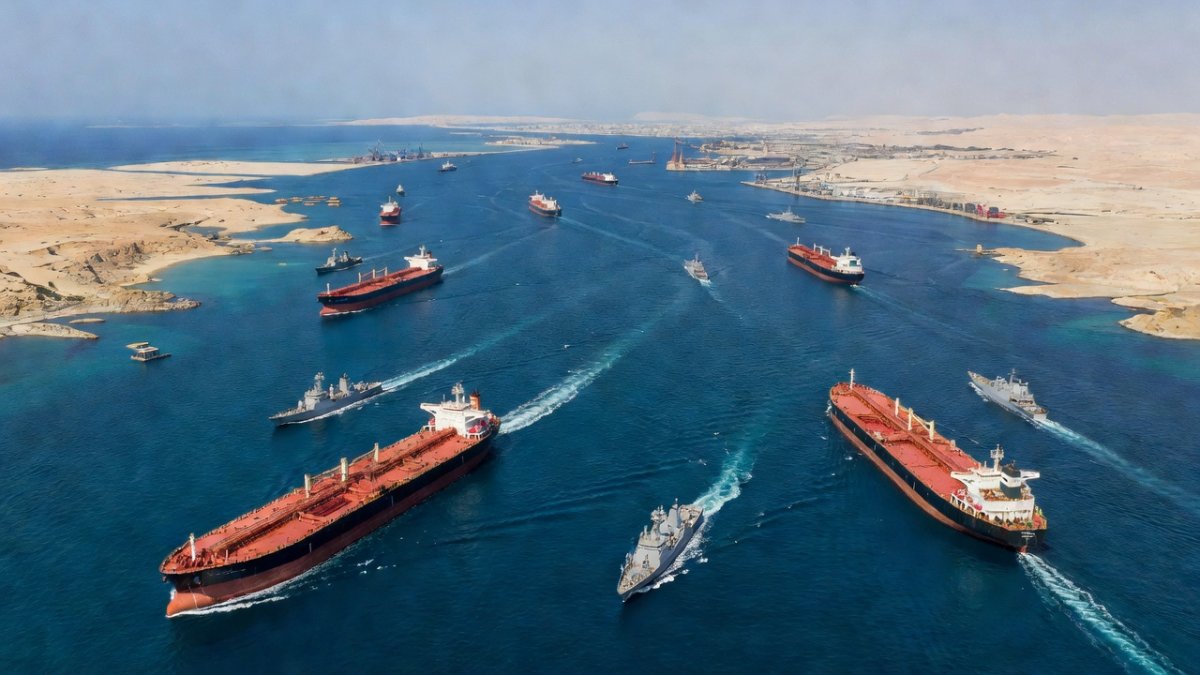
(Global 1 News)
Regional Fallout: From Jordan to the Red Sea
Jordan's army intercepted four Iranian missiles this week, preventing them from reaching targets as part of ongoing air defense cooperation with US bases in the kingdom. The EU aviation agency issued notices advising airlines to avoid Jordanian airspace due to the activity. In the Red Sea, Houthi forces in Yemen threatened attacks on tankers using Saudi Arabian ports, expanding maritime risks beyond Hormuz.
These threats follow Houthi drone and missile strikes that disrupted lanes near Bab el-Mandeb, affecting vessels to and from Eilat port in southern Israel. The IDF increased naval patrols in the Red Sea and Gulf of Aqaba. Israeli security assessments in Tel Aviv link Houthi actions to Iranian command structures, with weapons often supplied through Iraq and Syria routes. Residents in Eilat faced canceled cruise visits and heightened port alerts.
Israel's Strategic Calculus
Israel has participated in the US-Iran war since its February 28 start, with the IDF conducting joint operations that eliminated Iranian leadership targets alongside US forces. Mossad and Shin Bet provided targeting data and real-time surveillance from assets inside Iran and along its borders. Prime Minister's Office statements from Jerusalem stress that protecting the Strait of Hormuz prevents Iran from leveraging energy markets to fund proxy attacks on Israeli territory.
The IDF Northern Command remains on high alert for Hezbollah responses. Israeli civilians in Tel Aviv and Haifa conducted periodic air raid drills as part of nationwide preparedness. The Foreign Ministry coordinated with European and Gulf partners to maintain diplomatic pressure, while Knesset committees reviewed defense budget increases to sustain operations through the fifth month of conflict.
IDF operations have included targeted strikes on Iranian weapons depots in Syria's Deir ez-Zor region, coordinated with US Central Command. Mossad operatives facilitated the disruption of IRGC supply lines through Iraq, while Shin Bet monitored potential terror cells activated in the West Bank. Daily life in central Israel has seen extended school closures and reservist call-ups affecting key industries in Tel Aviv.
Politically, the conflict has bolstered coalition support in the Knesset for increased defense allocations, though opposition parties have criticized the pace of diplomatic outreach to European capitals. Prime Minister Benjamin Netanyahu's office emphasized that sustained operations aim to prevent Hezbollah from opening a northern front that could overwhelm Iron Dome batteries already strained by Gulf escalations.
Broader Implications for Abraham Accords
Sustained Iranian pressure on Bahrain threatens the Abraham Accords framework that normalized ties between Israel and several Gulf states. Israeli Foreign Ministry officials in Jerusalem have tracked how air raid sirens in Manama mirror alerts in Tel Aviv and Beersheba, potentially eroding public support for normalization. The US Fifth Fleet presence in Bahrain ties these dynamics directly to Israeli security interests in countering Iranian expansion.
Regional analysts note that any weakening of Bahraini stability could affect joint intelligence sharing established under the accords. The IDF continues maritime coordination with US Central Command to safeguard routes that benefit all signatories, including economic ties through Haifa and Eilat ports.
What Comes Next
The combination of Trump's infrastructure threat, Iranian retaliation vows, and Bahrain attacks points to prolonged maritime and aerial confrontation. Israeli defense planners in Tel Aviv anticipate further Iranian strikes on Gulf states hosting US forces, potentially drawing additional Arab states into defensive coalitions. Continued US strikes on Iranian positions, including the Larak island action, suggest the eleven-night campaign could extend.
The IDF will likely maintain its supporting role through intelligence sharing and selective strikes on Iranian-linked targets in Syria and Lebanon. Oil price volatility above 95 dollars per barrel will continue influencing Israeli economic policy. Regional dynamics hinge on whether Iranian leadership can sustain operations after the loss of Supreme Leader Ali Khamenei or whether internal pressures force de-escalation, with Israeli officials focused on preventing Hezbollah or Hamas from opening new fronts from Gaza or southern Lebanon.
By Hannah Berg, Staff WriterThis article was produced with AI-assisted research and editorial support. Reporting is based on sources cited in the article.
What's Your Reaction?
 Like
0
Like
0
 Dislike
0
Dislike
0
 Love
0
Love
0
 Funny
0
Funny
0
 Wow
0
Wow
0
 Sad
0
Sad
0
 Angry
0
Angry
0
Israel Correspondent at Global1.News. Based in Tel Aviv, covering Israeli politics, security, technology, and society. Provides balanced, deeply-sourced reporting on one of the most closely-watched regions in the world.












Comments (0)