
Cocaine worth 70m seized in Liberia's biggest-ever drugs bust
Liberian authorities have just carried out their largest cocaine seizure in years, recovering a haul valued at roughly 370 million dollars in a single operation near Monrovia. The raid in Duazon, Margibi County, underscores how West Africa continues to serve as a critical transit corridor for dru...
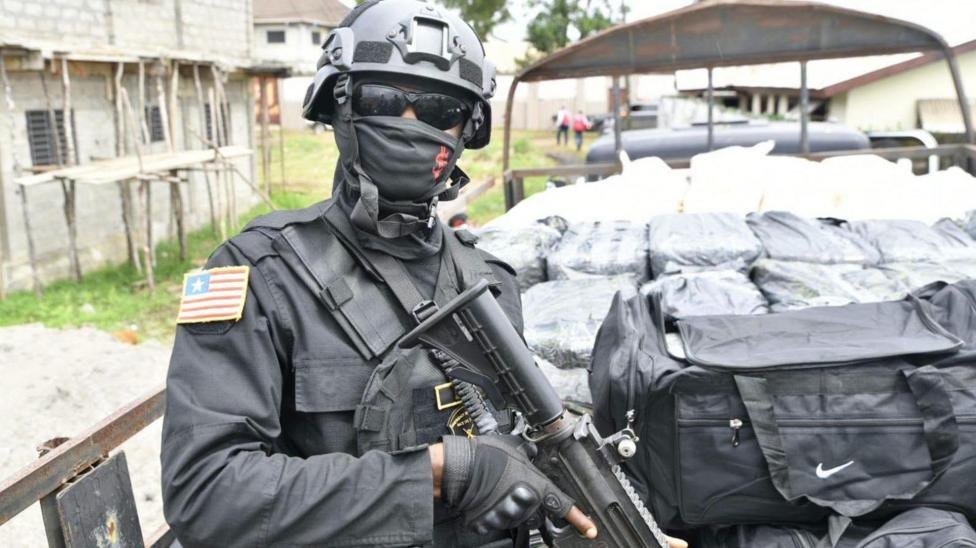
Liberian authorities have just carried out their largest cocaine seizure in years, recovering a haul valued at roughly 370 million dollars in a single operation near Monrovia. The raid in Duazon, Margibi County, underscores how West Africa continues to serve as a critical transit corridor for drugs moving from South America to Europe. With neighbouring countries feeling the ripple effects, the find raises fresh questions about enforcement capacity and regional cooperation.
Dakar, Senegal — Article continues...
Liberia's $370 Million Cocaine Question
The Raid in Duazon
Early reports indicate that officers from the Liberia Drug Enforcement Agency (LDEA) carried out a major operation in Duazon, a community in Margibi County roughly 20 kilometres east of Monrovia. The action followed months of surveillance tied to suspected drug-trafficking routes. Authorities described the location as a key point where shipments were being prepared for onward movement.
Local residents in the area spoke of unusual activity in the days before the raid, with vehicles coming and going at odd hours. Such movements often raise quiet concern among families who simply want their neighbourhoods to remain safe for children and market traders.
Those Taken Into Custody
Several people were detained during the operation. Among them were two foreigners and a number of Liberian nationals. No names have been released, and the LDEA has not yet confirmed formal charges against any of the individuals.
Observers note that withholding identities at this stage is common in ongoing investigations, yet it has drawn criticism from local media outlets such as FrontPageAfrica, which argue that greater transparency helps build public trust.
Liberia's Largest Recorded Seizure
The cocaine recovered is valued at approximately 370 million US dollars, making this the biggest single drugs seizure reported in Liberia in recent years. Earlier this same month, authorities at Roberts International Airport intercepted a smaller consignment hidden inside seasoning cubes, worth around 19 million dollars, and charged five people in that case.
Across West Africa the pattern is clear. Cocaine seizures have risen steadily since 2019, reaching roughly 30 tonnes for the region in 2025. Liberia's latest find fits into a wider trend that now touches ports, airports and rural roads from the coast to the interior. Compared with other major seizures across the region, Liberia's haul stands out for its size. The earlier airport seizure with cocaine inside seasoning cubes revealed similar concealment tactics that traffickers repeat across borders. These repeated seizures suggest Liberia is serving as both a landing point and a transit hub rather than a final destination. Officials and communities along the coast see the pattern clearly — when large loads keep appearing, it signals that Liberia's ports and airfields remain attractive to groups seeking quick onward movement to Europe.
West Africa's Role in the Trade
West Africa has become a recognised transit corridor for cocaine moving from South America to Europe. Porous borders, limited radar coverage along the coastline and stretched enforcement budgets create openings that trafficking networks exploit. The 2022 MV Matthew case, which ended with a 157-million-euro seizure off Ireland, illustrated how large volumes can cross the Atlantic before being broken into smaller loads for European markets.
Cocaine travels from South America, mainly Brazil, Colombia and Venezuela, across the Atlantic to West African ports. Once ashore in places like Conakry, Abidjan and Dakar, the product is repackaged and sent onward to Europe. Fishing vessels, container ships and occasional small aircraft carry the loads, using legitimate trade routes to avoid detection. UNODC data tracks these transatlantic movements and highlights how volumes have increased over the past decade. From initial landing points, smaller boats and trucks move the cocaine inland or along the coast. This secondary stage relies on established commercial traffic between West African capitals and European markets. The combination of sea and land transport keeps the supply chain flexible and hard to disrupt entirely.
Countries such as Senegal, Guinea and Ivory Coast appear regularly in seizure reports. The same geographic advantages that once supported legitimate coastal trade now serve illicit routes, affecting fishing communities and port workers who notice unusual vessel movements but often lack channels to report them safely.
Implications for Senegal and Neighbouring States
As a Senegalese journalist, I see these developments not as distant headlines but as matters that reach our own markets and border posts. When networks strengthen in Liberia, the ripple effects can appear in Dakar's port areas or along the routes that link Senegal with Guinea and beyond. Families who rely on cross-border commerce already navigate checkpoints and fluctuating prices; added criminal activity only complicates daily life.
Senegal feels the effects through Dakar's busy port and the smuggling routes along the Petite Côte. Fishing communities there have been drawn into networks that use local boats for short coastal hops. These links create economic pressures on families who already depend on the sea for their livelihood. Senegalese authorities have stepped up checks at the port and along known routes, yet reports continue to name Senegal as a regular transit country for cocaine moving north. Cross-border trade with neighbours allows traffickers to shift loads quickly when one area becomes too risky, affecting markets and security in Mali, Guinea-Bissau and beyond.
Regional bodies have discussed joint patrols and shared intelligence, yet practical cooperation remains uneven. Senegal's own enforcement agencies continue to monitor coastal waters, aware that any weakening of controls elsewhere increases pressure on our side of the border.
The Persistent Challenge of Corruption
Reports from the region consistently point to corruption as a factor that allows networks to operate with reduced risk. When officials at various levels accept payments to look the other way, entire communities bear the consequences through eroded trust in institutions and diverted public resources.
A FrontPageAfrica editorial criticised the LDEA for withholding the names of six suspects after a major seizure. This silence fits a broader pattern that appears in law enforcement agencies across West Africa. When names stay hidden, public trust erodes and networks continue operating with little fear of exposure. Trafficking groups exploit weak institutions by offering payments that outmatch official salaries. Asset declaration rules, stronger judicial independence and active regional anti-corruption bodies are needed to close these gaps.
Similar infiltration occurs in other industries where large cash flows meet limited oversight. Timber, mining and fishing have all faced comparable problems when criminal money enters local economies. Addressing corruption in law enforcement therefore requires changes that reach beyond any single sector or country.
Next Steps for Investigators and the Region
The LDEA has stated that its investigation remains active. Further arrests and asset tracing are expected, though timelines are not yet public. Regional cooperation through bodies such as ECOWAS could help track movements that cross multiple borders, yet concrete mechanisms for rapid information sharing are still being refined.
For ordinary citizens across West Africa, the hope is that enforcement improves without disrupting legitimate trade or placing undue burdens on small-scale traders and fishermen. Sustained attention from governments and civil society will be needed if the current wave of seizures is to translate into lasting disruption of the networks involved.
By Amara Diop, Staff Writer
This article was produced with AI-assisted research and editorial support. Reporting is based on sources cited in the article.
What's Your Reaction?
 Like
0
Like
0
 Dislike
0
Dislike
0
 Love
0
Love
0
 Funny
0
Funny
0
 Wow
0
Wow
0
 Sad
0
Sad
0
 Angry
0
Angry
0

West Africa/Sahel Correspondent at Global1.News. Dakar-based journalist covering politics, security, climate, and development across Francophone and Anglophone West Africa. Tells the stories of a region undergoing profound transformation.











Comments (0)