
OpenCV Launches AI Art Course on Kickstarter
OpenCV launches Mastering Generative AI for Art on Kickstarter, offering developers and artists deep technical training in Stable Diffusion, Flux, Midjourney, and custom model training through OpenCV University's comprehensive curriculum.
OpenCV is the backbone of computer vision — powering everything from smartphone cameras to autonomous vehicles. But now, the organization behind the most downloaded computer vision library on the planet is taking a massive leap into the creative side of AI. And they're doing it on Kickstarter.
OpenCV Launches AI Art Course on Kickstarter: Can You Create Masterpieces With Code?
Mountain View, CA — OpenCV, the open-source computer vision library that's been the gold standard for developers and researchers for over two decades, has just dropped a bombshell for the creative coding community. They've launched the "Mastering Generative AI for Art" course, and it's currently funding on Kickstarter with a promise to turn developers into digital artists.
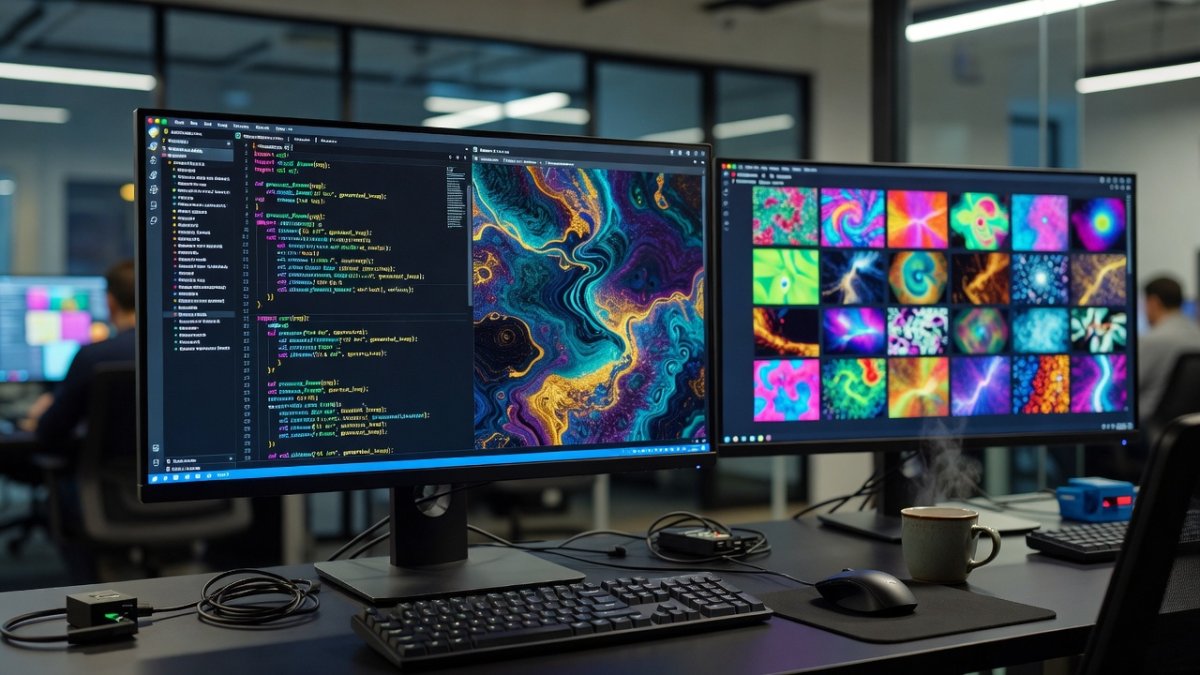
The New Creative Playground
OpenCV University has been the go-to destination for serious computer vision education, but this new course marks a significant shift toward the creative side of AI. The "Mastering Generative AI for Art" program dives deep into the world of AI-generated imagery, covering everything from Stable Diffusion text-to-image generation to fine-tuning models on your own datasets. And the Kickstarter model means early adopters get lifetime access and exclusive perks at a fraction of the course's eventual retail price.
What's Inside the Course
This isn't your basic "how to prompt Midjourney" tutorial. The curriculum goes deep into the technical weeds. Students will learn the fundamentals of Stable Diffusion, including how to generate images from text descriptions, how to fine-tune models on custom datasets, and how to use advanced techniques like ControlNet, IP-Adapter, and DreamBooth for precise image manipulation. The course also covers inpainting, outpainting, and image-to-image workflows, alongside hands-on projects using OpenCV for image preprocessing and post-processing.
The course goes beyond just generation — it dives into practical deployment with OpenCV's real-time image processing pipeline, giving students the tools to build production-ready creative AI applications. There's even a module dedicated to training custom models on personal image collections, which opens the door for artists, designers, and developers to create truly unique visual styles.
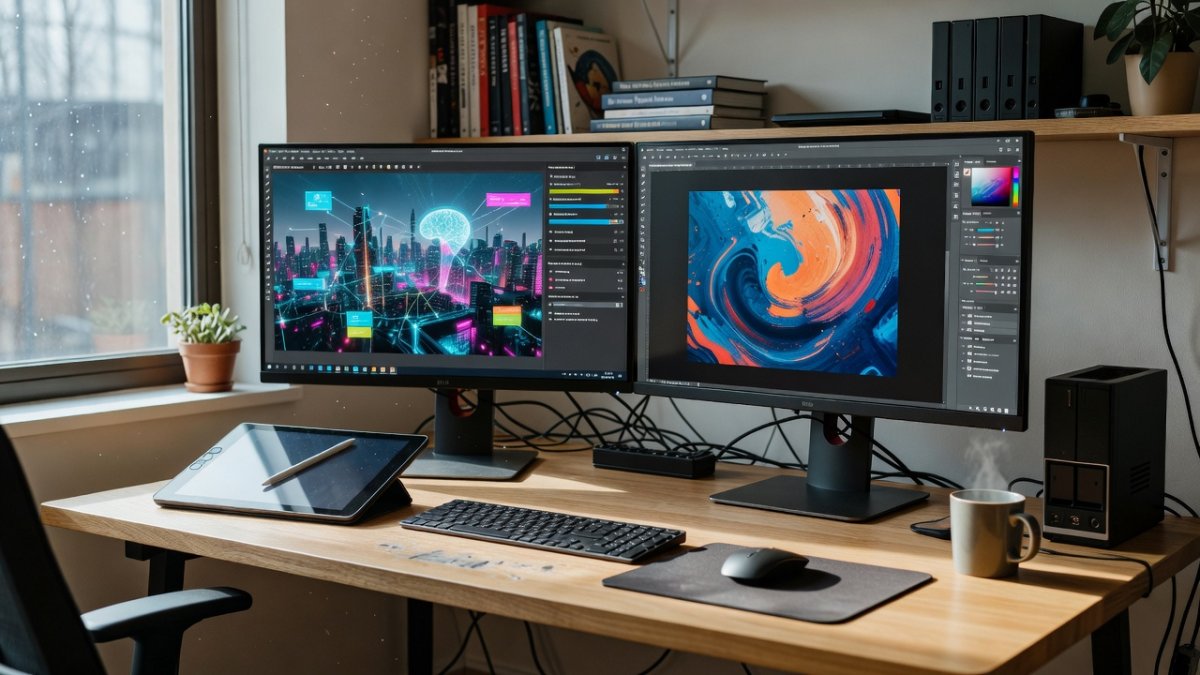
ComfyUI workflows form a core pillar of the hands-on modules, teaching students to construct modular node-based pipelines that chain together latent space operations, custom samplers, and post-processing filters with surgical precision. Participants build production-grade workflows that integrate OpenCV's preprocessing routines directly into the generation loop, enabling automated batch processing and real-time parameter tweaking without leaving the interface.
ControlNet integration projects push further into practical territory. Students develop storyboard tools that enforce consistent camera angles and scene layouts across sequences, alongside style-consistent character generators that lock facial features, clothing details, and lighting conditions across multiple outputs. These projects demonstrate how OpenCV's mature computer vision stack can anchor generative pipelines, turning one-off experiments into repeatable creative systems.
Why Kickstarter For AI Education?
Here's the thing folks — OpenCV isn't a startup looking for seed money. They're a massive, established open-source foundation. So why Kickstarter? The answer is community-driven development. By launching through Kickstarter, OpenCV is testing demand, building a community of early adopters who'll help shape the course content, and offering genuine early-bird pricing. The model mirrors what we've seen in successful developer tool Kickstarters — it's less about funding and more about building momentum and a feedback loop with the actual students.
Backers get lifetime access to the course materials, including video lectures, coding exercises, project files, and future updates. There are also tiered reward levels that include one-on-one mentoring sessions, priority support, and even co-creation opportunities for higher-tier backers.
The State of Generative AI Art in 2026
Let's cut through the BS for a second. The generative AI art space has exploded over the past two years, and I'm not just talking about pretty pictures. We've seen Flux dethrone Stable Diffusion as the open-source king, Midjourney evolve into a full creative suite, and DALL-E 3 integration become standard in enterprise workflows. But here's the problem — most of the educational content out there is surface-level prompting guides, not real technical training. OpenCV is positioning itself to fill that gap with actual engineering-grade education.
The tools are evolving faster than the educational ecosystem can keep up. What was state-of-the-art six months ago — standard text-to-image generation — is now table stakes. Today's competitive landscape demands an understanding of LoRA training, ControlNet conditioning, video-to-video generation, and real-time inference pipelines. This course appears to be built for that reality.
OpenCV's decades of computer vision leadership set it apart from the wave of generative AI startups that emerged overnight. While newcomers often chase flashy demos with limited real-world validation, OpenCV has spent twenty years shipping production systems that handle edge cases in unforgiving environments. That track record translates directly to trustworthy instruction on model training and deployment.
Consider medical imaging, where OpenCV has long powered diagnostic tools that require pixel-perfect accuracy under strict regulatory constraints. Factory inspection systems built on the same library detect microscopic defects at industrial scale. Autonomous vehicle perception stacks rely on OpenCV for robust feature extraction in variable lighting and weather. Few generative AI outfits can claim comparable depth in mission-critical vision pipelines, giving OpenCV unmatched credibility when teaching how to stabilize and productionize creative models.
What This Means For Developers And Artists
This isn't just another AI course announcement — it's a signal. When the team behind the most-used computer vision library on the planet decides to create a generative AI art curriculum, it tells you something about where the industry is heading. Computer vision and generative AI are converging, and the developers who understand both will have a massive advantage in the job market.
For artists and designers who want to move beyond prompt engineering and actually understand the technical foundations of the tools they use, this course offers a path. For developers who want to add creative AI capabilities to their skillset, it's a direct route. And for anyone who's been sitting on the fence wondering whether to dive into generative AI — this is the kind of structured, authoritative education that makes the decision easier.
Who Should Enroll
Python developers already comfortable with OpenCV and NumPy will find the course a natural extension of their existing toolkit. The curriculum assumes familiarity with image arrays and matrix operations, then layers generative techniques on top without hand-holding through basic syntax. These students typically finish with deployable applications that combine real-time vision pipelines and diffusion models.
Digital artists seeking technical depth beyond prompt crafting represent another core audience. Many arrive with strong visual intuition but limited coding experience; the course meets them at the intersection of creative intent and engineering control, showing how to translate artistic decisions into reproducible workflows and custom model training runs.
Technical educators and curriculum designers at universities or coding bootcamps will also benefit. The modular structure and project-based approach provide ready-made templates for teaching generative AI responsibly, complete with assessment rubrics and open-source licensing guidance that align with institutional needs.
The Kickstarter Details
The campaign has already attracted significant attention from the developer community, with early-bird pricing tiers moving quickly. The base tier includes full course access with lifetime updates, while higher tiers add one-on-one mentorship sessions, priority community access, and even the opportunity to contribute to the course's project portfolio. Given OpenCV's reputation and the quality of their existing course offerings at OpenCV University, this is shaping up to be one of the most credible AI art education launches on the platform this year.
Bottom Line
OpenCV is betting that the next wave of AI innovation won't come from better models — it'll come from more people who actually understand how to build with them. The "Mastering Generative AI for Art" course is a bet on education over hype, on engineering over buzzwords. If you're a developer, a designer, or just someone who wants to do more than type prompts into a text box, this is worth your attention.
The course is live on Kickstarter now. Early-bird pricing won't last forever, and if OpenCV University's track record is anything to go by, this is going to be one of the most comprehensive generative AI art courses available. Go check it out, and while you're at it, fire up that GPU — because you're going to want to start training your own models.
Beyond the immediate classroom value, this launch signals a maturing open-source AI ecosystem where established foundations leverage their infrastructure expertise to democratize advanced techniques. By releasing comprehensive curricula under permissive licenses, OpenCV sets a precedent that rewards community contribution over proprietary gatekeeping.
Other open-source organizations watching this campaign will likely replicate the model. Expect similar Kickstarter-backed courses from projects in audio synthesis, robotics simulation, and scientific computing, each using their domain credibility to deliver engineering-grade education that outpaces startup marketing cycles.
— Jessica Ali, Global 1 News — cutting through the BS, one story at a time.
This article was produced with AI-assisted research and editorial support. Reporting is based on sources cited in the article.
What's Your Reaction?
 Like
0
Like
0
 Dislike
0
Dislike
0
 Love
0
Love
0
 Funny
0
Funny
0
 Wow
0
Wow
0
 Sad
0
Sad
0
 Angry
0
Angry
0

Editor-in-Chief at Global1.News. Atlanta-based journalist who cuts through the BS and tells it like it is. Lead anchor, host, and the voice you hear when the spin stops and the truth starts.










Comments (0)