
Springboks 43-0 Wales Demolition Sparks All Blacks Fever
Kings Park Atmosphere Ignites Seven-Try Running Rugby Masterclass Hollywoodbets Kings Park Stadium pulsed with that unmistakable Durban energy on Saturday 18 July 2026 as more than 50,000 passionate fans packed the stands for the Nations Championship clash. The green and gold faithful created a wall of sound from the first whistle, turning the famous old ground into a cauldron that Wales simply could not handle.
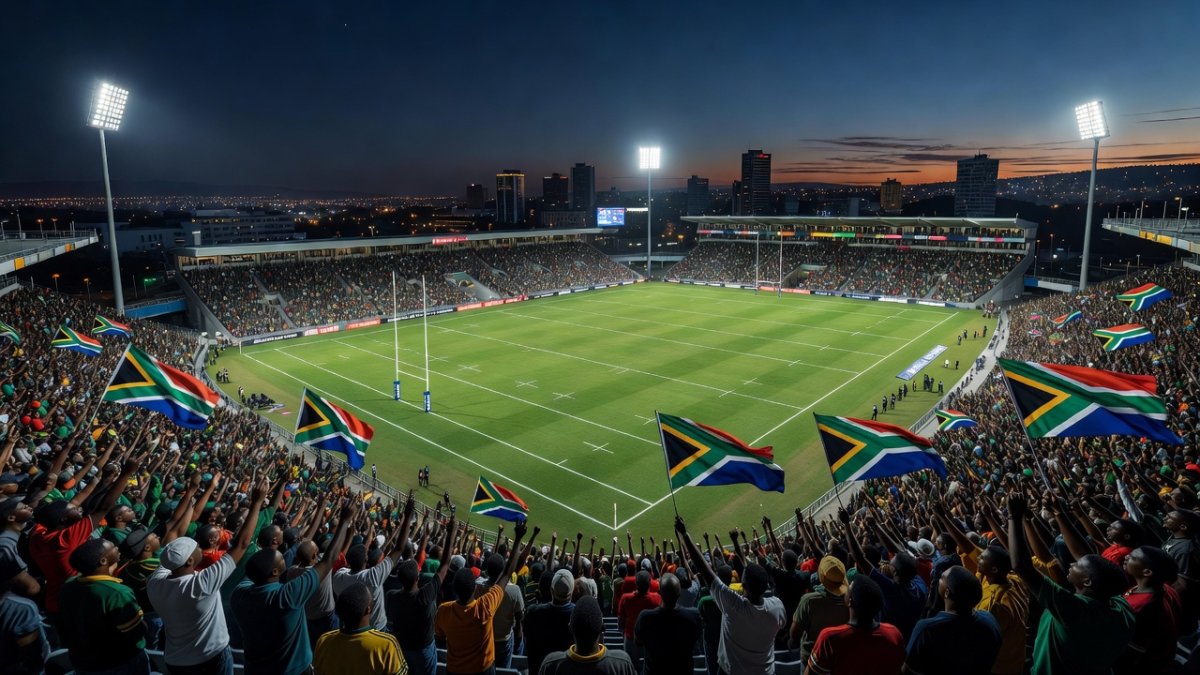
Kings Park Atmosphere Ignites Seven-Try Running Rugby Masterclass
Hollywoodbets Kings Park Stadium pulsed with that unmistakable Durban energy on Saturday 18 July 2026 as more than 50,000 passionate fans packed the stands for the Nations Championship clash. The green and gold faithful created a wall of sound from the first whistle, turning the famous old ground into a cauldron that Wales simply could not handle. What unfolded was a complete Springbok performance that ended 43-0, a scoreline that barely captured the one-sided nature of the contest.
The Boks led 19-0 at the break after a first half full of intent and clinical finishing. Jasper Wiese crashed over early to set the tone, followed by sniping efforts from Cobus Reinach and a well-worked score from Jesse Kriel. The running rugby on display was pure Springbok flair mixed with power, the kind that has defined South African sides when they click. Players offloaded in contact, backs hit the line at pace, and the crowd roared every time the ball went wide.
After the interval the floodgates opened further. Jaco Williams, Herschel Jantjies, Kurt-Lee Arendse and debutant Paul de Villiers all crossed the whitewash as the Boks refused to take their foot off the pedal. Four conversions were landed, three by Vusi Moyo and one by Manie Libbok, bringing the final tally to 43 unanswered points. Kings Park has seen many great Bok nights, but this demolition of Wales will live long in the memory of everyone who was there or watching on SuperSport. The atmosphere never dipped, the Mexican waves rolled, and the national anthem still echoed in the warm KwaZulu-Natal air long after the final hooter.
This was more than just a win. It was a statement of attacking intent and squad harmony that sent a clear message across world rugby. The seven different try-scorers showed the variety in the Springbok arsenal, from tight forward power to backline magic. For the fans who filled every seat and every standing area, it was a lekker afternoon of total dominance that reinforced why Kings Park remains one of the great fortresses of the game.
Forward Pack Dominance Lays Foundation for Total Control
The Springbok forward pack delivered a masterclass in set-piece mastery and work rate that completely smothered Wales at Hollywoodbets Kings Park. From the opening scrums the visitors were under severe pressure, with the Bok front row of Steenekamp, Sadie and Van Heerden winning the collisions and earning penalties that kept the scoreboard ticking and the territory battle firmly in South African hands. The dominance was clinical and relentless.
The Wiese brothers stood tall throughout, combining raw power with intelligent link play that continually put Wales on the back foot. Jasper Wiese’s early try was reward for the pack’s go-forward ball, while the loose trio’s work rate around the park was immense. They cleaned out rucks with venom, made dominant tackles, and still had the energy to feature in second-phase attacks. Paul de Villiers, on debut, slotted straight into this high-intensity environment and looked every bit a Test-match forward.
Lineout execution was another area of clear superiority. The Springboks stole Welsh ball at key moments and used their own throws as genuine attacking platforms rather than mere restarts. Maul defence was rock solid, denying Wales any platform to build momentum. This set-piece stranglehold allowed the backs the freedom to play with width and ambition, knowing the forwards would win the gain-line battle every time.
World rugby media were quick to highlight the gulf in forward play and the problems it created for a Welsh side that simply could not match the physicality or cohesion. For South African supporters raised on the tradition of dominant packs, this was pure joy. The Boks now sit 3-from-3 in the 2026 Nations Championship precisely because their forwards continue to lay these unbreakable platforms. Kings Park witnessed a throwback to the great eras of Bok forward play, updated with modern speed and skill.
Manie Libbok Kicking Controversy and the Kolbe Alternative
While the Springboks ran in seven tries, the goal-kicking duties of Manie Libbok drew heavy criticism after a wayward display at Kings Park. Only one of his conversion attempts sailed between the posts, with Vusi Moyo stepping up to land three others. In a match the Boks controlled so thoroughly the missed kicks did not affect the result, yet they sparked familiar debates about the flyhalf position and the pressure that comes with wearing the number 10 jersey in front of a full house in Durban.
Cheslin Kolbe has emerged as an ace kicker during the 2026 season and is increasingly viewed as a genuine alternative for those duties. His reliability from the tee has given Rassie Erasmus valuable options and reignited historical conversations about how Springbok coaches manage the kicking portfolio. South African rugby has long thrived on healthy competition for places, and the current situation is no different. Fans on SuperSport phone-ins and in the stands debated whether Kolbe should assume more responsibility going forward.
Erasmus’s man-management will be key in the coming weeks. The coach has always thrived on creating internal competition that lifts standards rather than creating division. Libbok’s overall play still offered creativity and attacking spark, yet the spotlight on goal-kicking remains unforgiving at this level, especially under the intense Kings Park lights and the weight of national expectation. The pressure of performing in front of 50,000-plus passionate home supporters can magnify every miss.
This conversation is healthy for the squad. It forces every player to sharpen their skills knowing that depth exists across the park. As the Boks prepare for bigger challenges, the ability to share or rotate kicking duties could prove a strategic weapon. South African fans understand the flyhalf debates run deep in our rugby culture, and this latest chapter simply adds another layer to the rich tapestry of selection talk that accompanies every Springbok campaign.
Depth and Transformation Shine Through Debutants and Systems
The sight of debutant Paul de Villiers crossing for a try on his first Springbok appearance perfectly captured the depth and transformation story that continues to define South African rugby. De Villiers was not alone in making an impact; the entire match-day squad reflected years of careful development through the Currie Cup and United Rugby Championship feeder systems. Talent is rising from every corner of the country and finding its way into the green and gold.
SARU’s grassroots programmes have long been the backbone of this success. From schoolboy fields in the Eastern Cape to club rugby in Gauteng and the coastal provinces, the pathway remains strong. The diversity of the current talent pool is a source of immense pride. Players of every background are earning selection on merit and then delivering under the highest pressure. This 43-0 victory over Wales showcased that depth in real time, with seven different try-scorers and impactful contributions from the bench.
World rugby media have taken note of South Africa’s production line and the problems it creates for opposition sides who cannot match the wave after wave of quality. When one player exits, another of similar standard steps up. That conveyor belt is no accident. It is the result of sustained investment in coaching, conditioning and identification programmes that reach deep into communities. The Currie Cup remains a vital proving ground where future Boks harden their games before stepping onto the international stage.
For supporters, this depth means the Springboks can rotate and still maintain standards, a luxury few nations enjoy. It also reinforces the sense that the national team truly belongs to all South Africans. Watching a debutant like Paul de Villiers score at Kings Park while established stars around him excelled sent a powerful message about continuity and opportunity. The system is working, the talent is flowing, and the results are there for the world to see.
All Blacks Showdown Looms Large After Perfect Start
With the Springboks now sitting on a perfect 3-from-3 record in the 2026 Nations Championship, attention turns immediately to the looming All Blacks showdown. That fixture will test every part of the South African game against the traditional benchmark of world rugby. The 43-0 dismantling of Wales provides a strong platform, yet the coaching staff and players know the step up in intensity and precision will be massive.
Key matchups already dominate discussion. The Springbok forward pack that so thoroughly dominated Wales will face an All Black unit renowned for its mobility and technical excellence at set piece. The Wiese brothers, Steenekamp, Sadie, Van Heerden and De Villiers must reproduce their work rate and physicality against opponents who thrive on turning defence into attack in the blink of an eye. In the backs, the creative sparks shown by the likes of Kurt-Lee Arendse and Jesse Kriel will be measured against New Zealand’s legendary ability to exploit the smallest defensive lapse.
Form comparison favours the Boks on recent evidence, yet history teaches that All Blacks encounters rewrite scripts. South Africa’s depth gives them the ability to absorb the inevitable physical toll and still finish strongly. Nations Championship implications are significant. A strong performance or victory would strengthen the Boks’ position at the top of the standings and send another message about their credentials as the team to beat. Anything less would open the door for rivals.
Preparation will focus on tightening the small details that Wales could not punish. Goal-kicking consistency, discipline at the breakdown and clinical conversion of pressure into points will be non-negotiable. Kings Park delivered a statement win; the All Blacks fixture will demand an even higher level. South African fans are already counting down the days, knowing these are the matches that define eras and forge legends in the green and gold.
Cultural Significance and National Pride Surge Through Kings Park
Nights like this 43-0 triumph at Hollywoodbets Kings Park remind every South African why rugby sits at the heart of national identity. The energy inside the stadium was electric from hours before kick-off, with supporters in green and gold singing, braaiing nearby, and creating the unique Durban atmosphere that visiting teams fear. When the Boks run out to that wall of sound, something primal connects players and fans in a shared purpose that transcends the ninety minutes.
SuperSport broadcasts carried the occasion into homes across the country and the diaspora, allowing millions to share in the joy. Families gathered around screens, former players offered analysis, and social media lit up with pride every time another try was scored. This is how rugby unites. In a nation of many languages and histories, the Springboks remain one of the most powerful symbols of collective achievement and possibility. A dominant win over Wales reinforces that sense of togetherness.
The cultural significance runs deeper than the scoreboard. It validates the work happening at every level of the game, from SARU development pathways to the weekend warriors at club level who dream of one day wearing the jersey. Children watching on Saturday will remember the names of the try-scorers and the roar that greeted Paul de Villiers on debut. That inspiration fuels the next generation. National pride swells when the Boks perform with this mixture of power, skill and joy.
For SA fans the result means belief. Belief that the team is building something special in 2026, belief that the depth is real, and belief that the All Blacks showdown can be approached with genuine confidence. Kings Park has once again served as the stage for a performance that will be replayed and retold for years. As the final notes of the anthems faded and the crowd lingered to celebrate, one truth was clear: when the Springboks click like this, the whole country stands taller.
By Dante Williams, Staff Writer
This article was produced with AI-assisted research and editorial support. Reporting is based on sources cited in the article.
What's Your Reaction?
 Like
0
Like
0
 Dislike
0
Dislike
0
 Love
0
Love
0
 Funny
0
Funny
0
 Wow
0
Wow
0
 Sad
0
Sad
0
 Angry
0
Angry
0

Breaking News and Investigations Correspondent at Global1.News. Based in London, covering global breaking news, security, and investigative stories. Known for digging deeper and connecting the dots across continents.











Comments (0)