
Hamas Chief al-Hayya Outlines Ceasefire Priorities in Gaza
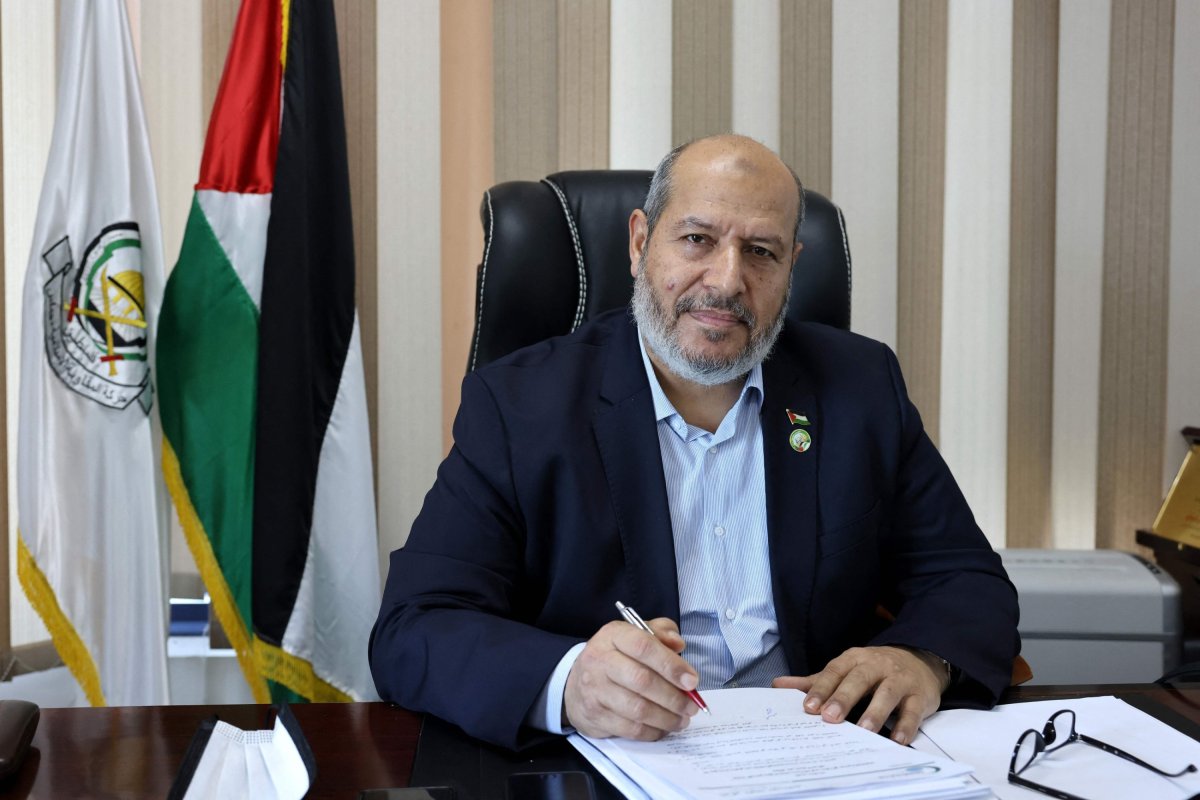
Al-Hayya's Election and Its Timing Khalil al-Hayya assumed leadership of the Hamas political bureau after the announcement of his election, filling a post vacant since Yahya Sinwar's death during clashes in Rafah in October 2024.
Al-Hayya's Election and Its Timing
Khalil al-Hayya assumed leadership of the Hamas political bureau after the announcement of his election, filling a post vacant since Yahya Sinwar's death during clashes in Rafah in October 2024. The vote saw al-Hayya defeat Khaled Meshaal by a single ballot, reflecting tight internal balances within the movement.
Khalil al-Hayya’s narrow victory over Khaled Meshaal by a single ballot in July 2026 underscores the deep factional divides within Hamas. The Gaza-based leadership, hardened by two years of direct confrontation with Israeli forces, favored al-Hayya’s blend of battlefield credibility and diplomatic experience. In contrast, the external leadership centered in Qatar and Turkey leaned toward Meshaal’s broader regional networks and more pragmatic tone. This one-vote margin reveals how narrowly the movement avoided a split that could have fractured its already strained command structure.
The timing of the election itself was driven by mounting external pressures. With the ceasefire’s first phase stalling and reconstruction talks deadlocked, Hamas needed a visible political figure who could engage mediators without appearing to capitulate. Al-Hayya’s survival of an Israeli drone strike attempt in Doha in September 2025 further elevated his standing; the incident was widely interpreted inside the movement as proof of his value to Israel’s targeting list, thereby strengthening his internal legitimacy among military commanders wary of softer external figures.
The Six Priorities Presented
In his initial televised address, al-Hayya identified a comprehensive ceasefire and full Israeli withdrawal from Gaza as the foremost objectives. Second came the restoration of living conditions, prevention of displacement, reconstruction, and prisoner releases. Third was the launch of national dialogue to rebuild institutions, especially the PLO, on democratic foundations. Fourth involved strengthening ties with Arab and Muslim states. Fifth focused on mobilizing those states against continued Israeli operations. Sixth urged the United Nations and international bodies to protect Palestinians and pursue accountability for alleged war crimes.
Al-Hayya’s first priority—a comprehensive ceasefire and complete Israeli withdrawal—reflects Hamas’s sober assessment that Gaza’s infrastructure has been reduced to rubble. With official Palestinian casualty figures exceeding 73,000 dead, any further delay in halting operations risks rendering large parts of the territory uninhabitable. Practically, this means insisting that Israel complete its pullback from the Netzarim corridor and Philadelphi axis before hostage or prisoner exchanges advance to the next stage.
The third priority, launching national dialogue to reform the PLO, carries the most far-reaching institutional implications. By seeking democratic restructuring of the PLO from within, Hamas aims to convert its battlefield endurance into political representation rather than remaining an outsider movement. This approach differs markedly from earlier reconciliation attempts that foundered on Fatah’s refusal to cede control of the PLO’s executive structures.
Ceasefire Implementation Challenges
Al-Hayya called on mediating states to press Israel toward existing agreements and subsequent phases. A ceasefire was reached in October 2025 after the Israeli offensive that began in October 2023, yet movement to later stages has stayed incomplete. This leaves open questions about the pace of any further withdrawals or exchanges.
Qatar and Egypt continue to shuttle proposals, while the United States has limited its role to monitoring compliance rather than applying direct pressure on Israel. When al-Hayya calls for “moving to the next phase,” he is signaling that Hamas will not release additional captives until Israel begins withdrawing from the central and southern sectors of Gaza, a sequencing that mediators have so far been unable to enforce.
Regional Responses and Gulf Calculations
Arab states face competing pressures. Gulf capitals weigh normalization tracks against domestic sentiment over Gaza casualties, which official Palestinian figures place above 73,000 killed and nearly 174,000 injured. Iran may view al-Hayya's emphasis on Muslim-world mobilization as an opening to deepen coordination, while Sunni-led governments assess how far to align with Hamas demands without derailing other diplomatic channels.
Saudi Arabia remains caught between its desire to advance normalization talks with Israel under U.S. auspices and intense domestic sympathy for Gaza’s civilian population. Riyadh has quietly urged mediators to secure visible Israeli concessions on withdrawal before any public diplomatic movement, fearing that proceeding without them would inflame internal opinion already inflamed by images of destruction. The UAE, having normalized relations earlier, has adopted a lower profile, channeling humanitarian aid through established channels while avoiding direct engagement with Hamas.
Qatar’s hosting of the Hamas political office gives it unique leverage, yet Doha must balance this role against its broader regional interests. Iran, for its part, views al-Hayya’s emphasis on Muslim-world mobilization as an opportunity to deepen coordination with Hamas, though Sunni Gulf states remain wary of any framework that would enhance Tehran’s influence inside Palestinian decision-making.
Turkish and Broader Muslim-World Angles
Turkey has historically maintained contacts with Hamas leaders. Al-Hayya's call for effective Arab and Muslim action could prompt Ankara to amplify its mediation profile or humanitarian role. Other Muslim-majority states may respond with statements or limited aid commitments, though concrete leverage remains constrained by differing national interests.
President Erdoğan has long cultivated ties with Hamas as part of Turkey’s broader regional strategy to position Ankara as a defender of Palestinian rights. Al-Hayya’s election offers Erdoğan an opportunity to amplify Turkey’s mediation profile, particularly through expanded humanitarian corridors and possible offers to host further talks. Unlike Sinwar, whose military background made him appear more confrontational to Ankara, al-Hayya is viewed in Turkish circles as someone who can sustain both armed resistance credentials and diplomatic engagement.
The Organization of Islamic Cooperation has issued statements of support but lacks enforcement mechanisms. Malaysia and Indonesia have signaled willingness to contribute to reconstruction funds, yet their influence is constrained by distance and limited leverage over Israel. Al-Hayya’s Muslim Brotherhood links, shared with the Turkish ruling party, may facilitate coordination but also risk alienating Gulf states that have designated the Brotherhood a terrorist organization.
Hamas Strategic Calculus Going Forward
Al-Hayya's background as a negotiator with links to the military wing suggests an approach that pairs diplomatic outreach with insistence on core demands. The six priorities blend immediate relief with longer-term institutional goals, indicating an effort to sustain relevance both inside Gaza and across Palestinian politics while reconstruction talks advance slowly.
Al-Hayya’s background as a long-serving negotiator with documented links to the Qassam Brigades marks a shift from Sinwar’s more overtly military command style. Where Sinwar projected an image of unyielding resistance, al-Hayya is expected to pursue a dual-track approach that pairs continued armed deterrence with active diplomatic outreach. This balance is intended to maintain internal cohesion while testing whether mediators can deliver concrete Israeli withdrawals.
His ties to the military wing are likely to reassure hardliners that any diplomatic concessions will remain limited. At the same time, these same connections could make ceasefire arrangements more durable, because al-Hayya possesses the internal authority to enforce compliance across both political and military structures—an advantage Sinwar’s successors initially lacked.
Reconstruction, Exchanges, and Unity Prospects
Restoring services and securing prisoner releases form central second-priority items. Any progress hinges on phased implementation that mediators have yet to complete. Parallel efforts at PLO reform through national dialogue could alter representation structures, though success depends on buy-in from factions that have long diverged over strategy and governance.
Gaza’s destruction is estimated to exceed $50 billion in direct damages, with over 60 percent of housing units destroyed or severely damaged and most hospitals reduced to partial functionality. Reconstruction cannot begin in earnest until the second phase of the ceasefire unlocks large-scale material imports. Prisoner exchanges remain another bottleneck, with Hamas holding several dozen Israeli captives while Israel detains thousands of Palestinians, many without charge.
Past Fatah-Hamas reconciliation efforts, including the 2017 and 2022 agreements, collapsed over control of security forces and revenue. The current PLO reform priority will test whether Hamas can translate battlefield endurance into institutional power without triggering another round of factional paralysis.
Mediators and Historical Leadership Shifts
Qatar and Egypt have facilitated indirect talks. Their continued involvement will test whether al-Hayya can translate his negotiating record into tangible movement on withdrawal and releases. Past Hamas leadership changes, from earlier bureau heads to Sinwar, show that external pressure and internal consensus both shape policy direction, a pattern likely to continue under the new leadership.
Qatar’s decision to host the Hamas political office since 2012 has given it unmatched access to both Hamas decision-making and Israeli intelligence channels. Egypt, by contrast, remains primarily concerned with preventing militant spillover into Sinai and has therefore conditioned its mediation on strict border controls.
Previous transitions—from Ismail Haniyeh’s consensus-building style to Sinwar’s military assertiveness and now to al-Hayya—demonstrate that Hamas policy tends to oscillate between diplomatic flexibility and hardened red lines depending on who holds the bureau chair. Al-Hayya’s tenure will likely test whether this pattern can be stabilized into a more consistent negotiating posture.
By Malik Hassan, Staff Writer
This article was produced with AI-assisted research and editorial support. Reporting is based on sources cited in the article.
What's Your Reaction?
 Like
0
Like
0
 Dislike
0
Dislike
0
 Love
0
Love
0
 Funny
0
Funny
0
 Wow
0
Wow
0
 Sad
0
Sad
0
 Angry
0
Angry
0
Middle East Correspondent at Global1.News. Based in Beirut, covering politics, conflict, energy, and society across the Middle East. Brings context and depth to a region often reduced to headlines.












Comments (0)