
Thailand Engages Myanmar Leadership for Regional Stability
In a gesture reflecting Thailand's deep-rooted commitment to its neighbors, Prime Minister Anutin Charnvirakul has invited Myanmar's Senior General Min Aung Hlaing for official talks in Bangkok ahead of the BIMSTEC summit. This step highlights the value of face-to-face dialogue in nurturing stability along shared borders that touch countless lives each day.
Thailand Engages Myanmar Leadership for Regional Stability
Bangkok, Thailand — Article continues...
Thailand Prioritizes Direct Dialogue with Myanmar Leadership
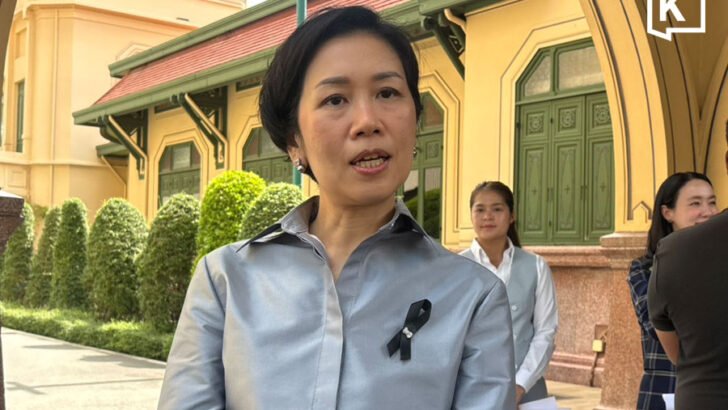
The Thai government has confirmed that Prime Minister Anutin Charnvirakul invited Senior General Min Aung Hlaing for an official visit to Bangkok ahead of the BIMSTEC summit scheduled for early August. Government spokesperson Ratchada Thanadirek stated on Wednesday that this engagement forms part of Thailand's consistent approach to maintaining open channels with its immediate neighbour. She noted that Thailand's position reflects the practical reality of sharing a long land border where daily cross-border movement affects communities on both sides.
In the gentle rhythm of Thailand's long-standing ties with its western neighbour, the 2,400-kilometre border has long shaped daily life for families on both sides. From the bustling markets of Mae Sot in Tak province to the fishing villages near Ranong, Thai communities have welcomed generations of Myanmar migrant workers who contribute to local economies through agriculture, construction, and small-scale trade. These connections run deep, rooted in centuries of shared history along the Moei and Salween rivers, where cross-border movement was once a natural flow rather than a regulated checkpoint affair.
Previous Thai governments, from the era of Prime Minister Thaksin Shinawatra through to the present, have consistently favoured pragmatic engagement with Myanmar's leadership. This approach recognises that isolation rarely serves border communities facing daily realities of trade and family ties. Under earlier administrations, quiet diplomacy helped maintain open checkpoints even during periods of Myanmar's internal upheaval, allowing goods such as rice, gems, and textiles to move steadily while supporting Thai exporters who rely on these routes for regional supply chains. Today, border trade volumes at key points like Mae Sot and Three Pagodas Pass exceed several billion baht annually, underscoring why direct dialogue remains essential. By inviting Senior General Min Aung Hlaing ahead of the BIMSTEC summit, Thailand continues this warm, community-centred tradition, mindful of how stable relations benefit ASEAN neighbours seeking collective progress.
Addressing Image Concerns Through Neighbourly Realities
Ratchada Thanadirek directly addressed questions about whether hosting the Myanmar junta chief could affect Thailand's international standing. She explained that nations not sharing a border with Myanmar may not fully grasp the necessity of continued contact to manage shared challenges. The spokesperson emphasized that Thailand views the visit as essential for promoting stability rather than a matter of political optics.
"Countries that are not Myanmar's neighbours may not understand that we have to live together," she said. "If peace and stability return to Myanmar, Thailand and the Thai people will benefit as well. We need to help one another, not isolate them." This stance reflects a longstanding principle in Thai foreign policy — that constructive engagement and face-to-face dialogue achieve more than diplomatic isolation, especially when the well-being of border communities hangs in the balance.
Key Topics for Discussion During the Bangkok Meetings
The two leaders plan to cover efforts to restore peace inside Myanmar alongside concrete issues such as drug trafficking and scam operations that cross into Thai territory. Additional agenda items include transboundary environmental problems, open burning that affects air quality in northern Thai provinces, and river pollution impacting communities along the Mekong and Salween systems. Ratchada Thanadirek highlighted that Myanmar has already requested Thai technical assistance on managing open burning and broader environmental practices.
Along the northern frontiers, seasonal haze from open burning in Myanmar's Shan and Kachin states drifts into Chiang Mai and Chiang Rai, turning the skies a hazy grey each dry season and affecting the health of thousands of Thai families. This environmental challenge, intertwined with agricultural practices across the border, calls for patient conversation rather than distant criticism. Thai communities in Isaan provinces along the Mekong similarly feel the ripple effects of river pollution, where upstream activities impact fishing livelihoods and water quality that families have depended on for generations. Drug trafficking from the Golden Triangle region continues to pose real concerns, with methamphetamine flows affecting Thai youth and border towns. Likewise, call-centre scam operations based in Myanmar have targeted Thai citizens, eroding trust and economic security in everyday households. These issues, alongside efforts toward peace inside Myanmar, form a natural part of face-to-face talks that honour the interconnected lives of ASEAN peoples.
Thailand's Ongoing ASEAN Engagement Efforts
The spokesperson pointed to Thailand's recent hosting of an informal ASEAN foreign ministers meeting that included Myanmar's foreign minister as evidence of Bangkok's sustained diplomatic work. She said Myanmar has expressed appreciation for these Thai initiatives aimed at gradually returning the country to a fuller role within the regional bloc. This approach aligns with Thailand's long-standing preference for constructive involvement over isolation when dealing with neighbouring states. Myanmar had also acknowledged concerns raised by Thailand over pollution originating across the border and had requested Thai technical assistance on open burning and environmental management, Ratchada said.
Benefits for Thai Border Communities and Regional Stability
Ratchada Thanadirek stated that peace and stability in Myanmar directly support the well-being of people living along Thailand's border areas. "If Myanmar is peaceful, people living along Thailand's border will also benefit," she said, adding that cooperation between neighbouring countries required their leaders to engage in direct dialogue. Border provinces such as Tak, Mae Hong Son, and Kanchanaburi thrive when stability allows markets to flourish and families to plan for the future. Trade at these crossings supports local vendors, transport workers, and small businesses that form the backbone of Thai rural economies. Refugee flows from Myanmar's conflict zones have long tested resources in these areas, yet Thai communities have responded with characteristic warmth, offering shelter and integration that reflects Buddhist values of compassion shared across the region.
Healthcare and education services in border towns often extend to migrant populations, creating spillover benefits that enrich both sides while easing pressures on Thai systems. Fishing communities along the Salween and Mekong feel the direct impact of pollution, where cleaner waters mean sustainable catches for generations to come. Direct engagement helps address these realities, reducing cross-border crime and supporting the quiet dignity of daily life.
Implications for Thailand's Position Within ASEAN and BIMSTEC
The upcoming BIMSTEC summit in Bangkok provides a natural platform for these bilateral talks while also advancing wider Bay of Bengal regional cooperation. Thailand's strategy of keeping dialogue open supports its role as a constructive ASEAN member that balances regional unity with practical neighbourly relations. Thailand's strategy of open dialogue aligns with its longstanding role as a bridge within ASEAN, where the Five-Point Consensus on Myanmar remains a guiding framework for collective response. Neighbouring nations hold varied views on engagement versus isolation, yet Thailand's measured path reflects the practical wisdom of border realities and cultural ties that bind the region. This balancing act allows Bangkok to navigate Western perspectives while staying rooted in ASEAN pragmatism that values face-to-face understanding.
The BIMSTEC summit, due to be held in Bangkok in early August, offers a timely platform to advance Bay of Bengal cooperation, linking South and Southeast Asian economies through trade, connectivity, and shared security. By maintaining channels with Myanmar, Thailand contributes to wider stability that benefits all members, from economic corridors to cultural exchanges that celebrate the diversity of ASEAN communities. By focusing on shared problems such as pollution and trafficking, Bangkok aims to deliver tangible improvements for Thai citizens while encouraging Myanmar's gradual reintegration into ASEAN frameworks.
By Ann Srisawat, Staff Writer
This article was produced with AI-assisted research and editorial support. Reporting is based on sources cited in the article.
What's Your Reaction?
 Like
0
Like
0
 Dislike
0
Dislike
0
 Love
0
Love
0
 Funny
0
Funny
0
 Wow
0
Wow
0
 Sad
0
Sad
0
 Angry
0
Angry
0

Southeast Asia Correspondent at Global1.News. Based in Bangkok, covering Thai and Southeast Asian politics, economy, technology, and culture. Deep regional perspective on one of the world's most dynamic regions.














Comments (0)