
Gordie Howe Bridge Revenue Deal Stirs Political Debate in Ottawa
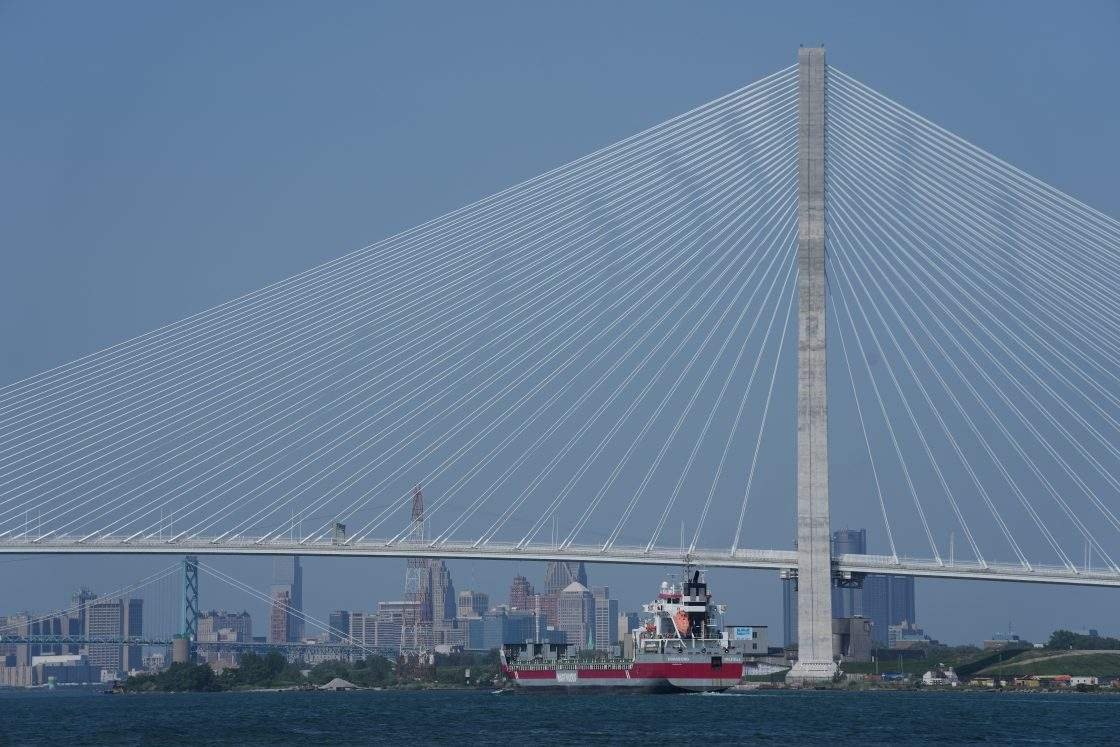
Gordie Howe Bridge Revenue Deal Stirs Political Debate in Ottawa The Gordie Howe International Bridge stands as a striking example of Canadian infrastructure investment meeting shifting bilateral priorities, with Ottawa having financed the entire $6.4-billion project yet agreeing to share net toll revenue with the United States from the first day of operations.
Gordie Howe Bridge Revenue Deal Stirs Political Debate in Ottawa
The Gordie Howe International Bridge stands as a striking example of Canadian infrastructure investment meeting shifting bilateral priorities, with Ottawa having financed the entire $6.4-billion project yet agreeing to share net toll revenue with the United States from the first day of operations.
Ottawa, Ontario – July 22, 2026 — The federal government released the agreement-in-principle text on July 22, 2026, revealing that Canada will divide 50 percent of net toll revenue with the United States for the initial 15 years after the bridge opens on July 27, 2026, a provision that departs from the repayment-first structure outlined in the 2012 accord signed under former prime minister Stephen Harper.
The Story: What the New Agreement Contains
The 2.5-kilometre, six-lane bridge connecting Windsor, Ontario, and Detroit, Michigan, was fully financed and constructed by Canada at a cost of $6.4 billion, with construction beginning in 2018 following the original 2012 agreement. Under that earlier framework, toll revenue sharing with Michigan would commence only after the full capital outlay had been recovered, an outcome projected to occur decades after opening. The newly released text instead mandates an immediate 50 percent split of net revenue for the first 15 years of operation, beginning July 27, 2026.
Questions remain about the precise definition of “net revenue” and whether the $6.4-billion Canadian debt will factor into calculations before distributions occur. The federal government has stated that the arrangement supports ongoing maintenance and border efficiency while preserving Canadian ownership of the structure. Both countries have confirmed that the bridge will operate under a single binational authority once open.
The Windsor-Detroit Bridge Authority will oversee toll-setting through a binational board that must balance cost recovery with competitive rates, drawing on traffic modelling that projects 16,000 daily vehicle crossings by 2030. Tolls are expected to start near current Ambassador Bridge levels of roughly $5.50 for passenger cars and $30 for commercial trucks, with annual adjustments capped at inflation plus two percent to avoid diverting traffic. This structure aims to maintain volume while generating the net revenue subject to the 50 percent split.
The cable-stayed design features a 220-metre main span and 47-metre clearance, engineered for a 125-year service life with seismic and wind-load standards exceeding current codes. Six inspection lanes on each side will increase border processing capacity by 50 percent compared with the Ambassador Bridge, reducing average wait times from 45 minutes to under 20 minutes during peak periods according to federal simulations.
These specifications support faster just-in-time automotive parts movement, yet the immediate revenue split raises questions about whether Canadian taxpayers will see accelerated debt reduction or if maintenance reserves will absorb a larger share of proceeds before distributions occur.
The Contradiction: Carney's Statements vs. the Text
Prime Minister Mark Carney had previously indicated that revenue sharing would occur only after the project’s costs were fully repaid, aligning with the language of the 2012 agreement. The July 22, 2026, release of the agreement-in-principle text shows an immediate sharing arrangement, prompting questions in Ottawa about the timing and scope of the change. Government officials have not yet provided a detailed reconciliation between the earlier public statements and the final terms.
Opposition members have noted that the discrepancy emerged only after the document became public, raising procedural concerns about how such modifications were negotiated and approved. The Prime Minister’s Office has maintained that the deal advances Canadian interests by securing reliable cross-border capacity, though it has not addressed the specific wording shift directly in recent briefings.
Canadian Context: The Windsor-Detroit Trade Corridor
The Windsor-Detroit corridor processes roughly $2.5 billion in daily two-way trade and serves as a critical artery for the integrated Canada-United States automotive supply chain. The new bridge is intended to relieve chronic congestion at the Ambassador Bridge, the current busiest Canada-United States land crossing, by providing additional capacity and modern inspection facilities. Ontario has coordinated closely with federal authorities on connecting infrastructure, including Highway 401 and the E.C. Row Expressway, to ensure efficient movement of goods once the bridge opens.
Provincial officials in Queen’s Park have emphasised that the project supports manufacturing employment across southwestern Ontario while strengthening supply-chain resilience. Federal-provincial working groups have addressed land-use planning and highway integration, reflecting the long-standing practice of shared responsibility for border infrastructure. The corridor’s economic weight extends well beyond the immediate region, influencing production schedules in both countries’ vehicle assembly plants.
Chronic congestion at the Ambassador Bridge has long plagued the corridor, with 2010s data showing average delays costing the automotive sector an estimated $300 million annually in lost productivity. The 2012 Harper government pursued the project to secure dedicated Canadian capacity and reduce reliance on a privately owned crossing, viewing the bridge as essential for supply-chain resilience amid rising North American trade volumes.
Similar to the St. Lawrence Seaway agreement and past pipeline negotiations, Ottawa has historically accepted shared governance models to advance continental infrastructure, though critics note those precedents often included stronger Canadian repayment protections. Windsor municipal leaders have welcomed the added capacity for local employment but expressed concern that toll policy could affect downtown revitalisation if commercial traffic patterns shift.
The corridor’s $2.5-billion daily trade figure underscores its national significance, yet the revised revenue terms may influence how future bilateral projects allocate fiscal risk between the two countries.
Impact on Canadians: Trade, Jobs and Crossing Costs
The immediate revenue-sharing provision will affect the pace at which the $6.4-billion investment is recovered, with implications for Canadian taxpayers who financed the project. Trucking companies operating through the corridor have expressed interest in how toll levels will be set and whether the 50 percent split will influence future rate adjustments. Local economies in Windsor and surrounding communities anticipate increased activity from construction completion and ongoing operations, though the precise distribution of benefits remains subject to final toll policy.
Manufacturing supply chains reliant on just-in-time parts movement stand to gain from reduced delays, yet the long-term fiscal return to Canada will depend on traffic volumes and the agreed definition of net revenue. Industry associations have called for transparent accounting mechanisms to ensure that Canadian contributions are clearly tracked against shared proceeds. The bridge’s role in supporting daily trade volumes underscores its strategic importance to employment in both the automotive sector and related logistics industries.
Political Reactions: Poilievre, Trump and the Opposition
Conservative Leader Pierre Poilievre has demanded full transparency and called for all relevant documents to be tabled in the House of Commons, citing the need for parliamentarians to examine the revenue-sharing terms before the July 27 opening. United States President Donald Trump described the arrangement as “a MUCH BETTER DEAL for America,” while U.S. Ambassador to Canada Pete Hoekstra stated that both sides remain aligned on implementation. These comments have intensified scrutiny in Ottawa regarding the balance of concessions.
NDP and Bloc Québécois members have joined calls for additional briefings, focusing on how the revised terms compare with the 2012 framework and what safeguards exist for Canadian revenue. Broader Canada-United States trade tensions, including ongoing tariff discussions, have provided context for the debate, with some parliamentarians questioning whether similar infrastructure negotiations could follow the same pattern. The government has indicated it will respond to document requests through established parliamentary channels.
Under the Parliament of Canada Act, international agreements of this nature require tabling in the House followed by potential committee scrutiny, a process Poilievre has invoked to demand immediate disclosure of all side letters and financial models. The timing coincides with renewed Canada-United States trade tensions under President Trump, whose praise for the deal has prompted some analysts to question whether Ottawa conceded revenue to secure broader tariff relief elsewhere.
NDP critic Heather McPherson has called for an independent audit of net-revenue definitions, arguing that Canadian taxpayers deserve clarity on how maintenance costs will be apportioned before any American share is calculated. Historical examples such as the Columbia River Treaty and early St. Lawrence Seaway financing show Canada occasionally accepting front-loaded concessions to lock in long-term strategic access, though those arrangements later faced domestic backlash over perceived imbalances.
These dynamics suggest the current debate could set precedents for how future border infrastructure is negotiated and communicated to Parliament.
What Happens Next
Preparations for the July 27, 2026, opening continue in both Windsor and Detroit, with final inspections and staffing plans under way. Federal officials expect parliamentary committees to review the agreement-in-principle text in the coming weeks, potentially leading to further questions about oversight mechanisms. Long-term implications for future Canada-United States infrastructure projects are already being discussed in policy circles, particularly regarding revenue models and debt-recovery timelines.
Ontario and federal authorities are finalising integrated highway connections to maximise the bridge’s utility for commercial traffic. Observers note that the outcome of the current transparency debate may influence how subsequent bilateral projects are structured and communicated. The bridge remains on schedule to begin operations as planned, with both governments committed to coordinated launch activities.
Tags: Gordie Howe International Bridge, Mark Carney, Pierre Poilievre, Canada-US trade, Windsor-Detroit corridor, toll revenue, border infrastructure, Stephen Harper, 2012 agreement, July 2026 opening
By Alex Thompson, Staff Writer
This article was produced with AI-assisted research and editorial support. Reporting is based on sources cited in the article.
What's Your Reaction?
 Like
0
Like
0
 Dislike
0
Dislike
0
 Love
0
Love
0
 Funny
0
Funny
0
 Wow
0
Wow
0
 Sad
0
Sad
0
 Angry
0
Angry
0

Canada Correspondent at Global1.News. Based in Toronto, covering Canadian politics, energy, trade, and US-Canada relations. Provides the Canadian perspective on North American and global affairs.















Comments (0)