
Brazil Amazon Fires Hit Record Low Since 1985
The sharp drop in fires across Brazil's Amazon in 2025 marks a rare moment of progress in a region long scarred by flames and policy battles. Data from MapBiomas shows the burned area fell to its lowest level since records began in 1985, offering concrete evidence that targeted government action can curb destruction even amid ongoing pressures from agriculture and logging.
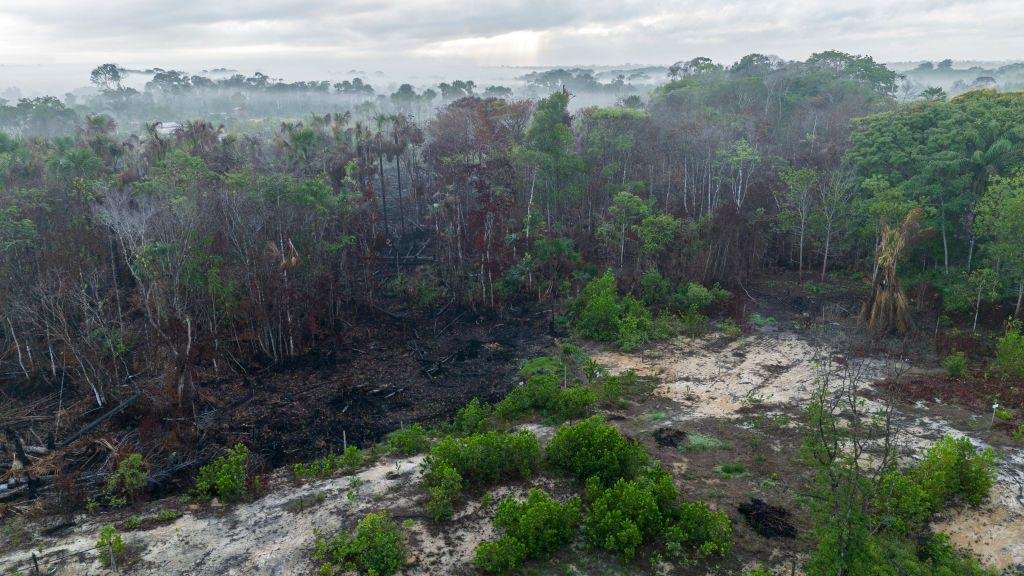
The sharp drop in fires across Brazil's Amazon in 2025 marks a rare moment of progress in a region long scarred by flames and policy battles. Data from MapBiomas shows the burned area fell to its lowest level since records began in 1985, offering concrete evidence that targeted government action can curb destruction even amid ongoing pressures from agriculture and logging. This turnaround arrives after the record-shattering fires of 2024 and raises questions about whether the gains can hold against shifting climate patterns and political choices. For communities in the Amazon basin, from riverine settlements to farming frontiers, the change touches daily realities of air quality, livelihoods, and the forests that sustain regional economies.
Brazil Amazon Fires Reach Record Low Since 1985
Brasília, Brazil — Article continues...
MapBiomas Data Reveal Historic Lows in the Amazon
MapBiomas documented 3.1 million hectares burned in Brazil's Amazon during 2025. That figure stands in stark contrast to the 15.8 million hectares consumed in 2024, when fires reached unprecedented levels across the rainforest. The 2025 total represents the smallest area burned in the Amazon since the project's records started in 1985 and marks a 31 percent reduction below the historical average. Researchers at the Amazon Environmental Research Institute noted the scale of the improvement, with Vera Arruda stating that the numbers demonstrate it is possible to reduce burned areas in the country through sustained measures.
The decline also produced the lowest number of fires recorded in the Amazon in 41 years. These outcomes concentrate in states where cattle ranching and soy expansion have historically driven land clearance, yet the data show measurable restraint compared with prior seasons. Local economies tied to smallholder agriculture and extractive industries felt the effects through reduced smoke and clearer skies during peak dry months. The figures underscore how enforcement changes can alter outcomes on the ground without halting all economic activity in the region.
The sharp drop to 3.1 million hectares burned in 2025, the lowest since MapBiomas records began in 1985 and 31 percent below the historical average, reflects a combination of La Niña-driven rainfall patterns and renewed enforcement actions that curtailed ignition sources across the basin. While natural climate variability played a central role compared with the intense El Niño drought of 2024, satellite monitoring and field operations limited the spread of fires that would otherwise have expanded under drier conditions.
Riverine communities and indigenous territories experienced measurable relief from reduced smoke and ash deposition, which had previously contaminated waterways and disrupted fishing cycles in areas bordering the most affected zones. These populations, often located near fire-prone agricultural frontiers, saw fewer respiratory health incidents and preserved access to traditional livelihoods that depend on intact forest edges.
In contrast to the Amazon, the Pantanal and Cerrado continued to register elevated fire activity in 2025, underscoring how biome-specific vegetation and land-use pressures produce divergent outcomes even under the same national climate regime. The Amazon's denser canopy and higher humidity buffered some ignition events that readily consumed the more open landscapes of the other regions.
Among Amazon states, Mato Grosso, Pará, and Amazonas accounted for the bulk of remaining burned area, though at substantially lower totals than in 2024, highlighting the concentration of fire risk along expanding cattle and soy frontiers where enforcement presence remains uneven.
National Burned Area Trends Across Brazil
Across all of Brazil, burned area totaled 12.7 million hectares in 2025. This compares with 30 million hectares in 2024 and falls well below the all-time high of 30.7 million hectares recorded in 2007. The nationwide improvement reflects reduced fire activity in multiple biomes, though the Amazon accounted for a significant share of the overall drop. Government agencies tracking land use noted that the pattern extended beyond rainforest zones into savanna and agricultural frontiers in central and northern states.
These national numbers carry direct implications for Brazil's position in Latin American environmental policy debates. Neighboring countries facing similar pressures from commodity exports watched the Brazilian results closely, as cross-border fire and smoke events often affect air quality in Peru, Bolivia, and Colombia. The 2025 data provide a benchmark that regional organizations can reference when discussing coordinated fire management strategies.
Climate Patterns Behind the 2025 Improvement
The reduction partly reflects the easing of the extreme 2024 fire season, supported by cooler La Niña conditions that contrasted with the warmer El Niño phase active in 2024. La Niña typically brings increased rainfall to parts of the Amazon basin, limiting the spread of fires started for land clearing. This natural variability interacted with policy shifts to produce the observed decline, though analysts caution that weather alone does not explain the full extent of the change.
MapBiomas issued a direct warning that a return of El Niño conditions could extend the dry season later this year and raise fire risk once more. Such shifts would test the durability of recent gains, especially in areas where logging roads and agricultural expansion continue to fragment forest cover. Communities dependent on seasonal rains for fishing and crop cycles in the northern states remain particularly exposed to these fluctuations.
Policy Reversals Under Lula Compared With Bolsonaro Era
President Lula da Silva pledged zero deforestation upon his election in 2022 and reversed several Bolsonaro-era policies after taking office on January 1, 2023. During Bolsonaro's term, deforestation rose 75 percent over three years, driven by weakened enforcement and expanded permissions for land conversion. The 2025 fire data align with the period following those reversals, including renewed monitoring and penalties for illegal burning.
These policy adjustments connect to broader Latin American discussions about balancing resource extraction with forest protection. Lula's administration emphasized enforcement in federal territories while facing pressure from agricultural lobbies in states such as Mato Grosso and Pará. The results suggest that consistent application of existing laws can produce measurable reductions in burned area, though implementation varies across different administrative regions.
Reinstated IBAMA fines, expanded satellite monitoring through systems such as DETER, and renewed embargoes on illegally cleared land formed the core enforcement mechanisms that contributed to the 2025 decline after years of weakened oversight. These tools allowed authorities to target repeat offenders more effectively once budgets and personnel were restored.
During the Bolsonaro administration, deforestation rose 75 percent over three years largely because of sustained budget cuts to environmental agencies, reduced field inspections, and public signals that penalties would not be pursued, creating an environment in which land-clearing accelerated along existing roads and rivers.
Lula's restructuring of the environmental ministry restored coordination between federal agencies and state governments, re-establishing technical teams that had been dispersed and prioritizing rapid response to detected hotspots rather than relying solely on voluntary compliance.
Congressional resistance from the ruralista bloc has repeatedly sought to dilute these measures through proposed legislation that would ease licensing requirements and limit the scope of embargoes, illustrating the ongoing tension between short-term agricultural expansion interests and long-term forest protection commitments.
Criticisms and Competing Priorities in Amazon Governance
Critics have pointed to Lula's approval of oil exploration at the mouth of the Amazon River as a contradiction with the zero deforestation pledge. This decision highlights tensions between energy development goals and rainforest conservation commitments, particularly in coastal zones adjacent to the main Amazon basin. Environmental groups in Brazil argue that such projects risk undermining the credibility of fire reduction efforts by signaling continued expansion into sensitive areas.
The debate reflects wider challenges across Latin America, where governments weigh short-term economic gains from fossil fuels and commodities against long-term climate stability. Local populations near proposed exploration sites in Amapá and Pará states have voiced concerns about potential impacts on fisheries and traditional livelihoods already stressed by past fire seasons.
Global Significance of the Amazon as Carbon Sink
Tropical rainforests such as the Amazon absorb vast quantities of CO2, yet they face continuous pressure from land clearance for agriculture and logging. The 2025 reduction in burned area preserves more of this carbon storage capacity at a time when global emissions trajectories remain under scrutiny. Brazilian forests contribute to regional rainfall patterns that support agriculture across South America, linking Amazon conditions directly to food production in countries far from the rainforest itself.
International observers track these changes because Amazon fires release stored carbon and reduce the forest's future absorption potential. The MapBiomas findings provide one data point in ongoing assessments of whether Latin American nations can meet collective climate targets while sustaining rural economies. Reduced fire activity in 2025 offers a window into what coordinated national action can achieve when aligned with favorable weather patterns.
Amazon fires release stored carbon into the atmosphere, directly counteracting the forest's role as a net CO2 absorber and adding to the cumulative emissions that the Paris Agreement seeks to limit. The 2025 reduction therefore represents a temporary easing of this pressure, yet the underlying vulnerability to renewed burning remains tied to land-use decisions.
Brazil's hosting of COP30 places additional scrutiny on whether the current decline can be sustained, as international negotiators evaluate progress toward nationally determined contributions that explicitly reference Amazon conservation as a climate mitigation pillar.
Scientific assessments of the Amazon tipping point indicate that continued cumulative deforestation and fire activity could push portions of the forest toward savanna-like states, with the 2025 data showing improvement but not yet reversing the long-term trajectory of degradation observed over prior decades.
Outlook for Dry Season Risks and Required Actions
MapBiomas warned that El Niño could extend this year's dry season and increase fire risk, requiring continued vigilance from federal and state agencies. Maintaining the 2025 gains will depend on sustained enforcement, support for alternative land management practices, and monitoring in high-risk municipalities. Without these steps, the progress could prove temporary as commodity markets continue to incentivize forest conversion.
Regional cooperation across Amazonian countries remains essential, given that fire and smoke cross borders and affect shared ecosystems. Brazilian authorities face the task of integrating fire prevention with economic support for communities in the northern states, where daily dependence on forest resources intersects with national development plans. The 2025 data show what is achievable, yet they also underscore the need for consistent policy application amid shifting climate conditions.
Sustained monitoring expansion, development of alternative livelihoods for smallholders currently reliant on fire-based clearing, and renewed international funding commitments are required to prevent reversion to higher burn levels if climate conditions shift again.
The Amazon Fund remains a central vehicle for channeling international cooperation into verified reduction projects, yet its effectiveness depends on transparent disbursement and measurable outcomes that link funding directly to enforcement and community-level incentives.
Should enforcement capacity weaken once more, historical patterns suggest rapid rebound in burned area, as seen during the prior administration, underscoring the need for institutional safeguards that outlast individual political cycles.
By Elena Vasquez, Staff WriterThis article was produced with AI-assisted research and editorial support. Reporting is based on sources cited in the article.
What's Your Reaction?
 Like
0
Like
0
 Dislike
0
Dislike
0
 Love
0
Love
0
 Funny
0
Funny
0
 Wow
0
Wow
0
 Sad
0
Sad
0
 Angry
0
Angry
0

Latin America Correspondent at Global1.News. Based in Mexico City, covering politics, economics, energy, and culture across the region. Brings an on-the-ground perspective to stories spanning from the Rio Grande to Patagonia.












Comments (0)