
US-Iran War Escalates: Hormuz Crisis and Saudi Nuclear Deal Reshape Gulf Security
The US-Iran war, now in its fifth month since beginning on February 28, 2026, has entered a dangerous new phase. President Donald Trump has threatened to destroy one Iranian bridge or power plant for every commercial vessel targeted in the Strait of Hormuz. On the eleventh consecutive night of US strikes, American forces hit the Iranian island of Larak on July 22.
The Hormuz Flashpoint and Energy Markets
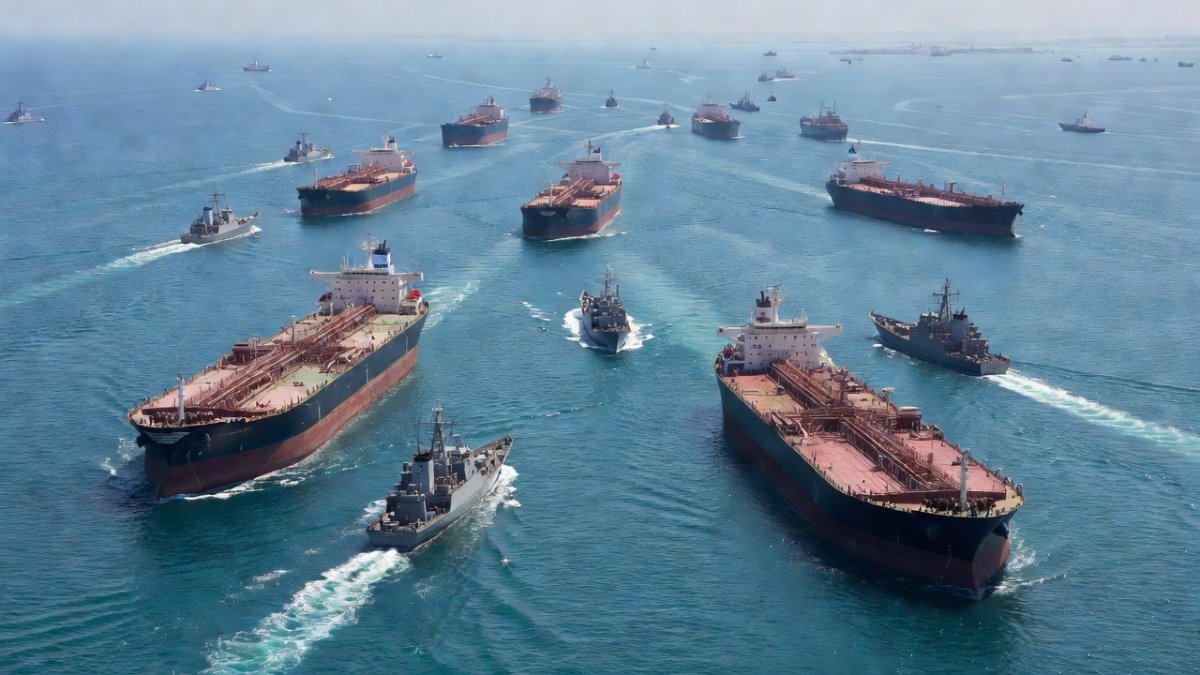
Iran’s attacks on commercial ships in the Strait of Hormuz, which carries one-fifth of global oil and gas supplies, have already lifted international oil prices. Tehran has declared the waterway a red line and warned that further US strikes on Iranian infrastructure will trigger retaliation against all Gulf energy facilities. These threats directly affect Sunni Gulf states whose economies depend on uninterrupted exports.
Brent crude has surged past $98 per barrel, marking a 27 percent increase since the initial Hormuz incidents in early June. This echoes the 1973 oil shock when prices quadrupled after the Yom Kippur War embargo, the 2008 spike driven by supply fears during the Iraq surge, and the 2022 Russia-Ukraine war that pushed prices above $120. Iran’s Revolutionary Guard Navy employs swarming tactics with fast-attack boats and mines, targeting vessels near Larak Island and the narrow 21-mile-wide shipping lanes. Major operators including Maersk and MSC have rerouted tankers around the Cape of Good Hope, adding 12–15 days to voyages and inflating freight costs by 40 percent.
War-risk insurance premiums for Hormuz transits have climbed to 1.8 percent of hull value, compared with 0.3 percent pre-conflict. OPEC+ holds roughly 3.2 million barrels per day in spare capacity, concentrated in Saudi Arabia and the UAE, yet Riyadh has signaled reluctance to release reserves without explicit security guarantees. The UAE has activated its Fujairah terminal bypass pipeline, Kuwait has increased storage at Mina al-Ahmadi, and Saudi Arabia has accelerated East-West pipeline flows to 7 million barrels daily, mitigating some export losses while exposing the structural vulnerability of Gulf economies to even brief chokepoint closures.
US Military Posture and Regional Targets
US forces have also responded to Iranian missile and drone strikes on Bahrain, home to the US Fifth Fleet, and Kuwait. Nearly 100 American troops have been wounded in recent exchanges. The pattern shows Washington prioritizing protection of maritime routes and forward bases while avoiding a full-scale ground campaign. Each side’s leverage rests on the ability to impose asymmetric costs: the United States through air and naval superiority, Iran through proximity to chokepoints and allied militias.
Unlike the 1991 Gulf War’s massive 500,000-troop coalition or the 2003 Iraq invasion’s rapid armored thrust, current operations rely on carrier strike groups and long-range bombers operating from Al Udeid in Qatar and Al Dhafra in the UAE. Munitions include JASSM-ER cruise missiles and GBU-57 bunker busters delivered by B-2 and B-52 aircraft. Iranian retaliation options encompass 3,000-kilometer-range ballistic missiles, Shahed-136 drones, and proxy networks: Kataib Hezbollah in Iraq, Fatemiyoun in Syria, and Houthi forces in Yemen that have already struck Red Sea shipping.
Approximately 13,500 US troops remain forward-deployed across the Gulf, down from 2019 peaks yet sufficient for sustained air and naval campaigns. This posture mirrors the anti-ISIS air campaign’s emphasis on precision strikes but carries higher escalation risks given Iran’s integrated air defenses and willingness to absorb attrition.
Saudi Arabia’s Nuclear Opening
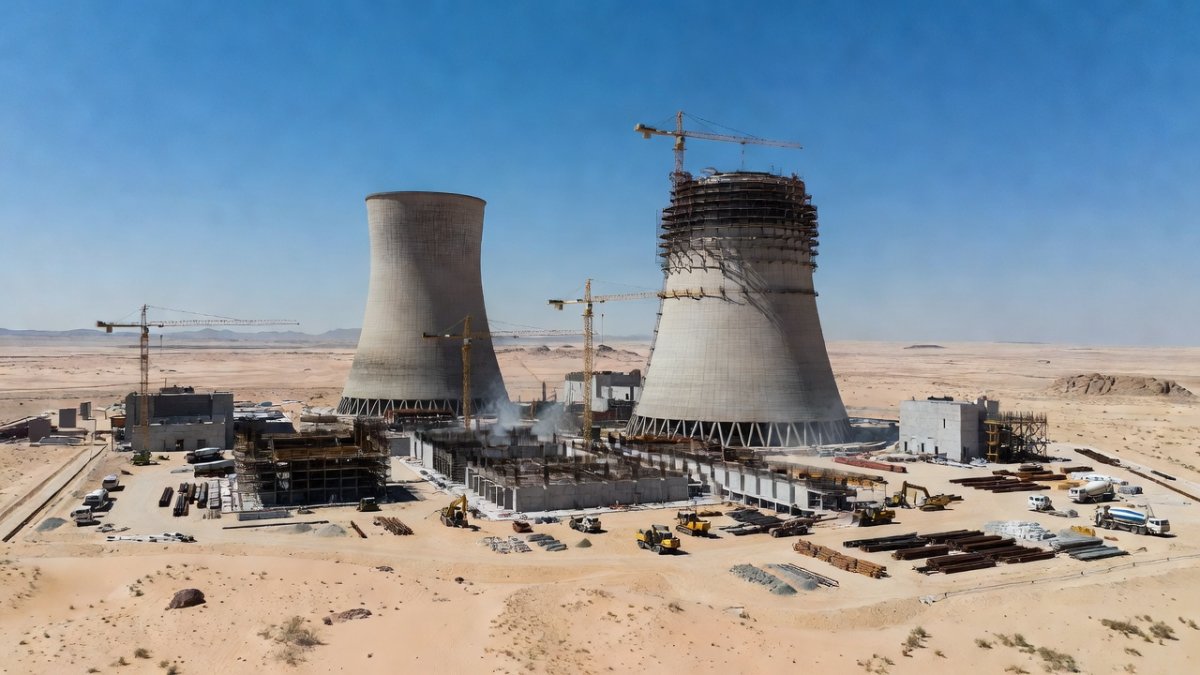
Against this backdrop, President Trump formally approved a 30-year US-Saudi civil nuclear cooperation agreement under Section 123. The deal permits Saudi Arabia to enrich uranium to 10 percent. Riyadh frames the agreement as essential to Vision 2030 diversification away from oil revenues. US lawmakers and Israeli officials have raised proliferation concerns, noting that enrichment technology could shorten any future breakout timeline.
Negotiations trace back to Obama-era talks stalled over enrichment limits and resumed under Biden before collapsing in 2023. The UAE’s Barakah plant, built by South Korea with strict 123 Agreement terms prohibiting domestic enrichment, serves as the non-proliferation benchmark Riyadh seeks to exceed. Precedents at Iran’s Fordow and Natanz facilities demonstrate how even modest enrichment infrastructure can be reconfigured for weapons-grade output within months.
IAEA safeguards under the Additional Protocol would apply, yet congressional critics cite the 2019 Saudi enrichment announcement and Israeli intelligence assessments warning of a potential 10-percent threshold enabling rapid weaponization. Crown Prince Mohammed bin Salman’s strategy ties nuclear power to desalination and hydrogen ambitions, aiming for 17 gigawatts of clean energy by 2040 while securing an implicit US security guarantee against Iranian conventional threats.
Strategic Calculations of Key Actors
Saudi Arabia seeks reliable civilian nuclear power and a stronger security umbrella from Washington while navigating its own tensions with Iran. Iran calculates that sustained pressure on Hormuz shipping can force de-escalation or extract sanctions relief. The United States aims to restore deterrence without committing ground forces that would further inflate the $113.3 billion bill. Israel watches the Saudi enrichment clause closely, weighing normalization gains against new proliferation risks in a region already strained by Sunni-Shia competition.
Iran’s economy contracts under 35 percent inflation and a rial trading at 620,000 to the dollar, with sanctions slashing oil exports to under 400,000 barrels daily. Russia and China have positioned themselves as mediators, offering discounted oil purchases and diplomatic cover at the UN. European efforts center on reviving JCPOA-style talks, while India, importing 40 percent of its crude via Hormuz, has activated strategic reserves and explored overland routes through Chabahar.
Israel retains strike options against Iranian nuclear sites but faces stretched air defenses after repeated Iranian missile barrages. The Abraham Accords framework remains intact yet fragile, with Gulf states conditioning deeper normalization on credible US protection of energy infrastructure.
Second-Order Effects Across the Gulf
Disruption in the Strait has ripple effects on Turkey’s energy imports and on Arab-Israeli normalization talks that depend on stable Gulf economies. Great-power competition adds another layer: China and Russia have offered diplomatic openings to Tehran, while European states urge restraint to protect their own energy security. If the nuclear agreement proceeds, it could accelerate similar requests from other Gulf states, altering the regional non-proliferation landscape.
Lebanon’s Hezbollah has mobilized along the Israeli border, raising the specter of a two-front war. Yemen’s Houthis have intensified Red Sea attacks, while Iraq’s government balances US basing rights against Iranian-backed militia influence. Turkey, a NATO member sharing a 500-kilometer border with Iran, has increased patrols and offered Ankara as a neutral venue for talks, simultaneously expanding arms sales to Gulf clients wary of Iranian missiles.
Historical Context: A Five-Month War
The conflict originated on February 28, 2026, when Iranian-backed militias struck US logistics convoys in eastern Syria, prompting immediate American retaliation against IRGC facilities near Damascus. A fragile UN-brokered ceasefire in late April collapsed in July after Iranian forces mined sections of the Strait and targeted a Bahraini port facility hosting US naval assets.
Key turning points include the May 12 sinking of a Greek-flagged tanker that killed 14 crew members, triggering Trump’s bridge-for-vessel threat, and the June 28 Iranian missile barrage
 on Kuwait’s Al Jaber Air Base that wounded 47 American personnel. These events shifted Washington from limited deterrence to sustained infrastructure strikes, culminating in the July 22 Larak Island operation.
Outlook and Containment Risks
The current trajectory suggests continued tit-for-tat strikes unless both sides establish clearer red lines or back-channel understandings. Any expansion of Iranian attacks on infrastructure beyond Bahrain and Kuwait would likely draw additional US responses, further elevating oil prices and testing the resilience of Vision 2030 projects. Regional actors are therefore balancing immediate security needs against long-term economic and diplomatic goals in an environment where miscalculation carries continent-wide consequences. By Malik Hassan, Staff Writer
This article was produced with AI-assisted research and editorial support. Reporting is based on sources cited in the article.
What's Your Reaction?
 Like
0
Like
0
 Dislike
0
Dislike
0
 Love
0
Love
0
 Funny
0
Funny
0
 Wow
0
Wow
0
 Sad
0
Sad
0
 Angry
0
Angry
0

Middle East Correspondent at Global1.News. Based in Beirut, covering politics, conflict, energy, and society across the Middle East. Brings context and depth to a region often reduced to headlines.














Comments (0)