
South Korea's K-Pop Diplomacy at UNESCO: SEVENTEEN and the Institutionalization of Hallyu Soft Power
South Korea’s strategic deployment of popular culture as diplomatic infrastructure reached a new institutional milestone on 25 June 2026, when SEVENTEEN member Joshua Hong Jisoo addressed UNESCO headquarters in Paris. The event represents a deliberate extension of Seoul’s long-standing Hallyu strategy into multilateral programming, converting commercial cultural reach into meas
South Korea’s strategic deployment of popular culture as diplomatic infrastructure reached a new institutional milestone on 25 June 2026, when SEVENTEEN member Joshua Hong Jisoo addressed UNESCO headquarters in Paris. The event represents a deliberate extension of Seoul’s long-standing Hallyu strategy into multilateral programming, converting commercial cultural reach into measurable diplomatic influence at one of the United Nations’ most prominent specialized agencies.
The June 2026 UNESCO Event as Diplomatic Infrastructure
On 25 June 2026, SEVENTEEN member Joshua Hong Jisoo addressed UNESCO headquarters in Paris during the event “UNESCO x SEVENTEEN: Celebrating Youth, Creativity and Well-Being Together.” The appearance marked the operationalization of a formal partnership initiated when SEVENTEEN was appointed UNESCO’s first Youth Goodwill Ambassadors in June 2024. Joshua’s remarks centered on the phrases “Never Diminish Your Dreams” and “Every Dream Matters,” delivered before UNESCO Director-General Khaled El-Enany and ten youth grant recipients whose projects had been funded through the “Going Together – For Youth Creativity and Well-Being” Global Youth Grant Scheme.
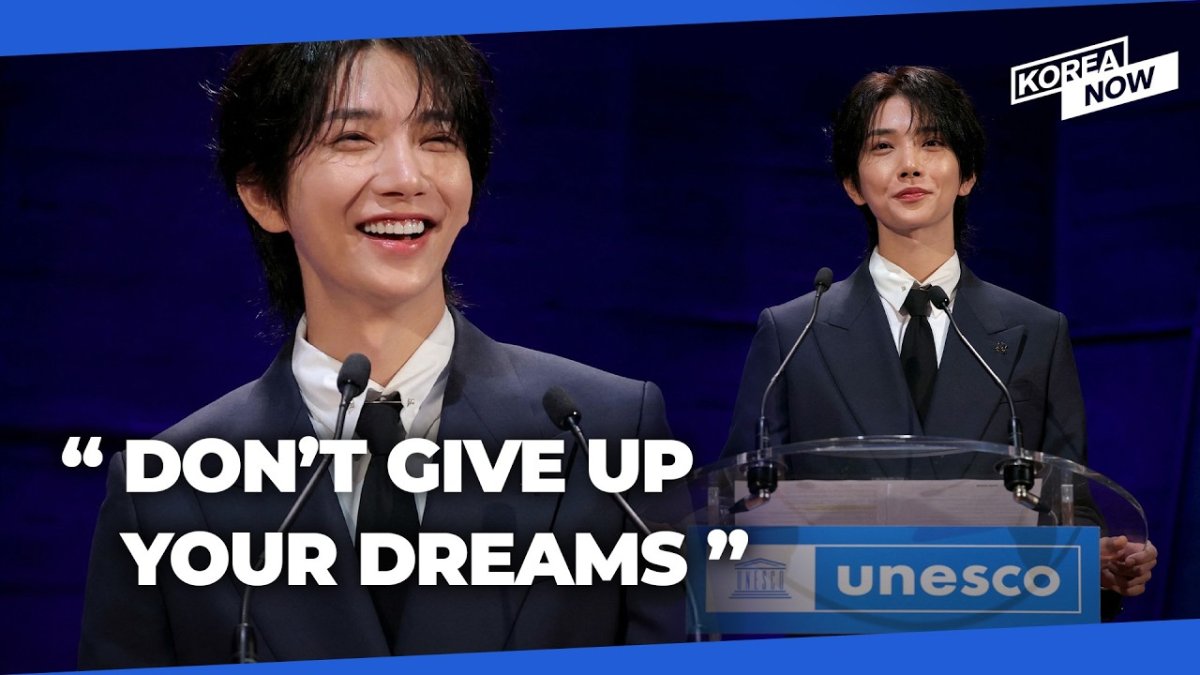
SEVENTEEN member Joshua addresses UNESCO headquarters in Paris on 25 June 2026 (KOREA NOW / YouTube)
The scheme itself originated from a $1,000,000 donation by SEVENTEEN in 2025, which supported 100 youth-led initiatives across themes of mental health, literacy, environmental awareness, and cultural expression. While the public framing emphasized youth empowerment, the event constituted a deliberate extension of South Korean state strategy at a multilateral cultural institution.
Hallyu as State-Sponsored Diplomatic Asset Since the Late 1990s
South Korea began treating popular culture as an instrument of foreign policy in the late 1990s, when the Kim Dae-jung administration identified content industries as a means to overcome the 1997 financial crisis and to project a modern national image. Successive governments have since embedded Hallyu within official diplomatic planning rather than leaving it to market forces alone. Annual content exports now exceed $14 billion, placing Korea among the world’s leading cultural exporters. This economic scale supplies the material basis for diplomatic initiatives that would otherwise lack credibility.
The 2026 UNESCO engagement therefore represents continuity rather than innovation. It follows a pattern in which commercial cultural products are repurposed at international organizations to advance Korea’s middle-power positioning between larger powers and the Global South.
Institutional Architecture: MOFA and the Ministry of Culture, Sports and Tourism
Coordination between the Ministry of Foreign Affairs (MOFA) and the Ministry of Culture, Sports and Tourism (MCST) constitutes the operational core of Korean cultural diplomacy. MOFA supplies the multilateral access and diplomatic framing, while MCST manages content partnerships and funding mechanisms. The SEVENTEEN–UNESCO arrangement was negotiated through this dual structure, ensuring that ambassadorial appointments align with Korea’s priorities at UNESCO’s General Conference and Executive Board. Such inter-ministerial linkage distinguishes Korea’s approach from countries that rely primarily on private foundations or ad-hoc celebrity engagements.
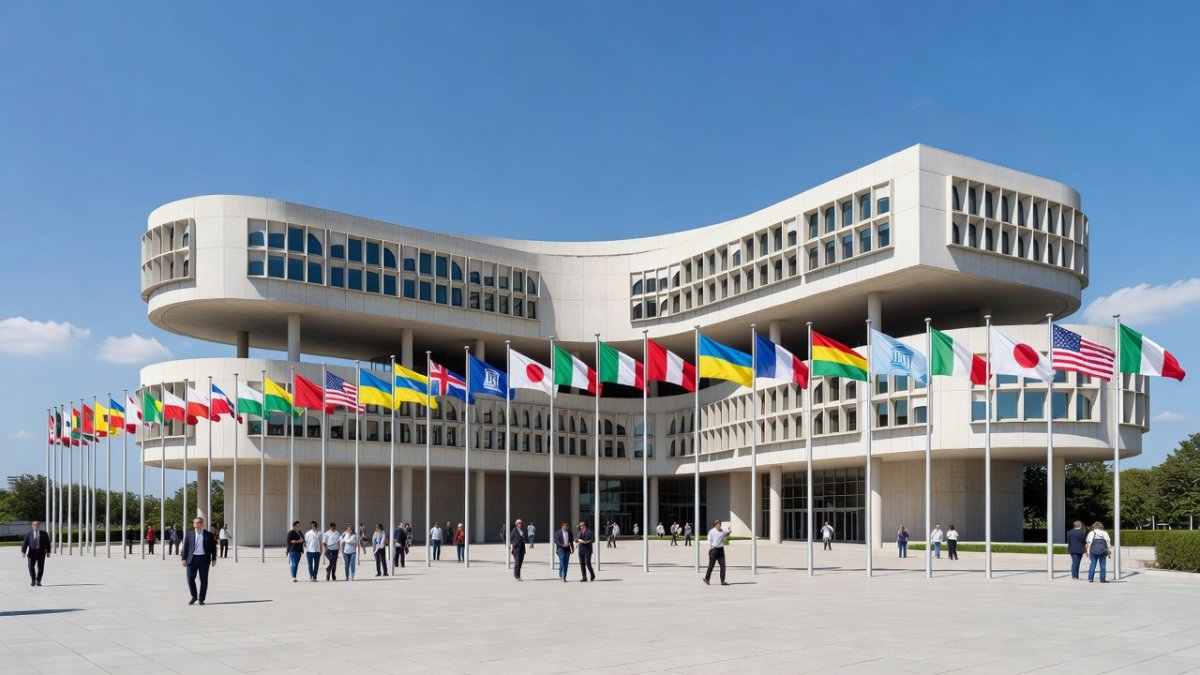
UNESCO headquarters in Paris, venue for South Korea’s cultural diplomacy engagement (Global 1 News)
Previous deployments illustrate the same mechanism. BTS addressed the UN General Assembly in 2018, 2021, and 2023 under joint MOFA–MCST auspices. PSY’s 2012–2013 appearances at the OECD were likewise coordinated to reinforce Korea’s image as an innovative economy. The SEVENTEEN grant scheme extends this model into UNESCO’s youth and education mandate, demonstrating institutional learning across different UN specialized agencies.
Middle-Power Strategy and Non-State Cultural Assets
Korea’s middle-power diplomacy has long sought to leverage non-state assets where traditional hard-power resources remain limited. By embedding K-pop groups within UNESCO’s programmatic work, Seoul converts commercial popularity into recognized diplomatic capital. The 2024 Youth Goodwill Ambassador designation and the subsequent 2026 headquarters event illustrate how private-sector visibility is channeled through state institutions to secure agenda-setting influence in areas such as youth mental health and creative education—domains where Korea can claim distinctive expertise derived from its own rapid development trajectory.
This strategy carries measurable returns. Korea’s consistent presence at high-profile multilateral cultural events has contributed to its election to UNESCO’s Executive Board and to expanded development-cooperation budgets administered through the Korea International Cooperation Agency (KOICA). The SEVENTEEN initiative therefore functions simultaneously as public diplomacy and as an instrument for consolidating Korea’s voice in global governance forums.
Comparative Precedents and Policy Implications
The 2026 Paris speech must be read alongside BTS’s UN addresses and PSY’s OECD performances. Each case demonstrates a sequenced approach: commercial breakthrough, state recognition, multilateral platform, and programmatic follow-up. SEVENTEEN’s $1 million donation and the resulting 100 funded projects represent the programmatic phase, moving beyond symbolic appearances toward sustained project delivery. This evolution suggests that Korean cultural diplomacy is maturing from episodic celebrity moments into institutionalized grant-making capacity.
Policy implications extend beyond image management. Sustained engagement at UNESCO allows Korea to shape global norms on digital literacy and youth well-being—areas where Korean content platforms already hold competitive advantage. It also provides a counterweight to Chinese and Japanese cultural initiatives within the same organization, preserving space for Korean perspectives in Asia-Pacific heritage and education debates.
Strategic Outlook for Korean Multilateral Cultural Diplomacy
The June 2026 event at UNESCO headquarters confirms that South Korea intends to maintain Hallyu as a durable component of its foreign-policy toolkit. Institutional coordination between MOFA and MCST, combined with measurable financial commitments such as the 2025 grant scheme, indicates a long-term strategy rather than short-term publicity. As content exports continue to grow and as new generations of artists reach global audiences, Korea possesses both the economic base and the bureaucratic architecture to convert cultural popularity into tangible influence at international organizations. The SEVENTEEN–UNESCO partnership therefore serves as a concrete illustration of middle-power statecraft that other nations with significant creative industries may seek to emulate.
By Prof. David Park, Staff Writer
This article was produced with AI-assisted research and editorial support. Reporting is based on sources cited in the article.
What's Your Reaction?
 Like
0
Like
0
 Dislike
0
Dislike
0
 Love
0
Love
0
 Funny
0
Funny
0
 Wow
0
Wow
0
 Sad
0
Sad
0
 Angry
0
Angry
0

East Asia/Technology Correspondent at Global1.News. Seoul-based voice covering Korean politics, technology, business, and culture. Analyzes how technology and geopolitics intersect across East Asia.










Comments (0)