
Japan Silver Economy: Tech Empowering Senior Entrepreneurs
Introduction Japan's demographic transformation has created an unexpected wave of innovation among its oldest citizens. With nearly one in three residents now over the age of 60, a growing number of seniors are launching businesses that leverage digital platforms to address social needs. This trend reflects not only economic necessity but also the enabling power of technology t
Introduction
Japan's demographic transformation has created an unexpected wave of innovation among its oldest citizens. With nearly one in three residents now over the age of 60, a growing number of seniors are launching businesses that leverage digital platforms to address social needs. This trend reflects not only economic necessity but also the enabling power of technology that lowers traditional barriers to entry for older founders.
The NHK WORLD-JAPAN documentary highlights how seniors are turning personal passions into viable enterprises. Technology serves as the critical bridge, allowing individuals with decades of experience to reach customers through smartphones and online marketplaces. These developments align closely with Japan's broader vision for a technology-driven society that harnesses the capabilities of all age groups.
Senior entrepreneurship represents a pragmatic response to labor shortages and extended lifespans. Digital tools ranging from e-commerce platforms to AI-assisted services are proving especially effective at integrating older adults into the economy. This shift carries implications for other nations facing similar demographic pressures.
Japan Silver Economy: Tech Empowering Senior Entrepreneurs
Tokyo, Japan - July 5, 2026 - NHK WORLD-JAPAN reports that many Japanese seniors over 60 are starting businesses using digital tools, with e-commerce platforms, smartphone apps, and government digital literacy programs enabling a new wave of senior entrepreneurship across the country.
Japan's Demographic Reality and the Silver Economy
Japan maintains the world's oldest population, with a median age approaching 48 years. More than 30 percent of citizens exceed 60 years old, creating sustained pressure on pension systems and healthcare infrastructure. This reality has accelerated the emergence of the silver economy, where older consumers and producers interact through technology-enabled channels.
Labor shortages across multiple sectors have made senior workforce participation economically essential rather than optional. The government's Lifetime Active Society framework explicitly encourages continued engagement after traditional retirement age. Technology adoption among seniors has risen sharply as a direct consequence of these structural demands.
The silver economy now encompasses everything from specialized e-commerce services to digital health solutions designed for older users. This market segment rewards entrepreneurs who understand both the limitations and the accumulated expertise of aging consumers. Data from government surveys indicate that senior-led ventures frequently target unmet needs in caregiving, education, and local services.
Technology as an Enabler for Senior Entrepreneurs
E-commerce platforms such as Mercari and Rakuten have dramatically reduced the capital and logistical requirements for starting a business. Seniors can list products, manage inventory, and complete transactions entirely through smartphone applications without maintaining physical storefronts. These interfaces have been progressively refined to accommodate users with varying levels of digital familiarity.
Digital payment systems and cloud-based accounting tools further simplify operations for older founders who may lack formal business training. Services like Uber Eats allow individuals to participate in the gig economy on flexible schedules that accommodate health considerations. AI-powered translation and content generation tools help seniors expand their market reach beyond local communities.
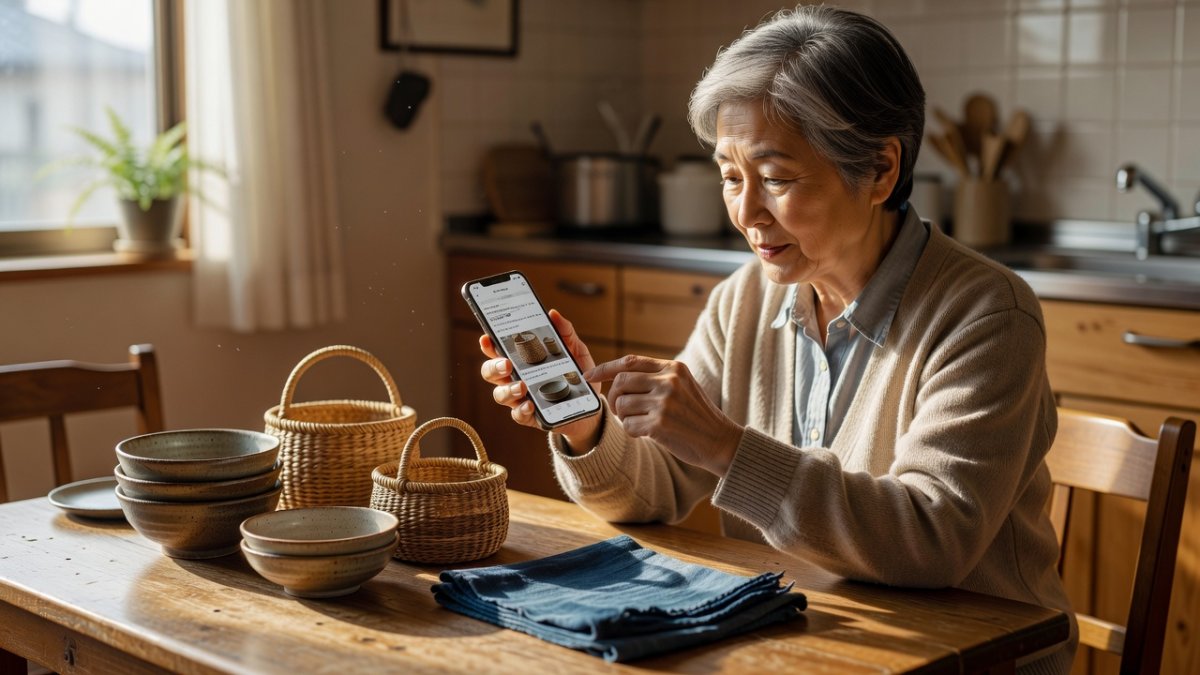
Social media platforms provide low-cost marketing channels that connect senior entrepreneurs directly with niche audiences. Many older founders report using video tutorials and community forums to acquire technical skills rapidly. This combination of accessible hardware and intuitive software has compressed the learning curve that previously discouraged late-career business formation.
Government Policy and Digital Inclusion Initiatives
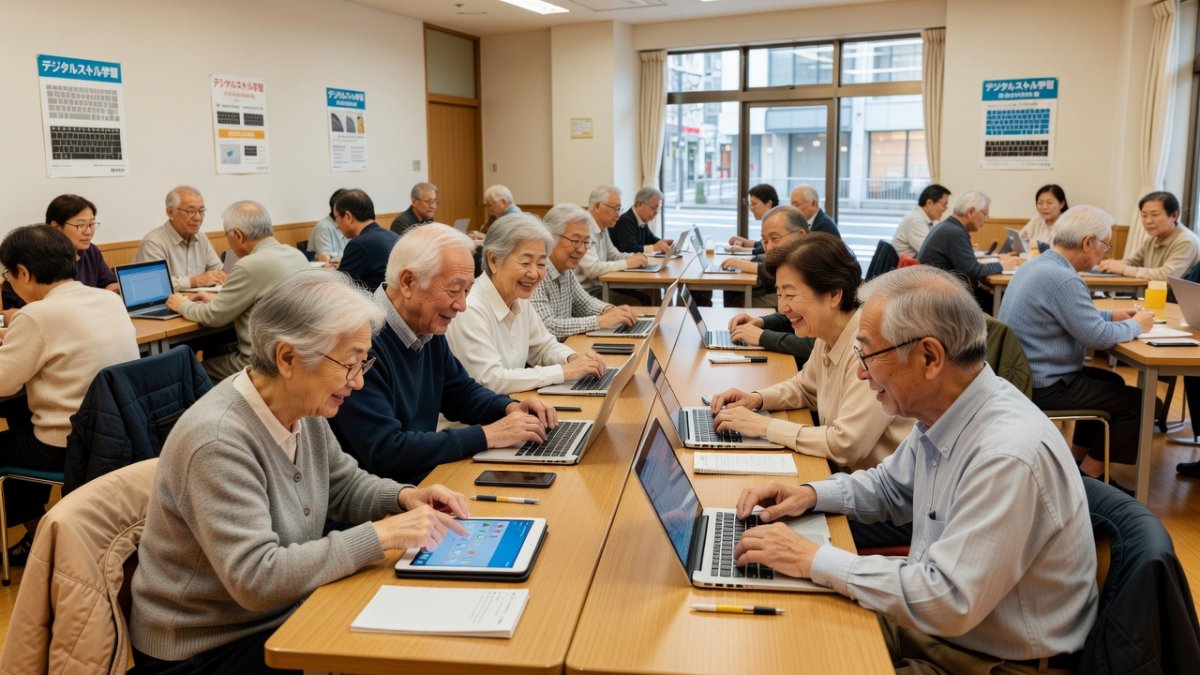
Japan's Digital Agency has prioritized digital literacy programs specifically targeting seniors as part of its broader mandate. These initiatives include subsidized smartphone training sessions and simplified interfaces for public services. The policy framework recognizes that technology access is foundational to sustained economic participation among older adults.
Society 5.0, the national vision for a human-centered digital future, explicitly positions technology as the solution to demographic decline. Government funding supports pilot projects that integrate senior entrepreneurs into regional innovation ecosystems. These efforts include grants for digital platform development and mentorship programs pairing experienced seniors with younger technologists.
Regulatory reforms have also eased business registration processes through online portals. Seniors can now complete incorporation paperwork and tax filings without visiting multiple government offices. This streamlining reduces both time and physical demands that once disproportionately affected older applicants.
Success Stories and Emerging Business Models
Many senior-founded enterprises focus on local food products sold through national e-commerce channels. Former engineers and teachers are applying their expertise to develop educational content delivered via subscription platforms. These models demonstrate how domain knowledge accumulated over decades translates effectively into digital products.
Crowdfunding sites have enabled seniors to test market demand for specialized services before committing significant resources. Several documented cases show retirees launching consulting practices that serve both domestic and international clients through video conferencing tools. The flexibility of cloud infrastructure allows these businesses to scale according to the founder's capacity and health.
Partnerships between senior entrepreneurs and younger developers have produced hybrid ventures combining traditional craftsmanship with modern digital marketing. Such collaborations frequently result in products that appeal to both domestic seniors and overseas collectors interested in Japanese heritage items.
Challenges and Barriers
Despite progress, a persistent digital divide affects segments of the senior population with limited prior technology exposure. Health concerns and varying degrees of visual or motor impairment require continued interface improvements from platform providers. Access to startup capital remains constrained for older founders who may lack conventional credit histories or collateral.
Platform algorithms sometimes disadvantage smaller sellers who cannot invest in paid promotion. Cybersecurity risks present particular concerns for seniors managing business finances online for the first time. Training programs must therefore address both technical skills and risk awareness to ensure sustainable participation.
Regulatory complexity around pensions and part-time income can create uncertainty that discourages some potential entrepreneurs. Clearer guidelines and automated tax tools would further reduce friction for this demographic.
Lessons for Other Aging Societies
Countries experiencing similar demographic shifts can draw direct lessons from Japan's integration of technology policy with senior entrepreneurship support. Early investment in digital literacy yields measurable returns in labor force participation among older adults. Platform design that prioritizes accessibility benefits not only seniors but also users with temporary or permanent disabilities.
International comparisons reveal that Japan's combination of government digital initiatives and private-sector platform development creates a distinctive ecosystem. European and North American approaches often emphasize different balances between regulation and market-driven solutions. Japan's experience suggests that coordinated policy across agencies accelerates adoption rates.
Cross-border knowledge exchange on successful senior entrepreneurship models could benefit multiple developed economies simultaneously. Shared platforms for best practices would reduce duplication of effort in addressing common demographic challenges.
What to Watch For
Future developments will likely include greater integration of generative AI tools tailored for senior users in business contexts. Expansion of voice-activated interfaces and augmented reality applications may further lower remaining barriers. Monitoring adoption metrics from the Digital Agency will provide early indicators of which interventions prove most effective.
International technology firms are increasingly designing products with Japan's silver economy in mind, potentially creating export opportunities for Japanese senior-led startups. Continued evolution of Society 5.0 policies will shape the regulatory environment for these emerging businesses over the coming decade.
The trajectory suggests that senior entrepreneurship will become a permanent feature of Japan's economic landscape rather than a temporary phenomenon. Technology will remain the central mechanism enabling this transition while offering a replicable model for other nations.
By Kenji Tanaka, Staff Writer
This article was produced with AI-assisted research and editorial support. Reporting is based on sources cited in the article.
What's Your Reaction?
 Like
0
Like
0
 Dislike
0
Dislike
0
 Love
0
Love
0
 Funny
0
Funny
0
 Wow
0
Wow
0
 Sad
0
Sad
0
 Angry
0
Angry
0

Japan Correspondent at Global1.News. Tokyo-based voice covering Japanese politics, technology, economy, and culture. Tracks the intersection of tradition and innovation in one of the world's most dynamic societies.















Comments (0)