
Netanyahu-Trump White House Meeting Signals US Backing Amid West Bank Offensive
Netanyahu's upcoming White House meeting with Trump follows a canceled trip and coincides with a wide-scale offensive in occupied West Bank villages. The visit highlights ongoing US-Israel ties amid Palestinian hardships from occupation and displacement, with limited details available beyond the reported schedule and funeral attendance.
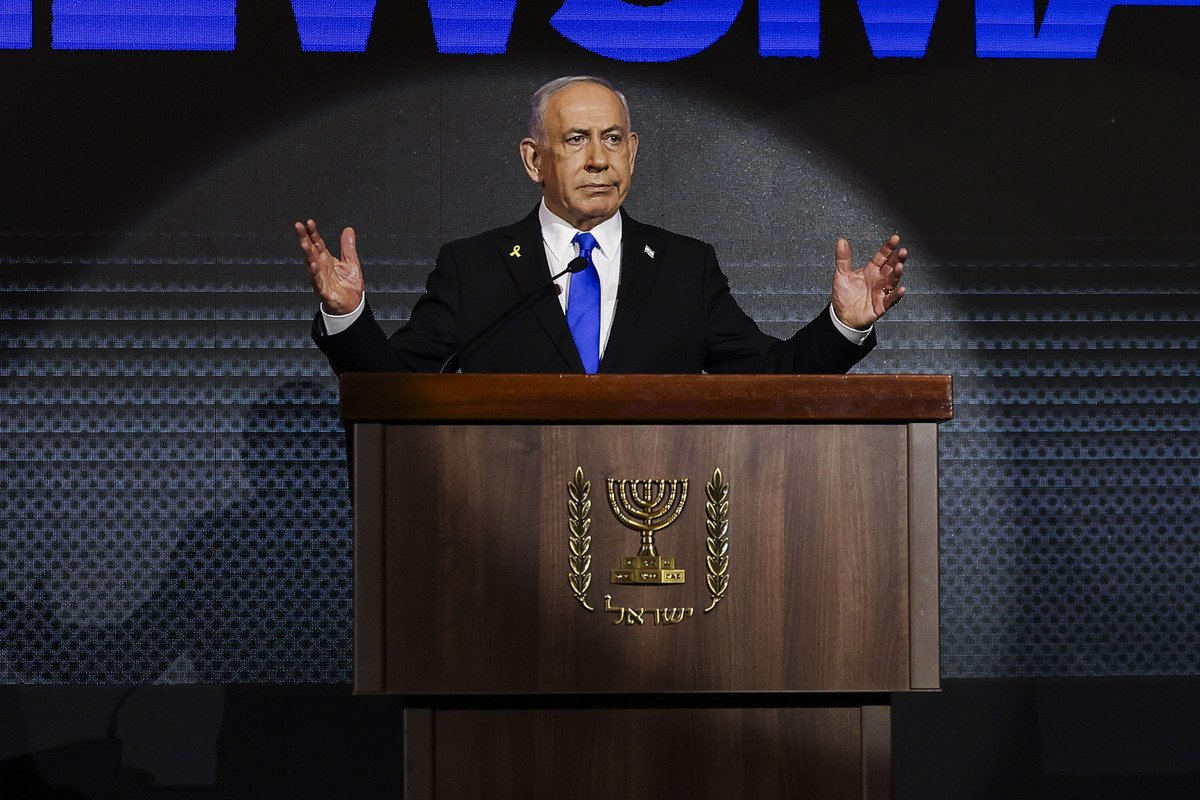
Netanyahu's Washington Trip Signals Continued US Engagement
Jerusalem — Article continues...
Netanyahu's Washington Trip Signals Continued US Engagement
Israeli Prime Minister Benjamin Netanyahu will travel to Washington next week at the invitation of US President Donald Trump, according to Israeli media reports on Friday. Netanyahu is scheduled to fly to Washington on Monday and meet Trump at the White House on Tuesday. He will also attend the funeral of US Sen. Lindsey Graham, as reported by the Israeli news outlet Ynet, citing a statement from his office.
Earlier Cancellation and Revised Plans
Netanyahu had previously canceled a planned trip to Washington after his office stated on July 16 that the funeral appeared to have been postponed until the end of the month. The updated schedule reflects a direct invitation from the US president and aligns with the revised timing of the senator's funeral. This development comes amid ongoing regional tensions.
Link to Military Actions in the West Bank
The visit occurs against the backdrop of Netanyahu ordering a wide-scale military offensive in occupied West Bank villages. Such operations have long contributed to displacement and hardship for Palestinian communities living under occupation. Reports of intensified activity in these areas underscore the daily realities faced by residents amid broader conflict dynamics.
The wide-scale military offensive ordered by Netanyahu encompasses sustained operations across multiple West Bank governorates, including Jenin, Nablus, and Tulkarm, with Israeli forces conducting raids, establishing temporary siege perimeters, and deploying armored units for periods extending beyond two weeks in targeted zones. Villages such as Jenin refugee camp, Qabatiya, and Silat al-Harithiya have faced encirclement, restricting movement and enabling house-to-house searches that disrupt local economies and agriculture.
These measures have imposed severe constraints on Palestinian daily life, with expanded checkpoints causing multi-hour delays for commuters, curfews confining residents indoors after dusk, and repeated school closures affecting thousands of students. Medical access has been hampered by permit denials and roadblocks, leading to documented delays in emergency care, while displacement figures from recent phases exceed 1,200 individuals according to local monitoring groups.
UN agencies and human rights organizations, including the Office of the High Commissioner for Human Rights, have issued statements condemning the scale of operations as of concern, calling for adherence to international humanitarian law and highlighting risks to civilians in affected areas.
Historical Context of US-Israel Diplomacy
Meetings between Israeli leaders and US presidents at the White House have shaped Middle East geopolitics for decades. These engagements often coincide with periods of heightened activity in Palestinian territories, including the occupied West Bank. The current trip follows a pattern where diplomatic scheduling intersects with developments on the ground affecting civilian populations.
Previous Netanyahu-Trump encounters produced concrete shifts in U.S. policy, including the 2017 recognition of Jerusalem as Israel's capital, the 2019 acknowledgment of Israeli sovereignty over the Golan Heights, and the 2020 rollout of the Deal of the Century, which endorsed settlement blocs while sidelining Palestinian statehood aspirations. These outcomes reinforced Israeli negotiating leverage and accelerated trends in occupied territories in the West Bank.
Consistent U.S. diplomatic backing has historically enabled successive Israeli governments to expand settlements and conduct military operations with reduced international repercussions, often through vetoes at the UN Security Council and sustained military aid packages. In contrast, earlier administrations such as those of Obama and Bush occasionally conditioned support on settlement freezes or pursued multilateral frameworks like the Quartet, creating episodic friction absent in the current alignment.
Washington meetings have repeatedly served to legitimize Israeli actions in occupied territories by framing them as security necessities, thereby influencing domestic Israeli politics and emboldening further expansion amid reduced accountability from traditional allies.
Human Rights Dimensions of Regional Developments
Palestinians under occupation continue to experience the effects of military operations, restrictions on movement, and displacement. The announcement of Netanyahu's travel to Washington draws attention to how high-level discussions in the US capital can influence policies that impact human rights in the region. Compassion for those living through conflict remains central to understanding these events.
Documented violations during West Bank operations include arbitrary detentions, excessive use of force at checkpoints, and destruction of civilian infrastructure, as recorded by groups such as B'Tselem and Amnesty International. Restrictions on water access in Area C communities, combined with healthcare barriers from movement controls, have worsened chronic conditions and maternal health risks for Palestinian populations under prolonged occupation.
International law, anchored in the Fourth Geneva Convention and multiple UN resolutions including 242 and 338, designates the West Bank as occupied territory where settlement activity and collective measures are prohibited. Ongoing ICC investigations into potential war crimes continue to examine patterns of conduct in these zones, though enforcement remains limited by jurisdictional challenges.
Personal accounts from affected families illustrate cumulative trauma, with children experiencing interrupted education and adults facing livelihood losses, underscoring how occupation policies intersect with immediate military actions to compound long-term vulnerabilities across generations.
Geopolitical Ripple Effects Across the Middle East
The planned discussions between Netanyahu and Trump at the White House carry implications for stability in the Middle East. Israeli media coverage highlights the trip's timing, which overlaps with funeral arrangements for Sen. Lindsey Graham according to Israeli media. Observers note that such visits can signal continuity in bilateral relations while Palestinian communities navigate the consequences of ongoing offensives.
Regional reactions to intensified U.S.-Israel coordination have included condemnations from Jordan and Egypt, alongside cautious statements from Gulf states wary of domestic backlash. The Abraham Accords normalization trajectory faces renewed strain, as Palestinian grievances risk reigniting public opposition in signatory countries and complicating further diplomatic overtures.
Iran and aligned resistance groups have leveraged the developments to portray U.S. policy as influencing regional dynamics, potentially accelerating proxy activities and rhetorical escalation across the axis. Prospects for a viable two-state solution appear further diminished, with settlement growth and military operations narrowing territorial contiguity essential for future Palestinian sovereignty.
The Arab League and Organization of Islamic Cooperation have convened emergency sessions to coordinate responses, yet internal divisions limit unified action, leaving the peace process increasingly dependent on external mediation amid shifting regional power dynamics.
Perspectives on Occupation and Displacement
Communities in the occupied West Bank have faced repeated rounds of military activity, leading to further displacement and challenges to daily life. The connection between diplomatic travel and ground-level realities illustrates how decisions made in distant capitals affect families enduring occupation. Human rights concerns, including access to resources and safety, form a persistent thread in these narratives.
Analytical Outlook on Future Interactions
As Netanyahu prepares for his Monday flight and Tuesday meeting, the intersection of US political events and Israeli policy decisions remains evident. The earlier postponement and subsequent confirmation of the trip reflect the fluid nature of international scheduling. For Palestinians experiencing the effects of wide-scale operations in their villages, these developments represent another chapter in a long history of regional upheaval.
By Fatima Al-Rashid, Staff Writer
This article was produced with AI-assisted research and editorial support. Reporting is based on sources cited in the article.
What's Your Reaction?
 Like
0
Like
0
 Dislike
0
Dislike
0
 Love
0
Love
0
 Funny
0
Funny
0
 Wow
0
Wow
0
 Sad
0
Sad
0
 Angry
0
Angry
0
Gulf/MENA Correspondent at Global1.News. Based in Doha, covering Gulf politics, energy markets, diplomacy, and development across the Middle East and North Africa. Tracks the economic transformation of the Gulf states.












Comments (0)