
Will the Israel-US-Iran Conflict Become Another Ukraine?
This analysis is based on a Daily Sabah opinion piece published July 24, 2026, examining the Israel-US-Iran conflict and the risk of it evolving into a prolonged hybrid war. The following commentary explores those themes through a regional lens. A Region on the Edge of Prolonged Conflict The Middle East has entered a new phase of hybrid warfare where conflicts prove easier to initiate than to conclude. The ongoing confrontation involving Israel, the United States, and Iran no
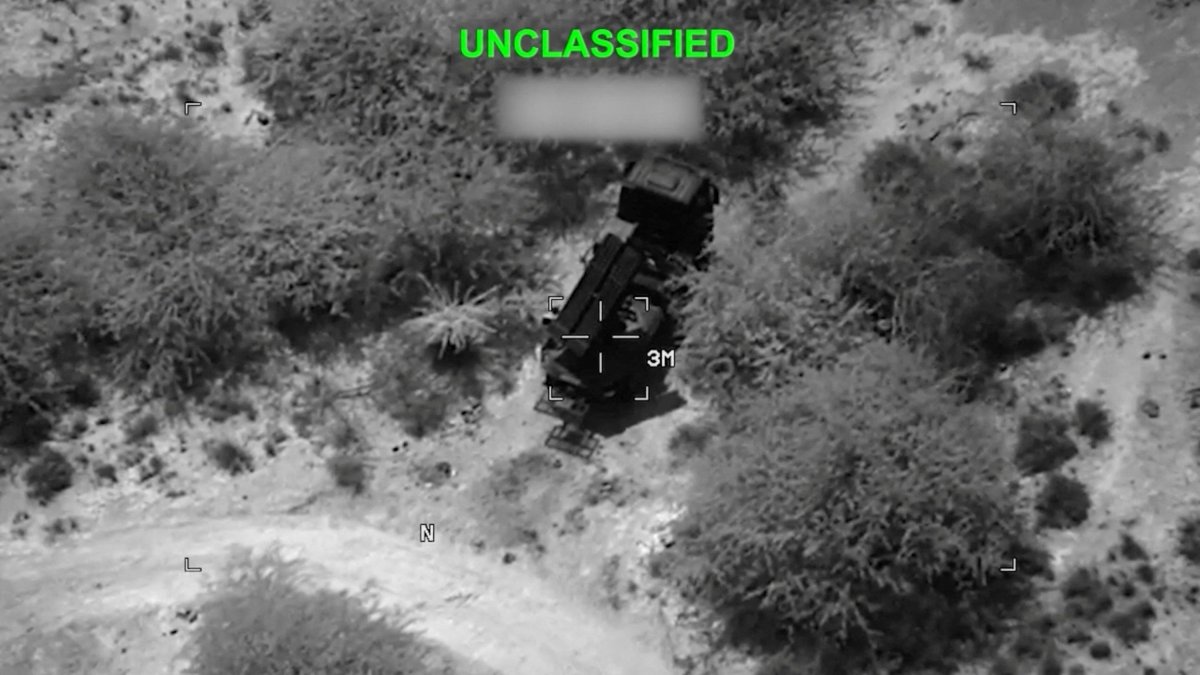
This analysis is based on a Daily Sabah opinion piece published July 24, 2026, examining the Israel-US-Iran conflict and the risk of it evolving into a prolonged hybrid war. The following commentary explores those themes through a regional lens.
A Region on the Edge of Prolonged Conflict
The Middle East has entered a new phase of hybrid warfare where conflicts prove easier to initiate than to conclude. The ongoing confrontation involving Israel, the United States, and Iran now carries the distinct risk of settling into a drawn-out pattern similar to the Russia-Ukraine war, with shifting objectives and external actors holding divergent interests in its duration. This development unfolds against the backdrop of Sunni-Shia tensions, Gulf economic priorities, and great-power maneuvering that could reshape alliances across the region.
The 2006 Lebanon War offers a telling precedent: Hezbollah's sustained rocket barrages and tunnel networks forced Israel into a costly stalemate despite overwhelming conventional superiority. Similar dynamics now appear in the Strait of Hormuz, where Iranian speedboats and anti-ship missiles reportedly threaten substantial daily oil transit volumes. Gulf Cooperation Council states, wary of Iranian retaliation, have quietly expanded joint naval exercises with the U.S. Fifth Fleet while avoiding direct combat commitments. These overlapping deterrence postures risk freezing the conflict into a managed but volatile equilibrium rather than a decisive resolution.
Regional economic data underscore the stakes. Saudi Arabia's 2025 budget reportedly assumes oil prices above a certain threshold; any prolonged closure of Hormuz shipping lanes would erase projected surpluses and force Riyadh to draw down its sovereign wealth reserves. Meanwhile, Chinese state oil trader Unipec has reportedly rerouted a significant share of its Iranian crude purchases through shadow fleets, illustrating how external powers adapt to sustain flows even amid heightened risk. Such adaptations reduce incentives for any party to seek an immediate ceasefire.
Israel-US-Iran conflict dynamics
Washington entered the conflict with expectations of rapid resolution, as then-President Trump initially predicted completion within a week and later claimed that Iran's military infrastructure and war-fighting capacities had been effectively destroyed. Iran responded with notable resilience, demonstrating the ability to strike American bases across the Gulf while threatening U.S. naval assets through its missile capabilities. From the outset, Iran's diplomatic maneuvering repeatedly complicated American calculations, while Trump employed shifting and often contradictory statements. Both sides pursued a highly vague process in which their ultimate objectives remained unclear. The parties eventually announced a sixty-day ceasefire, yet many observers questioned whether it would produce a durable settlement.
U.S. Central Command has deployed carrier strike groups and destroyers to the northern Gulf, while Iran has forward-deployed corvettes and ballistic missiles with extended ranges. The sixty-day ceasefire terms reportedly include mutual stand-downs at a set distance from contested islands and a temporary halt to IRGC drone flights over Iraqi airspace. Verification relies on deconflicting hotlines established in 2023, yet satellite imagery reportedly shows continued construction of underground missile silos near Bandar Abbas, suggesting both sides are preparing for potential resumption.
Israeli F-35I Adir squadrons reportedly conducted a high number of sorties targeting Iranian air-defense nodes in the opening phase, according to a leaked IDF after-action report. Tehran countered with hundreds of ballistic and cruise missiles, reportedly a large percentage of which were intercepted by Arrow and Patriot batteries. These exchange ratios reveal the high operational tempo that could exhaust munitions stockpiles within weeks if fighting resumes, forcing Washington and Tel Aviv to weigh resupply constraints against Iranian production capacity estimated at dozens of missiles per month.
Comparison to Russia-Ukraine war patterns
Recent conflicts from Nagorno-Karabakh to the Russia-Ukraine war have illustrated how hybrid warfare has become relatively easy to start but increasingly difficult to end. When Russia invaded Ukraine, expectations of a swift conclusion gave way to prolonged fighting after initial strategic miscalculations. Ukraine strengthened its resistance through U.S. and European support while adopting new methods of warfare, including drone innovations associated with Selçuk Bayraktar. The Israel-US-Iran conflict shows parallels, as unsuccessful models of extended confrontation appear easiest to imitate. Today's hybrid wars blur the line between war and peace, allowing the interests of directly involved parties to diverge from those of their allies.
The 2014 Gaza conflict demonstrated early drone-swarm tactics that Israel later refined against Hezbollah tunnels; today, Iranian Shahed-136 derivatives reportedly mirror those Ukrainian Bayraktar TB2 successes by targeting static Israeli radar sites. Historical parallels with the 2006 Lebanon War are evident in Hezbollah's continued retention of a large rocket arsenal despite Israeli air superiority, a posture now replicated by Iranian proxy networks in Iraq and Syria. These layered deterrence capabilities transform what began as limited strikes into attritional contests where neither side can achieve decisive victory without unacceptable escalation.
Nagorno-Karabakh's 2020 drone campaign reportedly destroyed a significant portion of Armenian armor in a short period, accelerating global adoption of loitering munitions. Both Israel and Iran have since integrated similar systems into their doctrines, yet neither possesses the industrial depth Ukraine developed with Western aid. This asymmetry favors a grinding stalemate where precision strikes degrade infrastructure without collapsing command structures, echoing the frozen lines that emerged outside Donbas after 2015.
Turkey's role as a stabilizing actor
The Republic of Türkiye has emerged as one of the few countries maintaining domestic stability while actively working to preserve stability across the wider region. From the outset, Ankara sought to prevent the Gulf states from becoming direct parties to the conflict and succeeded to a considerable extent. Türkiye's "terror-free Türkiye" initiative helped facilitate the re-establishment of a unitary Syrian state and demonstrated that the PKK/YPG was far less formidable than many had assumed. This effectively removed what might otherwise have become a significant proxy force available to the United States for use against Iran. Efforts to encourage groups to open a new front against Iran and contribute to internal instability were countered by these Turkish actions.
Ankara's diplomatic outreach to Riyadh and Abu Dhabi in late 2024 produced joint statements urging de-escalation, leveraging Turkey's observer status in the Astana process to coordinate with Russia on Syrian airspace management. This balancing act allows President Erdoğan to maintain NATO Article 5 commitments while preserving reportedly substantial annual trade with Tehran, including critical natural-gas swaps that offset European sanctions pressure. Turkish intelligence sharing on PKK movements in northern Syria simultaneously denies Washington a ready-made proxy corridor into Iran.
By brokering back-channel talks between Baghdad and Tehran, Ankara has also limited Iraqi militia rocket attacks on U.S. bases, reducing the risk of horizontal escalation. These efforts reflect a calculated strategy: preventing any single power from dominating the Levant while positioning Turkey as indispensable mediator for future reconstruction contracts once hostilities subside.
Great power interests (China, Russia) in prolonging the conflict
Just as many in Europe and the United States appear to believe that prolonging the war in Ukraine gradually weakens Russia, it is equally plausible that both China and Russia may see strategic advantages in preventing a quick end to the conflict involving Iran. Other regional and international actors may also hold interests in sustaining the confrontation. The separation of interests between countries directly involved and their allies creates conditions where some parties benefit from extended fighting rather than swift resolution.
China reportedly imports a substantial volume of barrels per day from Iran, representing a notable share of its total crude intake; sustained sanctions relief would flood markets and depress prices below Beijing's preferred band. Russia, meanwhile, reportedly supplies Iran with fighters and components in exchange for drones used in Ukraine, creating a circular dependency that prolongs both conflicts. OPEC+ production cuts announced in December 2024 already reflect Riyadh's recognition that extended Gulf instability supports higher prices.
Moscow's strategic calculus treats Iran as a low-cost proxy partner that diverts U.S. attention from the Black Sea theater. Should Washington commit additional carrier groups to the Gulf, Russian forces gain operational breathing room in Ukraine. These interlocking incentives suggest that great-power patrons may quietly tolerate periodic flare-ups rather than press for comprehensive settlement.
Domestic political dimensions (US elections, Iranian internal dynamics)
The United States has struggled to persuade its own public that it is engaged in a necessary or justified war, with many Americans believing Israel played the decisive role in bringing about the conflict. This discussion has eroded then-President Trump's public support while backing for the war itself continues to decline. Iran hopes to weaken Trump politically ahead of the November elections, though it remains unclear how Trump's electoral defeat would ultimately serve Iran's strategic interests. While Trump has been increasingly preoccupied with domestic political challenges, the Iranian leadership is trying to persuade the Revolutionary Guards and other hardline factions to accept an end to the fighting. Israel, believing Iran has not yet suffered sufficient damage, has intensified its lobbying efforts in Washington in favor of prolonging the conflict, with one of the strongest objections coming from U.S. Vice President J.D. Vance.
A February 2025 YouGov poll reportedly showed limited American support for continued U.S. involvement, with congressional Republicans split between defense hawks and fiscal conservatives wary of another supplemental. Inside Iran, the leadership's hardline coalition faces pushback from technocrats who favor renewed JCPOA talks; IRGC commanders, however, argue that any ceasefire without territorial gains would undermine their domestic legitimacy. J.D. Vance's public skepticism has reportedly delayed additional munitions shipments, creating friction between the White House and pro-Israel caucuses on Capitol Hill.
Israeli lobbying through AIPAC has secured Senate co-sponsors for a resolution opposing premature withdrawal, yet domestic fatigue mirrors patterns seen before the 2021 Afghanistan exit. Iranian factional debates now hinge on whether accepting the sixty-day pause preserves enough missile inventory for future bargaining leverage or signals weakness to domestic hardliners.
Regional implications and what comes next
One can only hope that the Israel-U.S.-Iran conflict does not follow the path of the Russia-Ukraine war and evolve into another prolonged confrontation lasting five years or more. The risk remains that hybrid warfare patterns will continue to separate the interests of participants from those of their allies, making durable settlements harder to achieve. Much can still be said about the course of this war, and numerous theories will continue to emerge regarding its trajectory and the strategic calculations of all involved parties.
Israel's updated security doctrine now prioritizes preemptive strikes on Iranian nuclear sites within a defined timeframe, according to statements from IDF Chief of Staff Herzi Halevi. GCC states have accelerated joint missile-defense integration under U.S. Central Command, yet OPEC+ members remain divided on whether to maintain or expand output cuts should Hormuz traffic drop below certain daily volumes. These contingencies suggest that even a formal ceasefire may leave underlying force postures largely intact.
Should the pause collapse, analysts at the International Institute for Strategic Studies project a notable probability of multi-year attrition warfare, with cumulative costs exceeding substantial figures for regional economies. Diplomatic off-ramps therefore depend less on battlefield outcomes than on whether external patrons — Washington, Beijing, and Moscow — decide that continued friction serves broader geopolitical objectives.
By Malik Hassan, Staff Writer
This article was produced with AI-assisted research and editorial support. Reporting is based on sources cited in the article.
What's Your Reaction?
 Like
0
Like
0
 Dislike
0
Dislike
0
 Love
0
Love
0
 Funny
0
Funny
0
 Wow
0
Wow
0
 Sad
0
Sad
0
 Angry
0
Angry
0

Middle East Correspondent at Global1.News. Based in Beirut, covering politics, conflict, energy, and society across the Middle East. Brings context and depth to a region often reduced to headlines.












Comments (0)