
Trump's 'Honor' Strikes: Nine Nights of Fury Over the Strait of Hormuz
The US-Iran confrontation has become the central axis around which every regional actor now pivots, from Riyadh’s Vision 2030 ambitions to Beijing’s energy contracts and Ankara’s gas imports.
The US-Iran confrontation has become the central axis around which every regional actor now pivots, from Riyadh’s Vision 2030 ambitions to Beijing’s energy contracts and Ankara’s gas imports. Sunni Gulf capitals weigh American security guarantees against the immediate threat of Iranian missiles and drones, while Shia proxy networks from Lebanon to Yemen test the limits of deterrence. Energy markets, sectarian fault lines, and great-power competition converge in a single theater whose outcome will reshape the Middle East for a generation.
Washington, D.C. – July 25, 2026 — Article continues...
Trump's 'Honor' Strikes: Nine Nights of Fury Over the Strait of Hormuz
Trump's Framing of US Strikes as Tribute to Fallen Soldiers
President Trump stated on July 20-21, 2026, that US forces struck Iran "very hard" in honor of American soldiers killed during the conflict. This marked the ninth consecutive night of operations under Operation Epic Fury, which began on February 28, 2026. The remarks came ahead of the dignified transfer of four US service members at Dover Air Force Base on July 22, part of the confirmed 18-20 US personnel killed in action.
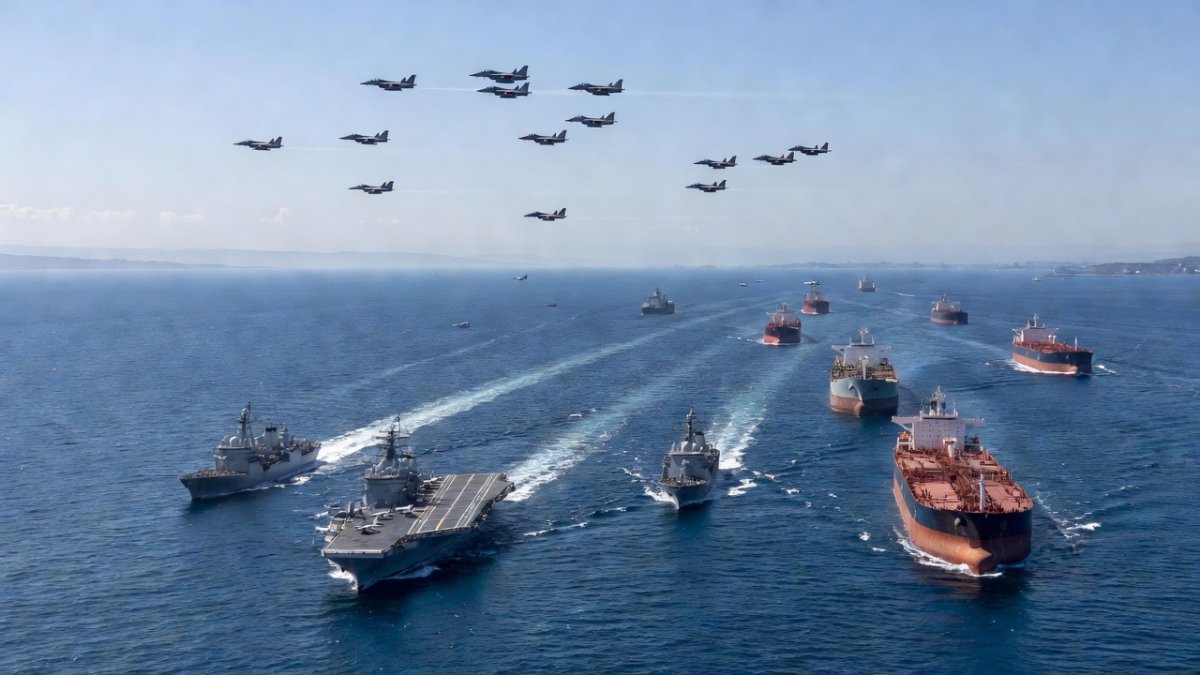
Trump's language ties directly to domestic political calculations while signaling resolve to regional actors. By linking strikes to fallen troops, the administration frames escalation as moral necessity rather than policy choice. This approach resonates with US audiences but complicates diplomacy with Sunni Gulf states wary of prolonged Shia-Iran confrontation.
Collapse of the June Peace Accord and Resumed Hostilities
The 14-point memorandum of understanding signed June 19 in Switzerland offered a narrow window for de-escalation after the initial US-Israeli strikes that killed Supreme Leader Khamenei on day one of the war. That framework collapsed by early July, triggering renewed strikes from July 7 focused on the Strait of Hormuz. Iranian forces responded with drone attacks on US bases in Bahrain, Jordan, and Kuwait, some of which the Pentagon initially underreported.
The 14-point memorandum of understanding signed in Geneva on June 19 outlined precise obligations: Iran committed to capping uranium enrichment at 20 percent, allowing IAEA inspectors full access to Fordow and Natanz facilities within 48 hours, and halting drone shipments to Houthis; the US agreed to release $6 billion in frozen assets via Qatar, pause additional sanctions on Iranian oil exports to China, and limit Israeli overflights in Syrian airspace. Points 7 through 11 addressed proxy de-escalation, requiring Hezbollah to withdraw heavy weapons from the Litani River zone and Iraqi militias to cease attacks on US convoys. Both sides pledged maritime security guarantees in the Gulf, including joint patrols against smuggling.
These terms unraveled between June 25 and 27 when Iranian Revolutionary Guard naval units struck the Liberian-flagged tanker Ever Lovely and the Japanese-owned Kiku with anti-ship missiles near the Strait, killing 14 crew members and spilling 180,000 barrels of crude. Qatari and Omani mediators flew emergency shuttles to Tehran and Washington, offering extended monitoring mechanisms, yet US and Israeli intelligence assessments showed Iran had already enriched 142 kilograms of uranium to 60 percent purity—enough for two bombs if further processed—prompting refusal to extend the truce beyond July 5. The breakdown reflected deeper deterrence failures: Washington and Jerusalem calculated that any pause would allow Tehran to reconstitute missile stocks and proxy networks, while Iranian leaders viewed the MOU as a temporary shield rather than a permanent constraint on nuclear breakout capacity. Strategic calculus on both sides explains the breakdown. Iran sought to retain leverage over maritime chokepoints, while US and Israeli planners viewed the MOU as insufficient to neutralize remaining missile and proxy capabilities. The failure illustrates how quickly tactical pauses can revert to open conflict when core deterrence goals remain unmet.
Strait of Hormuz Blockade and Resulting Energy Market Disruption
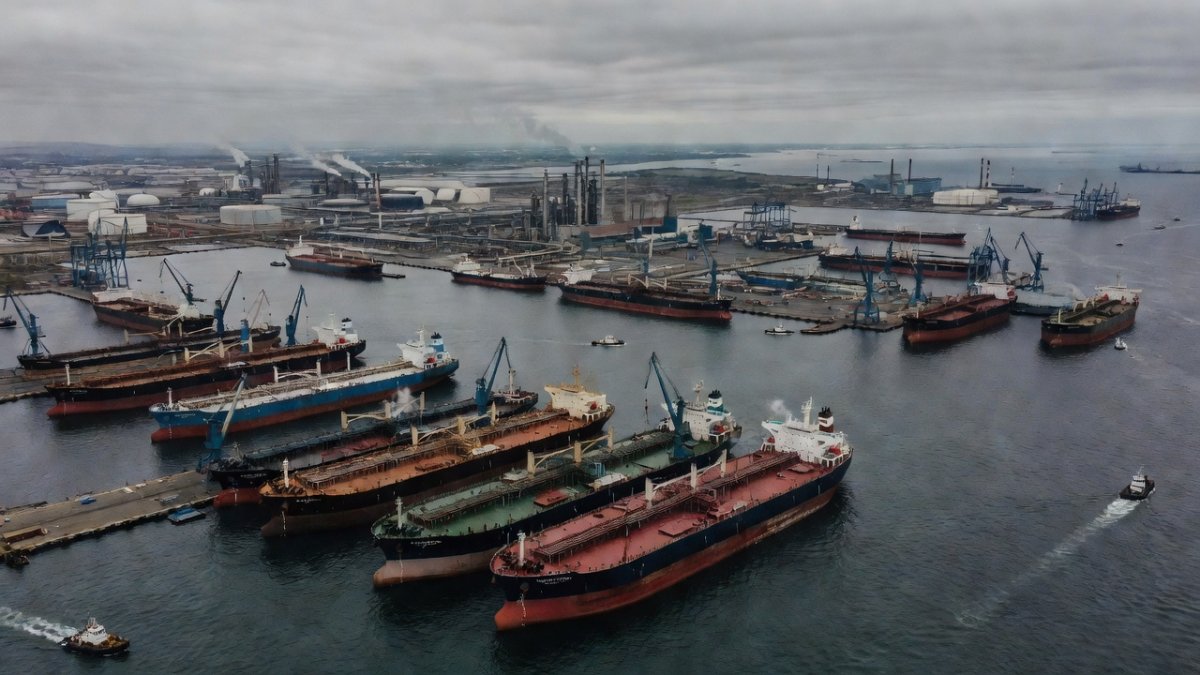
The effective closure of the Strait of Hormuz has disrupted roughly 20 percent of global oil flows, sending immediate shocks through energy markets. Gulf producers face acute pressure as export routes narrow and insurance costs spike. Houthis in Yemen declared a parallel Red Sea blockade, compounding the squeeze on maritime traffic.
Iranian mining and fast-boat operations have effectively closed the Strait since July 7, choking 21 million barrels per day—roughly 20 percent of global supply. Brent crude surged from $78 to $134 per barrel within ten days, while WTI climbed to $129, triggering circuit breakers on NYMEX. Asian economies absorbed the heaviest blow: Japan’s import costs rose 68 percent, forcing Tokyo to activate emergency LNG swaps with Australia; South Korea drew down 12 percent of its strategic reserves; and India, reliant on Iranian and Iraqi crude, saw inflation spike to 9.4 percent, compelling New Delhi to accelerate purchases from Russia’s Arctic fields.
Gulf sovereign wealth funds responded by liquidating $47 billion in European equities to stabilize domestic budgets. Saudi Arabia’s Public Investment Fund paused several Vision 2030 giga-projects, including the $500 billion NEOM expansion, as oil revenue shortfalls reached $28 billion monthly. China and India together released 45 million barrels from reserves, while war-risk insurance premiums for tankers jumped from 0.3 percent to 4.7 percent of hull value. Alternative routes via the Red Sea remain blocked by Houthi attacks, and the proposed 1.5-million-barrel-per-day Iraq-to-Jordan pipeline faces repeated sabotage, leaving Gulf producers with few immediate workarounds and deepening dependence on Chinese mediation for any future reopening. Analysis of Gulf diversification strategies shows why this matters. Saudi Arabia and the UAE have invested heavily in non-oil sectors, yet their fiscal buffers still depend on stable hydrocarbon revenues. Prolonged closure risks accelerating Chinese and Indian efforts to secure alternative supplies, weakening traditional US leverage in energy diplomacy.
Gulf States' Dilemma Between US Security Guarantees and Iranian Retaliation
Monarchies in Riyadh, Abu Dhabi, and Manama must balance reliance on US extended deterrence against the reality of Iranian drone strikes on nearby bases. The presence of US forces in Bahrain and Jordan has turned these states into potential targets, raising questions about the sustainability of Arab-Israeli normalization efforts under active conflict conditions.
Saudi Arabia’s Crown Prince Mohammed bin Salman faces an acute trade-off between Vision 2030’s $1.5 trillion diversification targets and the risk of Iranian missile barrages on Jubail and Yanbu petrochemical complexes. Riyadh has quietly reduced public criticism of Tehran while accelerating Chinese-mediated talks, yet it still hosts US THAAD batteries whose presence invites proxy strikes. The UAE’s earlier 2023 withdrawal from the Saudi-led Yemen coalition demonstrated Abu Dhabi’s willingness to prioritize economic resilience over collective defense, a precedent now influencing its restrained response to Iranian drone overflights.
Bahrain, home to the US Fifth Fleet’s 7,000 personnel, remains acutely vulnerable; Iranian attacks on Isa Air Base in July killed two Bahraini soldiers and damaged radar installations. Qatar continues its dual-track diplomacy, maintaining the Al Udeid airbase while hosting Hamas and Iranian officials, thereby preserving leverage with both Washington and Tehran. The Abraham Accords process has stalled, with only two additional normalization agreements signed since February; Jordan and Egypt have signaled they will not expand security cooperation until the current round of strikes concludes, fearing domestic backlash and Iranian-backed unrest in the West Bank and Sinai. Regional actors calculate that open alignment with Washington invites proxy retaliation, while hedging invites US criticism. This tension echoes broader Sunni-Shia competition, where Gulf capitals seek to limit Iranian influence without triggering wider sectarian mobilization across Iraq, Lebanon, and Yemen.
US Military Escalation and Pentagon Reporting Gaps
The July 23 deployment of B-1 bombers marked the first use of the platform since hostilities resumed. Defense Secretary Pete Hegseth described the campaign as a "historic and overwhelming victory," citing Iranian military casualties estimated between 1,800 and 7,650 killed, with total deaths across the conflict ranging from 8,080 to 18,305. War costs have already exceeded $113 billion.
Questions persist about information control. The Pentagon's initial underreporting of Iranian strikes on Jordanian facilities suggests deliberate management of public perception. Such gaps affect allied confidence and complicate assessments of Iranian residual capabilities.
Regional Stability Implications and the Risk of Perma-Crisis
Continued operations raise the prospect of a "perma-crisis" stretching across the Levant, Arabian Peninsula, and maritime routes. Israeli-Palestinian dynamics remain frozen amid the larger confrontation, while Turkey's foreign policy options narrow between NATO alignment and energy interests with Gulf states. Great power competition intensifies as Russia and China position themselves to exploit any US overextension.
Israel has achieved tactical gains by degrading Iranian air defenses and proxy command nodes, yet the cumulative cost exceeds $28 billion in munitions and reserve call-ups, with Hezbollah retaining an estimated 120,000 rockets despite leadership losses. Turkey balances NATO Article 5 obligations against its 42-billion-cubic-meter annual gas imports from Russia and Iran, limiting Ankara’s willingness to host additional US strike aircraft. China’s $400 billion energy contracts with Tehran give Beijing strong incentives to prevent total Iranian collapse, while Russia supplies Iran with air-defense components in exchange for Shahed drone technology.
Proxy dynamics across Iraq, Syria, and Lebanon continue to escalate: Iraqi militias have launched 47 attacks on US positions since June, and Hezbollah’s cross-border fire has displaced 60,000 Israelis. The humanitarian toll inside Iran includes 4,200 civilian deaths from strikes on fuel depots and power plants, driving internal displacement of 1.2 million people and food-price inflation above 300 percent. Without a negotiated off-ramp addressing both nuclear thresholds and maritime security, the region risks locking into a prolonged cycle of tit-for-tat strikes that erodes state capacity and invites further great-power opportunism. Strategic analysis indicates that neither side has achieved decisive objectives sufficient for lasting de-escalation. Iran's nuclear program remains a latent concern, and proxy networks retain operational reach. Gulf states face difficult choices between deeper integration with Israeli security structures and preserving autonomy from direct US-Iran fighting. The coming months will test whether energy market pressures force new diplomatic openings or entrench the current cycle of strikes and blockades.
By Malik Hassan, Staff WriterThis article was produced with AI-assisted research and editorial support. Reporting is based on sources cited in the article.
What's Your Reaction?
 Like
0
Like
0
 Dislike
0
Dislike
0
 Love
0
Love
0
 Funny
0
Funny
0
 Wow
0
Wow
0
 Sad
0
Sad
0
 Angry
0
Angry
0
Middle East Correspondent at Global1.News. Based in Beirut, covering politics, conflict, energy, and society across the Middle East. Brings context and depth to a region often reduced to headlines.












Comments (0)