
23 Governors Just Signed Trump's Data Center Pledge - Here's What They're Not Telling You About Your Electric Bill
President Trump announced 23 Republican governors have signed his non-binding Ratepayer Protection Pledge for data centers, as residential electricity prices surge 25% since 2020 and utility shut-offs hit 4 million households. But the pledge has no enforcement mechanism.
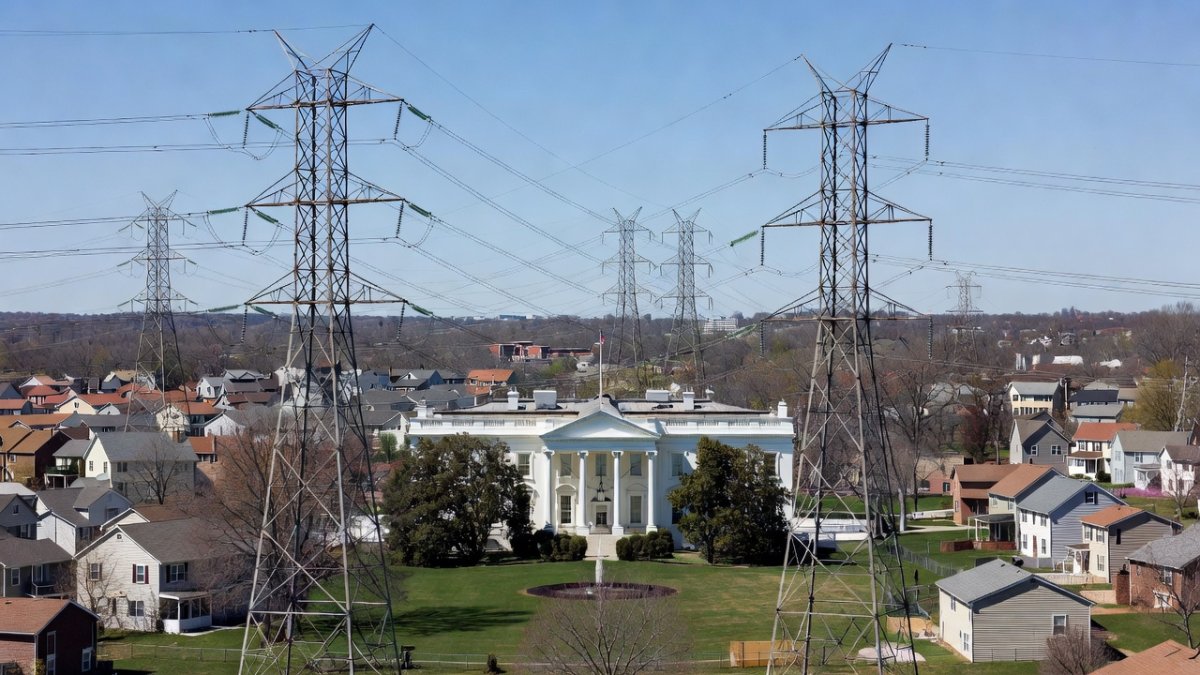
23 Governors Just Signed Trump's Data Center Pledge — Here's What They're Not Telling You About Your Electric Bill
Let me tell you something that's been sitting wrong with me since this morning.
President Trump stood at the EPA headquarters today with four Republican governors and announced that 23 governors have signed his "Ratepayer Protection Pledge" — a non-binding document that supposedly protects American households from bearing the cost of the AI data center buildout. Seven of the world's largest tech companies — Google, Microsoft, Meta, Oracle, xAI, OpenAI, Amazon — already signed it back in March.
And I read the pledge. I read the White House press release. I looked at who signed it, who didn't, and what happens next. And folks, I am not comforted. Not one bit.
Here's what nobody in that EPA room is telling you about your electric bill.
The Pledge — What It Actually Says
The Ratepayer Protection Pledge commits signers to "protect American consumers from price hikes due to data center energy and infrastructure requirements, and lower electricity costs for consumers in the long term." The governors who signed on commit to "implement the principles established in the Ratepayer Protection Pledge, to the greatest extent possible in our respective positions."
Let me translate that for you. "To the greatest extent possible" means "when it's politically convenient." "Non-binding" means there is no enforcement mechanism. Zero. Zilch. The pledge has about as much legal teeth as a New Year's resolution.
Trump called data centers "big, strong, bold, and Money Machines" in a social media post last week. And he's right about one thing — they are money machines. But the question nobody in that room answered today is: whose money are we talking about? Because right now, the data shows that money is flowing out of residential ratepayer pockets and into hyperscaler balance sheets.
The Electricity Price Crisis — By the Numbers
Let me give you some numbers that should make every one of you sit up straight.
Between 2020 and 2024, residential electricity prices in the United States increased by 25 percent. That's not inflation-adjusted. That's real dollars coming out of your pocket every month. Household utility debt in this country reached $25 billion by mid-2025. Utility shut-offs hit 4 million households that same year.
Between March 2021 and March 2026, according to federal energy data cited by PolitiFact, average residential retail electricity prices rose 94 percent in Washington D.C., 74 percent in Maryland, 73 percent in Maine, and 58 percent in New York. These are not normal numbers. These are crisis numbers.
And what's driving it? AI data centers now consume roughly 4 percent of total U.S. electricity — heading to an estimated 8 to 10 percent by 2030, according to the IEA. In Northern Virginia's "Data Center Alley," data centers accounted for almost 40 percent of the state's total electricity consumption in 2024. In Virginia, a county with 37 data centers is bracing residents for a 25 percent rate hike.
Average U.S. residential electricity prices hit about 19 cents per kilowatt-hour by the end of 2025 — up roughly 27 percent from 2019, and around 40 percent since 2021. That outpaced overall inflation. Your electricity bill is growing faster than almost everything else you pay for.
Who Signed, Who Didn't, and Why That Matters
The 23 governors who signed the pledge are all Republicans. Kay Ivey of Alabama. Brian Kemp of Georgia. Kim Reynolds of Iowa. Mike DeWine of Ohio. Greg Abbott of Texas. Bill Lee of Tennessee. Spencer Cox of Utah. These are not swing states on the data center question — they're states where data center development is already happening or actively sought.
But here's what's interesting. Three Republican governors did NOT sign. Vermont's Phil Scott. New Hampshire's Kelly Ayotte. And Florida's Ron DeSantis — who signed a new state law this year implementing strict regulations on data centers, including measures to prevent cost pass-through to residential ratepayers. DeSantis has been a prominent critic of data centers' economic impact on residents, though he also pushed to renew tax breaks for them — a contradiction I'll come back to.
And zero Democrats signed. Zero. This pledge is now a partisan document in an issue that affects every American household regardless of party registration. That alone tells you something about how this is being framed — not as consumer protection, but as a political messaging tool.
New York Governor Kathy Hochul, a Democrat, issued an executive order last week placing a one-year pause on data centers consuming 50 megawatts or more. Trump called it a "terrible decision." Hochul called it protecting New Yorkers from an uncontrolled buildout. Both are playing politics, but Hochul actually did something with legal force. The pledge? It's a press release with signatures.
The 75-Project Black Eye
Here's the context the White House press release conveniently left out. Opponents have successfully blocked 75 planned data center projects in the first quarter of 2026 alone. 75. That includes the $165 billion Project Jupiter pipeline that was rejected not once, but twice. That's not NIMBYism — that's a structural rejection of the current buildout model.
Nationwide, 142 protests across 42 states on July 18 alone — I wrote about that a couple days ago. 69-plus local moratoriums or bans in effect. Communities in Georgia fighting eminent domain seizures for transmission lines. Towns in Ohio pushing back against Meta's "tent data centers" with off-grid gas plants. Virginia suburbs organizing against yet another data center campus in their backyard.
This backlash is the reason the pledge exists. The White House needed a response to the growing perception that data centers are driving up electricity costs for everyone else. So they created a document that says the right things, got a bunch of people to sign it, and called it a day. The problem is that the document has no enforcement mechanism, no penalties for non-compliance, and no independent monitoring.
And the people who DID sign — the seven tech giants — are the same companies whose data center buildout is driving the demand that's raising electricity prices in the first place. Google, Microsoft, Meta, Oracle, Amazon — these are the companies spending a combined $725 billion on AI infrastructure in 2026. They signed a pledge promising not to pass costs to ratepayers. But their own data centers don't pay residential rates — they negotiate industrial power purchase agreements at wholesale rates. The cost that gets passed to residential ratepayers is the grid infrastructure upgrades needed to support their facilities. New transmission lines. New substations. Grid hardening. All of that gets baked into the rate base. All of it gets paid by you.
The Structural Contradiction — Subsidies, Tax Breaks, and "Protection"
Here's the contradiction that nobody in the mainstream coverage is connecting. DeSantis signed strict data center regulations in Florida this year. But Florida also gives millions in tax breaks to data centers. Multiple states offer sales tax exemptions, property tax abatements, and infrastructure subsidies to attract data center investment — while simultaneously signing a pledge to "protect consumers from price hikes."
You cannot do both. You cannot give a data center a 10-year property tax abatement AND promise residents their rates won't go up. The lost tax revenue has to be made up somewhere. That somewhere is residential ratepayers.
The Hyperscaler Argument — the one you'll hear from every tech company PR department — is that data centers bring jobs, tax revenue, and economic growth to communities. And there's some truth to that. A data center construction project employs hundreds of workers. But the operational workforce for a 200MW facility is maybe 50 people. The jobs argument collapses under its own weight when you compare the 50 permanent jobs to the strain on the local grid serving 200,000 homes worth of electricity demand.
What This Actually Means for Independent Hosting Providers
First — watch what happens with utility rate cases in your state. The pledge is non-binding, but it creates political cover for public utility commissions to scrutinize data center tariff structures. If you're colocated in a facility that negotiates industrial power rates, those rates could change if regulators start applying the pledge's principles to corporate PPA negotiations. Monitor your power costs like a hawk.
Second — the political landscape just got more complicated. Data centers are now a partisan issue. That means siting approvals, tax incentives, and grid interconnection queues will vary dramatically between red and blue states. Blue states like New York are imposing moratoriums. Red states are signing pledges but still offering tax breaks. The regulatory patchwork is going to get worse before it gets better. Factor state-level political risk into your colo location decisions.
Third — the non-binding nature of the pledge is actually good news for independent operators. Here's why: if the pledge had legal teeth and actually forced hyperscalers to bear their full grid infrastructure costs, their total cost of ownership would increase significantly. That would make independent hosting — where you're not subsidizing a $205 billion capex plan — even more competitive on price. The pledge's weakness is your pricing opportunity.
Fourth — position yourself as the transparent alternative. When your customers ask about power costs, you can tell them the truth: your data center costs include the actual cost of electricity, not a subsidized rate that somebody else's residential customers are covering. That level of transparency is something no hyperscaler can offer right now. Use it.
The Structural Reality — Nobody's Solving the Core Problem
A press release with 30 signatures doesn't build a single mile of transmission line. It doesn't install a single substation. It doesn't reduce the 8 to 10 percent of U.S. electricity that AI data centers will consume by 2030.
The core problem is structural: the United States does not have the electrical infrastructure to support the current AI buildout trajectory, and there is no political consensus on who should pay for the upgrades. The pledge papered over that disagreement with nice language and a signing ceremony at the EPA. But the underlying tension — between hyperscaler demand, community resistance, and residential affordability — is not resolved. It's not even close to being resolved.
And here's the thing that keeps me up at night: every month that passes without a real solution, the gap between what the grid can deliver and what AI infrastructure needs grows wider. More projects get blocked. More communities organize. More rate cases get filed. The pledge doesn't solve any of that. It just kicks the can down the road.
The Bottom Line
Twenty-three governors signed a piece of paper today. Seven trillion-dollar tech companies signed the same piece of paper four months ago. And the only guarantee in that entire document is that nobody is legally obligated to do anything.
Meanwhile, your electric bill is 25 percent higher than it was four years ago. Utility shut-offs hit 4 million households last year. Household utility debt hit $25 billion. And the companies driving that demand are getting tax breaks and signing pledges that mean nothing.
I'm not saying data centers are bad. I run a hosting business. I understand what it takes to power compute infrastructure. But I'm saying that the current model — where residential ratepayers absorb the grid upgrade costs while hyperscalers get the revenue — is not sustainable. And a non-binding pledge with no enforcement mechanism is not a solution. It's a press release.
Watch your electric bill. Watch your state's utility commission. And if a data center developer comes to your town promising jobs and tax revenue while asking for a 10-year property tax abatement, ask them one question: if you're such a "Money Machine," why can't you pay your own way?
— Allan Ali, Founder
This article was produced with AI-assisted research and editorial support. Reporting is based on sources cited in the article.
What's Your Reaction?
 Like
0
Like
0
 Dislike
0
Dislike
0
 Love
0
Love
0
 Funny
0
Funny
0
 Wow
0
Wow
0
 Sad
0
Sad
0
 Angry
0
Angry
0

Publisher of Global1.News. Automation architect, systems builder, and the guy making sure the truth gets published.














Comments (0)