
Still No US-NK Diplomacy as Kim Jong Un Prepares for a 'New Era'
Still No US-NK Diplomacy as Kim Jong Un Prepares for a 'New Era' The Significance of the 10th Enlarged Meeting of the 8th WPK Central Committee The 10th Enlarged Meeting of the 8th Central Committee of the Workers' Party of Korea represents a high-level convening of senior party officials summoned directly by Kim Jong Un to address pressing national priorities. This gathering o
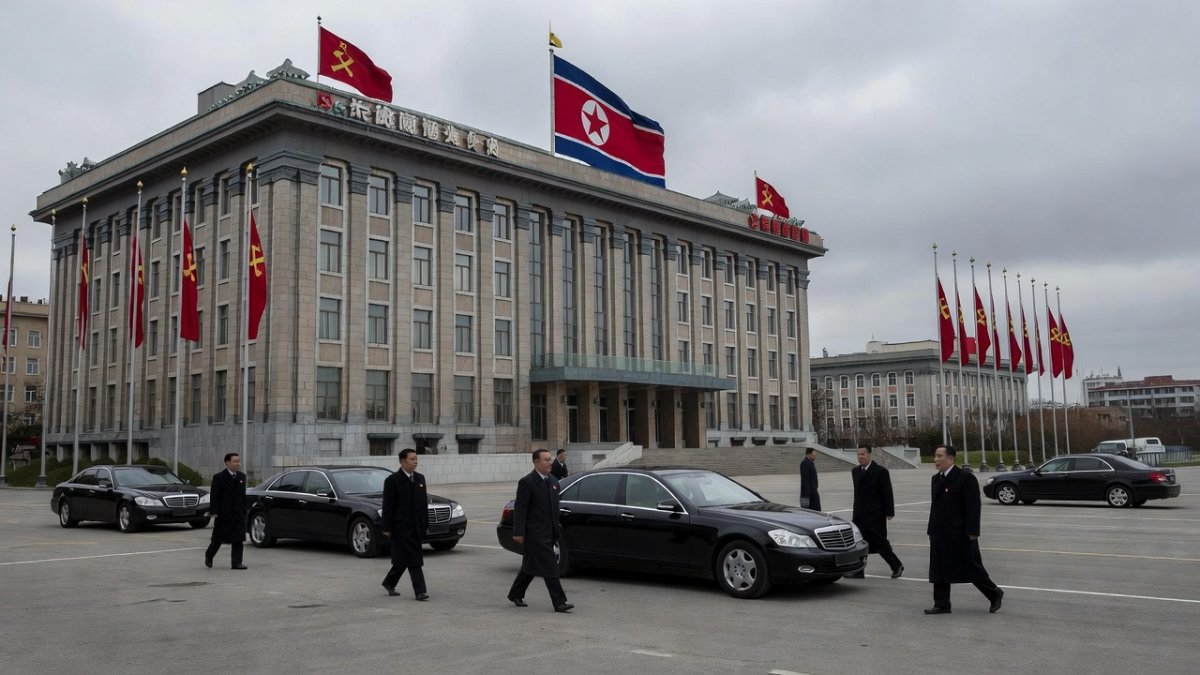
The Significance of the 10th Enlarged Meeting of the 8th WPK Central Committee
The 10th Enlarged Meeting of the 8th Central Committee of the Workers' Party of Korea represents a high-level convening of senior party officials summoned directly by Kim Jong Un to address pressing national priorities. This gathering occurs amid a confluence of domestic hardships and shifting external alignments, with the North Korean leader presiding over deliberations that encompass both economic recovery measures and foreign policy recalibrations. The timing aligns with the annual cycle of party plenums, yet the enlarged format signals an intent to incorporate broader input from regional and sectoral representatives beyond the core Politburo.
Enlarged plenums of the Workers' Party have historically served as precursors to major policy announcements in the Democratic People's Republic of Korea. Previous sessions, such as those held in the early 2010s, preceded shifts toward economic management reforms and nuclear posture adjustments. Analysts note that these meetings allow the leadership to consolidate internal consensus before public rollout, drawing on precedents from the Kim Il Sung and Kim Jong Il eras when similar forums ratified five-year plans or military-first policies. The current session thus carries weight as a platform for articulating responses to sanctions and natural disasters.
The presence of a Chinese delegation at the meeting underscores Beijing's continued diplomatic engagement despite evolving regional dynamics. This attendance conveys a signal of sustained relevance in Pyongyang's calculations, even as North Korea deepens ties elsewhere. For the domestic audience, the plenum emphasizes internal resilience and cadre performance, while internationally it projects an image of institutional continuity and strategic autonomy. Such dual signaling reflects the Workers' Party's long-standing practice of managing parallel narratives to maintain cohesion at home and leverage abroad.
Kim Jong Un's 'New Era' Framing
According to the Korean Central News Agency, Kim Jong Un described the proceedings as marking a historic turning point in national development. This rhetorical device frames the current challenges as opportunities for transformative advancement under party guidance. The leader highlighted the contributions of party cadres, officials, and patriotic-minded citizens who have upheld state dignity amid external pressures, thereby reinforcing collective responsibility for future progress.
The invocation of a new era echoes earlier declarations in North Korean political discourse, including those associated with the 2010s shift toward simultaneous economic and nuclear advancement. Such language serves to legitimize policy continuity while introducing adjustments tailored to contemporary constraints. By praising specific groups within the elite and populace, the address cultivates loyalty and positions the Workers' Party as the indispensable vehicle for overcoming adversity.
Domestic legitimacy maintenance through this rhetoric operates alongside efforts to project resolve internationally. The emphasis on promoting the rights and interests of the people aligns with longstanding ideological commitments to self-reliance, yet it also anticipates the rollout of new economic directives. This framing helps sustain regime stability by linking popular welfare to party directives, a pattern observable across multiple leadership transitions in Pyongyang.
Economic Pressures — International Sanctions and the 2025 Floods
North Korea's economy remains constrained by multiple United Nations Security Council resolutions targeting its ballistic missile and nuclear programs, which limit access to critical imports and financial channels. These measures, accumulated over successive rounds since 2006, have curtailed revenue streams from exports and technology transfers. The resulting isolation compounds vulnerabilities when compounded by environmental shocks, forcing reliance on internal resources and selective partnerships.
The July 2025 floods inflicted severe damage across northwestern regions, with estimates indicating over 4,000 casualties and the destruction of more than 17,400 structures. Kim Jong Un personally oversaw damage assessments in the aftermath, underscoring the leadership's direct involvement in crisis response. These events appear to have exceeded the scale of prior flooding incidents, straining already limited reconstruction capacities and highlighting deficiencies in infrastructure resilience.
In response, the Workers' Party meeting is anticipated to advance a five-year economic development strategy centered on self-reliance and technological advancement. This approach draws from historical precedents of juche-oriented planning while incorporating targeted modernization goals. The plan's focus on sustainable growth reflects an acknowledgment of external constraints, yet its success hinges on mitigating the cumulative effects of sanctions and recurrent natural disasters through enhanced domestic mobilization.
The Treaty on Comprehensive Strategic Partnership with Russia
The Treaty on Comprehensive Strategic Partnership between the Democratic People's Republic of Korea and the Russian Federation was signed on June 19, 2026, coinciding with the fourth anniversary of Vladimir Putin's visit to Pyongyang. This agreement formalizes expanded cooperation across multiple domains, including a mutual defense provision under Article 4. The treaty's conclusion marks a notable evolution in bilateral relations following earlier high-level exchanges.
Ratification proceeded swiftly in Pyongyang through unanimous approval by the Presidium of the Supreme People's Assembly, while the document remains under review in Russia's State Duma. Once fully implemented, the arrangement is expected to facilitate sanctions relief mechanisms, expanded technology access, and deepened military-technical collaboration. These provisions carry implications for North Korea's capacity to navigate economic isolation and enhance defense capabilities.
The treaty alters the broader security calculus in Northeast Asia by introducing new vectors of cooperation that intersect with existing alliance structures. For Pyongyang, it provides avenues for resource diversification beyond traditional dependencies. Historical patterns of North Korean engagement with major powers suggest that such partnerships are calibrated to maximize autonomy while addressing immediate material needs, though their long-term durability depends on ratification processes and geopolitical contingencies.
The Persistent US-North Korea Diplomatic Stalemate
The second Trump administration has adopted a posture of strategic patience toward North Korea, echoing elements of the approach seen during the Obama years. This stance has resulted in minimal direct diplomatic engagement despite evident economic strains within the Democratic People's Republic of Korea. Washington remains focused on other global priorities, leaving little momentum for renewed negotiations on denuclearization or related security issues.
Analysts have pointed to missed opportunities for leverage arising from North Korea's vulnerabilities, including those exacerbated by sanctions and recent floods. The absence of meaningful talks limits prospects for confidence-building measures or incremental agreements that might have been pursued in earlier cycles. This inertia perpetuates a cycle of mutual suspicion, with Pyongyang advancing its strategic programs in the absence of external incentives for restraint.
The stalemate carries direct consequences for denuclearization prospects across the Korean Peninsula. Without sustained diplomatic channels, the potential for miscalculation increases, while regional actors adjust their own postures accordingly. Historical precedents from the Six-Party Talks era illustrate how prolonged disengagement can entrench positions, complicating future efforts at de-escalation even when economic pressures might otherwise create openings.
China's Cautious Balancing Act
Pyongyang maintains its public alliance with Beijing, yet Chinese engagement has grown more measured in light of competing priorities with Washington. Beijing faces the dual challenge of preserving influence over North Korean decision-making while avoiding actions that could escalate tensions with the United States. This balancing act reflects longstanding patterns in Sino-DPRK relations dating back to the post-Korean War period.
Chinese attendance at the recent Workers' Party meeting serves as a tangible signal of continued relevance in Pyongyang's affairs. Such participation allows Beijing to monitor developments and convey expectations regarding stability on the peninsula. At the same time, it underscores the limits of Chinese leverage when North Korea pursues parallel alignments with other powers.
Historical precedents demonstrate that Sino-DPRK ties have oscillated between close coordination and periods of friction, often influenced by broader great-power dynamics. China's current approach prioritizes managed influence to prevent instability that could affect its northeastern border regions. This strategy aligns with Beijing's broader regional objectives while acknowledging the constraints imposed by North Korea's independent foreign policy choices.
Inter-Korean Implications and Regional Security Architecture
Seoul finds itself constrained by the lack of United States initiative in engaging Pyongyang, limiting options for independent inter-Korean initiatives. South Korean policymakers must navigate domestic political considerations alongside alliance commitments, resulting in cautious responses to North Korean developments. This dynamic reduces prospects for renewed dialogue on humanitarian or economic cooperation across the demilitarized zone.
The Russia-North Korea treaty introduces new variables into deterrence calculations for both Japan and South Korea. Enhanced military-technical cooperation between Moscow and Pyongyang could affect regional force postures and prompt adjustments in allied planning. These shifts reinforce the value of sustained United States-Japan-Republic of Korea trilateral coordination to address evolving security challenges in Northeast Asia.
The inward orientation of the anticipated five-year economic plan further diminishes immediate prospects for inter-Korean dialogue. By prioritizing self-reliance and technological self-sufficiency, Pyongyang signals reduced interest in external economic engagement that might involve Seoul. This approach echoes earlier periods of limited cross-border interaction, with implications for confidence-building measures and long-term reconciliation efforts on the peninsula.
By Prof. David Park, Staff WriterThis article was produced with AI-assisted research and editorial support. Reporting is based on sources cited in the article.
What's Your Reaction?
 Like
0
Like
0
 Dislike
0
Dislike
0
 Love
0
Love
0
 Funny
0
Funny
0
 Wow
0
Wow
0
 Sad
0
Sad
0
 Angry
0
Angry
0

East Asia/Technology Correspondent at Global1.News. Seoul-based voice covering Korean politics, technology, business, and culture. Analyzes how technology and geopolitics intersect across East Asia.













Comments (0)