
The War That Refuses to End: How the US-Iran Conflict Mirrors Ukraine's Protracted Nightmare
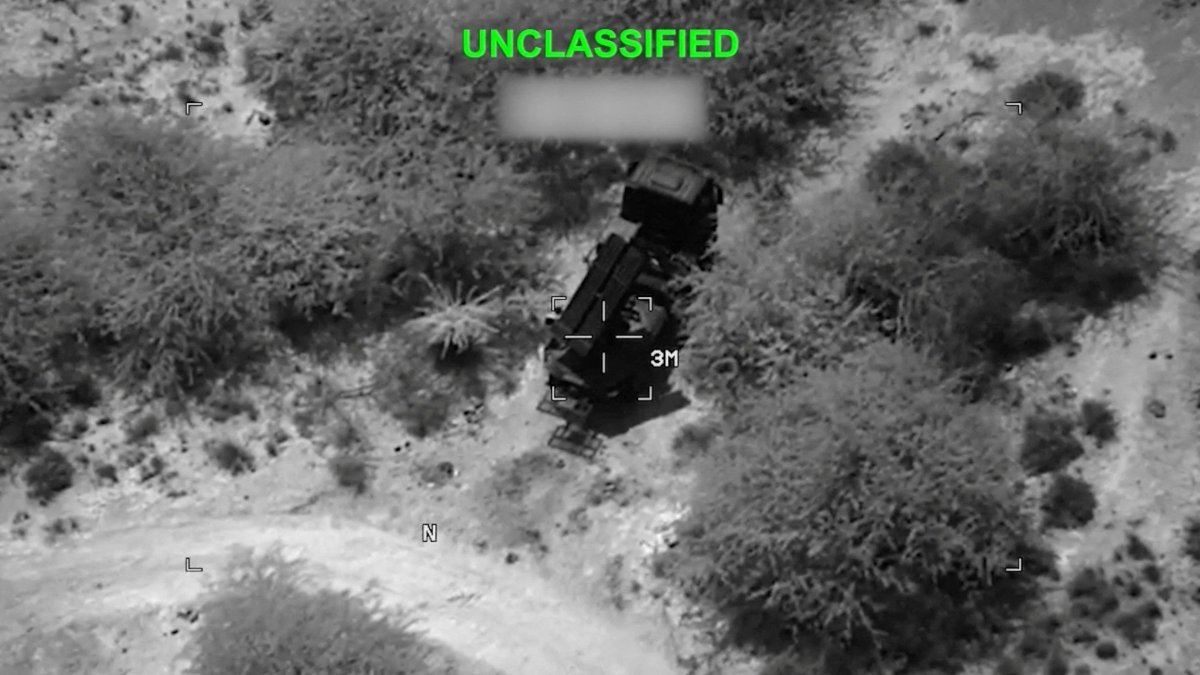
The Initial Strategic Calculus Washington and Jerusalem entered the conflict with expectations shaped by rapid technological superiority and prior assessments of Iranian vulnerabilities. US President Donald Trump anticipated a swift resolution within a week, echoing early assumptions in other recent conflicts where major powers anticipated quick victories. These calculations underestimated Iran's capacity for asymmetric responses and its ability to sustain operations across multiple fronts. The
The Initial Strategic Calculus
Washington and Jerusalem entered the conflict with expectations shaped by rapid technological superiority and prior assessments of Iranian vulnerabilities. US President Donald Trump anticipated a swift resolution within a week, echoing early assumptions in other recent conflicts where major powers anticipated quick victories. These calculations underestimated Iran's capacity for asymmetric responses and its ability to sustain operations across multiple fronts.
The strategic environment quickly revealed parallels to the opening phase of the Russia-Ukraine war. Initial strikes aimed at degrading military infrastructure produced declarations of success, yet Iranian forces retained significant missile and proxy capabilities. This misreading of resilience created conditions for a drawn-out confrontation rather than the decisive outcome initially projected.
The parallels with the 2020 Nagorno-Karabakh war are striking, where Azerbaijani forces leveraged Turkish Bayraktar TB2 drones to devastating effect against Armenian armor and air defenses, exposing how low-cost unmanned systems could neutralize superior conventional assets. Selçuk Bayraktar's innovations in integrating real-time intelligence with precision strikes fundamentally altered modern warfare doctrines, allowing smaller powers to project asymmetric power and forcing larger militaries to rethink layered defenses in contested environments like the Gulf.
US and Israeli planners appear to have overlooked these lessons when anticipating rapid degradation of Iranian capabilities, much as Russian commanders underestimated Ukrainian adaptations in the Donbas. The proliferation of affordable drone technologies has democratized precision strikes, enabling Tehran to mirror Azerbaijan's playbook through its own unmanned aerial vehicles and loitering munitions supplied to proxies.
This technological shift has prolonged conflicts by raising the costs of decisive victories, turning what Washington hoped would be a swift campaign into an attritional contest where resilience trumps initial technological edges.
Iran's Resilience
Iran demonstrated an unexpected ability to absorb initial blows while projecting power toward US bases across the Gulf and threatening naval assets. Its missile forces and diplomatic maneuvering complicated American decision-making from the outset. Tehran alternated between direct threats and political engagement, keeping Washington off balance in ways reminiscent of how Ukraine adapted after early territorial losses.
Domestic cohesion within Iran proved stronger than anticipated, allowing the leadership to maintain operations despite external pressure. This resilience shifted the conflict from a presumed short campaign into a test of endurance, where Iranian forces could sustain strikes and maintain pressure on American deployments in the region.
Iran's IRGC has executed direct strikes on US installations in Bahrain and Kuwait while issuing explicit threats against Jordanian territory, demonstrating a willingness to escalate horizontally across the Gulf theater. These actions were coordinated through the Revolutionary Guard's extraterritorial Quds Force, which maintains operational autonomy from the regular diplomatic corps that simultaneously pursued backchannel talks in Oman and Baghdad.
The dual-track strategy has allowed Tehran to sustain pressure without fully closing political doors, mirroring how hybrid actors balance kinetic and non-kinetic tools to avoid total isolation. Such maneuvers have complicated American force protection calculations and highlighted Iran's capacity to threaten multiple Gulf monarchies simultaneously.
Regional observers note that this calibrated approach has preserved Iranian leverage even as sanctions bite, preventing the kind of rapid collapse that early US assessments predicted.
The Ceasefire's Fragility
A sixty-day ceasefire was announced after weeks of fighting, yet questions about its durability emerged immediately among observers. The agreement lacked clear enforcement mechanisms and left core disputes unresolved, creating space for renewed escalation. Both sides retained incentives to test boundaries during the pause.
Historical patterns from other hybrid conflicts suggest that temporary halts often fail to produce lasting settlements when underlying strategic objectives remain unchanged. The absence of robust verification and the continued presence of external actors with divergent interests increase the likelihood that fighting could resume before the period concludes.
The 40-day war analogy from February 28 onward underscores how fragile pauses often collapse without ironclad verification regimes, as seen in previous Lebanon and Gaza truces where mediators from Qatar and Oman struggled to enforce compliance. Durable settlements would require explicit commitments on missile ranges, proxy funding, and nuclear enrichment limits, backed by third-party monitoring that neither Washington nor Tehran has yet accepted.
Without these elements, the current ceasefire risks serving merely as a rearmament interval rather than a genuine de-escalation pathway.
Great Power Dynamics
China and Russia hold potential interests in extending the confrontation, viewing it as a means to divert American resources and attention from other theaters. This dynamic mirrors calculations in the Ukraine conflict, where external supporters on both sides saw advantages in prolonging attrition. Prolonged fighting could strain US military and political bandwidth across multiple regions simultaneously.
Energy market implications further complicate the picture. Disruptions in Gulf shipping lanes or production capacity would affect global prices, creating secondary effects that benefit actors seeking to weaken Western cohesion. The entanglement of these great-power interests reduces the prospects for rapid de-escalation.
Russia has calculated that sustained US entanglement in the Gulf diverts attention from its Ukrainian front, while China eyes potential disruptions at the Strait of Hormuz to pressure Washington on Taiwan-related supply chains. Energy market shocks from even partial Hormuz closures could spike Brent crude beyond $120 per barrel, forcing OPEC+ members like Saudi Arabia to weigh production increases against political alignments with Beijing.
These great-power incentives align with prolonging low-intensity conflict rather than seeking swift resolution, echoing the proxy dynamics that have sustained Ukraine's attrition for years.
Turkey's Mediating Role
Ankara has prioritized preventing Gulf states from direct involvement, achieving measurable success in limiting the conflict's geographic spread. Through consistent diplomatic engagement, Turkey sought to insulate regional economies and maintain channels that could support eventual stabilization. This approach aligns with its broader interest in avoiding additional fronts that could destabilize its southern borders.
Turkish efforts to consolidate a unitary Syrian state under the "terror-free Türkiye" framework also reduced opportunities for proxy forces to open new fronts against Iran. By diminishing the viability of certain militant networks, Ankara removed potential instruments that external actors might have used to widen the war, thereby contributing to a narrower scope of confrontation.
President Erdogan's shuttle diplomacy has focused on preventing Saudi and Emirati entanglement through direct appeals to Riyadh and Abu Dhabi, while the "terror-free Türkiye" initiative has targeted Kurdish militant networks in northern Syria to deny external actors potential launchpads against Iranian interests. By neutralizing YPG-linked groups that could open a northern front, Ankara has narrowed the conflict's scope and preserved its own border security.
These efforts have positioned Turkey as a critical stabilizer, though success depends on continued coordination with European and Gulf partners wary of renewed refugee flows.
Israel's Strategic Objectives
Israeli assessments that Iranian capabilities remain insufficiently degraded have driven continued lobbying in Washington for extended operations. This position reflects a calculation that partial damage leaves Tehran able to reconstitute threats over time. Sustained pressure is viewed as necessary to achieve more permanent degradation of missile and nuclear-related infrastructure.
Internal US debates have surfaced around these objectives, with Vice President JD Vance among those expressing reservations about indefinite involvement. The divergence highlights how allied interests can separate when one party bears disproportionate costs while the other focuses on long-term regional containment.
Netanyahu's calculus prioritizes maximal degradation of Iranian missile infrastructure before any pause solidifies, driven by domestic Israeli debates where security hawks dominate coalition politics and push for extended operations. Israeli lobbying in Washington has intensified around figures like Senator Lindsey Graham to counter Vice President JD Vance's restraint arguments, reflecting how allied divergences can fracture unified strategy when one side absorbs disproportionate political costs.
This internal pressure risks extending the conflict beyond American appetite for involvement.
Implications for Regional Stability
The risk that this conflict follows the Ukraine pattern of multi-year attrition carries severe consequences for the broader Middle East. Sunni-Shia tensions could intensify if proxy networks expand operations, while Gulf economic diversification plans face setbacks from sustained uncertainty. Energy markets would experience volatility that affects both regional producers and global consumers.
Arab-Israeli normalization efforts under frameworks like the Abraham Accords could stall or reverse if the war deepens sectarian divides or draws additional states into confrontation. Turkey's stabilizing posture offers one counterweight, yet its influence remains limited without broader international coordination. The ultimate trajectory depends on whether domestic political pressures in Washington and Tehran converge on a durable settlement or continue to favor incremental escalation.
Gulf states including Saudi Arabia and the UAE have reacted with cautious hedging, accelerating diversification away from energy dependence while privately urging Washington to avoid actions that could spike global oil prices and derail their Vision 2030-style projects. Abraham Accords momentum has stalled as Sunni-Shia fault lines sharpen, with Abu Dhabi expressing particular concern over Iranian naval posturing near the Strait of Hormuz that threatens its LNG export terminals.
Energy market projections now forecast sustained volatility through 2026 unless a comprehensive settlement addresses both nuclear and conventional threats, leaving regional stability hostage to great-power maneuvering and domestic political cycles in Tehran and Washington.
By Malik Hassan, Staff WriterThis article was produced with AI-assisted research and editorial support. Reporting is based on sources cited in the article.
What's Your Reaction?
 Like
0
Like
0
 Dislike
0
Dislike
0
 Love
0
Love
0
 Funny
0
Funny
0
 Wow
0
Wow
0
 Sad
0
Sad
0
 Angry
0
Angry
0

Middle East Correspondent at Global1.News. Based in Beirut, covering politics, conflict, energy, and society across the Middle East. Brings context and depth to a region often reduced to headlines.











Comments (0)