
The Democratic Dilemma: Ballot Shortages and Electoral Trust in South Korea's Local Elections
The Democratic Dilemma: Ballot Shortages and Electoral Trust in South Korea's Local Elections Electoral Administration Failures in the June 3 Local Elections The June 3 local elections exposed concrete shortcomings in ballot distribution across South Korea. Ballots ran short at 50 of the country's 14,288 polling stations, with voting stunted at 22 of them. The National Election
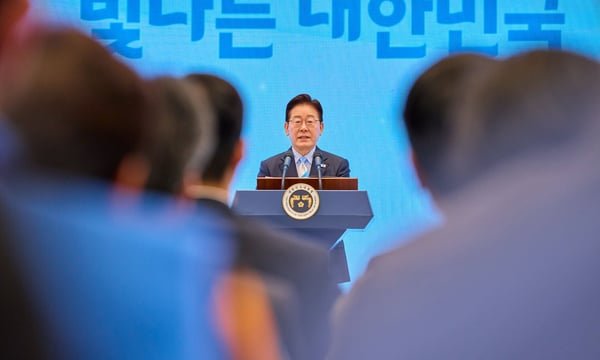
Electoral Administration Failures in the June 3 Local Elections
The June 3 local elections exposed concrete shortcomings in ballot distribution across South Korea. Ballots ran short at 50 of the country's 14,288 polling stations, with voting stunted at 22 of them. The National Election Commission had budgeted to print ballots for 110 percent of registered voters, yet a guideline revised after last year's presidential election permitted district commissions to print ballots for as few as half of registered voters. The commission itself acknowledged that papers were split unevenly between stations and that emergency transfers of spares proved insufficient. Queues formed predominantly in conservative southern Seoul, intensifying the political reaction that followed.
These operational shortfalls occurred despite the commission's constitutional mandate to manage elections. Citizens arriving to vote encountered delays or were turned away after closing time, representing a direct constraint on the exercise of suffrage. The incident unfolded eight months after Lee Jae-myung addressed the U.N. General Assembly and highlighted the "Revolution of Light" as evidence that Korean democracy corrects itself. The practical outcome on June 3 tested that claim through administrative rather than political means.
The Constitutional Framework of the National Election Commission
The National Election Commission operates as a constitutionally independent body, which complicates external oversight. This status led the commission to reject an audit by the Board of Audit and Inspection into its personnel practices following a 2023 scandal involving preferential hiring of senior officials' children. The commission argued that a constitutionally independent institution falls outside executive-branch audit authority and filed a competence dispute. In February 2025 the Constitutional Court ruled unanimously that the audit infringed on the commission's independence.
The commission's leadership structure further shapes accountability. Its chairman serves as a sitting Supreme Court justice on a part-time basis, while eight of its nine commissioners hold non-standing positions. Earlier management issues during the pandemic-era 2022 early-voting period included reports of ballots from quarantined voters collected in plastic baskets and paper bags. These precedents illustrate recurring tensions between institutional autonomy and operational reliability in South Korean electoral administration.
The Evolution of Fraud Allegations in Korean Politics
Claims of electoral fraud have circulated since the April 2020 general election, centering on early voting procedures, QR codes, counting machines, and alleged foreign interference. Of the 126 lawsuits filed after that election, none succeeded. The Supreme Court dismissed the principal case in 2022 following a recount that yielded no irregularities. Despite these judicial outcomes, the narrative persisted and gained renewed traction after Yoon Suk-yeol's martial law decree directed troops into commission offices in December 2024.
Public opinion data from last year indicated that a fifth of Koreans believed the 2024 general election was rigged. Among young conservatives, nearly four in ten expressed similar doubts regarding the 2025 vote won by Lee Jae-myung. Figures such as former history lecturer Jeon Han-gil have organized rallies amplifying these claims. The ballot shortage at June 3 polling stations was incorporated into this longer narrative by some far-right groups, even though the commission attributed the shortages to uneven printing and inadequate contingency measures rather than deliberate interference.
Responses from Political Parties and Calls for Accountability
The conservative People Power Party responded swiftly to the shortages. Leader Jang Dong-hyeok declared the Seoul vote tainted and requested that counting be halted. Floor leader Song Eon-seok called for a delay in the vote tallying process, noting that affected stations had favored incumbent mayor Oh Se-hoon by over 60 percent in 2022. Both referenced Article 196 of the election law, which permits postponement under unforeseen circumstances. Late on voting day, Jang demanded a nationwide halt to counting and preparation of an annulment lawsuit.
Two days later the party's demands expanded to include a parliamentary investigation, appointment of a special counsel, resignation of all commissioners with impeachment threatened in case of refusal, and establishment of a standing reform committee in the National Assembly. Lee Jae-myung described the incident as "hard to fathom" and directed agencies to apply the executive's full authority in determining responsibility. The commission issued a public apology on election night, after which its secretary-general and chairman submitted resignations. An external task force was subsequently formed, though additional accountability steps remain pending.
The Challenge of Unified Democratic Defense Amid Partisan Tensions
The ballot shortage created a shared grievance that cut across party lines, yet partisan framing complicated collective response. Crowds of approximately 1,200 at peak gathered outside commission headquarters in Gwacheon beginning in the early hours of June 4, with Jeon Han-gil declaring the election fraudulent and void. Some participants sought to maintain a non-partisan character, displaying signs that warned "Do not be incited" and declining direction from visiting politicians. The absence of a formal organizer reflected an effort to frame the protest around the principle of suffrage rather than partisan advantage.
For supporters of the Democratic Party, the presence of far-right figures and symbols associated with earlier pro-Yoon demonstrations created visual and rhetorical overlap. This overlap raised the question of whether a legitimate complaint about voting access could be advanced without appearing to align with narratives previously rejected by the same groups. The commission's independence, while protecting it from certain executive pressures, also limited rapid mechanisms for addressing public concerns about the June 3 disruptions.
Implications for Institutional Reform and Electoral Integrity
The episode underscores the difficulty of balancing constitutional independence with effective public accountability in South Korea's electoral system. Remedies such as parliamentary investigations or special counsel appointments carry the risk of being interpreted by long-standing fraud claimants as validation of their earlier assertions, even when the underlying cause appears to be bureaucratic misallocation rather than coordinated interference. At the same time, inaction would leave unaddressed the concrete denial of voting access experienced at multiple stations.
Lee Jae-myung's earlier emphasis on Korean democracy's self-correcting capacity now confronts the practical requirement of restoring confidence through transparent administrative review. The commission's apology and leadership resignations represent initial steps, yet the broader challenge lies in designing oversight mechanisms that respect constitutional independence while preventing recurrence of distribution failures. The June 3 events demonstrate that administrative lapses, regardless of intent, can erode trust in ways that intersect with preexisting political divisions.
By Prof. David Park, Staff WriterThis article was produced with AI-assisted research and editorial support. Reporting is based on sources cited in the article.
What's Your Reaction?
 Like
0
Like
0
 Dislike
0
Dislike
0
 Love
0
Love
0
 Funny
0
Funny
0
 Wow
0
Wow
0
 Sad
0
Sad
0
 Angry
0
Angry
0
East Asia/Technology Correspondent at Global1.News. Seoul-based voice covering Korean politics, technology, business, and culture. Analyzes how technology and geopolitics intersect across East Asia.











Comments (0)