
Australia Pledges P1.2-Billion Maritime Aid, New Drones to PH Amid China Tensions
Australia Pledges P1.2-Billion Maritime Aid, New Drones to PH Amid China Tensions Announcement Brings Fresh Hope to West Philippine Sea Communities On July 23, 2026, Australia announced nearly P1.2 billion in new maritime assistance to the Philippines, including additional drones for the Philippi...
Australia Pledges P1.2-Billion Maritime Aid, New Drones to PH Amid China Tensions
Announcement Brings Fresh Hope to West Philippine Sea Communities
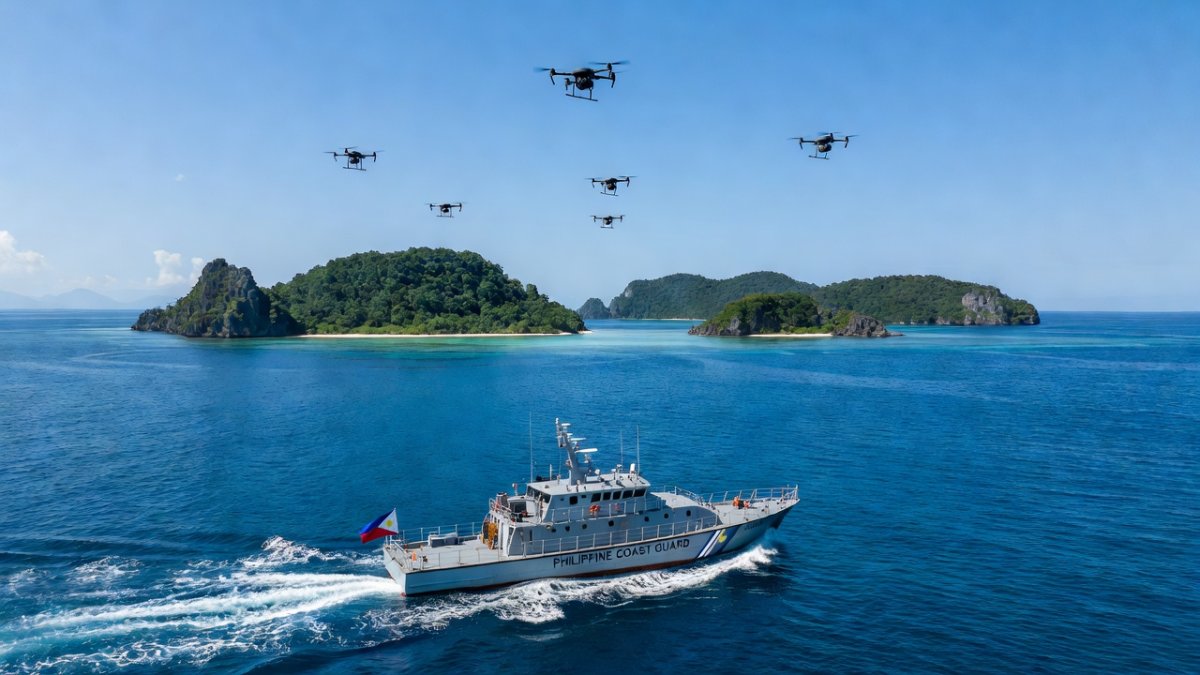
On July 23, 2026, Australia announced nearly P1.2 billion in new maritime assistance to the Philippines, including additional drones for the Philippine Coast Guard. This development follows shared concerns over conduct at sea and builds directly on the P413 million drone package delivered just two days earlier on July 21. For families in coastal towns who rise before dawn to prepare their bancas, the news carries the quiet promise of safer waters where they can continue the work that feeds their children and sustains entire barangays.
The pledge arrives at a time when many fishing households still recall tense encounters near traditional grounds. With this support, communities from Palawan to Zambales may see improved monitoring that helps protect their daily routes without replacing the courage they already show each time they set out.
The fresh package includes an AUD $10 million component for advanced systems, including aerial drones for wide-area surveillance and underwater drones for seabed monitoring. Philippine Coast Guard officials plan to station the aerial units at forward bases in Palawan and Zambales, with underwater drones rotating between patrol vessels to detect submerged obstacles and monitor vessel movements near contested shoals. Deployment is slated to begin within 90 days, supported by a six-week training program led by Australian specialists that will certify 120 PCG personnel in drone operation and maintenance.
These tools arrive as part of a layered monitoring strategy that pairs real-time video feeds with existing radar networks. Local commanders say the aerial drones will extend visual coverage beyond the horizon during monsoon seasons when visibility drops, while the underwater systems help identify illegal structures or debris that endanger small bancas. Training modules also cover data sharing with the National Maritime Council, ensuring that sightings reach fishing cooperatives within hours rather than days.
Defense Cooperation Agreement Signed in Manila
Defense Secretary Gilbert Teodoro and Australian Deputy Prime Minister Richard Marles signed a 2026 defense cooperation agreement in Manila. Australian Assistant Minister Matt Thistlethwaite also visited to affirm stronger ties in defense, maritime security, trade, and people-to-people exchanges. These steps reflect ongoing efforts to deepen practical cooperation between the two nations.
Local leaders in affected provinces note that such agreements often translate into equipment that reaches the Philippine Coast Guard faster. Fishermen in these areas speak of the difference it makes when patrol vessels can respond more quickly to reports of interference, allowing them to focus on hauling in their catch rather than worrying about sudden confrontations.
The second Philippine-Australia Defense Ministers’ Meeting produced a 2026 defense cooperation agreement that formalizes annual joint maritime patrols and intelligence exchanges. The pact builds on the Enhanced Defense Cooperation Agreement with the United States while aligning with the broader AUKUS and Quad frameworks that emphasize interoperable surveillance across the Indo-Pacific. Australian Deputy Prime Minister Richard Marles highlighted how the agreement allows Philippine forces to access Australian satellite imagery and logistics support during extended deployments.
Defense analysts note that this layered partnership helps Manila maintain presence without overextending its own budget. The agreement also opens pathways for Philippine officers to attend Australian staff colleges, strengthening long-term planning on maritime domain awareness. Community leaders in coastal provinces view these ties as practical extensions of people-to-people links already forged through decades of migration and trade.
Previous Drone Deliveries Strengthen Ongoing Efforts
The July 21 package of P413 million already included underwater drones and counter-drone systems for the Philippine Coast Guard. The new P1.2 billion commitment adds further aerial drones, creating a layered approach to monitoring. Reports from June 2026 in the South China Morning Post had already highlighted the Philippines turning to Australian drone technology for South China Sea awareness.
In practice, these tools help map movements across features such as Second Thomas Shoal and Sabina Shoal. For the women who mend nets while waiting for their husbands to return, the presence of better surveillance offers a measure of reassurance that their loved ones are less likely to face unexpected risks far from shore.
The earlier P413 million package delivered in July included SeaFox underwater drones equipped with sonar for mine detection and portable counter-drone jammers that neutralize small unmanned aircraft within a two-kilometer radius. These systems complement the new aerial platforms by providing close-in protection for patrol boats operating near Second Thomas Shoal. Compared with Chinese maritime militia drones that often rely on commercial off-the-shelf models, the Australian-supplied units offer encrypted data links and longer endurance, giving Philippine operators an edge in contested waters.
Coast Guard reports indicate the counter-drone technology has already reduced harassment incidents during resupply missions. Integration workshops held in Manila last month focused on fusing feeds from both packages into a single operations center, allowing faster response times when fishermen radio distress calls. This incremental buildup reflects a deliberate shift toward technology that multiplies the effectiveness of limited vessel numbers.
Human Impact on Fishermen and Maritime Families
Many Filipino fishermen describe the West Philippine Sea as more than a workplace; it is part of their family story passed down through generations. When tensions rise, the uncertainty affects not only income but also the simple rhythms of community life, from school fees paid with the day’s catch to fiestas that celebrate successful voyages.
Enhanced maritime assistance can mean patrol units reach distressed vessels sooner, reducing the hours families spend in anxious waiting. In barangays where jeepney drivers and market vendors also depend on steady fish supply, steadier access to fishing grounds supports the wider local economy that keeps sari-sari stores stocked and children in school uniforms.
In Palawan’s Coron municipality, the average fishing household earns roughly P18,000 monthly during peak season — barely enough to cover fuel, ice, and school fees for three children. A 30-foot banca costs around P450,000 to build and equip, representing years of savings at risk. Families in Zambales report similar pressures, with many wives managing sari-sari stores while husbands spend 10 to 14 days at sea. Residents of the Kalayaan Islands describe the emotional weight of waiting for husbands whose radios fall silent near Scarborough Shoal. With improved drone coverage, patrol response times could drop from six hours to under two, cutting the anxious vigil that currently stretches into the night. Local cooperatives say reliable access to traditional grounds could raise annual earnings by 15 to 20 percent, directly supporting the wider economy that depends on fresh catch reaching shore each evening.
Regional Tensions and Philippine Response
China has voiced criticism of Philippine defense cooperation involving the United States, Japan, and Australia. At the same time, Philippine officials continue to emphasize the need to safeguard sovereign rights and the livelihoods tied to the West Philippine Sea. The recent Australian support fits within this broader pattern of partnerships aimed at maintaining presence and awareness.
Coastal communities often express that their primary concern remains practical: the ability to fish without fear. Equipment such as drones contributes to that goal by providing eyes in the sky that complement the traditional knowledge fishermen carry from years on the water.
Beijing has condemned the Australian assistance as external interference, issuing statements that single out joint activities near Second Thomas Shoal, Sabina Shoal, and Scarborough Shoal. ASEAN neighbors have issued measured statements urging restraint while quietly welcoming any measure that stabilizes sea lanes vital to regional trade. The alignment among the Philippines, United States, Japan, and Australia forms a practical network of shared radar data and coordinated patrols that discourages unilateral actions.
Philippine officials continue to frame the partnerships as defensive tools that protect sovereign rights and the livelihoods tied to the West Philippine Sea. Fishermen themselves emphasize that their daily concern remains practical: the ability to cast nets without fear of water cannons or ramming. The drones add eyes in the sky that complement generations of local knowledge passed from father to son on the water.
Cultural Threads of Solidarity and Shared Waters
Filipino culture has long valued bayanihan, the spirit of coming together for the common good. The maritime assistance from Australia echoes this value across borders, reminding many of the mutual respect that has grown between the two countries through decades of trade, migration, and joint exercises.
OFWs in Australia and Australian visitors to Philippine shores often speak of the warmth they receive, a connection that now extends into practical security measures. For fishing families, this partnership represents one more thread in the larger tapestry of protecting the sea that has nourished their ancestors and will nourish their grandchildren.
Looking Forward with Cautious Optimism
As details of the P1.2 billion package are finalized, attention turns to how quickly the new drones reach operational use and how they integrate with existing Philippine Coast Guard capabilities. Officials have stressed measured implementation, recognizing that equipment alone cannot replace the daily vigilance of those who live by the sea.
Communities across the archipelago continue to balance hope with realism. They know that sustained attention from partners like Australia can help preserve the maritime resources that remain central to Philippine identity and economy. In the end, the measure of success will be seen in the safer return of bancas each evening and the continued ability of families to gather around tables filled with the fruits of the West Philippine Sea.
Maritime security experts at the University of the Philippines stress that sustained funding and transparent procurement will determine whether the new systems deliver lasting gains. Congress is expected to hold budget hearings in September to review the Department of Budget and Management’s allocation for maintenance and spare parts. Officials have pledged quarterly progress reports that will track drone flight hours and training completion rates.
In the coming months, coastal communities will watch for the first operational flights and the arrival of certified PCG teams. Success will ultimately be measured not in press releases but in the steady return of bancas at dusk and the continued ability of families to gather around tables filled with fish from waters they have long called their own. The partnership with Australia adds one more layer of support to that enduring hope.
By Bella Reyes, Staff Writer
This article was produced with AI-assisted research and editorial support. Reporting is based on sources cited in the article.
What's Your Reaction?
 Like
0
Like
0
 Dislike
0
Dislike
0
 Love
0
Love
0
 Funny
0
Funny
0
 Wow
0
Wow
0
 Sad
0
Sad
0
 Angry
0
Angry
0

Philippines/Southeast Asia Correspondent at Global1.News. Manila-based journalist covering Philippine politics, environment, maritime security, and social issues. Passionate about marine conservation and the communities protecting the Philippines' natural heritage.














Comments (0)