
New Hamas Chief Outlines Priorities to End Gaza Offensive
Khalil al-Hayya has assumed leadership of Hamas's political bureau, succeeding Yahya Sinwar, and has outlined six priorities in his first address that center on ending Israel's military presence in Gaza while advancing unity and reconstruction. This transition arrives after the October 2025 ceasefire amid widespread destruction and humanitarian crisis.
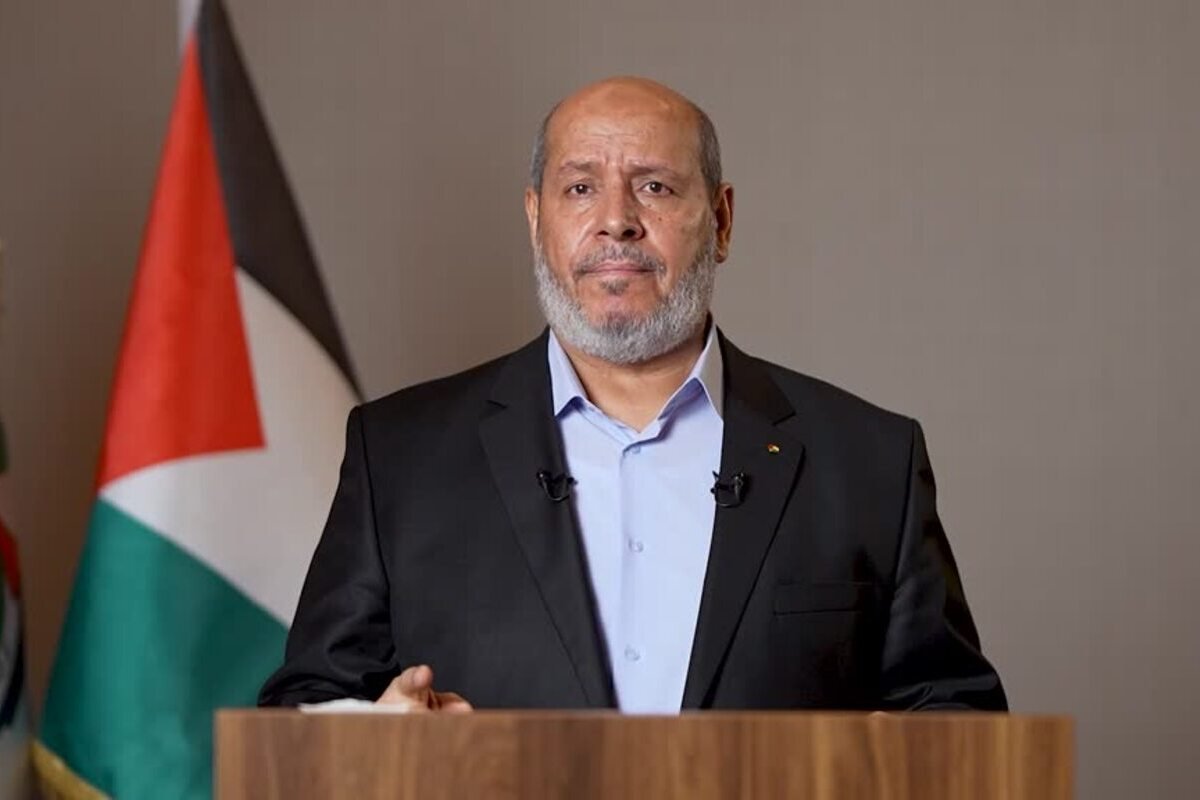
Khalil al-Hayya has assumed leadership of Hamas's political bureau, succeeding Yahya Sinwar, and has outlined six priorities in his first address that center on ending Israel's military presence in Gaza while advancing unity and reconstruction. This transition arrives after the October 2025 ceasefire amid widespread destruction and humanitarian crisis.
Hayya Sets Gaza Withdrawal and Unity as Top Priorities
Gaza City, Occupied Palestinian Territories — In his first televised address since assuming the post of Hamas political bureau chief on Monday, Khalil al-Hayya outlined six priorities placing a comprehensive end to Israel's military offensive in Gaza and a full Israeli withdrawal from the enclave at the top of the agenda, Anadolu has reported. Hayya called on countries mediating ceasefire negotiations to pressure the Israeli government to implement existing agreements and move to the next phase of the process.
The Context of Khalil al-Hayya's Election
Khalil al-Hayya assumed leadership of Hamas's political bureau on Monday, succeeding Yahya Sinwar, who was killed during clashes with Israeli forces in October 2024. In his first televised address on Wednesday, Hayya presented a clear set of priorities shaped by the prolonged conflict that began with Israel's offensive in Gaza in October 2023. The transition occurs after a ceasefire was reached in October 2025, leaving the enclave with extensive destruction and a population facing severe hardships.
Hayya's election reflects internal Hamas decisions amid ongoing regional pressures. The political bureau role involves directing diplomatic efforts and negotiations, a position previously held by figures navigating complex relations with mediators. Historical patterns show that leadership changes within Palestinian factions often coincide with shifts in strategy toward unity talks and reconstruction demands.
The transition following Yahya Sinwar's death in Rafah during an Israeli operation in October 2024 marks a pivotal shift in Hamas's internal dynamics. Sinwar, who rose through the ranks after spending over two decades in Israeli prisons and later led the group's military wing in Gaza, embodied a battlefield-centric approach that prioritized armed resistance and tunnel networks. His elimination created a vacuum that Khalil al-Hayya, a veteran of Hamas's political bureau with deep roots in the Muslim Brotherhood networks of the 1980s, now fills. Hayya's history includes serving as a liaison in earlier Egyptian-mediated talks and surviving multiple Israeli assassination attempts, equipping him with a diplomatic toolkit that contrasts Sinwar's combative style.
Hamas's political bureau, operating from exile in Qatar and Lebanon since the 2007 Gaza takeover, functions as the movement's external face while coordinating with the Gaza-based leadership. In the current period, it must balance internal factions wary of concessions with the urgent need to secure aid flows through Rafah crossing. Hayya's elevation signals an emphasis on reviving the 2017 reconciliation documents that sought Palestinian Authority integration, potentially easing tensions with Fatah.
Historically, similar leadership transitions within Hamas, such as after the 2004 killing of Sheikh Ahmed Yassin, led to periods of internal consolidation followed by renewed outreach. Hayya's background in the West Bank during the First Intifada and his later role in drafting the 2017 charter revisions positions him to articulate a pragmatic vision that maintains core demands like prisoner releases while engaging mediators.
The Six Priorities Outlined by the New Chief
Hayya placed a comprehensive end to Israel's military offensive in Gaza and a full Israeli withdrawal from the enclave as the first priority. He urged mediating countries to pressure the Israeli government to implement existing agreements and advance to the next phase of the ceasefire process.
The second priority focuses on restoring dignified living conditions for Palestinians in Gaza, thwarting displacement plans, accelerating reconstruction efforts, and securing the release of prisoners. Hayya tied these goals directly to the daily realities faced by residents after years of blockade and bombardment.
Achieving Palestinian unity forms the third priority, with an immediate call for national dialogue to rebuild institutions, particularly the Palestine Liberation Organization. This emphasis connects to long-standing efforts to consolidate Palestinian representation across factions.
Strengthening Hamas's relations with Arab and Muslim countries stands as the fourth priority. The fifth involves mobilizing those nations to take effective action and increase pressure to stop Israel's killing and genocide machine against Palestinians in Gaza. The sixth priority calls on the international community and the United Nations to protect Palestinians and hold Israeli war criminals accountable.
The Humanitarian Situation in Gaza
The Israeli offensive launched in October 2023 resulted in more than 73,000 people killed and nearly 174,000 injured, according to the provided figures, with the enclave left in ruins before the October 2025 ceasefire.
Gaza's infrastructure has suffered catastrophic damage, with over 80 percent of hospitals rendered inoperable due to repeated strikes on facilities like Al-Shifa and Nasser Medical Complex. Water systems, including the main desalination plants in Deir al-Balah, lie in ruins, forcing reliance on contaminated wells that have spiked cholera cases. Schools, once serving 600,000 students, now house displaced families in overcrowded conditions, with UNRWA reporting that 70 percent of educational buildings sustained direct hits.
The displacement crisis has uprooted nearly 1.9 million people, many now in makeshift camps near Khan Younis and Rafah with limited sanitation. Food insecurity affects 96 percent of the population per recent assessments, as the blockade's chokehold on imports has driven flour prices beyond 500 percent of pre-2023 levels. The scale of reconstruction demands an estimated $40 billion to rebuild 300,000 destroyed housing units and restore the power grid.
Children bear the heaviest toll, with thousands orphaned and suffering acute malnutrition rates exceeding 15 percent in northern areas. Families face generational trauma from repeated displacements, echoing the economic stagnation that kept Gaza's unemployment above 45 percent even before 2023.
Regional and International Reactions
Specific reactions from Arab and Muslim governments to Hayya's speech were not immediately available in initial reports.
Egypt's longstanding position as both ceasefire mediator and gatekeeper of the Rafah crossing has deep roots in the 1979 Camp David Accords. In recent rounds, Egyptian intelligence chief Abbas Kamel has shuttled between Doha and Tel Aviv to broker pauses in hostilities, yet Cairo's insistence on maintaining control over Rafah has clashed with Israeli demands for a permanent security presence. Qatar's financial and diplomatic mediation has evolved from its post-2014 role in funding Gaza salaries, positioning Doha as a key interlocutor alongside Egypt and the United States.
Turkish support for Hamas, rooted in President Erdogan's post-2009 diplomatic break with Israel and the 2010 Mavi Marmara incident, continues to provide political cover in international forums. The UAE and Bahrain's Abraham Accords normalization with Israel frames their potential Gaza reconstruction contributions as conditional on political stability, raising questions about whether Emirati funding will prioritize infrastructure over accountability.
The Palestinian Authority's reaction to unity calls reveals persistent obstacles stemming from the 2007 Fatah-Hamas split, with Ramallah wary that any power-sharing arrangement could dilute its international recognition under the Oslo framework. The US administration's emphasis on phased ceasefires without immediate Israeli accountability mirrors prior policies, often deferring ICC scrutiny of alleged war crimes whose preliminary examinations date back to 2015. UN resolutions continue to face implementation gaps that undermine multilateral credibility and fuel Palestinian skepticism toward renewed diplomatic processes.
What This Means for Ceasefire Negotiations
Hayya's emphasis on implementing existing agreements and moving to the next phase signals a direct appeal to mediators to maintain momentum after the October 2025 ceasefire.
The current prisoner exchange framework draws on precedents from the 2011 Gilad Shalit deal mediated by Egypt and Germany, yet outstanding issues center on the ratio of Palestinian detainees to Israeli captives and the inclusion of high-profile figures whose release Israel has historically resisted. Phases of withdrawal from the Netzarim and Philadelphi corridors remain contentious, with Egypt insisting on demilitarization guarantees tied to its 1979 treaty obligations, while Hamas seeks verifiable timelines that prevent reoccupation.
The Egypt-Qatar-US mediation triangle provides the operational backbone for sequencing talks, though each party's leverage differs: Cairo controls physical access, Doha supplies financial incentives, and Washington offers diplomatic cover. Sticking points on Palestinian Authority return to Gaza echo the 2005-2007 transition failures, where security sector reform demands clashed with Hamas governance structures.
Practical definitions of "full Israeli withdrawal" hinge on interpretations of the 2005 disengagement lines versus current corridor expansions, with timelines for phased implementation likely stretching across 42-day increments modeled on prior temporary truces. Historical patterns from the 2014 and 2021 ceasefires indicate that without binding enforcement mechanisms, withdrawal phases risk indefinite delays.
Analysis of What Comes Next
Hayya's agenda positions Hamas to pursue parallel tracks of internal consolidation and external diplomacy in the post-ceasefire period.
The six priorities intersect with Palestinian rights discourse by linking immediate humanitarian relief to longer-term self-determination claims rooted in UN resolutions and the 1993 Oslo letters of recognition. The challenge of unity between Hamas and Fatah after 18 years of division will determine whether any post-ceasefire authority can claim legitimacy across the West Bank and Gaza without repeating the 2006 election fallout.
Reconstruction funding sources, including Qatar's continued salary support, Saudi and UAE infrastructure pledges, and EU conditional assistance, carry political strings tied to governance reforms. The long-term governance question for Gaza remains unresolved, with proposals for an expanded PA role or international trusteeship facing resistance from both factions.
Prisoner release prospects offer tangible hope for families awaiting information since the 2014 escalation, yet success measured by full withdrawal, unity, and reconstruction would require sustained international monitoring absent in prior agreements. Failure, manifested in renewed hostilities or stalled talks, would deepen Gaza's civilian isolation, perpetuating cycles of displacement and economic collapse that have defined the territory since the 2007 blockade.
By Fatima Al-Rashid, Staff Writer
This article was produced with AI-assisted research and editorial support. Reporting is based on sources cited in the article.
What's Your Reaction?
 Like
0
Like
0
 Dislike
0
Dislike
0
 Love
0
Love
0
 Funny
0
Funny
0
 Wow
0
Wow
0
 Sad
0
Sad
0
 Angry
0
Angry
0
Gulf/MENA Correspondent at Global1.News. Based in Doha, covering Gulf politics, energy markets, diplomacy, and development across the Middle East and North Africa. Tracks the economic transformation of the Gulf states.










Comments (0)