
Google Beat Estimates, Supermicro Has a $60 Billion Problem, and the Market Doesn't Know What to Do
Google smashed Q2 2026 estimates with $119.8B revenue and 82% Cloud growth but the stock fell 4% after raising capex to $205B. Supermicro reported a $60B record backlog and surged 25%. What these signals mean for independent hosting.
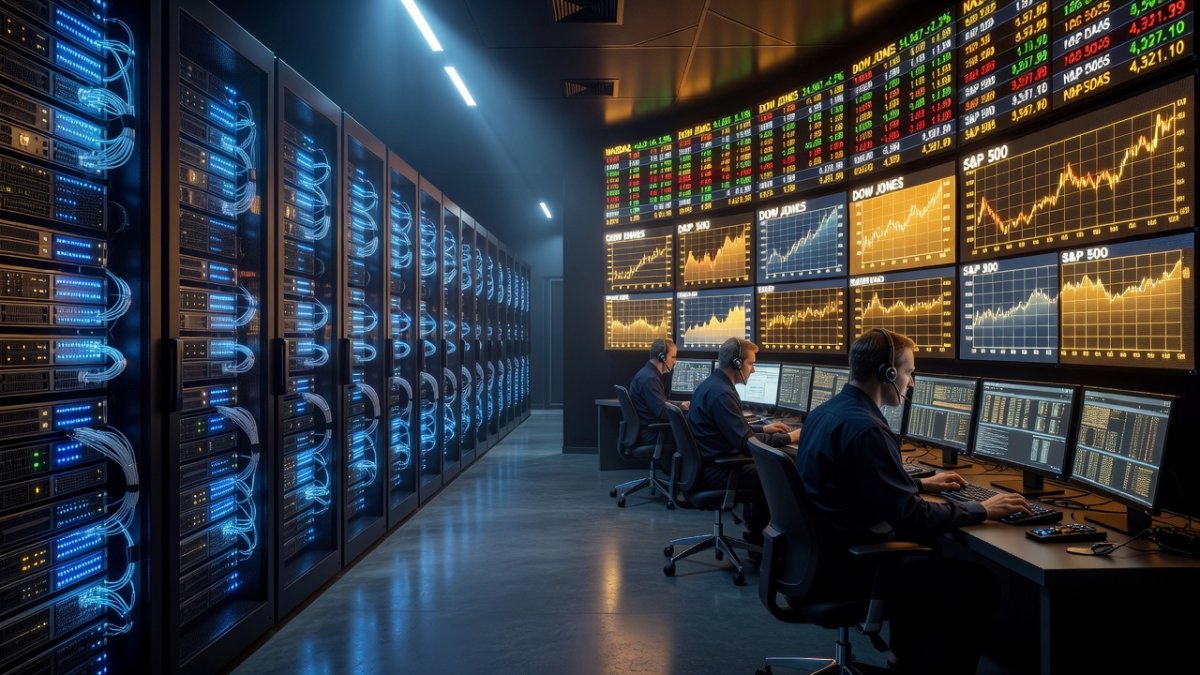
Google Beat Estimates, Supermicro Has a $60 Billion Problem, and the Market Doesn't Know What to Do
Let me tell you something that's been bouncing around my head since last night's earnings calls. I sat there watching Google beat every number analysts threw at them — $119.8 billion in revenue, Cloud growing 82% year over year, a quarter trillion in backlog — and the stock dropped 4%. Meanwhile, the same afternoon, Supermicro announced a $60 billion order backlog and the stock rocketed 25%. Same day. Same market. Completely different verdicts.
If you're running an independent hosting business and trying to figure out what the AI infrastructure buildout actually means for your operation, yesterday was a masterclass in how confused the market really is about this moment. And I think there's a clear signal buried under all that noise — if you know where to look.
The Google Story — Smashing Records, Getting Punished
Let's start with the elephant in the room. Alphabet reported Q2 2026 revenue of $119.8 billion, up 24% year over year and well above the $116.9 billion analysts expected. Net income hit $112.1 billion — nearly four times the $28.2 billion they reported a year ago. On the surface, this is a company firing on all cylinders.
Google Cloud was the standout. $24.77 billion in revenue, up 82% from $13.6 billion last year. The cloud backlog hit $514 billion — up from $462 billion last quarter. Sundar Pichai said nearly 90% of the Fortune 100 is using Gemini Enterprise. These numbers are staggering by any historical measure.
So why did the stock drop 4% in after-hours trading? Because Google also raised its 2026 capital expenditure guidance from $180-190 billion to $195-205 billion. That's an extra $15 billion on top of a number that was already seen as aggressive. Full-year capex of $205 billion would be more than six times what they spent in 2023 — $32.3 billion. Six times in three years.
The market looked at a $44.92 billion quarterly capex line — double the $22.45 billion from a year ago — and asked the same question every hosting provider has been asking me for months: where's the return on this? The profit was there — $112 billion in net income — but $98 billion of that was unrealized gains from equity stakes in SpaceX and Anthropic, not operational earnings. Strip that out and the operating story is: we're spending $45 billion a quarter on infrastructure and investors are getting nervous about when that spending turns into cash flow.
The Supermicro Story — Hardware Demand Has No Ceiling
Now contrast that with what happened across town at Supermicro. The same day Google was explaining its capex raise to skeptical analysts, Supermicro dropped a preliminary Q4 fiscal 2026 update that was so good it broke their own stock price record. The company announced a $60 billion order backlog — not pipeline, not signed letters of intent — actual orders in hand. That's $60 billion worth of servers, GPUs, and infrastructure hardware that customers have committed to buying.
The stock jumped 15% during regular trading and extended to 25% after hours. Needham reaffirmed their Buy rating with a $46 price target, noting that the backlog was so massive Supermicro had to raise $7 billion just to start filling it. Let that sink in. They needed $7 billion in working capital — more than most hosting companies' entire market cap — just to buy the components needed to build what's already been ordered.
This is the signal the market is missing. Google's capex raise was treated as a risk factor. Supermicro's $60 billion backlog was treated as a victory lap. But they're describing the same phenomenon from opposite sides: the AI infrastructure buildout is real, it's accelerating, and it's happening right now. The market just can't decide whether that's good news or bad news.
The Tesla Story — The Hidden Warning Signal
And then there's Tesla, reporting the same night. Revenue of $28.236 billion, a modest beat against $25.71 billion expected. But earnings per share came in at 33 cents adjusted — well below the 51 cents consensus. The company is spending aggressively on AI compute for its autonomous driving and Optimus robot programs, and those costs are eating into margins.
Tesla's story is the one that should worry independent hosting providers the most. Here's a company with real revenue, real products, and a massive AI computing need — and its margins are getting squeezed by the same capex dynamic playing out across the entire tech sector. If Tesla can't get margin relief from its AI infrastructure spending, what makes anyone think the hyperscalers can?
The answer is that the hyperscalers have something Tesla doesn't: a captive customer base that can't leave. Google Cloud has $514 billion in backlog. Those are contracted commitments. Tesla has to sell cars every quarter. There's no GAAP difference between backlog and deal flow, but there's a massive cash flow difference when the economy turns.
What These Three Stories Together Tell Us
Take a step back and look at what happened on a single day in July 2026:
Google — proved AI infrastructure can generate real revenue at scale ($24.77B Cloud quarter) but the cost of that growth is scaring investors who are starting to ask hard questions about free cash flow.
Supermicro — proved the hardware demand is insatiable ($60B backlog) and the supply chain is the bottleneck, not the demand side.
Tesla — proved that even companies with genuine AI use cases are struggling to make the math work on AI infrastructure spending without margin compression.
These aren't three separate stories. They're three symptoms of the same structural shift. The AI infrastructure buildout has moved past the "will it happen?" phase and into the "how do we pay for it?" phase. The answer so far has been: raise more capital, take on more debt, and hope the revenue catches up before the market loses patience.
The Secondary Bottleneck — Market Signal Confusion and What It Means for Pricing
Here's the part nobody's talking about but that matters most to independent hosting providers. When the market can't decide whether a $205 billion capex plan is good or bad, every supplier in the chain — from GPU vendors to colo operators to power utilities — gets mixed pricing signals.
Supermicro's $60 billion backlog means server and GPU lead times are going to stay tight through 2027 at minimum. But Google's stock drop means hyperscalers are going to be more aggressive about negotiating down their supplier costs to protect margins. That creates a bizarre dynamic where the hardware is getting more expensive at the component level (limited supply) but the hyperscalers who buy the most are demanding better pricing (shareholder pressure).
For independent hosting providers, this is actually a window. The hyperscalers are fighting a two-front war — investors on one side, suppliers on the other. They're going to prioritize their own internal deployments over wholesale colo and managed hosting partnerships. That leaves room for independents who can move fast, lock in supply relationships now, and offer the personalized service that hyperscalers can't scale. I've been saying this for eleven days straight now, and yesterday's earnings only confirmed it.
What This Actually Means for Independent Hosting Providers
First — lock your hardware orders now, not next quarter. Supermicro's $60 billion backlog means anyone waiting to order servers is now in a queue behind the world's largest AI labs and cloud providers. Lead times that were bad last quarter are going to get worse. If you have a capacity expansion plan for 2027, place those orders in Q3 2026. You cannot afford to wait.
Second — watch Google's free cash flow like a hawk. The stock drop on a capex raise is the canary in the coal mine. If Google's FCF continues to degrade while capex goes up, expect the entire hyperscaler financing model to tighten. That means less competition for colo space from hyperscaler buildouts, but also less availability of wholesale capacity as projects get delayed. The sweet spot is the mid-market — facilities that are too small for Google to care about but too large for a single startup to fill.
Third — position your pricing against the margin pressure the hyperscalers can't escape. Tesla's 33 cents EPS on $28 billion in revenue tells you everything about the margin environment. The hyperscalers are going to be raising prices on their cloud customers to protect their own margins. That makes independent hosting comparatively more attractive. If you can offer 80% of the capability at 60% of the price, you win.
Fourth — diversify your supply chain while you still can. Supermicro's backlog concentration is a risk. AMD's $5 billion Anthropic deal from yesterday, the rise of custom ASICs from Broadcom and Marvell, and the growing adoption of Chinese chips (Z.AI's all-Chinese data center) all point toward a more fragmented supply market over the next 18 months. Don't put all your GPU eggs in one basket.
The Structural Reality — The Market Is Confused, But the Buildout Is Real
The most important takeaway from yesterday is this: the market doesn't know how to value AI infrastructure spending because there's no historical precedent for this scale of capital deployment. Google is spending $205 billion in a single year. That's more than most countries' GDP. The models that analysts use to value cloud companies were built for a world where $10 billion in capex was aggressive. Nobody has a model for $205 billion.
But the demand is real. Supermicro's $60 billion backlog is not a forecast — it's a stack of purchase orders. Google's $514 billion cloud backlog is not a projection — it's signed contracts. The infrastructure is being built, the hardware is being ordered, and the capacity is being consumed.
The question isn't whether the buildout is happening. It's whether the market's patience will outlast the buildout timeline. And based on yesterday's reactions, the answer is: barely.
The Bottom Line
Yesterday gave us three data points that look contradictory but are actually pointing in the same direction. Google proved AI infrastructure can generate real revenue. Supermicro proved the hardware demand is bottomless. Tesla proved the margin math is still being worked out. All three say the same thing: this buildout is real, it's happening now, and the window for independent hosting providers to position themselves between the hyperscalers and the market's impatience is wide open.
But it won't stay open forever.
— Allan Ali, Founder
This article was produced with AI-assisted research and editorial support. Reporting is based on sources cited in the article.
What's Your Reaction?
 Like
0
Like
0
 Dislike
0
Dislike
0
 Love
0
Love
0
 Funny
0
Funny
0
 Wow
0
Wow
0
 Sad
0
Sad
0
 Angry
0
Angry
0

Publisher of Global1.News. Automation architect, systems builder, and the guy making sure the truth gets published.












Comments (0)