
South Korea’s Africa Strategy Two Years On: Testing Pledges Against Practice in Uganda
The 2024 Korea-Africa Summit as Institutional Turning Point The first Korea-Africa Summit, convened in June 2024 at KINTEX in Ilsan, marked a deliberate elevation of Seoul’s engagement with the African continent. Hosted under President Yoon Suk Yeol and framed explicitly within his “Global Pivotal State” foreign policy vision, the gathering brought together top officials from 48 African nations, including more than 25 heads of state.
The 2024 Korea-Africa Summit as Institutional Turning Point
The first Korea-Africa Summit, convened in June 2024 at KINTEX in Ilsan, marked a deliberate elevation of Seoul’s engagement with the African continent. Hosted under President Yoon Suk Yeol and framed explicitly within his “Global Pivotal State” foreign policy vision, the gathering brought together top officials from 48 African nations, including more than 25 heads of state. Unlike earlier, more episodic dialogues, the summit was designed not merely as a venue for aspirational communiqués but as an institutionalized mechanism intended to convert political commitments into implementable programs. Twelve agreements and 34 memoranda of understanding were concluded, spanning energy, minerals, infrastructure, and manufacturing. The headline financial pledges—US$10 billion in official development assistance to Africa by 2030 and US$14 billion in export financing to support Korean firms—built upon a 2023 commitment of US$6 billion directed at energy transition, agricultural innovation, and knowledge development. Nearly two years later, the practical question is no longer what was promised in Ilsan, but how those instruments are performing where projects meet local conditions.
Trade between South Korea and Africa had already reached nearly US$20 billion around the time of the summit, providing an economic baseline against which the new political architecture could be measured. The launch of the Korea-Africa Critical Minerals Dialogue further signaled that resource security and supply-chain diversification occupied a central place in Seoul’s calculus. For a country whose industrial model remains heavily dependent on secure access to intermediate inputs, Africa’s mineral endowment and demographic trajectory offered both commercial opportunity and strategic insurance. The test of whether this architecture can deliver, however, rests less on summit choreography than on the performance of implementing agencies such as the Korea International Cooperation Agency (KOICA) in specific national settings.
Yoon’s Global Pivotal State Doctrine and the African Vector
President Yoon’s “Global Pivotal State” concept sought to position the Republic of Korea as a bridge between advanced industrial economies and the developing world, moving beyond a foreign policy traditionally dominated by the North Korean threat, the U.S. alliance, and Northeast Asian power balances. Africa became a logical theater for this ambition. By hosting the continent’s leaders on Korean soil and attaching multi-year financial envelopes to the relationship, Seoul aimed to demonstrate that middle-power diplomacy could generate tangible development partnerships rather than simply echoing the initiatives of larger powers. The summit’s institutionalization—its explicit orientation toward follow-through rather than one-off pledges—distinguished it, at least in design, from some competing dialogue formats that have struggled to move from declaration to delivery.
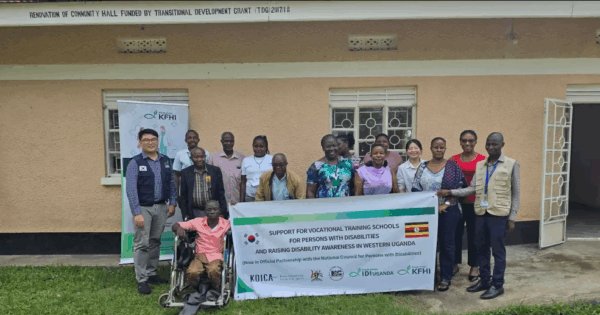
This doctrinal shift carried domestic as well as international implications. Korean public support for expanded official development assistance has historically been uneven, conditioned by perceptions of economic return and national prestige. Framing Africa engagement as integral to resource security, export market diversification, and Korea’s claim to responsible middle-power status helped align the policy with broader narratives of national competitiveness. At the same time, the approach invited scrutiny: if the Global Pivotal State vision is to retain credibility, the gap between Ilsan’s commitments and outcomes on the ground cannot widen indefinitely. The western Uganda project funded by KOICA has therefore acquired significance beyond its immediate development metrics; it functions as an early, visible indicator of whether the new architecture can translate political will into sustained operational presence.
KOICA’s Institutional Role and the Uganda Test Case
Founded in 1991, KOICA has long served as the principal vehicle for South Korea’s grant aid programs. Its evolution mirrors Korea’s own transition from aid recipient to donor, and its project portfolio has increasingly reflected the thematic priorities articulated at the 2024 summit—energy access, agricultural productivity, human capital, and, more recently, critical minerals governance. In western Uganda, a KOICA-funded initiative has been examined as a concrete test of what South Korea can offer the continent in practical terms. While detailed operational metrics and independent evaluation findings remain limited in the public domain as of mid-2026, the project’s symbolic weight is clear: it sits at the intersection of Seoul’s development cooperation tradition and its newer strategic framing of Africa policy.
The choice of Uganda is itself instructive. Uganda occupies a position of relative political continuity in the East African region and has pursued partnerships across multiple external actors. For KOICA, operating in such an environment requires navigating local procurement rules, coordinating with line ministries, and demonstrating additionality relative to other donors. Korean development cooperation has often emphasized knowledge transfer drawn from Korea’s own rapid-development experience—vocational training models, rural modernization lessons, and public-private partnership templates. Whether these approaches retain relevance in contemporary African contexts, and whether they can be adapted without imposing inappropriate institutional templates, constitutes a core analytical question. The Uganda case therefore offers a window into both the strengths and the frictions of Korea’s offer.
Critical Minerals, Supply Chains, and Resource Security
The Korea-Africa Critical Minerals Dialogue launched around the summit reflects a structural preoccupation of Korean industrial policy. South Korea’s battery, electronics, and advanced manufacturing sectors depend on stable access to cobalt, lithium, rare earths, and related inputs. Diversifying away from over-concentrated supply sources has become a bipartisan priority in Seoul, intersecting with alliance coordination on economic security. African producers, for their part, have grown more assertive about local value addition, demanding that external partners move beyond extractive models toward processing, skills development, and infrastructure that anchors more of the value chain on the continent.
How far the Dialogue has progressed from convening function to operational supply-chain partnerships remains an open empirical question. The 12 agreements and 34 MOUs signed in 2024 created a dense paper architecture; converting those instruments into mine-to-manufacturing linkages that satisfy both Korean industrial demand and African developmental priorities is a multi-year undertaking. Export financing of up to US$14 billion was intended to crowd in Korean firms, yet firms evaluate political risk, logistics costs, and offtake certainty with commercial rigor. The gap between diplomatic signaling and final investment decisions is a familiar feature of resource diplomacy worldwide; Korea is not exempt from it. Still, the explicit linkage of minerals cooperation to the broader ODA and financing package suggests an attempt at policy coherence that earlier, more fragmented approaches sometimes lacked.
Trade, Export Financing, and Chaebol Engagement
Bilateral trade approaching US$20 billion provides a foundation, yet the composition of that trade and its growth trajectory matter as much as the headline figure. Korean exports to African markets have historically featured automobiles, electronics, and capital goods, while imports have included energy and mineral commodities. The US$14 billion export-financing envelope was designed to lower the risk threshold for Korean companies—particularly larger conglomerates and their supplier networks—considering longer-horizon projects in infrastructure, energy, and manufacturing. Whether this financing is being drawn down at the pace envisioned in 2024, and whether it is reaching a diverse set of African partners rather than a narrow subset of relatively lower-risk markets, will shape assessments of the summit’s economic legacy.
Chaebol dynamics introduce both capacity and complexity. Large Korean groups possess the balance-sheet strength and project-management experience to undertake major undertakings, yet their global capital allocation is competitive; African projects must clear internal hurdle rates against opportunities in Southeast Asia, North America, and elsewhere. Smaller and medium-sized Korean enterprises, which KOICA and related agencies sometimes seek to involve in development-linked commercial activity, face steeper information and risk barriers. Effective policy therefore requires not only headline financing facilities but also risk-mitigation instruments, local partner matching, and sustained diplomatic support after the summit lights dim. The institutionalization of the Korea-Africa relationship as an implementation mechanism rather than a periodic pledging conference was meant to address precisely this continuity problem.
Comparative Landscape and Diplomatic Positioning
South Korea enters a crowded field. China, the European Union, the United States, Japan, Turkey, and Gulf actors all maintain active African strategies, each with distinct financial instruments, political conditionalities, and sectoral emphases. Korea’s comparative advantage has often been framed in terms of its own development trajectory—compressed industrialization, education-driven growth, and experience in managing rapid urbanization—and its relative lack of colonial baggage on the continent. The Global Pivotal State framing adds a claim to bridge-building: Korea as a partner that understands both OECD-donor practices and the constraints facing late developers.
Credibility in this space depends on delivery speed, flexibility, and respect for African agency. The 2024 summit’s emphasis on joint implementation structures was an attempt to signal partnership rather than paternalism. Two years on, African governments and regional organizations will judge the initiative by the predictability of disbursements, the quality of technical cooperation, and the willingness of Korean actors to align with continental frameworks such as the African Continental Free Trade Area. For Seoul, success in Africa also feeds back into broader diplomatic positioning—at the United Nations, in climate negotiations, and in debates over global governance reform—where African votes and voices carry weight. Inter-Korean dynamics remain the central axis of South Korean security policy, yet a more diversified diplomatic portfolio can, over time, enlarge Seoul’s room for maneuver and reduce the perception that its foreign policy is solely reactive to Pyongyang.
Implementation Challenges and the Road to 2030
Several structural challenges confront the translation of 2024 pledges into 2030 outcomes. First, ODA absorption capacity varies widely across African partners; programming US$10 billion effectively requires robust country systems, anti-corruption safeguards, and realistic project pipelines. Second, coordination inside the Korean government—among the Ministry of Foreign Affairs, the Ministry of Economy and Finance, KOICA, export-credit agencies, and provincial actors—must be sustained beyond the initial political momentum of the summit. Third, monitoring and evaluation frameworks need sufficient independence and transparency to allow course correction; without credible feedback loops, the institutionalization claimed for the Korea-Africa process risks becoming procedural rather than substantive.
The western Uganda KOICA project, whatever its ultimate evaluated results, illustrates the micro-level difficulties that aggregate into macro-level performance: land and permitting issues, alignment with local development plans, training that leads to retained employment, and maintenance regimes that outlast the donor’s direct involvement. Korean practitioners bring genuine technical strengths, yet they also operate within bureaucratic cultures and procurement rules that can slow adaptation. Acknowledging these frictions candidly, rather than treating every groundbreaking ceremony as proof of strategic success, will be essential to preserving the policy’s long-term viability.
Strategic Implications for Korean Foreign Policy
Viewed from the perspective of Korean foreign-policy history, the Africa initiative represents an extension of earlier efforts to globalize Seoul’s diplomatic and economic presence—efforts that accelerated after the end of the Cold War and Korea’s own OECD accession. What distinguishes the current phase is the tighter coupling of development cooperation, resource security, and middle-power branding under a single presidential doctrine. If the pledges articulated in 2024 are substantially realized by 2030, Korea will have established a more durable platform for engagement across a continent whose demographic and economic weight will only increase. If implementation falters, the Global Pivotal State vision will face a credibility tax that extends beyond Africa policy alone.
For daily life and institutional practice inside Korea, the stakes are more diffuse but still real. Universities and research institutes are expanding African studies and language capacities; firms are recalibrating risk models; and the foreign ministry’s diplomatic training increasingly treats African postings as career-relevant rather than peripheral. These cumulative shifts matter. They suggest that, regardless of any single project’s outcome in western Uganda, the 2024 summit has already begun to alter the opportunity structure facing Korean state and non-state actors. The analytical task now is to track, with discipline and without hype, whether financial commitments, institutional mechanisms, and on-the-ground partnerships advance in rough proportion to the ambitions announced at KINTEX. That proportion—more than any communiqué—will determine how history judges South Korea’s African turn.
By Prof. David Park, Staff WriterThis article was produced with AI-assisted research and editorial support. Reporting is based on sources cited in the article.
What's Your Reaction?
 Like
0
Like
0
 Dislike
0
Dislike
0
 Love
0
Love
0
 Funny
0
Funny
0
 Wow
0
Wow
0
 Sad
0
Sad
0
 Angry
0
Angry
0

East Asia/Technology Correspondent at Global1.News. Seoul-based voice covering Korean politics, technology, business, and culture. Analyzes how technology and geopolitics intersect across East Asia.














Comments (0)