
Senior Esports in Japan: Cognitive Boost for Aging Populace
A recent NHK WORLD-JAPAN report highlights how residents in Tsuru City, Yamanashi Prefecture, are using competitive video games to maintain mental sharpness in later life. Senior Esports in Japan: Cognitive Boost for Aging Populace Tokyo, Japan – June 11, 2026 — The NHK WORLD-JAPAN video "Esports-loving seniors power-up their cognitive abilities" documents weekly gaming session
A recent NHK WORLD-JAPAN report highlights how residents in Tsuru City, Yamanashi Prefecture, are using competitive video games to maintain mental sharpness in later life.
Senior Esports in Japan: Cognitive Boost for Aging Populace
Tokyo, Japan – June 11, 2026 — The NHK WORLD-JAPAN video "Esports-loving seniors power-up their cognitive abilities" documents weekly gaming sessions among older adults in Tsuru City, a municipality of roughly 30,000 people located about 80 km west of Tokyo at the base of Mt. Fuji.
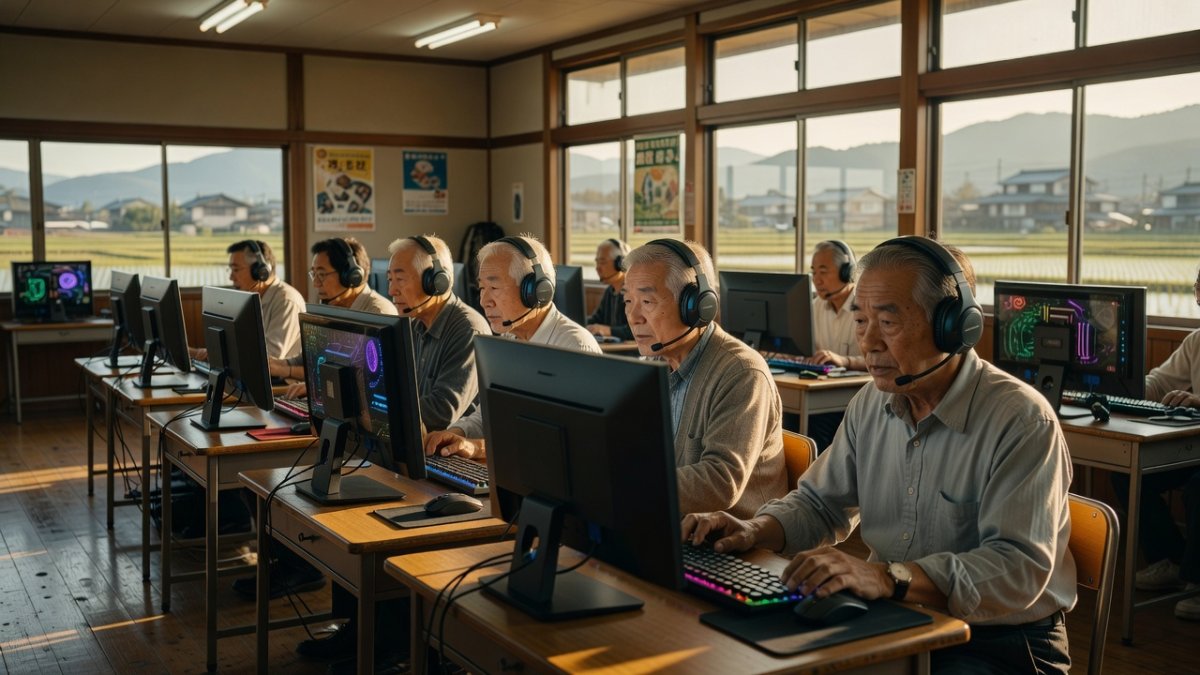
Japan's Senior Esports Phenomenon
Japan's organized senior esports scene has expanded beyond local recreation. The Matagi Snipers, a professional team whose members range in age from 60 to 75 with an average age near 68, compete in Valorant tournaments against younger squads.
In January 2023 the Senior Esports Association was established to coordinate leagues, training programs, and national events. A notable result occurred when 92-year-old Hisako Sakai captured first place in a Tekken 8 division of Japan's Senior Esports League.
These developments build on earlier coverage, including a December 2021 Wall Street Journal feature that first drew international attention to the trend.
Scientific Evidence for Cognitive Benefits
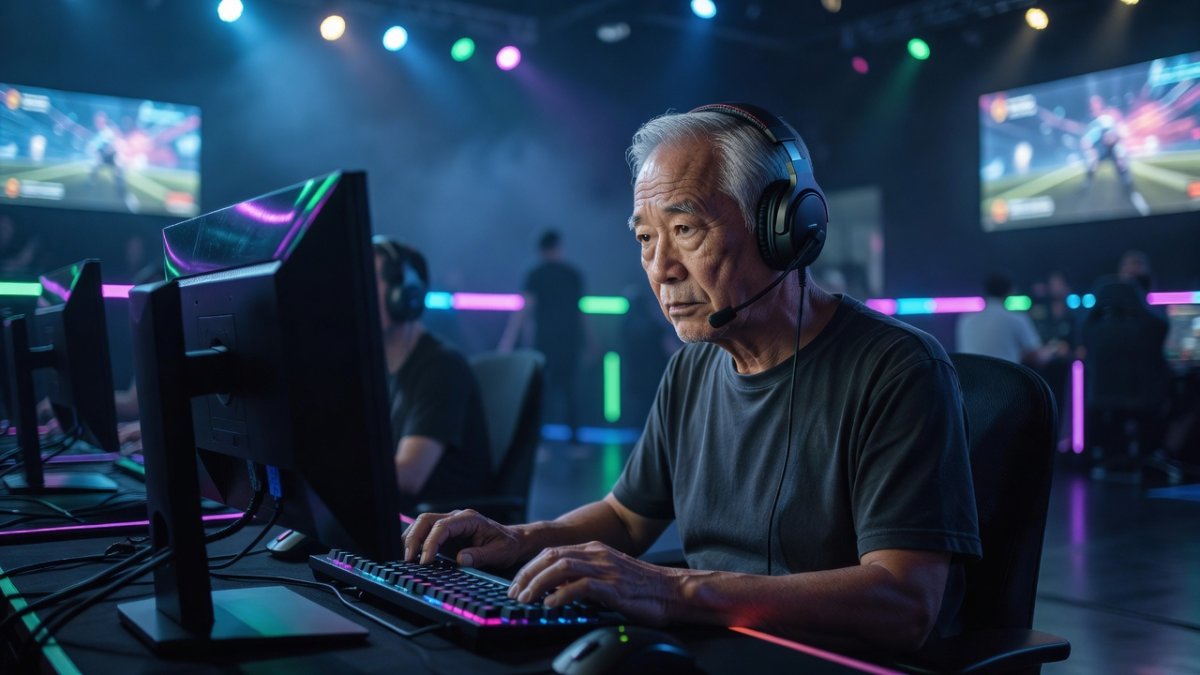
Research published in Frontiers in Aging Neuroscience in January 2026 examined older adults with mild cognitive impairment who participated in regular video-game training. The study found statistically significant gains in global cognitive functioning, including executive control and processing speed, after 12 weeks of structured play.
Game genres requiring rapid target acquisition and team coordination produced the strongest effects. Researchers noted that social interaction during matches further supported adherence and mood outcomes.
While the study sample was modest, the controlled design provides a replicable framework for future trials in Japan and elsewhere.
Japan's Aging Population and Society 5.0
More than 29 percent of Japan's population is aged 65 or older, creating sustained pressure on healthcare and social services. The government's Society 5.0 initiative explicitly positions digital technologies, including AI-supported training platforms and accessible gaming interfaces, as tools to mitigate these demographic challenges.
The Digital Agency, launched in 2021, coordinates cross-ministry efforts to integrate such technologies into public health and community programs. METI has referenced senior esports in discussions of the Green Transformation (GX) and human-capital strategies, viewing digital engagement as a low-cost complement to traditional exercise and cognitive therapy.
Yamanashi Prefecture's proximity to Tokyo makes it a convenient test bed for scaling successful local models to other regions.
Implications for the Asia-Pacific Region
Other Asia-Pacific economies facing rapid population aging, such as South Korea, Singapore, and parts of China, are monitoring Japan's senior esports programs. Shared cultural emphasis on group activities and technology adoption could accelerate similar initiatives.
Regional esports federations have begun including age-specific divisions in exhibition events, creating pathways for knowledge exchange on training protocols and venue design.
What to Watch For
Observers should track whether the Senior Esports Association secures formal recognition from national sports bodies, which would unlock additional public funding. Pilot programs linking gaming performance data to municipal health records are also under discussion.
Hardware manufacturers are developing simplified controllers and larger on-screen interfaces aimed at users over 60; commercial release timelines remain subject to iterative user testing.
Longer-term studies will determine whether sustained esports participation correlates with delayed onset of dementia diagnoses at the population level.
Japan's experience demonstrates that competitive gaming can serve as a practical, technology-enabled response to super-aging. By aligning community programs with Society 5.0 objectives and the Digital Agency's infrastructure goals, policymakers are creating scalable models that other nations confronting similar demographic pressures may adapt. Continued measurement of cognitive and social outcomes will determine the extent to which senior esports becomes a standard component of healthy-aging strategies nationwide.
By Kenji Tanaka, Staff Writer
This article was produced with AI-assisted research and editorial support. Reporting is based on sources cited in the article.
What's Your Reaction?
 Like
0
Like
0
 Dislike
0
Dislike
0
 Love
0
Love
0
 Funny
0
Funny
0
 Wow
0
Wow
0
 Sad
0
Sad
0
 Angry
0
Angry
0

Japan Correspondent at Global1.News. Tokyo-based voice covering Japanese politics, technology, economy, and culture. Tracks the intersection of tradition and innovation in one of the world's most dynamic societies.















Comments (0)