
US, Saudi Arabia strike civilian nuclear deal
The United States and Saudi Arabia have concluded a civilian nuclear cooperation agreement at a moment when the ongoing US-Iran conflict, which began on February 28, continues to reshape Gulf security calculations. The deal arrives as Tehran’s Yemeni allies, the Houthis, threaten to close key maritime passages and as longstanding fears of a regional nuclear arms race remain acute.
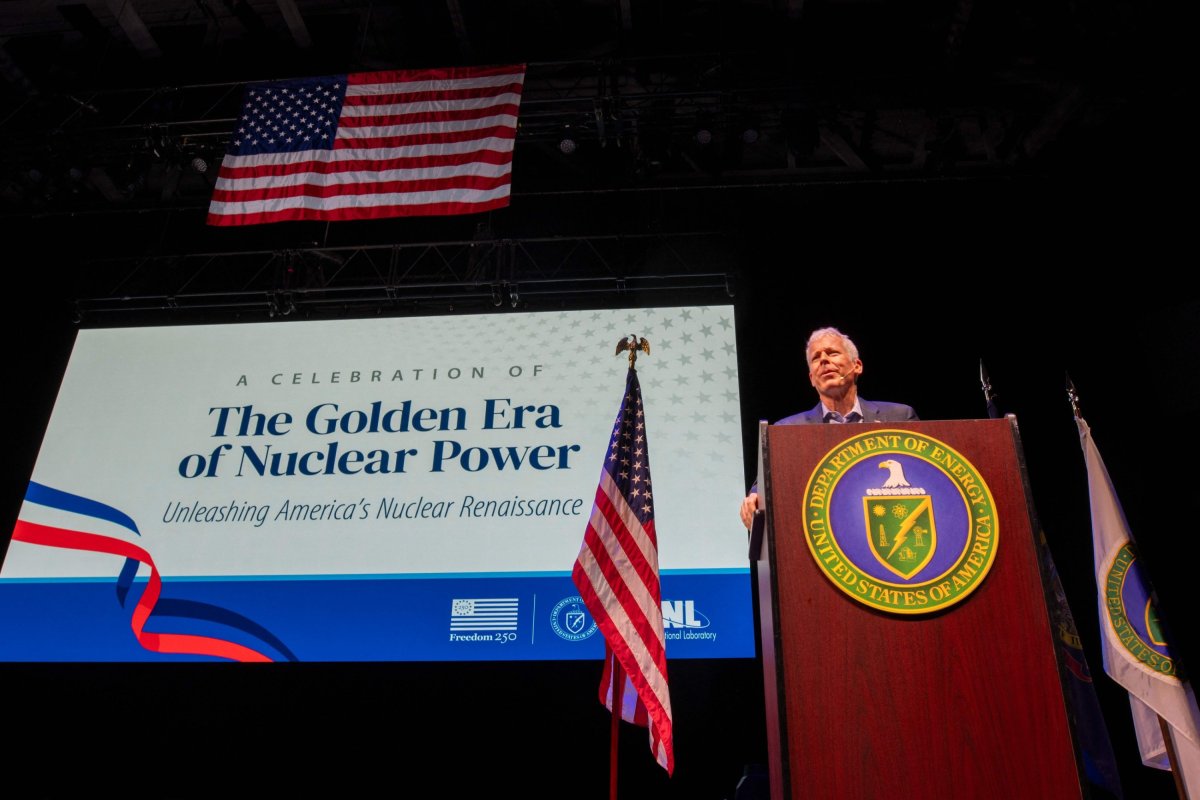
The United States and Saudi Arabia have concluded a civilian nuclear cooperation agreement at a moment when the ongoing US-Iran conflict, which began on February 28, continues to reshape Gulf security calculations. The deal arrives as Tehran’s Yemeni allies, the Houthis, threaten to close key maritime passages and as longstanding fears of a regional nuclear arms race remain acute. These developments tie directly into broader Sunni-Shia geopolitical competition and efforts by Gulf states to diversify their economies while managing Iranian proxy networks.
The US-Saudi Nuclear Agreement — details of the deal
The United States and Saudi Arabia announced the landmark agreement on Wednesday to launch a civilian nuclear program in the kingdom. Washington stated that the deal incorporates stringent nonproliferation measures. The US State Department said in a statement, “Together, these two agreements lay the legal foundation for a decades-long, multibillion-dollar partnership that advances several priority economic and strategic objectives, including nuclear nonproliferation.” The agreement will be submitted to Congress for review, though the Republican-controlled legislature is unlikely to block implementation. The deal could pave the way for Saudi Arabia to enrich uranium for peaceful purposes, following the model of earlier cooperation frameworks in the region.
Negotiations for a US-Saudi nuclear pact date back to 2018, when Mohammed bin Salman’s ambitions collided with the Khashoggi assassination and congressional outrage, stalling talks under the Trump administration. The Biden era brought a partial reset focused on human-rights conditionality, but the 2025-2026 Trump revival accelerated the process after Saudi Arabia signaled willingness to accept enhanced safeguards in exchange for enrichment rights. Under Section 123 of the Atomic Energy Act, the agreement must meet nonproliferation criteria before Congress can approve it, mirroring the legal framework used for the UAE deal yet allowing limited domestic enrichment for the first time in the Gulf.
Saudi Vision 2030 explicitly targets 17 gigawatts of nuclear capacity by 2040 to power desalination plants and petrochemical complexes, reducing the kingdom’s 50 percent dependence on oil-fired electricity. Riyadh has already signed preliminary memoranda with South Korea’s KEPCO and France’s EDF, positioning the US agreement as the capstone that unlocks technology transfers and financing from the US Export-Import Bank.
Regional Security Context — the ongoing US-Iran war
The nuclear agreement emerges against the backdrop of the 2026 Iran war, which began on February 28 and has featured US strikes on Iranian territory along with Iranian retaliation against Gulf states. This conflict stems in part from US concerns about Tehran’s nuclear program, an issue that remains central to now-stalled talks between the two sides. Renewed fighting has heightened worries that the confrontation could further destabilize the wider Middle East, particularly as Iran maintains its network of regional proxies.
The 2026 Iran war began on 28 February after US forces struck Iranian missile facilities in response to an IRGC-orchestrated attack on a US naval vessel in the Strait of Hormuz. The conflict has progressed through three phases: initial US air and cyber strikes, Iranian ballistic-missile barrages on Saudi and Emirati energy sites in March, and a grinding proxy escalation that continues into summer. Iranian retaliation has included IRGC-directed drone strikes on Saudi Aramco facilities in Ras Tanura and an attempted missile attack on Bahrain’s naval base, both attributed to Quds Force units operating through Iraqi and Yemeni proxies.
The IRGC’s regional network has activated cells in Iraq, Syria, and Lebanon to impose asymmetric costs, while Tehran has increased oil exports via shadow fleets to offset sanctions pressure. Current front lines remain fluid, with US forces maintaining air superiority but facing persistent low-level harassment from Houthis and Iraqi militias.
Israeli and Congressional Concerns — opposition and proliferation fears
US lawmakers from both parties and Israeli officials have voiced opposition to a civilian nuclear project in Saudi Arabia, citing fears that it could eventually support nuclear weapons development. Senator Chris Murphy stated that the deal “would set off a nuclear race in the region, further disincentivizing Iran from limiting its own program.” The United States signed a nuclear cooperation agreement with the neighboring United Arab Emirates in 2009, although that country does not enrich its own uranium. US Secretary of State Marco Rubio, speaking in Manila before the formal announcement, dismissed concerns that the Saudi deal could lead to nuclear proliferation.
Israel’s security establishment, led by Mossad and IDF intelligence, has lobbied aggressively against any GCC enrichment rights since the 2009 UAE agreement, fearing a precedent that would erode the qualitative military edge. Israeli officials have privately briefed US lawmakers that Saudi enrichment could reach weapons-grade levels within 18 months if political will shifts, citing Riyadh’s past statements on matching Iran’s nuclear threshold.
The UAE “gold standard” explicitly prohibits enrichment and reprocessing, whereas Saudi negotiators have demanded on-site enrichment up to 5 percent, creating a clear divergence that divides Democrats, who favor the stricter UAE model, from Republicans who prioritize countering Iran even at proliferation risk. Senator Chris Murphy’s opposition reflects the Democratic wing, while Republican leadership views the deal as essential leverage against Tehran.
The Houthi Dimension — blockade, oil markets, Bab al-Mandeb
Tehran’s Yemeni allies, the Houthis, threatened this week to expand the conflict by announcing a blockade of Saudi ports. The Houthis have shut the Bab al-Mandeb strait, affecting Asian oil consumers, while Saudi Arabia has redirected 70 percent of its crude shipments to Yanbu port at a rate of 4.5 million barrels per day. Brent crude oil prices have risen above $90 per barrel amid these blockade threats. A drone struck a generator near the UAE’s Barakah nuclear power plant in May, causing a fire and underscoring vulnerabilities in regional energy infrastructure.
Houthi maritime operations have evolved since 2016 from sporadic attacks on Saudi vessels to systematic interdiction of commercial traffic through Bab al-Mandeb, with the current blockade echoing their 2018 Red Sea campaign that damaged multiple tankers. The group’s arsenal now includes Iranian-supplied anti-ship ballistic missiles and underwater drones, enabling sustained closure of the strait that carries 12 percent of global oil trade.
Asian importers face immediate strain: Japan and South Korea have rerouted tankers around the Cape, adding 14–18 days and $3–4 per barrel in freight costs, while India and China absorb higher spot prices and scramble for alternative supplies from Russia and the US. Brent crude above $90 has already lifted global inflation forecasts by 0.4 percentage points for Q3 2026, prompting OPEC+ to consider a 500,000-barrel daily increase that Riyadh has so far resisted.
The May drone strike on the Barakah plant’s backup generator, claimed by Houthi media as retaliation for UAE support of Saudi operations, exposed vulnerabilities in civilian nuclear infrastructure and forced temporary shutdown of one reactor unit, underscoring the risk that energy facilities could become sustained targets.
Strategic Calculus — what each side wants
The United States seeks to strengthen ties with Saudi Arabia as a counterweight to Iranian influence while embedding nonproliferation standards in any Saudi nuclear activities. Saudi Arabia aims to develop civilian nuclear energy to support economic diversification plans and reduce reliance on oil revenues. Iran, facing direct US military pressure, continues to rely on proxy forces such as the Houthis to impose costs on Gulf states and disrupt energy flows. Each actor calculates that leverage in one domain—nuclear technology, maritime control, or military strikes—can offset weaknesses in others.
Saudi Arabia continues its classic hedging strategy, deepening security ties with Washington while expanding energy and technology partnerships with China and Russia through the Belt and Road Initiative and Rosatom discussions. This dual-track approach allows Riyadh to extract concessions from all powers without full alignment.
Iran, under direct US military pressure, has intensified proxy warfare to raise costs for Gulf states and deter further escalation, calculating that sustained Houthi pressure on maritime routes can fracture the anti-Iran coalition. UAE, Qatar, Bahrain, and Kuwait have all signaled interest in similar 123 agreements, though none have matched Saudi demands for enrichment rights, preferring the UAE-style restrictions to avoid domestic political backlash.
Regional Implications — what this means for Gulf stability, energy markets, and the Iran conflict
The nuclear agreement could accelerate Gulf states’ pursuit of civilian nuclear capabilities, intensifying Sunni-Shia competition and complicating efforts to contain Iran’s program. Disruptions at the Bab al-Mandeb strait have already pushed Brent crude above $90 per barrel, raising costs for global energy markets and pressuring Asian importers in particular. If the Houthi blockade persists, it risks drawing additional Gulf states into direct confrontation and undermining the fragile 2022 truce between Saudi Arabia and the Houthis. The deal’s long-term success will depend on whether nonproliferation measures can prevent a wider arms race while the US-Iran conflict remains unresolved.
In the best-case scenario, the nuclear deal cements Saudi nonproliferation commitments and accelerates a broader regional framework that includes limited Israeli-Saudi normalization under the Abraham Accords. The most likely outcome sees incremental Saudi enrichment under IAEA monitoring alongside continued low-intensity Houthi harassment, keeping Brent in the $85–95 range through Q4 2026. The worst case involves Saudi-Iranian escalation that collapses the 2022 truce and draws additional Gulf states into direct conflict, spiking oil above $120 and derailing any normalization timeline.
Oil-market analysts project that sustained Bab al-Mandeb disruptions would add $8–12 per barrel to Asian refining margins in the second half of 2026, forcing Japan and India to accelerate strategic-reserve releases while China increases purchases from sanctioned Iranian crude. By Malik Hassan, Staff Writer
This article was produced with AI-assisted research and editorial support. Reporting is based on sources cited in the article.
What's Your Reaction?
 Like
0
Like
0
 Dislike
0
Dislike
0
 Love
0
Love
0
 Funny
0
Funny
0
 Wow
0
Wow
0
 Sad
0
Sad
0
 Angry
0
Angry
0

Middle East Correspondent at Global1.News. Based in Beirut, covering politics, conflict, energy, and society across the Middle East. Brings context and depth to a region often reduced to headlines.












Comments (0)