
Church of England Votes to Hear Palestinian Christians in Historic Synod Decision
In a recent Middle East Eye report, footage from the Church of England General Synod meeting in York captured the moment delegates voted to hear testimonies from Palestinian Christians, setting the stage for wider discussion of the Kairos II document amid ongoing conflict in Gaza and the West Bank. The decision reflects years of advocacy by Palestinian Christian leaders seeking recognition of conditions under occupation.
In a recent Middle East Eye report, footage from the Church of England General Synod meeting in York captured the moment delegates voted to hear testimonies from Palestinian Christians, setting the stage for wider discussion of the Kairos II document amid ongoing conflict in Gaza and the West Bank. The decision reflects years of advocacy by Palestinian Christian leaders seeking recognition of conditions under occupation. This vote opens a structured process of listening within one of England’s largest religious institutions.
Church of England Votes to Hear Palestinian Christians in Historic Synod Decision
York, England – July 23, 2026 — The Church of England General Synod, meeting in York on July 13, 2026, passed a motion to hear testimonies compiled by the Kairos Palestine group. The decision directs congregations across England to engage with the Kairos II document titled A Moment of Truth: Faith in a Time of Genocide. The document describes Israel as a colonial enterprise that has inflicted a genocidal war on Gaza. The motion passed after an amendment changed the original wording from receive to hear, signaling that the Church does not endorse every sentence in the document. Archbishop of Canterbury Sarah Mullally backed the motion and stated that Palestine is disappearing. The Church of England counts 26 million baptized members across England.
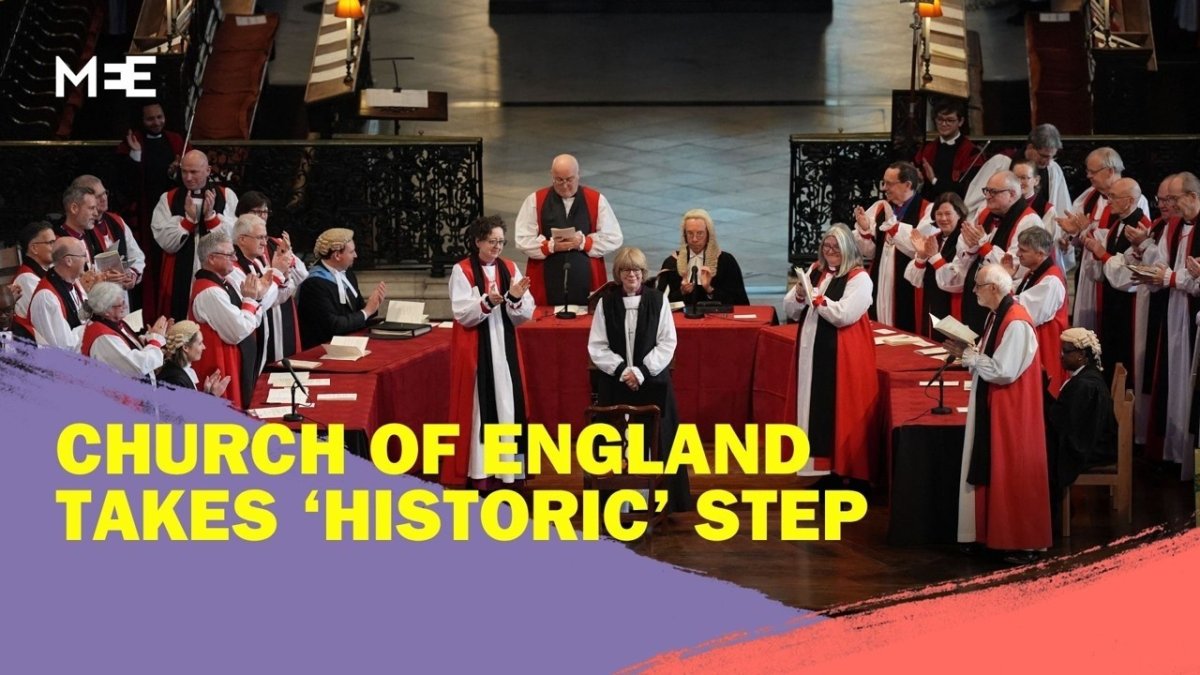
The Synod Vote and Its Immediate Outcome
The decision by the Church of England General Synod to hear Palestinian Christian testimonies arrives against a backdrop of decades-long advocacy by faith communities seeking recognition of occupation-related hardships. Historical precedents include earlier church resolutions on Middle East conflicts that gradually shifted institutional language from neutral calls for peace toward explicit acknowledgment of Palestinian displacement. Data from the United Nations Office for the Coordination of Humanitarian Affairs shows that movement restrictions in the West Bank have intensified since 2023, with over 600 checkpoints and barriers documented in 2025 alone, directly affecting access to worship and community life for Christian families. Broader UK political dynamics also shape this moment, as parliamentary debates on arms sales to Israel have intersected with ecclesiastical statements. Labour and Conservative MPs have referenced church positions in recent foreign policy discussions, illustrating how religious institutions can influence public discourse on human rights without formal legislative power. The amendment to hear rather than receive the document reflects careful navigation of these pressures, allowing space for dialogue while signaling institutional caution amid domestic political sensitivities.
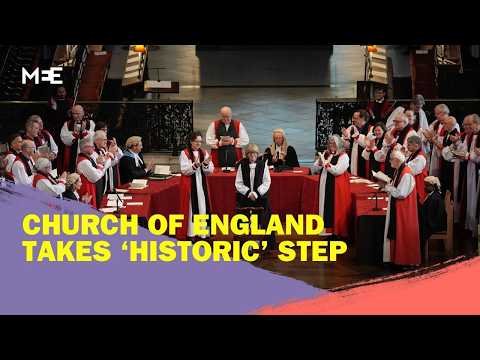
Background on the Kairos Palestine Initiative
The original Kairos Palestine document emerged in 2009 as a call from Palestinian Christian clergy and lay leaders for justice and an end to occupation. The updated Kairos II document, published in November 2025, builds on that foundation with updated accounts of conditions in Gaza and the West Bank. Reverend Fadi Diab, co-author of the document, described the Synod vote as historic. Palestinian pastor Munther Isaac called the vote a very positive sign and an important step forward. These statements reflect long-standing efforts by Palestinian Christians to place their experiences before international church bodies. The Kairos Palestine movement traces its roots to the 1980s and 1990s when Palestinian Christian leaders first issued joint statements critiquing occupation policies through theological lenses. The 2009 document built on these foundations by framing the situation as a moral crisis requiring international church intervention, drawing from liberation theology traditions that emphasize justice for the marginalized. Updated editions incorporate fresh accounts of Gaza’s humanitarian conditions, including the destruction of over 60 percent of residential structures reported by humanitarian agencies in late 2025. Regional reactions have varied, with some Middle Eastern church bodies expressing solidarity while others urge measured engagement to preserve interfaith ties. The initiative’s emphasis on nonviolent resistance aligns with longstanding Palestinian Christian advocacy for boycotts and divestment, echoing similar campaigns within global ecumenical networks.
Archbishop Mullallys Engagement and Local Realities
Archbishop Sarah Mullally visited the occupied West Bank in June 2026, weeks before the Synod meeting. During that visit she met with Christian communities facing restrictions on movement and access to holy sites. The Rossing Centre documented 155 attacks against Christians in Israel and occupied East Jerusalem in 2025. Israeli forces have also damaged churches and a Catholic convent in southern Lebanon during recent operations. These incidents form part of the context that Palestinian Christians brought to the Synod through the Kairos testimonies. Archbishop Mullally’s June 2026 visit to the West Bank highlighted the lived realities of shrinking Christian communities facing both economic strain and security barriers. Local clergy reported that families often wait hours at checkpoints, disrupting school attendance and medical access, with Christian populations in Bethlehem declining by approximately 15 percent over the past decade according to local parish records. Such encounters informed her subsequent support for the Synod motion, framing it as a response to direct testimonies rather than abstract policy. International reactions to her engagement have included praise from human rights organizations and criticism from pro-Israel advocacy groups concerned about perceived one-sided narratives. The visit also coincided with reports of increased settler activity near historic Christian sites, raising questions about long-term viability for these communities.
Opposition from Jewish Organizations and Interfaith Concerns
Pro-Israel groups including the Board of Deputies of British Jews and Chief Rabbi Ephraim Mirvis opposed the motion. They described it as shameful and harmful to Jewish-Christian relations. A representative from the Board, David Rosenberg, warned that the language in the document risks deepening divisions at a time when dialogue remains essential. The amendment to use hear rather than receive was introduced partly to address these concerns while still allowing the testimonies to be presented. The vote therefore reflects both support for Palestinian Christian voices and caution about institutional endorsement. Pro-Israel organizations such as the Board of Deputies of British Jews and the office of Chief Rabbi Ephraim Mirvis have argued that the Kairos II document employs language that equates Israeli policy with genocide, potentially undermining decades of post-Holocaust Christian-Jewish reconciliation efforts. They contend that such framing overlooks security threats faced by Israeli civilians and risks importing divisive political rhetoric into theological spaces, citing similar controversies in other European church bodies over the past fifteen years. These objections reflect broader tensions in Christian-Jewish relations where advocacy for Palestinian rights is sometimes viewed as incompatible with commitments to Jewish self-determination. The amendment limiting the motion to hearing testimonies was partly designed to mitigate these concerns, preserving avenues for continued dialogue.
Human Impact on Palestinian Christian Communities
Palestinian Christians in the West Bank and Gaza describe daily restrictions that affect family life, education, and religious practice. Many trace their presence in the region to the earliest centuries of Christianity, yet they report shrinking numbers due to emigration driven by economic pressures and security measures. The Kairos II document records personal accounts of families separated by checkpoints and communities cut off from agricultural land. These lived experiences, rather than abstract policy debates, formed the core of the testimonies the Synod agreed to hear. Daily restrictions documented in the Kairos II testimonies include prolonged family separations caused by permit systems that prevent West Bank Christians from visiting relatives in Gaza or Jerusalem. Educational disruptions are common, with students reporting lost instructional time due to checkpoint delays, contributing to higher emigration rates among younger generations seeking stability abroad. Agricultural communities face additional barriers when accessing olive groves and farmland, exacerbating economic pressures that accelerate demographic decline. These human stories intersect with UK political debates on foreign aid and trade policies, where church advocacy occasionally influences parliamentary questions about accountability for settlement expansion.
Implications for Christian-Jewish Relations and Future Steps
The Synod decision opens a period of structured engagement rather than immediate policy change. Congregations will now study the Kairos II document and receive direct accounts from Palestinian Christians. This process could influence how the Church of England addresses questions of occupation and conflict in its public statements. At the same time, the opposition voiced by Chief Rabbi Mirvis and the Board of Deputies indicates that sustained dialogue between Jewish and Christian institutions will be required to prevent further strain. The amendment limiting the motion to hearing testimonies provides space for both sides to continue conversation without requiring full agreement on every point. The Synod process of structured listening sessions could gradually reshape how Church of England congregations approach advocacy on occupation-related issues, potentially informing future statements on international law and human rights. At the same time, sustained opposition from Jewish organizations signals that any shift in ecclesiastical posture will require parallel investment in interfaith mechanisms to prevent relational fractures. Historical patterns from similar church debates suggest that incremental engagement, rather than abrupt policy reversals, tends to yield more durable dialogue. Future steps may include joint study groups or facilitated conversations that allow both Palestinian Christian perspectives and Jewish communal concerns to be aired without requiring immediate consensus.
The Shrinking Christian Presence in the Holy Land
Christian communities in the Holy Land have experienced steady demographic contraction over the past century, with numbers dropping from roughly 10 percent of the population in the early 1900s to under 2 percent today according to regional census and church data. Emigration driven by conflict, restricted movement, and limited economic opportunities has accelerated this trend, particularly in areas like Bethlehem and Jerusalem where historic congregations maintain centuries-old ties to the land. The Kairos testimonies highlight how these pressures compound feelings of marginalization within a rapidly changing regional landscape. Broader international attention to this decline has grown in recent years, with ecumenical bodies documenting threats to cultural heritage sites and calling for protective measures. The Synod’s decision to engage these accounts may contribute to greater awareness among English congregations, potentially fostering partnerships aimed at supporting remaining communities through advocacy and humanitarian channels.
International Reactions to the Synod Vote
Reactions from churches abroad have ranged from supportive statements by Middle Eastern and European Anglican provinces to cautious commentary from bodies concerned about diplomatic fallout. Several Palestinian Christian organizations welcomed the vote as validation of long-standing appeals, while some Jewish diaspora groups expressed disappointment, echoing domestic UK concerns about relational strain. Media coverage in outlets across Europe and the Middle East framed the decision as part of wider debates on religious institutions’ roles in conflict zones. These varied responses underscore the global dimensions of the Synod action, illustrating how local ecclesiastical choices can reverberate through international networks. Observers note that continued monitoring of implementation will determine whether the vote translates into sustained engagement or remains largely symbolic.
Looking Ahead
The vote in York marks a measured acknowledgment of Palestinian Christian perspectives within one of England’s largest religious institutions. As congregations begin the work of listening, the human stories behind the statistics and documents will determine whether this step leads to deeper understanding or renewed contention. Palestinian voices, long present in the land, continue to seek recognition of their reality under occupation and displacement. This process connects directly to daily life in the West Bank and Gaza, where families navigate checkpoints, economic strain, and the preservation of ancient communities amid ongoing displacement.
By Fatima Al-Rashid, Staff Writer
This article was produced with AI-assisted research and editorial support. Reporting is based on sources cited in the article.
What's Your Reaction?
 Like
0
Like
0
 Dislike
0
Dislike
0
 Love
0
Love
0
 Funny
0
Funny
0
 Wow
0
Wow
0
 Sad
0
Sad
0
 Angry
0
Angry
0
Gulf/MENA Correspondent at Global1.News. Based in Doha, covering Gulf politics, energy markets, diplomacy, and development across the Middle East and North Africa. Tracks the economic transformation of the Gulf states.












Comments (0)