
NYC Mayor Calls Netanyahu 'War Criminal,' Urges ICC Enforcement
NYC Mayor Zohran Mamdani called Benjamin Netanyahu a war criminal in a Tuesday video and urged the U.S. government to enforce the ICC arrest warrant issued in November 2024. He cited over 73,000 deaths in Gaza, hospital attacks, and aid blocks, noting U.S. funding of weapons. Trump rejected any arrest. Mamdani said the city lacks authority but declared Netanyahu unwelcome. The statement highlights tensions between local positions and federal policy on international justice.
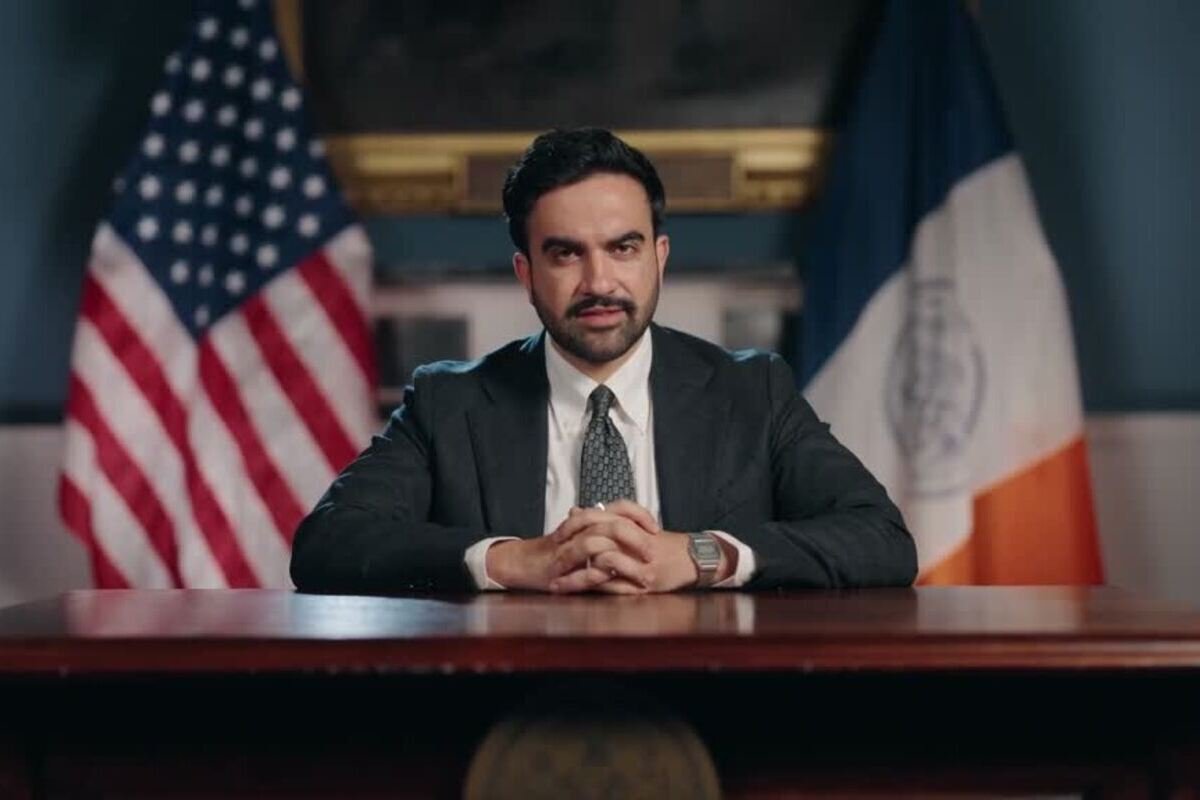
In a striking rebuke of U.S. foreign policy, New York City Mayor Zohran Mamdani has publicly branded Israeli Prime Minister Benjamin Netanyahu a war criminal and demanded that federal authorities enforce the International Criminal Court’s arrest warrant should Netanyahu set foot on American soil. The mayor’s video statement underscores the human cost of the Gaza conflict, linking U.S. weapons funding to widespread civilian suffering and calling for accountability under international law. This local challenge highlights deepening tensions between municipal voices advocating human rights and a federal government that continues to shield allies from global justice mechanisms.
New York City Mayor Urges ICC Warrant Enforcement Against Netanyahu
New York, NY — In a direct challenge to federal policy, New York City Mayor Zohran Mamdani has called Benjamin Netanyahu a war criminal and urged the US government to enforce the International Criminal Court's arrest warrant against him, citing the deaths of more than 73,000 Palestinians and systematic attacks on hospitals and aid supplies.
Mayor Mamdani Issues Direct Challenge on ICC Warrant
New York City Mayor Zohran Mamdani released a video message on the social media platform X on Tuesday, labeling Israeli Prime Minister Benjamin Netanyahu a war criminal and calling for the United States government to enforce an International Criminal Court arrest warrant if Netanyahu enters American territory. Mamdani stated that Netanyahu bears responsibility for the deaths of more than 73,000 people in the Gaza Strip, along with the targeting of hospitals and the obstruction of food and humanitarian aid. He emphasized that Americans fund the weapons involved in these actions and urged federal authorities to act on the warrant.
Background on the ICC Warrants Issued in November 2024
The International Criminal Court issued arrest warrants in November 2024 for Netanyahu and former Defense Minister Yoav Gallant. The warrants cite allegations of war crimes and crimes against humanity committed in Gaza. Mamdani noted that the court had clear reasons for these measures and argued that anyone examining the situation with conscience would recognize the need for legal accountability. The mayor clarified that his city administration lacks independent authority to enforce the warrant and placed responsibility on the federal government to join the ICC and carry out the order.
Human Impact of the Gaza Conflict and Aid Restrictions
Mamdani described the situation in Gaza as a genocide against the Palestinian people, highlighting the blocking of essential supplies and attacks on medical facilities. These actions have compounded the suffering of civilians already living under prolonged occupation and displacement. The mayor connected the events directly to American policy, noting that U.S. funding supports the military operations involved. Figures on total casualties beyond the reported 73,000 were not immediately available from official sources at the time of his statement.
The humanitarian situation in Gaza has deteriorated sharply since October 2023, with the United Nations estimating that nearly 1.9 million residents—roughly 90 percent of the population—have been displaced at least once. UN agencies, including the World Food Programme and OCHA, have documented acute food insecurity affecting more than 90 percent of households, with northern Gaza repeatedly classified under IPC Phase 5 famine conditions. Medical shortages have compounded these pressures: the World Health Organization reports that only 16 of 36 hospitals remain partially functional, with critical supplies such as anesthetics, antibiotics, and dialysis materials depleted for weeks at a time.
Attacks on healthcare facilities have further restricted access. The UN Human Rights Office and several international NGOs have recorded strikes on hospitals, ambulances, and medical personnel, actions that violate core protections under international humanitarian law. These incidents have forced surviving facilities to operate without electricity or running water, leading to preventable deaths from infection and untreated chronic conditions. Aid blockages at border crossings have limited daily truck entries far below pre-conflict averages, according to UN monitoring data, despite repeated Security Council calls for unimpeded access.
International organizations have described the cumulative effect as a manufactured humanitarian crisis. Médecins Sans Frontières and the International Committee of the Red Cross have warned that restrictions on fuel, water, and reconstruction materials prolong civilian suffering while undermining any near-term recovery of basic services. These conditions form the factual backdrop against which local officials have framed calls for accountability under international legal instruments.
Trump Administration Position and Federal Legal Limits
President Donald Trump stated on Monday that Netanyahu would not face arrest in any form while inside the United States. Mamdani acknowledged this federal stance while repeating his call for enforcement and declaring that Netanyahu is not welcome in New York City, nor are any other individuals facing similar charges. The mayor stressed that although the city cannot single-handedly end the conflict, it can refuse silence and examine every available tool to uphold human dignity.
President Trump’s statement that Netanyahu would face no arrest in the United States aligns with the country’s non-party status under the Rome Statute. As a non-signatory, the United States has no treaty obligation to detain or surrender individuals named in ICC warrants, a position reinforced by federal statutes that limit cooperation with the court. This stance mirrors the approach taken by other non-party states such as China and Russia, which have also declined to enforce ICC orders.
In contrast, states that have ratified the Rome Statute—such as those in the European Union—are generally required to arrest individuals subject to valid warrants when those individuals enter their territory. Several European governments have publicly stated they would execute the Netanyahu warrant if he traveled there, highlighting divergent enforcement practices based on treaty membership. The U.S. position therefore rests on sovereign choice rather than legal compulsion.
The episode raises questions about consistency in U.S. advocacy for international law. While Washington has supported ICC warrants against officials from Sudan, Russia, and other adversaries, its refusal to engage with warrants involving close allies tests the credibility of its selective engagement with global justice institutions.
Historical Context of U.S. Policy Toward the ICC and Palestine
The United States has long maintained a position outside the International Criminal Court framework, which limits its formal cooperation with ICC proceedings. Mamdani's remarks place renewed pressure on this longstanding approach by linking domestic city policy to international legal mechanisms. Palestinian communities in New York and across the United States have followed these developments closely, given the direct ties between U.S. decisions and conditions on the ground in Gaza and the West Bank. The mayor's statement reflects ongoing debates about how local governments can respond when federal policy diverges from calls for accountability.
The United States has never ratified the Rome Statute and therefore does not recognize the ICC’s jurisdiction over its nationals or those of non-party states. Successive administrations have argued that the court lacks sufficient checks against politicized prosecutions and could expose U.S. service members to foreign judicial processes. This stance hardened after the court’s 2015 preliminary examination of the situation in Palestine, which followed the Palestinian Authority’s accession to the Rome Statute that same year.
Palestine’s membership expanded the court’s territorial reach to the West Bank, Gaza Strip, and East Jerusalem, creating a legal pathway for investigations into alleged crimes committed by Israeli officials. The United States responded by imposing sanctions on ICC personnel in 2020 and later revoking them, signaling consistent opposition to any investigation involving Israel. These measures underscored a broader policy tension: Washington’s strategic alliance with Israel frequently conflicts with its rhetorical support for international justice mechanisms when those mechanisms scrutinize U.S. partners.
The resulting legal landscape leaves the United States outside formal cooperation obligations while still able to exert diplomatic and financial pressure on the court. This asymmetry has shaped debates over enforcement of ICC warrants, particularly when domestic political actors invoke international legal findings that federal policy has long rejected.
Local Reactions and the Role of Municipal Leadership
Mamdani framed his position as a choice about whether silence functions as an additional weapon in the conflict. He invited examination of all municipal tools to defend humanity and dignity for all people. While New York City holds no power to halt military operations abroad, the mayor argued that public officials can still set clear boundaries on who receives official welcome. This approach connects to broader discussions within Palestinian and allied communities about consistent application of international law regardless of the nationality of those accused.
New York City’s intervention reflects a widening pattern of U.S. municipalities adopting positions on foreign policy questions traditionally reserved for the federal government. Cities such as Chicago, San Francisco, and several in California have passed resolutions criticizing Israeli actions or endorsing calls for cease-fires, often citing local Palestinian-American constituencies. These measures have prompted legal and political pushback, with critics arguing that foreign affairs remain the exclusive domain of the national government under the Constitution.
Palestinian-American organizations in New York welcomed the mayor’s remarks, viewing them as validation of long-standing community concerns over U.S. policy. At the same time, pro-Israel groups condemned the statement as an overreach that undermines national diplomacy. The episode illustrates the friction between municipal expressive authority and federal preemption in international matters.
Legal scholars note that while cities cannot enforce ICC warrants or conduct foreign policy, they retain latitude to withhold official welcomes or symbolic honors. This distinction allows local leaders to register dissent without directly challenging federal supremacy, though the practical effect on enforcement remains negligible.
By Fatima Al-Rashid, Staff Writer
This article was produced with AI-assisted research and editorial support. Reporting is based on sources cited in the article.
What's Your Reaction?
 Like
0
Like
0
 Dislike
0
Dislike
0
 Love
0
Love
0
 Funny
0
Funny
0
 Wow
0
Wow
0
 Sad
0
Sad
0
 Angry
0
Angry
0
Gulf/MENA Correspondent at Global1.News. Based in Doha, covering Gulf politics, energy markets, diplomacy, and development across the Middle East and North Africa. Tracks the economic transformation of the Gulf states.














Comments (0)