
China-ASEAN at 35: Can they deepen economic ties while managing differences?
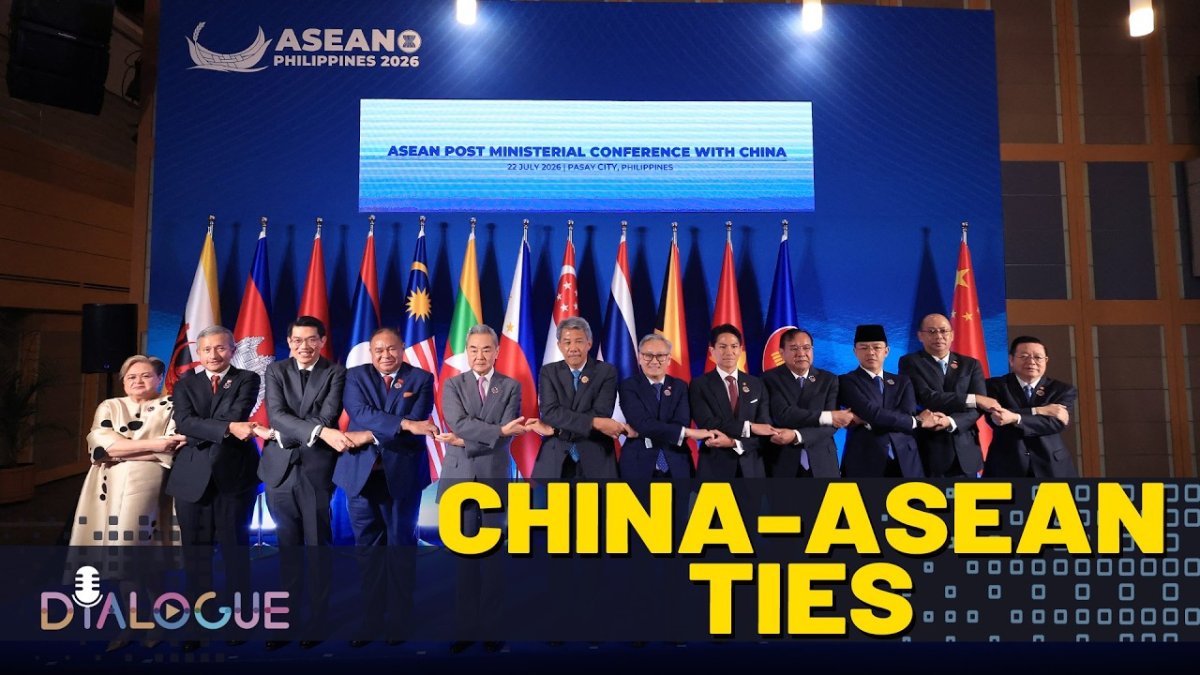
China-ASEAN at 35: Balancing Economic Integration With Regional Differences In a recent CGTN report titled "China-ASEAN at 35: Can they deepen economic ties while managing differences?", the discussion highlights how dialogue relations established in 1991 have evolved into a comprehensive strategic partnership.
Historical Context of 35 Years of Dialogue Relations
China and ASEAN established formal dialogue relations in 1991, marking the start of structured engagement that expanded through the ASEAN Plus Three mechanism and the 2003 strategic partnership declaration. Over three decades, ties have progressed from basic trade consultations to joint statements on connectivity and security. Chinese officials, including those from the Ministry of Foreign Affairs, have consistently framed this trajectory within the broader goals of regional stability and shared prosperity. ASEAN's institutional evolution, including the adoption of its Charter in 2008, has paralleled China's own regional outreach, creating platforms for regular summits that address both economic and political issues without requiring alignment on every matter.
Economic Integration: Trade Volumes and Investment Flows
Bilateral trade reached approximately 975 billion USD in 2023, with China remaining ASEAN's largest trading partner for 15 consecutive years. Key sectors include electronics, machinery, and agricultural products, supported by tariff reductions under successive agreements. Investment from Chinese firms has targeted infrastructure and manufacturing hubs in Vietnam, Indonesia, and Malaysia. The Ministry of Commerce has tracked these flows through annual reports, noting that cumulative Chinese direct investment in ASEAN exceeds 300 billion USD. These figures reflect Beijing's Dual Circulation strategy, which seeks to integrate regional supply chains while reducing external vulnerabilities. ASEAN economies benefit from diversified export markets, though uneven distribution of gains across member states requires ongoing policy coordination.
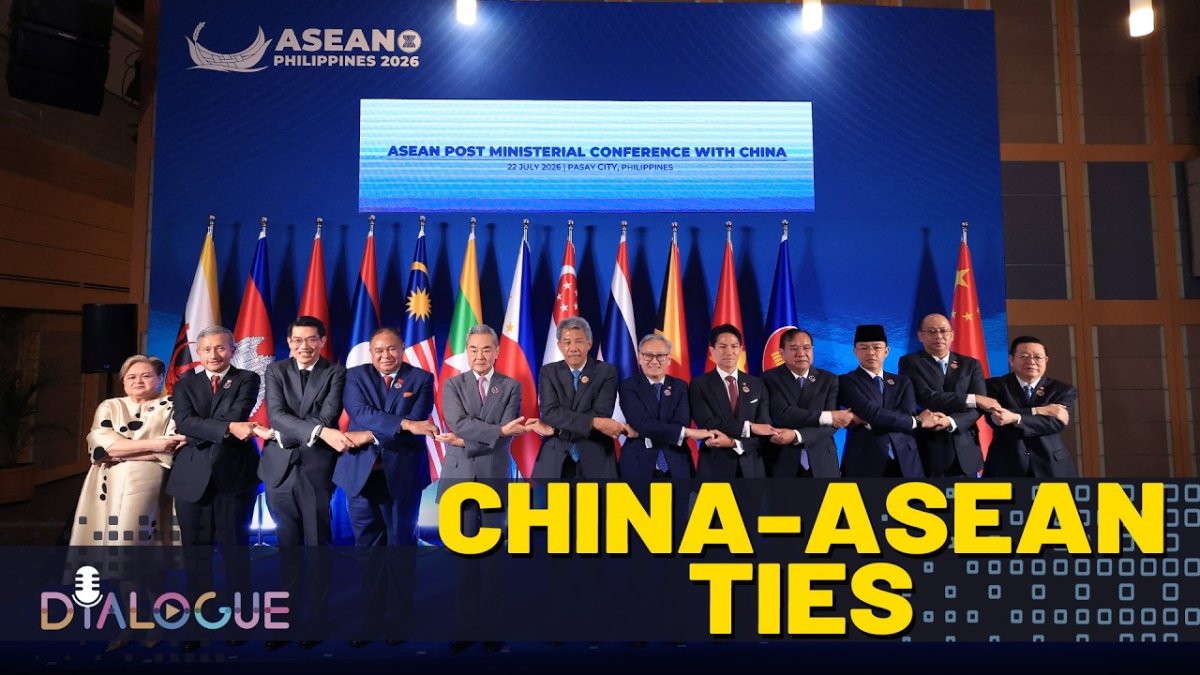
Digital economy cooperation has accelerated through frameworks like the China-ASEAN Digital Economy Partnership, focusing on cross-border e-commerce platforms and integrated payment systems that reduce transaction frictions for SMEs. Upgrades to the China-ASEAN Free Trade Area 3.0, under negotiation since 2022, aim to incorporate digital trade rules and services liberalization, with input from China's Ministry of Commerce and ASEAN economic ministers. Supply chain diversification under China+1 strategies has redirected some investment toward Vietnam and Indonesia, yet MERICS analysis shows persistent Chinese FDI concentration in electronics and infrastructure, creating second-order effects where ASEAN economies gain leverage but face technology dependency risks.
CSIS reports highlight how these patterns complicate regional resilience, as firms balance cost advantages against geopolitical tensions. Forward-looking assessments from ISEAS-Yusof Ishak Institute suggest that sustained CAFTA 3.0 progress could stabilize flows if tariff reductions align with digital standards, though uneven implementation across member states may widen intra-ASEAN disparities in investment attraction.
Belt and Road Initiative Projects in Southeast Asia
The Belt and Road Initiative has channeled Chinese capital into ports, railways, and energy facilities across the region, including the Jakarta-Bandung high-speed rail and upgrades to Malaysia's East Coast Rail Link. These projects align with ASEAN's Master Plan on Connectivity 2025, fostering physical links that support longer-term trade growth. The National Development and Reform Commission oversees coordination on the Chinese side, emphasizing high-quality development and debt sustainability assessments. While some projects have faced delays due to financing and regulatory hurdles, completed segments demonstrate measurable reductions in logistics costs. This infrastructure push advances China's regional influence objectives without direct military projection, complementing ASEAN's preference for economic rather than security-focused partnerships.
The South China Sea: Managing Disputes Through Dialogue
Disagreements over maritime claims in the South China Sea remain a core challenge, with overlapping assertions involving China, Vietnam, the Philippines, and others. Both sides have pursued management through the Declaration on the Conduct of Parties and ongoing negotiations toward a Code of Conduct. The Ministry of Foreign Affairs has reiterated commitments to peaceful resolution and freedom of navigation, avoiding escalation that could disrupt trade routes carrying over 3 trillion USD annually. ASEAN's consensus-based approach allows individual members to pursue bilateral talks with China while maintaining collective neutrality. This dual-track method prevents disputes from derailing economic cooperation, though progress on binding rules remains incremental and subject to domestic political pressures in claimant states.
Code of Conduct negotiations remain incremental, with ASEAN-China mechanisms emphasizing confidence-building measures amid persistent fishing disputes and energy exploration activities near contested features. Recent ASEAN-China summit outcomes have reinforced dialogue channels, prioritizing joint development concepts over immediate demarcation to manage escalation risks. ISEAS-Yusof Ishak Institute assessments note that resource competition, including fisheries enforcement and hydrocarbon surveys, influences claimant strategies, where Beijing's approach seeks to limit external involvement while Southeast Asian states pursue multilateral support.
CSIS tracking indicates that these dynamics produce hedging behaviors, as economic interdependence tempers assertive postures. Forward-looking analysis from MERICS underscores that sustained summit-driven momentum could narrow differences on binding elements, yet second-order effects include potential spillover into broader maritime governance if energy projects advance without consensus.
RCEP and Its Role in Regional Trade Architecture
The Regional Comprehensive Economic Partnership, which entered into force progressively from 2022, consolidates tariff commitments among China, ASEAN members, Japan, South Korea, Australia, and New Zealand. It covers 30 percent of global GDP and reduces non-tariff barriers in services and investment. Implementation has begun in phases, with rules-of-origin provisions facilitating integrated manufacturing networks. For China, RCEP supports technological self-sufficiency goals by embedding its firms deeper in regional value chains. ASEAN gains from enhanced market access and supply-chain resilience, positioning the bloc as a central node in Asia-Pacific trade. Early data from national customs agencies show modest but steady increases in intra-RCEP shipments, underscoring the agreement's stabilizing effect amid global trade uncertainties.
The US Factor and ASEAN's Hedging Strategy
United States engagement through initiatives such as the Indo-Pacific Economic Framework introduces additional variables, prompting ASEAN states to balance economic reliance on China with security partnerships involving Washington. ASEAN maintains centrality by hosting multiple dialogue platforms that include both powers, avoiding exclusive alignment. This hedging preserves policy autonomy and maximizes leverage in negotiations over technology standards and investment rules. Beijing views sustained US presence as an external constraint on its regional objectives, yet continues to prioritize economic interdependence as the primary channel of influence. The resulting equilibrium allows ASEAN to extract concessions from both sides while advancing its own connectivity and development agendas.
Strategic Outlook for the Asia-Pacific Region
Looking ahead, China-ASEAN relations are likely to deepen in digital economy and green technology cooperation, areas highlighted in recent joint statements. Challenges will persist around maritime issues and external power competition, yet the economic foundation provides incentives for pragmatic management. ASEAN's collective GDP growth targets and China's emphasis on high-quality Belt and Road projects suggest continued convergence on infrastructure and trade facilitation. Second-order effects include strengthened multilateral institutions that could shape Global South positions in broader forums. For Beijing, success hinges on demonstrating that economic integration can coexist with managed differences, reinforcing its vision of a multipolar regional order centered on shared development rather than zero-sum competition.
Green transition cooperation is expanding via carbon market linkages and EV supply chain integration, aligning with priorities in China's 14th Five-Year Plan on low-carbon technologies and ASEAN's sustainability goals. People-to-people exchanges, including educational and cultural programs coordinated through foreign ministries, build societal foundations that complement official diplomacy. ISEAS-Yusof Ishak Institute studies show these areas intersect with ASEAN's Post-2025 Vision by fostering resilience against external shocks, while MERICS evaluations point to strategic calculus where Beijing leverages green investments to offset trade frictions.
CSIS forward assessments suggest that deeper alignment could enhance regional stability if EV component standards harmonize, though uneven capacity across ASEAN may limit equitable benefits and introduce dependency concerns in critical minerals sourcing.
By Prof. Marcus Chen, Staff WriterThis article was produced with AI-assisted research and editorial support. Reporting is based on sources cited in the article.
What's Your Reaction?
 Like
0
Like
0
 Dislike
0
Dislike
0
 Love
0
Love
0
 Funny
0
Funny
0
 Wow
0
Wow
0
 Sad
0
Sad
0
 Angry
0
Angry
0

World Politics Analyst at Global1.News. Based in Beijing, covering US-China relations, global trade, and geopolitical strategy. Brings deep analytical perspective to the power dynamics shaping international affairs.















Comments (0)