
Escalation at Second Thomas Shoal Tests ASEAN Diplomacy Amid South China Sea Tensions
The recent clash at Second Thomas Shoal has intensified maritime tensions between China and the Philippines, prompting urgent diplomatic exchanges and raising questions about the future of ASEAN-led negotiations. This incident underscores Beijing's calibrated approach to asserting claims while Manila seeks to leverage international law and alliance support. Regional stability now hinges on whether bilateral restraint can prevent further escalation ahead of key multilateral forums.
The recent clash at Second Thomas Shoal has intensified maritime tensions between China and the Philippines, prompting urgent diplomatic exchanges and raising questions about the future of ASEAN-led negotiations. This incident underscores Beijing's calibrated approach to asserting claims while Manila seeks to leverage international law and alliance support. Regional stability now hinges on whether bilateral restraint can prevent further escalation ahead of key multilateral forums.
South China Sea Clash Tests ASEAN Code of Conduct
Manila, Philippines — Article continues...
The Incident at Second Thomas Shoal on July 20
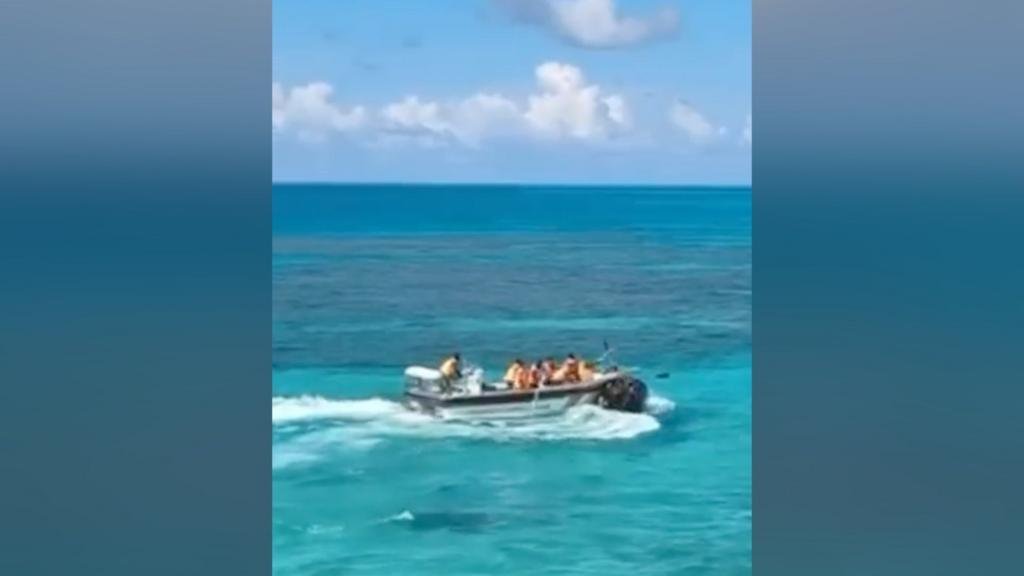
The confrontation unfolded on July 20 at Second Thomas Shoal, also known as Ayungin Shoal, in the Spratly Islands. According to the Armed Forces of the Philippines, a China Coast Guard boat carrying eight personnel approached the BRP Sierra Madre, the grounded Philippine warship serving as Manila's outpost. Two Philippine dinghies sought to drive the vessel away in a calm manner, after which a melee occurred and a Philippine marine sustained a significant head injury from a baton strike by a CCG sailor.
Diplomatic Exchange Between Lazaro and Wang Yi
Foreign Secretary Ma. Theresa Lazaro met Chinese Foreign Minister Wang Yi on the sidelines of the 59th ASEAN Foreign Ministers' Meeting in Manila. Lazaro conveyed the Philippines's consistent positions on the South China Sea and raised concerns over actions infringing on maritime rights, including incidents affecting the safety of Filipino personnel. Wang registered China's strong protest, urged the Philippines to stop provocative actions, and stated that bilateral relations stood at a crossroad requiring a correct and rational choice.
The meeting between Foreign Secretary Ma. Theresa Lazaro and Foreign Minister Wang Yi occurred against the backdrop of repeated resupply missions to the BRP Sierra Madre at Second Thomas Shoal, echoing the 2012 Scarborough Shoal standoff where Philippine vessels were blocked after an initial fisheries incident. That episode led to effective Chinese control over the feature and prompted Manila to initiate arbitration under UNCLOS, culminating in the 2016 Arbitral Award that rejected China's nine-dash line claims. Lazaro's reference to the award underscores Manila's reliance on this legal instrument, yet Beijing continues to dismiss it as non-binding, illustrating the persistent gap between legal rulings and enforcement realities in the region.
Economic stakes amplify the diplomatic friction. The South China Sea facilitates roughly $3.4 trillion in annual trade and holds an estimated 11 billion barrels of oil plus 190 trillion cubic feet of natural gas, while fisheries yield over 12 percent of global catch. Vietnam, Malaysia, and Brunei maintain overlapping claims and have pursued joint development talks with varying success, yet none have matched the Philippines' recent transparency campaign on resupply operations. This comparative approach contrasts with earlier incidents, such as the 2014 Hai Yang Shi You 981 platform standoff with Vietnam, where economic retaliation was swift but short-lived, suggesting China's current pressure on Manila seeks to test the limits of the 1951 Mutual Defense Treaty without triggering direct U.S. intervention.
Controversy Over the China Daily AI-Generated Video
Lazaro also protested an AI-generated video posted by China Daily depicting the Philippines as a karaoke-singing monkey in traditional dress, forced by faceless figures representing the US and Japan to parrot the 2016 Hague arbitral award. The Department of Foreign Affairs described the depiction as deeply offensive, distressing, and unacceptable. Chinese Ambassador Jing Quan attempted to distance the government from the video, yet Lazaro drew a firm line at the portrayal of Filipinos as monkeys.
The AI-generated video depicting the Philippines as a manipulated primate reflects a pattern of information operations that intensified after the 2016 Arbitral Award, when Beijing sought to delegitimize Manila's legal victory domestically and regionally. Such tactics parallel earlier propaganda during the 2012 Scarborough incident, where state media framed Philippine actions as provocations orchestrated by external powers. By invoking the U.S.-Japan axis, the video attempts to portray Manila's diplomacy as lacking agency, a narrative that resonates within China's domestic political cycles ahead of the next Party Congress, where leadership prioritizes narrative control over perceived sovereignty challenges.
ASEAN member states have reacted with measured concern. Vietnam, which faces similar pressure at Vanguard Bank, has avoided public endorsement of the video protest to preserve bilateral channels, while Malaysia and Brunei emphasize the ongoing Code of Conduct negotiations under the 2002 Declaration on the Conduct of Parties. These divergences highlight ASEAN's institutional constraints, where consensus remains elusive on naming specific incidents. External powers, particularly through the Quad, have cited the episode as evidence of coercive information warfare, raising questions about how AUKUS technology-sharing arrangements might indirectly bolster Philippine maritime domain awareness without direct involvement in propaganda countermeasures.
China's Strategic Calculus in the South China Sea
Beijing's approach at Second Thomas Shoal aligns with broader objectives of technological self-sufficiency and regional influence expansion under the Dual Circulation strategy. By maintaining pressure on Philippine resupply missions to the BRP Sierra Madre, China seeks to reinforce its claims in the Spratly Islands while testing Manila's resolve ahead of potential multilateral pushback. This calculus reflects a desire to shape outcomes without triggering full-scale conflict.
Beijing's calibrated presence at Second Thomas Shoal advances the Dual Circulation strategy by securing maritime space critical for energy imports and fisheries that support coastal provinces' economic stability. This approach builds on the 2012 Scarborough precedent, where sustained administrative control was achieved without kinetic escalation, allowing resources to be redirected toward technological self-sufficiency goals outlined in the 14th Five-Year Plan. Leadership calculations weigh the risk of U.S. alliance activation against the benefit of demonstrating resolve to domestic audiences during periods of economic adjustment.
Comparative analysis reveals continuity rather than rupture. Unlike the 2014 oil rig deployment near Vietnam, which prompted widespread anti-China protests, current operations at Second Thomas Shoal rely on coast guard and maritime militia assets to maintain plausible deniability. ASEAN perspectives diverge: Hanoi seeks multilateral pushback through UNCLOS mechanisms, while Kuala Lumpur prefers quiet diplomacy to protect hydrocarbon interests. The absence of a binding Code of Conduct after two decades of talks underscores how China's regional influence expansion prioritizes bilateral leverage over institutional outcomes favored by the Global South.
Responses from Quad Partners and Canada
During meetings with Quad partners, Japanese Foreign Minister Toshimitsu Motegi voiced strong opposition to changing the status quo by force. Australian Foreign Minister Penny Wong expressed real concerns about destabilizing and risky behavior. Canadian Foreign Minister Anita Anand described the incident as troubling. US Secretary of State Rubio raised the matter with Wang Yi, calling the actions escalatory and reminding him of Washington's defense treaty with Manila.
Japanese Foreign Minister Toshimitsu Motegi's statement on preserving the status quo aligns with Tokyo's post-2016 pivot toward capacity-building support for Manila, including patrol vessels that complement the 2016 Arbitral Award's emphasis on exclusive economic zones. Australia's Penny Wong similarly referenced real concerns over supply-line disruptions, reflecting Canberra's interest in safeguarding the $3.4 trillion trade corridor that passes near the shoal. These positions contrast with earlier episodes, such as muted Quad responses during the 2012 Scarborough standoff, indicating an evolution in collective signaling.
Canada's alignment adds weight to Western diplomatic coordination, yet stops short of invoking the 1951 Mutual Defense Treaty commitments that could draw the United States into direct escort operations. For ASEAN claimants like Vietnam and Malaysia, Quad involvement offers leverage but also risks polarizing COC negotiations, as Beijing views external alliances as contrary to its multilateral institution-building preferences. Second-order effects include potential acceleration of AUKUS submarine timelines, which could reshape deterrence dynamics without immediate alteration of on-water behaviors at Second Thomas Shoal.
Prospects for ASEAN-China Code of Conduct Negotiations
Despite the tensions, Lazaro and Wang Yi expressed continued willingness to conclude negotiations on the ASEAN-China Code of Conduct for the South China Sea. Malaysian Foreign Minister Mohamad Hasan indicated the document could be finalized at the 49th ASEAN Summit in Manila in November 2026. The process has already lasted two decades, and recent events suggest progress remains contingent on de-escalation at sites such as Ayungin Shoal.
Broader Strategic Implications for Regional Stability
The incident carries second-order effects for ASEAN, the EU, and the Global South by highlighting the limits of bilateral restraint in the face of sustained maritime pressure. For ASEAN states, it underscores the challenge of maintaining unity while advancing the Code of Conduct. External actors gain leverage through diplomatic statements, yet the core dynamic continues to center on whether Beijing and Manila can prevent further physical clashes from derailing multilateral talks.
By Prof. Marcus Chen, Staff Writer
This article was produced with AI-assisted research and editorial support. Reporting is based on sources cited in the article.
What's Your Reaction?
 Like
0
Like
0
 Dislike
0
Dislike
0
 Love
0
Love
0
 Funny
0
Funny
0
 Wow
0
Wow
0
 Sad
0
Sad
0
 Angry
0
Angry
0

World Politics Analyst at Global1.News. Based in Beijing, covering US-China relations, global trade, and geopolitical strategy. Brings deep analytical perspective to the power dynamics shaping international affairs.












Comments (0)