
Russia September 2026 Elections: State Duma Vote Outlook
Introduction Russians will head to the polls in September to elect a new State Duma and regional officials in a vote that the ruling United Russia party is expected to dominate but which could offer insight into how four years of war in Ukraine have reshaped the country's political landscape. The vote comes at a fraught time. The war is taking a mounting toll on the economy, wh
Introduction
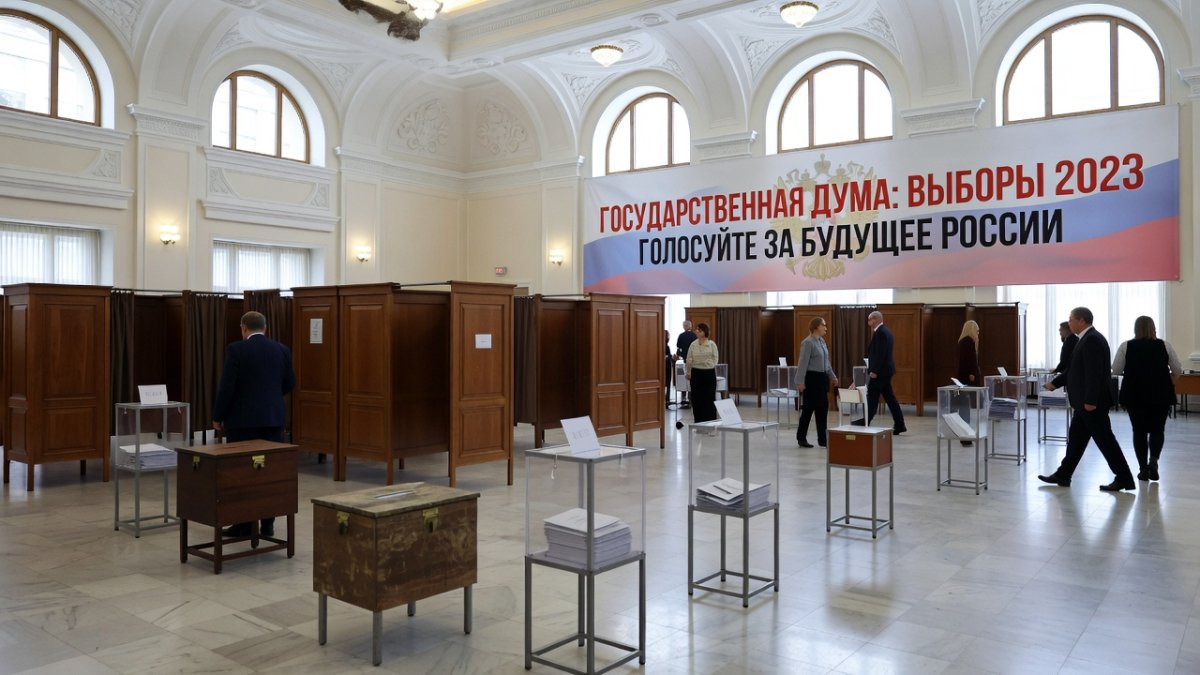
Russians will head to the polls in September to elect a new State Duma and regional officials in a vote that the ruling United Russia party is expected to dominate but which could offer insight into how four years of war in Ukraine have reshaped the country's political landscape. The vote comes at a fraught time. The war is taking a mounting toll on the economy, while long-range Ukrainian drone strikes have led to a widespread fuel crisis. Half of Russians now describe the political climate as "tense."
Russia's regions have reportedly been instructed to secure high voter turnout and a majority win for United Russia. Nevertheless, the vote remains an important instrument for the Kremlin to project popular legitimacy and demonstrate support for President Vladimir Putin and United Russia as both face unstable approval ratings. Reports have suggested the Kremlin could announce another round of mobilization after the elections, making a convincing electoral victory politically important for the ruling party.
Other reports claim that senior officials were allegedly seeking to convince Putin to postpone the State Duma elections due to the Ukrainian drone campaign, though the Kremlin has denied this. With approximately 111 million registered voters, the September contest on Unified Voting Day carries added weight because it tests whether managed electoral mechanisms can still deliver the appearance of broad consent amid sustained economic strain and direct attacks on Russian territory.
The Moscow Times examines the key trends to watch in the months leading up to September's vote as well as what these elections could mean for the future of Russian politics. This year's parliamentary vote will be the first in which residents of the Russian-occupied regions of Ukraine will take part, adding an international dimension that both Moscow and Kyiv are watching closely.
The Electoral Mechanics: What's at Stake
State Duma and regional lawmakers, as well as the heads of 11 regions will be elected to office this Sept. 20 on the country's Unified Voting Day. The most significant event will be the three-day State Duma elections on Sept. 18 to 20, which will see 225 lawmakers chosen in single-member constituencies and another 225 through party lists. This hybrid system allows the Kremlin to balance direct constituency control with proportional representation that favors established parties.
The Central Election Commission (CEC) says 17 political parties are eligible to take part in the parliamentary elections. The five major parties represented in the State Duma — United Russia, the Communist Party, the Liberal Democratic Party (LDPR), A Just Russia - For Truth and New People — are all automatically qualified to contest the election. Electronic voting, which critics have accused of being a tool for vote rigging, has been approved in 33 regions covering roughly 48 million eligible voters.
Voters in 39 regions will also elect members of regional parliaments, while municipal elections, including contests for city dumas, are expected to take place in nearly a dozen regions. Direct elections are scheduled in the Tver, Belgorod, Bryansk, Penza and Ulyanovsk regions, as well as in the republics of Mordovia, Tyva and Chechnya. In the North Caucasus republics of Dagestan, North Ossetia and Karachayevo-Cherkessia, regional leaders will be chosen by local legislatures rather than through a popular vote.
The state-run pollster VTsIOM said that 66% of respondents said they planned to vote, while turnout intentions among young people were even higher (73%). Yet 66% also said in May they did not know when the election would take place. Regional officials have reportedly been instructed to keep turnout at around 50%, the Vedomosti newspaper said. These mechanics reveal how the Kremlin seeks to calibrate participation levels while incorporating occupied Ukrainian territories for the first time.
United Russia's Declining Grip
United Russia, which holds 321 out of 450 seats in the State Duma, appears to be grappling with its approval ratings as Russia confronts mounting economic pressures, internet restrictions and a widening campaign of Ukrainian drone attacks. Although wartime polling is difficult to independently verify, support for United Russia currently stands at almost 34% and even fell to 29.3% in March, compared to around 40% after the start of the war in 2022. Polling by late Kremlin critic Alexei Navalny's Anti-Corruption Foundation (FBK) estimates United Russia's support at just 16%.
The approval rating of Putin, who formally led the party in 2008-2012, has also shown signs of declining — yet even according to the most unfavorable polling, his approval rating never fell below 65%. As a result, authorities have lowered target benchmarks for United Russia's projected performance, especially in regions where its support is weaker, Vedomosti reported, citing sources close to the presidential administration and regional authorities.
The party is reportedly heading into the elections with a lack of clear political direction, which caused frustration among the presidential administration, regional governors and party members. Formally led by former President Dmitry Medvedev, United Russia did not present its list of approved candidates for the parliamentary election until after its pre-election congress on Sunday. This delay signals internal tensions over how to frame the party's wartime record.
Regional governors have been pressed to deliver results despite these headwinds. The combination of lowered expectations and delayed candidate lists suggests the Kremlin is managing risk rather than projecting confidence. Medvedev's formal leadership role has not insulated the party from criticism within elite circles about its ability to mobilize voters under current conditions.
War, Drones, and the Economy
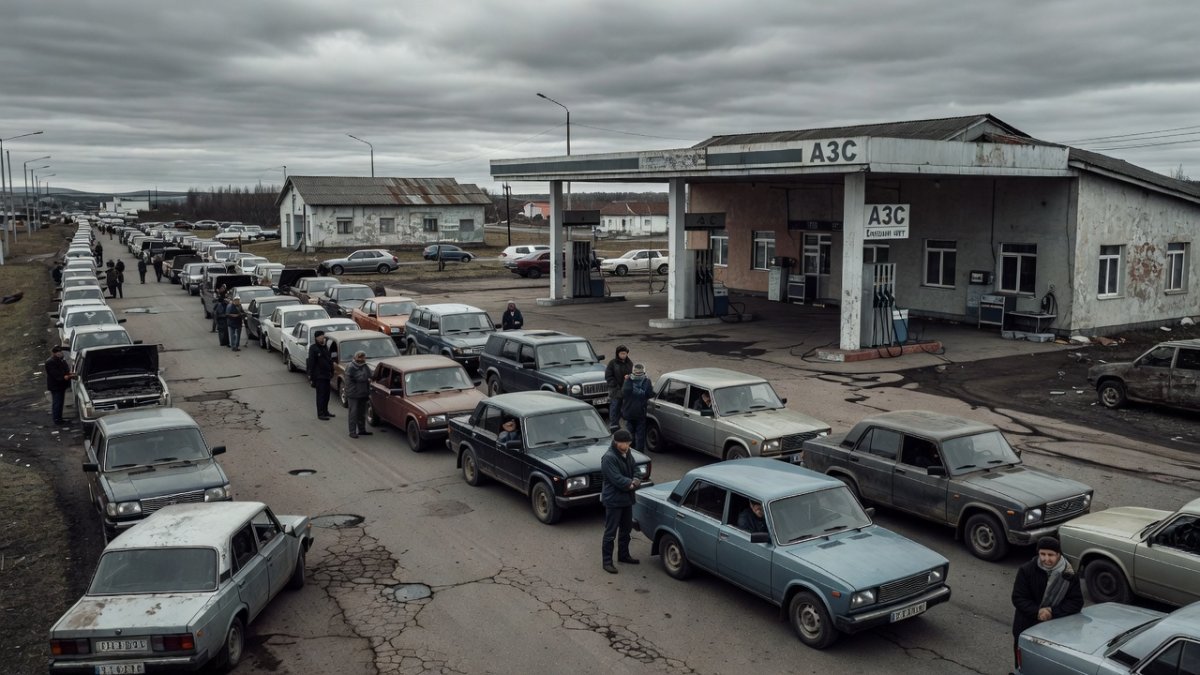
Long-range Ukrainian drone strikes have triggered a widespread fuel crisis that directly affects daily life across multiple Russian regions. The economic toll of four years of war, compounded by sanctions, has created visible strains that polling organizations struggle to measure accurately. Defense Ministry statements have focused on countering these strikes, yet the cumulative impact on civilian infrastructure and energy supplies continues to grow.
Reports have suggested the Kremlin could announce another round of mobilization after the elections. Other reports claim that senior officials were allegedly seeking to convince Putin to postpone the State Duma elections due to the Ukrainian drone campaign, though the Kremlin has denied this. The denial itself underscores how sensitive the timing has become for the presidential administration.
Internet restrictions have further narrowed the space for public debate, limiting independent scrutiny of both the war effort and electoral preparations. The mounting costs of sustaining military operations have forced regional authorities to prioritize turnout targets over addressing local grievances about fuel shortages and price increases. These pressures create a feedback loop in which economic discontent feeds political tension.
Legitimacy, Mobilization, and What Comes Next
Regional officials have reportedly been instructed to secure high voter turnout and a majority win for United Russia. The 50% turnout target remains a key benchmark for demonstrating legitimacy. Yet the fact that 66% of respondents told VTsIOM they did not know when the election would take place reveals a significant gap between official mobilization efforts and public awareness.
Reports have suggested the Kremlin could announce another round of mobilization after the elections, making a convincing electoral victory politically important for the ruling party. Ukrainian and EU perspectives view the participation of occupied territories as an attempt to legitimize territorial changes through electoral theater. Electronic voting in 33 regions covering 48 million voters has drawn renewed criticism from opposition figures who argue it facilitates rigging.
The inclusion of occupied Ukrainian regions for the first time adds an external layer of scrutiny. Both Kyiv and Western capitals have signaled they will not recognize results from these areas. This international dimension complicates the Kremlin's domestic narrative of unified support.
Analysis: Russia at a Crossroads
This election tests whether the system of managed democracy can absorb the pressures of a protracted war without visible fracture. CSTO partners in Central Asia and the Caucasus are watching how Moscow balances internal stability with continued military commitments. Post-Soviet dynamics suggest that prolonged conflict tends to erode the legitimacy of ruling parties over time, even when formal victories remain assured.
Analysts suggest this signals a narrowing window for the Kremlin to maintain the appearance of broad consent while economic costs rise. The gap between VTsIOM figures and FBK estimates highlights how wartime conditions distort traditional polling reliability. Whether United Russia can recover ground lost since 2022 will depend on its ability to address regional frustrations without altering core policy directions.
Ordinary Russians face a choice between participation that reinforces existing structures and abstention that carries little immediate consequence. The "tense" political climate described by half the population reflects accumulated fatigue rather than organized opposition. This mood may influence turnout more than any campaign messaging.
The Bottom Line
The September vote will likely deliver the expected majority for United Russia, yet the underlying indicators of declining support and economic strain point to longer-term challenges for the ruling party and the Kremlin. Post-election decisions on mobilization will test how much political capital the vote actually generates.
By maintaining control over the electoral process while incorporating occupied territories, Moscow seeks to project continuity. The real test lies in whether these mechanisms can continue to function effectively as the war's domestic costs accumulate.
By Irina Volkov, Staff Writer
This article was produced with AI-assisted research and editorial support. Reporting is based on sources cited in the article.
What's Your Reaction?
 Like
0
Like
0
 Dislike
0
Dislike
0
 Love
0
Love
0
 Funny
0
Funny
0
 Wow
0
Wow
0
 Sad
0
Sad
0
 Angry
0
Angry
0
Russia/Eastern Europe Correspondent at Global1.News. Covering Russian politics, energy, security, and the shifting dynamics of the post-Soviet space. Provides clear-eyed analysis on one of the world's most opaque regions.










Comments (0)