
SAVE America Act Standoff: Voter ID Bill Paralyzes Congress
The SAVE America Act is supposed to be about election integrity. But right now, it's become a hostage crisis on Capitol Hill — and your democracy is the bargaining chip. Folks, let me break this down, because the Beltway media is treating this like inside baseball, and it's not. What's happening right now — in the final hours before Congress breaks for July 4th — is a full-blow
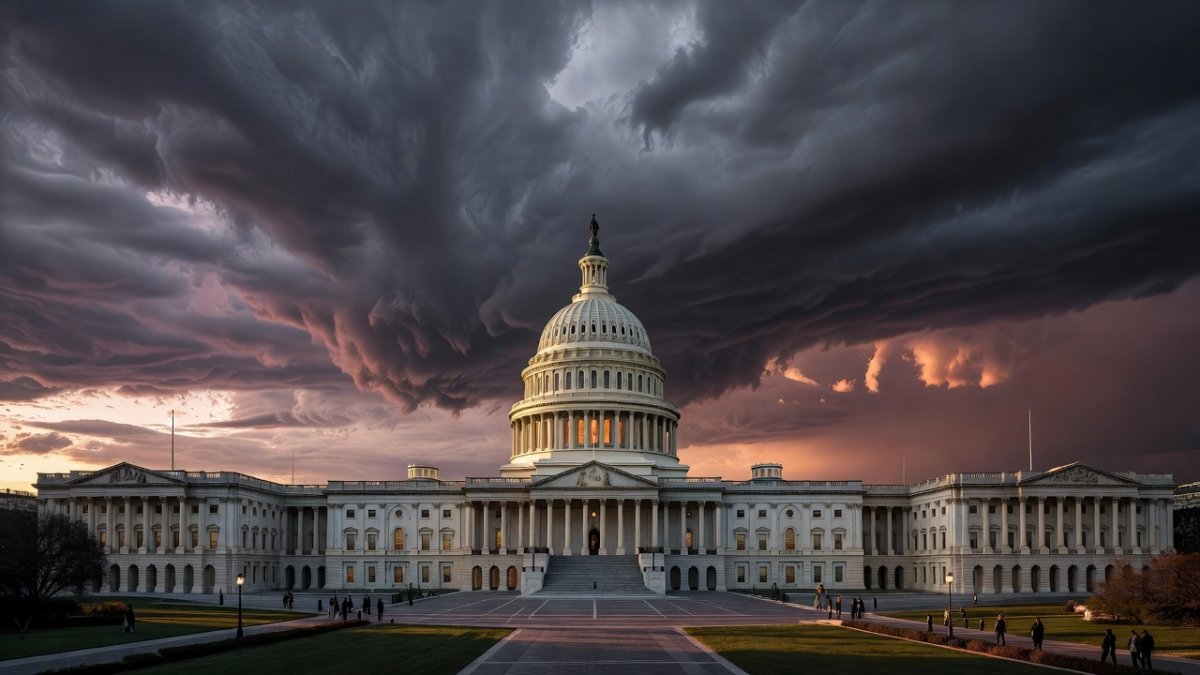
The SAVE America Act is supposed to be about election integrity. But right now, it's become a hostage crisis on Capitol Hill — and your democracy is the bargaining chip.
Folks, let me break this down, because the Beltway media is treating this like inside baseball, and it's not. What's happening right now — in the final hours before Congress breaks for July 4th — is a full-blown constitutional standoff between President Trump, Speaker Johnson, and Senate Republicans over a voter ID bill. And the National Defense Authorization Act — you know, the thing that pays our troops — is caught in the crossfire.
Let's get into it.
What the SAVE America Act Actually Does
Let's clear up the noise first. The Safeguard American Voter Eligibility Act — SAVE America Act — passed the House back in February 2026 as HR 7296. It does two main things.
One: It requires documentary proof of US citizenship — that means a passport, a birth certificate, or a naturalization certificate — when you register to vote in federal elections. Two: It requires you to present a valid physical photo ID before you can cast a ballot in person. If you vote by mail, you'd need to include a copy of that photo ID with your ballot.
According to the BBC, some states already require voter ID at the polls. This bill would make it the law of the land — federal mandate, every state, every federal election. Supporters say it closes a loophole that could allow non-citizens to vote in US elections. Opponents — and there are many — say it would disenfranchise millions of American citizens who don't have easy access to birth certificates or passports.
The Brennan Center for Justice estimates the new SAVE Act bills "would still block millions of American citizens from voting." And ABC News legal contributor James Sample called the bill a proposal that would "dramatically change the role of the federal government in the administration of federal elections."
You see where this is headed.
Passed the House. Stalled in the Senate. Enter the Chaos.
The bill sailed through the Republican-controlled House in February. But in the Senate, it hit a wall. Here's the math: Republicans hold 53 seats. You need 60 votes to break a filibuster. Democrats are uniformly opposed. That's a seven-vote gap that Majority Leader John Thune — a South Dakota Republican — simply cannot close.
Thune has told Trump directly: he doesn't have the 60 votes. Axios reported in June that Trump's SAVE Act obsession has "tied the Senate in knots." The Washington Times confirmed the House Freedom Caucus demanded that Thune bring the bill to the floor — putting public pressure on their own party's Senate leader.
And then things got weird.
Johnson's NDAA Gambit: A Must-Pass Bill Gets a Poison Pill
Speaker Mike Johnson cooked up a plan that is either genius legislative strategy or a recipe for constitutional crisis — depending on who you ask. He decided to merge the SAVE America Act with the National Defense Authorization Act — the NDAA, the must-pass defense funding bill that pays our military.
According to The Hill, the House Rules Committee advanced a rule on June 29 that would attach the SAVE Act to the NDAA through a procedure called "MIRVing" — bundling unrelated bills into a single legislative package. The idea? Force the Senate to swallow voter ID along with troop funding. Time magazine reported on July 1 that the "impasse was partly over a rule with language that would have merged the SAVE America Act with the National Defense Authorization Act."
But here's where it gets wild: the House voted it down. According to the Daily Caller, 14 House Republicans joined Democrats on June 30 to reject the rule that would have merged the SAVE Act with the NDAA. Even some conservatives balked at the maneuver. Rep. Anna Paulina Luna said afterward she'd support it — but only if her amendment for voter ID and proof of citizenship were placed directly into the NDAA text, not as a package deal.
Let me be blunt, folks: This is legislative brinksmanship at its most dangerous. You're telling me we can't fund the military unless we also pass a voter ID bill? That's not governance — that's a hostage negotiation. And now even the hostage takers can't agree on the terms.
Freedom Caucus Rebels Shut Down the House
Enter Rep. Anna Paulina Luna of Florida and her fellow House Freedom Caucus members. They weren't satisfied with Johnson's gambit — they wanted the Senate to act now. And when they didn't get it, they did something drastic.
According to the Washington Times, House GOP rebels "shut down the legislative agenda for a second consecutive week" in late June. They blocked floor action. They refused to move on other legislation. The message was clear: no SAVE Act, no business. Period.
The House was supposed to be in session this week before breaking July 3 through July 13 for the July 4th recess. But conservatives, CBS News reports, have effectively shut down the floor. A handful of members own the calendar of the People's House.
That's not a feature of democracy. That's a bug. And it's a dangerous one.
Trump Turns Up the Heat on Senate Republicans
And then there's the man at the center of it all. President Trump has made the SAVE America Act his signature domestic priority — and he's not subtle about it. Bloomberg reports that Trump delayed a major housing bill to push the SAVE Act instead. USA Today detailed how Trump "booted" the Housing Act in favor of the election bill.
At a RealClearPolitics captured event on June 29, Trump went after GOP senators directly: "How do you vote against voter ID or proof of citizenship?" He called mail-in ballots "corrupt" and demanded action. The Daily Caller described Trump's feud with Senate Republicans as a "cluster f*ck" — their words, not mine — with Trump storming into a Senate GOP lunch to demand answers.
Look, I get that election integrity matters. Poll after poll shows Americans across party lines support voter ID requirements. But the way this is playing out — threatening to hold up the entire defense budget, shutting down the House floor, delaying housing legislation — that's not leadership. That's a political food fight with the American people as collateral damage.
The Real Danger: What Happens to the NDAA?
Here's the part that should keep you up at night. The NDAA is must-pass legislation. It's been signed into law every year for over six decades. It funds our troops, our defense systems, and our national security infrastructure. If the SAVE Act blocks or delays the NDAA, we're in uncharted territory.
Yahoo News noted that the Senate "can still strip out the SAVE America Act" from the NDAA in the bicameral conference committee. But that assumes the process works as designed — and right now, nothing in Washington is working as designed.
Democrats are calling the SAVE Act a modern-day poll tax — a barrier to voting disguised as reform. The Washington Times quoted House Freedom Caucus members arguing that if the Senate can't pass voter ID, the entire GOP agenda is dead on arrival. The Brennan Center warns the bill would create chaos in election administration.
And through it all, the clock is ticking. The House breaks July 3. The Senate is already on a two-week break — Thune adjourned without a vote, prompting fury from the Freedom Caucus. Spectrum Local News reported that the House Freedom Caucus "demanded that the Senate return to its chambers" to pass the bill.
Return from break. That's where we are. Members of Congress are demanding their colleagues come back from vacation to vote on election laws.
The Bottom Line: This Isn't Over
As I record this on July 2, 2026, here's where we stand. The House is at a standstill. The NDAA is in limbo. The Senate is on break. Trump is furious. The Freedom Caucus is dug in. And the SAVE America Act — a bill that could fundamentally reshape how every American votes — sits in legislative purgatory.
This isn't a story about voter ID. It's a story about whether our system of government can still function when the parties disagree. It's about whether must-pass legislation can be held hostage for political priorities. It's about whether the will of 53 Republican senators — or even one determined president — can override the 60-vote threshold that's been the Senate's guardrail for generations.
I'm not telling you who to support on the SAVE America Act. That's your call. But I am telling you to pay attention. Because what happens in the next two weeks — before the July 13 return — will determine whether Congress can do its most basic job: fund the defense of this country.
Here's what you can do:
- Call your Representative and both Senators today. Ask them directly: Do you support the SAVE America Act? And do you support attaching it to the NDAA?
- Share this article. The more people understand what's happening, the harder it is for either side to hide behind procedural games.
- Stay vigilant. This fight isn't over. The NDAA deadline is approaching, and the SAVE Act isn't going away. Watch what happens when Congress returns from break.
This is Jessica Ali for Global 1 News. Cutting through the BS from Atlanta. Stay informed, stay engaged, and for the love of democracy — stay paying attention.
Sources: BBC, Bloomberg, CBS News, Fox News, Axios, The Hill, Time, Washington Times, Washington Examiner, USA Today, ABC News, Brennan Center for Justice, Spectrum Local News, Yahoo News, Daily Caller, RealClearPolitics
By Jessica Ali, Lead Anchor — Global 1 News
This article was produced with AI-assisted research and editorial support. Reporting is based on sources cited in the article.
What's Your Reaction?
 Like
0
Like
0
 Dislike
0
Dislike
0
 Love
0
Love
0
 Funny
0
Funny
0
 Wow
0
Wow
0
 Sad
0
Sad
0
 Angry
0
Angry
0

Editor-in-Chief at Global1.News. Atlanta-based journalist who cuts through the BS and tells it like it is. Lead anchor, host, and the voice you hear when the spin stops and the truth starts.












Comments (0)