
Lebanon State Control: Aoun-Trump Deal on Hezbollah
The July 21, 2026, White House meeting between Lebanese President and President marks a rare convergence of US leverage and Lebanese political will. After years of Hezbollah dominance and repeated Israeli incursions, a US-backed framework signed on June 26 offers Beirut its clearest route yet to reassert sovereignty.
The July 21, 2026, White House meeting between Lebanese President Joseph Aoun and President Donald Trump marks a rare convergence of US leverage and Lebanese political will. After years of Hezbollah dominance and repeated Israeli incursions, a US-backed framework signed on June 26 offers Beirut its clearest route yet to reassert sovereignty. The stakes extend far beyond Lebanon’s borders, touching Sunni-Shia competition, Gulf economic diversification, and the future of Arab-Israeli normalization.
Can Lebanon Finally Restore State Control? Aoun-Trump Summit Tests Sovereignty
Beirut, Lebanon – July 22, 2026 — The path forward for Lebanon depends on whether President Joseph Aoun can leverage US support to disarm Hezbollah and secure Israel's withdrawal from southern Lebanon under the June 26 framework agreement.
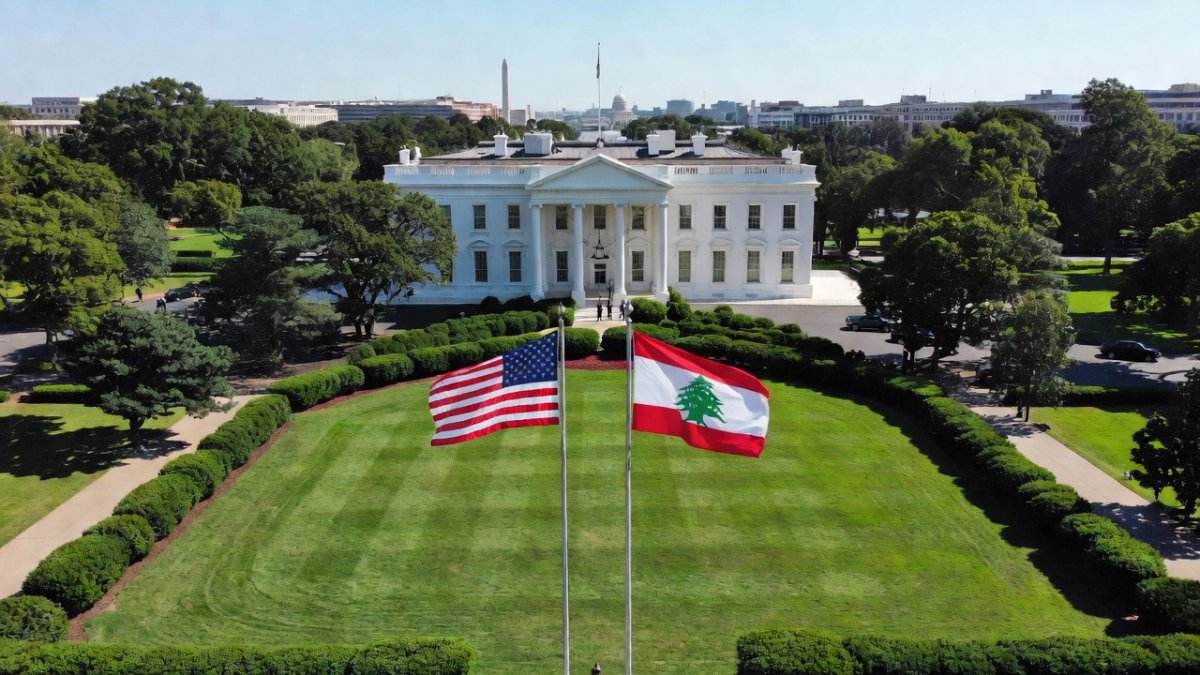
The Aoun-Trump White House Summit
Joseph Aoun, a Maronite Christian and former army commander elected in early 2025 after a two-year presidential vacuum, arrived in Washington as the first Lebanese president to visit in more than 17 years. He presented Trump with a written plan for Hezbollah’s disarmament and an Israeli withdrawal from southern Lebanon. Trump described the visit as a “historic achievement” and pledged that Lebanon, “a very badly treated place and country,” would be “properly treated.” Aoun replied that the outcome “will be your legacy” and that stability for Lebanon and the region was overdue.
Hours before the meeting, Lebanese army units began moving into territory vacated by Israeli forces in the south. US Secretary of State Marco Rubio praised Lebanon’s “determined effort to reclaim sovereignty, disarm Hezbollah and dismantle its terrorist infrastructure.” Trump indicated he would speak with Hezbollah if Aoun requested it, signaling flexibility provided the Lebanese state leads the process.
Aoun’s written submission outlined a three-phase disarmament schedule beginning with heavy weapons collection in the Bekaa Valley within 90 days, followed by rocket and missile inventories in the south by December 2026. The plan also proposed embedding US and French military advisors within Lebanese army brigades to verify compliance, a mechanism designed to reassure both Washington and Jerusalem without direct foreign combat involvement. Trump reportedly reviewed the document line-by-line during the Oval Office session, expressing particular interest in the verification clauses while cautioning that any slippage would trigger immediate suspension of US security assistance.
The pilot-zone mechanism received detailed attention in the talks. Five designated sectors along the Litani River corridor were identified for initial Lebanese army deployment, each roughly 40 square kilometers and chosen for their mix of terrain that favors conventional forces over guerrilla tactics. Trump endorsed the concept as a pragmatic test of state authority, noting that successful consolidation in these zones could unlock phased US reconstruction funding tied to measurable benchmarks rather than political promises.
Trump’s willingness to engage Hezbollah directly if requested by Aoun reflects a transactional approach that prioritizes Lebanese state leadership while preserving diplomatic off-ramps. This stance carries risks of inadvertently elevating the group’s status, yet it also signals that Washington views the framework as a state-to-state process in which non-state actors participate only on terms set by Beirut. Lebanese officials present interpreted the remark as both reassurance and subtle pressure on Aoun to maintain momentum.
The June 26 Framework Agreement
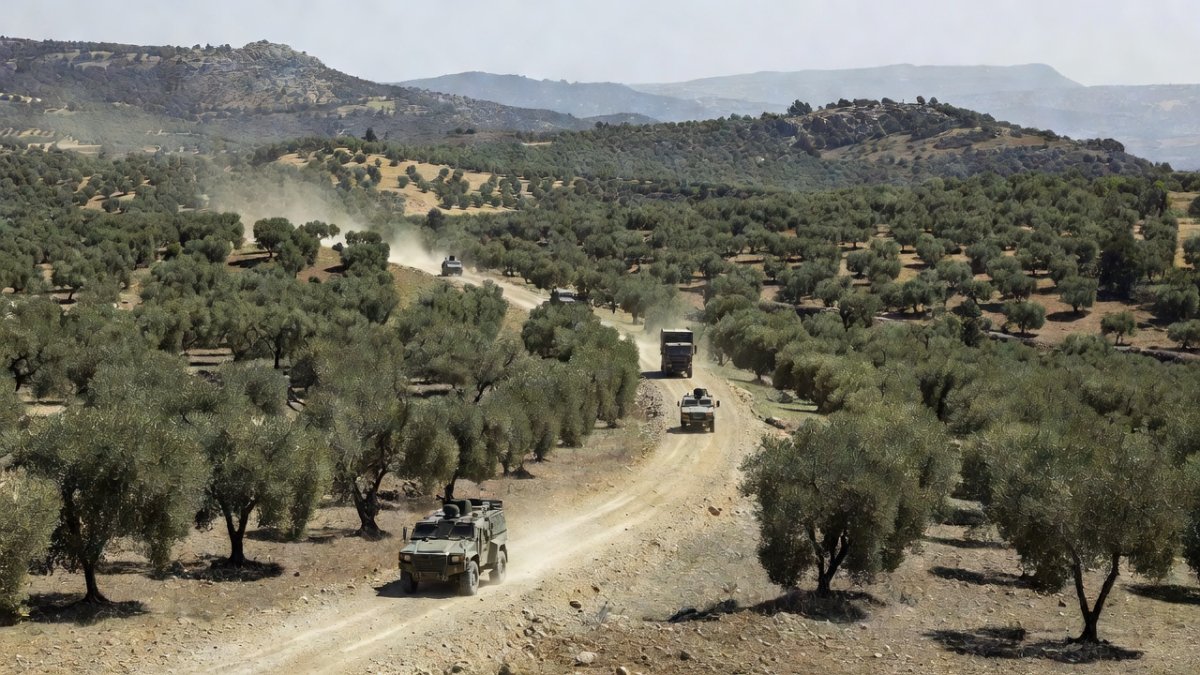
The US-brokered agreement between Lebanon and Israel requires Hezbollah’s disarmament, a phased Israeli withdrawal, Lebanese army deployment in designated “pilot zones,” and initial steps toward peaceful relations. Implementation remains contingent on Hezbollah surrendering its weapons—an explicit red line the group has rejected. More than 4,300 people have been killed in Lebanon since March 2026, according to the health ministry, with large areas of the south destroyed during Israel’s 2024 offensive and subsequent operations.
The deal revives the principle, long advocated by Aoun, that the state must hold a monopoly on arms. Lebanese troops are now entering vacated zones under the agreement’s terms, testing whether the army can fill the vacuum without renewed clashes.
Negotiations leading to the June 26 text involved intensive US shuttle diplomacy between Beirut, Jerusalem, and indirect channels to Tehran. US envoys presented successive drafts that narrowed Israeli withdrawal timelines from an initial 12-month horizon to a six-month phased pullback contingent on Lebanese army checkpoints reaching full operational capacity. The final document specifies that Israeli forces will vacate 85 percent of occupied southern positions by October 2026, retaining only limited observation posts near the Blue Line until disarmament milestones are certified.
Lebanese army deployment provisions call for an initial force of approximately 12,000 troops drawn from elite brigades, supported by US-supplied armored vehicles and surveillance drones. These units are tasked with establishing permanent bases in the pilot zones, conducting joint patrols with UNIFIL, and interdicting cross-border smuggling routes. The zones themselves function as controlled experiments: each is equipped with biometric registration systems for residents and real-time intelligence sharing with US Central Command to detect Hezbollah re-infiltration.
US mediation emphasized confidence-building measures such as joint Lebanese-Israeli technical committees on water resources and border demarcation. These provisions aim to create institutional habits of cooperation even before formal diplomatic relations, though their viability hinges on Hezbollah’s acquiescence or neutralization within the pilot areas.
Hezbollah’s Position and Calculations
Hezbollah, founded by Iran’s Revolutionary Guards in 1982, has flatly rejected both direct talks with Israel and any disarmament. The group views its arsenal as the core of its deterrence and political leverage. Its leadership calculates that surrendering weapons would erode its status as Lebanon’s most powerful actor and weaken Iran’s forward position on Israel’s northern border.
Yet Hezbollah also faces domestic pressure. Aoun’s election and the army’s southern deployment reflect growing Lebanese fatigue with a war that many blame on Hezbollah’s March 2026 escalation. The group’s rejection of the framework risks isolating it further if the army successfully consolidates control in pilot zones.
Hezbollah’s internal decision-making rests with its Shura Council, where military commanders now hold greater sway following the 2024 assassination of longtime secretary-general Hassan Nasrallah. This shift has hardened the group’s stance against concessions, as field operatives fear that partial disarmament would expose tunnel networks and precision-missile sites painstakingly built over the past decade. The March 2026 escalation, which triggered sustained Israeli operations, has also fractured support within Shia communities in southern Beirut and the Bekaa, where reconstruction needs now compete with the group’s military priorities.
In response to the Aoun-Trump meeting, Hezbollah media outlets issued statements framing the framework as an American-Israeli plot to subjugate Lebanon. Behind closed doors, however, the leadership is reportedly debating whether to allow limited army presence in pilot zones while retaining covert capabilities elsewhere, a hedging strategy that could prolong low-level instability without triggering all-out confrontation.
Iran’s Stake in Lebanon
Tehran insisted that Lebanon be included in its April 2026 ceasefire understandings with Washington. Iran’s Revolutionary Guards see Hezbollah as a strategic asset that ties down Israeli resources and provides leverage in any future nuclear negotiations. Trump’s warning that Iran “hasn’t seen anything yet” and that US forces would strike the Pickaxe Mountain facility “pretty soon” underscores the broader pressure on Tehran’s regional network.
If Hezbollah is forced to disarm, Iran loses a key node in its “axis of resistance.” Conversely, successful Lebanese state restoration could limit Iran’s ability to use Lebanese territory for future confrontations, altering the balance in the Levant.
Tehran’s strategic calculus treats Lebanon as both a forward deterrent and a bargaining chip. By sustaining Hezbollah’s autonomy, Iran maintains the ability to open a second front against Israel during any escalation over its nuclear program, thereby raising the cost of US or Israeli strikes. The axis architecture links Lebanese capabilities to Syrian transit routes and Iraqi logistics nodes, creating a layered defense that complicates Israeli targeting.
Loss of Hezbollah as a credible forward asset would degrade Iran’s capacity to threaten Israeli population centers with precision-guided munitions, forcing Tehran to rely more heavily on Houthis and Iraqi militias whose reach is more limited. Ongoing US strikes on Natanz and Pickaxe Mountain facilities have already prompted Iranian leaders to reassess how much additional pressure the Lebanese theater can absorb before the entire regional network risks fragmentation.
Regional Implications for Gulf States and Broader Stability
Gulf Arab states, holding more than US$3 trillion in sovereign wealth funds, have watched Lebanon’s collapse with concern. A stable Lebanon under central authority would reduce Iranian influence near their borders and open possibilities for reconstruction financing and eventual normalization with Israel. Saudi Arabia and the UAE have signaled interest in supporting Lebanese state institutions once disarmament advances.
The outcome also affects the Israeli-Palestinian track. A functioning Lebanese state that controls its southern border could ease Israeli security concerns and create space for wider Arab-Israeli economic cooperation. Failure, however, risks renewed cross-border fighting that could draw in additional regional actors.
Carnegie Middle East Center director Maha Yahya described the framework as “deeply disadvantageous” to Lebanon in some respects, while noting continued US interest. Washington Institute scholar Robert Satloff emphasized that Trump will seek concrete evidence of Aoun’s seriousness in disarming Hezbollah. The coming months will test whether the Lebanese army can translate the June 26 agreement into lasting territorial control.
Saudi Arabia has conditioned any financial support on verifiable progress toward state monopoly of force, viewing the Aoun government as a potential bulwark against further Iranian entrenchment. The UAE, by contrast, has signaled readiness to channel reconstruction funds through multilateral vehicles once pilot zones demonstrate sustained Lebanese army control, reflecting Abu Dhabi’s broader interest in post-conflict investment opportunities. Qatar maintains a more cautious posture, offering to facilitate indirect contacts with Hezbollah while avoiding commitments that could alienate Tehran.
Within the Abraham Accords framework, a stabilized Lebanon could serve as a test case for extending normalization beyond the current signatories. Israeli officials have privately indicated that successful border management by Lebanese forces would reduce domestic political obstacles to economic cooperation with additional Arab states. Reconstruction cost estimates range from $15 billion to $25 billion over five years, with Gulf financing likely tied to governance benchmarks rather than blanket pledges.
Yahya’s assessment highlights the power asymmetries embedded in the framework, warning that Lebanese sovereignty gains may prove fragile without sustained external enforcement. Satloff’s emphasis on verification mechanisms underscores that Washington’s engagement will remain conditional, requiring Aoun to deliver measurable disarmament results before deeper US or Gulf commitments materialize. These analyses converge on the recognition that Lebanon’s trajectory will either reinforce or undermine the emerging regional order shaped by US diplomacy and Gulf strategic priorities.
Lebanon’s moment is therefore not merely national but regional. Success would demonstrate that US diplomacy, combined with a credible Lebanese leadership, can roll back non-state armed actors. Failure would reinforce the pattern of Iranian proxies filling vacuums left by weak central governments. The Aoun-Trump meeting has placed the question squarely before Beirut and its neighbors: can Lebanon finally restore state control?
By Malik Hassan, Staff Writer
This article was produced with AI-assisted research and editorial support. Reporting is based on sources cited in the article.
What's Your Reaction?
 Like
0
Like
0
 Dislike
0
Dislike
0
 Love
0
Love
0
 Funny
0
Funny
0
 Wow
0
Wow
0
 Sad
0
Sad
0
 Angry
0
Angry
0
Middle East Correspondent at Global1.News. Based in Beirut, covering politics, conflict, energy, and society across the Middle East. Brings context and depth to a region often reduced to headlines.













Comments (0)