
Oil Spill in the Gulf of Paria Raises Questions Between Trinidad and Tobago and Venezuela
The Incident Comes to Light in Trinidad Waters On the morning of May 1 2026, Heritage Petroleum detected an oil spill at its offshore Main Field in the Gulf of Paria at 7:25 a.m. The company estimated that approximately 10 barrels had been released into the sea. Workers moved quickly to stop the leak the same day, completing repairs and returning the facility to service on May
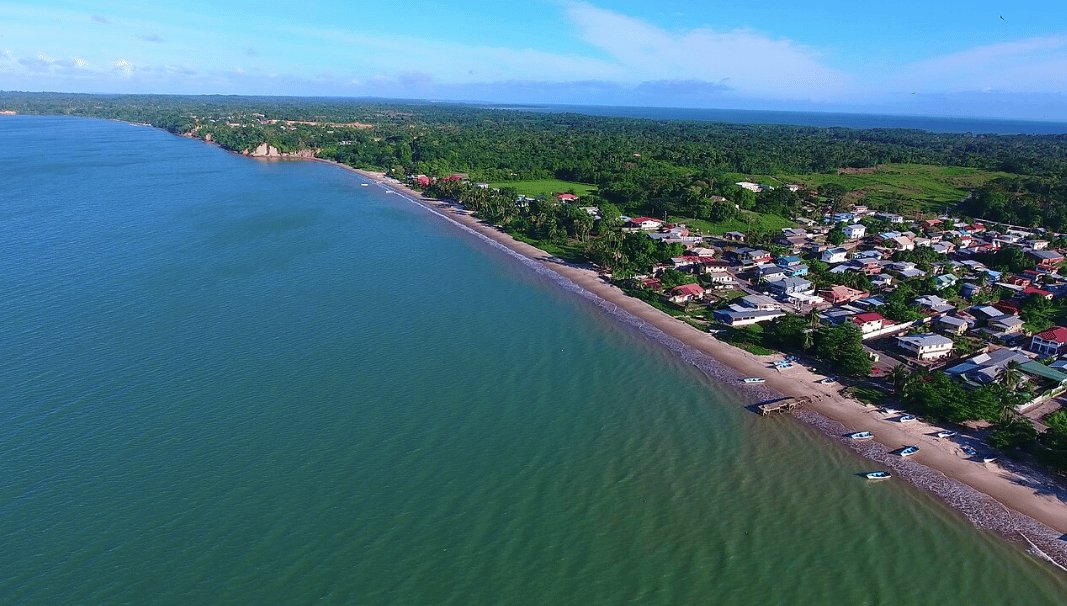
The Incident Comes to Light in Trinidad Waters
On the morning of May 1 2026, Heritage Petroleum detected an oil spill at its offshore Main Field in the Gulf of Paria at 7:25 a.m. The company estimated that approximately 10 barrels had been released into the sea. Workers moved quickly to stop the leak the same day, completing repairs and returning the facility to service on May 2. Trinidad and Tobago authorities were notified promptly, including the Ministry of Energy and Energy Industries, the Coast Guard and the Environmental Management Authority. Chemical dispersants were applied at a location roughly 6 to 8 nautical miles from the maritime border with Venezuela.
(Caribbean360)
In our small island nation, the energy sector has long been the backbone that keeps families fed and communities stable. The Gulf of Paria remains a vital area for oil production, and incidents like this touch the livelihoods of workers who head out each day from the western peninsula. Trinidad and Tobago's own spill trajectory modelling showed that untreated hydrocarbons could have drifted across into Venezuelan waters, prompting the rapid deployment of dispersants to limit any spread.
Follow-Up Checks Show Surface Waters Clear
After the response, drone and vessel inspections confirmed that no visible hydrocarbons remained on the surface. Port of Spain has maintained throughout that this was a minor event, quickly contained, with all proper procedures followed. The government has stressed that notifications were made internally as required and that the matter was handled according to established protocols.
Yet the decision not to make any public statement until Venezuela raised concerns has left many in Trinidad and Tobago wondering about transparency in matters that affect our shared marine environment. Neighbouring communities along the western coast understand how quickly news travels across the water, and silence can sometimes create more worry than the facts themselves.
Venezuela Brings the Matter to International Attention
On May 12, Venezuela's Foreign Minister Yván Gil went public, demanding information and possible compensation. Satellite imagery obtained by Caracas, including images dating back to April 28 before Trinidad's detection on May 1, appeared to show a slick originating from the Trinidad side. Acting President Delcy Rodríguez ordered a multidisciplinary team of environmental specialists, biologists and naval personnel to assess the situation.
Venezuela has warned of potential impacts across 1,625 square kilometres, affecting 12 wetland systems, four national parks and more than 500 fishermen in the states of Sucre and Delta Amacuro. For families on both sides of the Gulf who depend on the sea for their daily bread, these figures represent real concerns about fish stocks and coastal livelihoods that stretch beyond any single border.
Opposition Voices Call for Greater Scrutiny
Former Prime Minister Stuart Young, now in opposition, has described the lack of early public disclosure as a deliberate cover-up and is demanding a full investigation. He argues that the people of Trinidad and Tobago deserve to know exactly what happened and why the information was not shared sooner. Such calls resonate in a country where trust in institutions remains important for community cohesion.
At the same time, Energy Minister Roodal Moonilal has stated that talks with Venezuelan counterparts are being arranged. This measured approach reflects the long-standing, if sometimes complicated, relationship between the two nations that share the waters of the Gulf of Paria.
Regional Context and Shared Marine Concerns
The Gulf of Paria has always been more than a line on a map for people in Trinidad and Tobago. It connects our energy industry to the daily realities of cost of living pressures and the need for stable employment in oil and gas. At the same time, climate change impacts on small island developing states make every spill a reminder of how fragile our coastal ecosystems remain.
While Trinidad and Tobago maintains the spill was minor and contained, the cross-border dimension highlights the importance of open communication between neighbours. CARICOM frameworks exist for regional cooperation, yet incidents like this test how well those mechanisms work when environmental concerns cross maritime boundaries.
Looking Ahead to Dialogue and Accountability
With diplomatic talks now being organised, both sides have an opportunity to share data and clarify timelines. The satellite evidence presented by Venezuela and the trajectory modelling conducted by Trinidad and Tobago will likely form part of those discussions. For communities on either shore who fish these waters or work in the energy sector, the outcome matters deeply.
In the end, the people of Trinidad and Tobago value honest conversation and practical solutions. As neighbours across the Gulf, we share more than a body of water; we share a responsibility to protect it for the generations that follow. The coming weeks will show whether that shared interest can guide the path forward.
By Sharon Sahatoo, Staff WriterThis article was produced with AI-assisted research and editorial support. Reporting is based on sources cited in the article.
What's Your Reaction?
 Like
0
Like
0
 Dislike
0
Dislike
0
 Love
0
Love
0
 Funny
0
Funny
0
 Wow
0
Wow
0
 Sad
0
Sad
0
 Angry
0
Angry
0
Caribbean Correspondent at Global1.News. Based in Port of Spain, Trinidad, covering Caribbean politics, economy, energy, climate, and culture. Amplifying the voices and stories of the Caribbean region.










Comments (0)