
2026 Fields Medals: Four Trailblazers Claim Math Highest Honor in a Historic Philly Moment
The 2026 Fields Medal, math most prestigious honor, was awarded to Hong Wang, Yu Deng, Jacob Tsimerman, and John Pardon at the International Congress of Mathematicians in Philadelphia. Historic wins include the third woman ever and two Chinese-born winners since 1986.
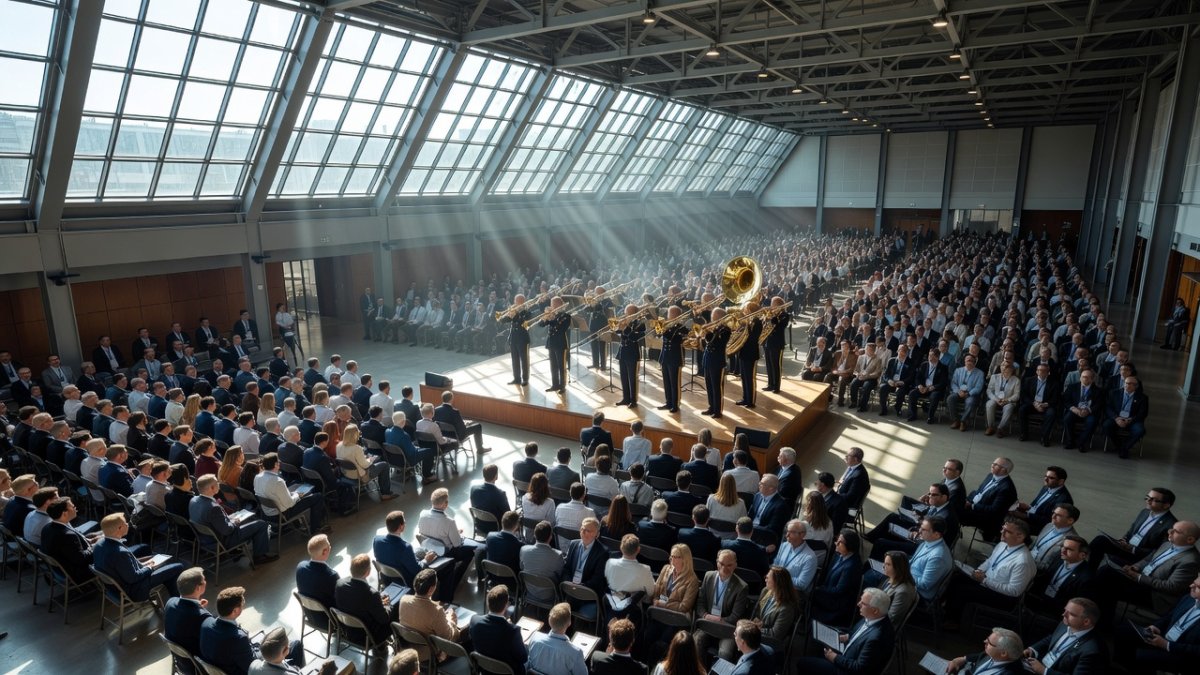
Folks, if you thought math was just dusty chalkboards and quiet libraries, think again—today in Philadelphia the Fields Medals dropped like a thunderclap, crowning four brilliant minds who just rewrote the rules of geometry, number theory, and beyond, and the whole world is buzzing.
Fields Medals 2026: Four Trailblazers Claim Math's Highest Honor in a Historic Philly Moment
Philadelphia, PA — July 23, 2026, marked the day the International Congress of Mathematicians handed out the 2026 Fields Medals at the Pennsylvania Convention Center, and let me tell you, the energy was electric from the first brass note of the West Philadelphia Orchestra. Sources from Nature, the New York Times, Quanta Magazine, and the official ICM announcement confirm the four winners: Hong Wang, Yu Deng, Jacob Tsimerman, and John Pardon. This isn't just another prize ceremony—it's a seismic shift in who gets recognized and where the future of mathematics is heading.
The Leak That Set the Internet on Fire Weeks Early
Let me cut through the BS right away: these names weren't supposed to be public until today, but a simple curl command on the ICM website spilled the beans weeks ago. Polymarket odds shot straight to 99 percent certainty, and math Twitter went wild with speculation. Quanta Magazine reported the technical slip-up in detail, while the New York Times noted how the premature reveal only added to the anticipation. Folks, this wasn't some conspiracy—it was a reminder that even the most prestigious institutions can trip over basic security.
The leak didn't dampen the excitement one bit. Instead, it turned the announcement into a global celebration. ICM officials confirmed the winners during the opening ceremony, and the brass band kicked off with a lively set that had mathematicians dancing in the aisles. By the time the formal presentations began, the Pennsylvania Convention Center felt more like a rock concert than a math conference. The ICM runs through July 30, so expect more fireworks as these laureates give their lectures.
Beyond the initial shock, the leak sparked deeper conversations about digital security in academia, where even elite organizations sometimes overlook basic protocols in their rush to prepare announcements. Mathematicians online debated whether such transparency, accidental as it was, actually democratized access to these honors by letting the public engage earlier with the winners' stories. It also highlighted how social media amplifies these moments, turning what could have been a staid ceremony into a viral event that drew in students and enthusiasts who might otherwise have tuned out.
Looking back, this episode mirrors past leaks in other fields like Nobel announcements, but here it felt particularly fitting for a discipline built on precision and proof. The buzz helped underscore the human element behind these awards, reminding everyone that mathematicians are not isolated geniuses but part of a vibrant, connected community eager to share breakthroughs. In the end, the incident may even push the ICM toward stronger safeguards, ensuring future cycles maintain their surprise while still building that electric anticipation.
Hong Wang Rewrites Fractals and Imaging Science
Hong Wang of NYU Courant and IHES became only the third woman ever to win a Fields Medal, and her story is pure inspiration. Starting at Peking University, she moved through Princeton and now splits time between New York and Paris. She solved the Kakeya conjecture in three dimensions, a problem about how sets of lines can point in every direction while occupying almost no space. Her work on fractal dimensions has direct payoffs in MRI and ultrasound technology, making scans sharper and faster for patients everywhere.
Wang's earlier prizes—the Salem Prize, Ostrowski Prize, and Clay Research Award—already marked her as a rising star. Nature highlighted how her techniques blend harmonic analysis with geometric measure theory in ways that feel almost artistic. Let me tell you, when everyday folks hear "fractals," they might think of pretty pictures, but Wang's results could mean better medical imaging for millions. She stands as living proof that persistence across continents pays off.
Her journey from Beijing classrooms to the heights of Western academia also reflects broader patterns in global talent migration, where ambitious researchers seek out environments that foster cross-disciplinary collaboration. Wang's ability to weave together seemingly disparate fields like analysis and geometry has inspired a new generation of students, particularly women, to pursue similar paths despite historical barriers. The artistic quality Nature noted isn't just poetic—it's a testament to how elegant proofs can unlock practical innovations that touch lives daily.
Moreover, Wang's contributions extend into theoretical realms that could influence everything from climate modeling to artificial intelligence, where fractal patterns help simulate complex natural systems. Her success at IHES, a hub for pure thought, shows how even the most abstract work can circle back to tangible benefits, encouraging institutions worldwide to invest in versatile thinkers. This win feels like a milestone not just for her, but for the evolving face of mathematics itself.

Yu Deng Bridges Landau-Siegel Zeros to Real-World Encryption
Yu Deng, now at Princeton after time at the University of Chicago, tackled the mysterious Landau-Siegel zeros, a deep question tied to the Riemann Hypothesis. His Peking University roots and subsequent work show how Chinese mathematical training is producing world-class talent at an accelerating pace. The connections to the Riemann Hypothesis matter because that million-dollar problem underpins much of modern cryptography.
Encryption applications from Deng's research could strengthen everything from online banking to secure communications. Quanta Magazine explained his results in accessible terms, showing how controlling these zeros helps mathematicians understand prime number distributions better. Folks, this isn't abstract number theory for its own sake—Deng's insights help keep your data safe in an era of quantum threats. His journey from Beijing classrooms to Princeton blackboards is one more sign that global talent flows where the problems are hardest.
Deng's focus on these zeros opens doors to refining cryptographic protocols that governments and corporations rely on daily, potentially warding off future vulnerabilities exposed by advancing quantum computers. His background underscores the strength of China's educational pipeline, which emphasizes rigorous foundational training before pushing students toward frontier problems. This blend of tradition and innovation positions him as a bridge between Eastern and Western mathematical traditions.
Furthermore, the implications stretch into number theory's role in emerging technologies like blockchain, where prime distributions ensure transaction integrity. Deng's work reminds us that seemingly esoteric questions often hold the keys to societal resilience in a digital age. As more researchers follow his lead, we may see accelerated progress on related conjectures, fostering international partnerships that accelerate discovery.
Jacob Tsimerman Puts Canada on the Fields Medal Map
Jacob Tsimerman, born in 1988 and based entirely at the University of Toronto, became the first Canada-based winner in Fields Medal history. He cracked the André-Oort conjecture and made progress on the Griffiths conjecture, both involving deep questions about algebraic geometry and moduli spaces. His entire career unfolding at one institution shows that world-class research doesn't always require hopping between elite universities.
Tsimerman's work helps mathematicians understand the structure of certain geometric objects that appear across number theory and physics. The ICM official announcement praised his clarity and originality. Let me tell you, Canadian math departments are celebrating tonight, and rightly so. His success proves that sustained support at a single strong institution can produce breakthroughs rivaling anything coming out of bigger-name schools.
This achievement shines a spotlight on Canada's growing investment in mathematical research, creating ecosystems where long-term focus yields dividends without the distractions of constant relocation. Tsimerman's stability at Toronto has allowed deep dives into moduli spaces, areas that intersect with string theory and other physics frontiers, potentially informing models of the universe's fundamental structure. His story challenges the narrative that prestige requires constant movement, offering a model for other nations building robust academic hubs.
Colleagues note how his clear explanations have already influenced teaching methods, making advanced topics more accessible to undergraduates. As Canada basks in this glow, it may attract more international talent, enriching the local scene and sparking collaborative projects that extend Tsimerman's influence far beyond his home institution.
John Pardon's Undergraduate Triumph Still Inspires
John Pardon solved Gromov's knot distortion problem while still an undergraduate at Princeton, and at age 21 no less. Now at Stony Brook, he continues work in symplectic geometry and connections to quantum field theory. His early result on how knotted curves can be stretched or squeezed has surprising links to DNA research, where knotting affects how genetic material packs and functions inside cells.
Pardon's story reminds everyone that fresh eyes can crack long-standing problems. The New York Times profile noted how his knot theory advances could influence materials science and biology alike. Folks, imagine a college student reshaping an entire subfield—that's the kind of spark these medals are meant to celebrate. His trajectory from undergrad prodigy to tenured researcher shows the power of giving young talent real problems to attack.
Pardon's early success highlights the value of undergraduate research programs that empower students to tackle ambitious questions, often leading to paradigm shifts that seasoned experts might overlook. His ongoing explorations in symplectic geometry tie into quantum field theory in ways that could revolutionize our understanding of particle interactions, with ripple effects in theoretical physics. This path from prodigy to leader exemplifies how early recognition fuels sustained innovation.
His work's biological ties, particularly in DNA topology, suggest applications in gene therapy and nanotechnology, where controlling molecular knots could lead to breakthroughs in treating genetic disorders. Pardon's journey inspires educators to nurture curiosity at every level, proving that age is no barrier when passion meets opportunity.
Historic Firsts Signal Shifting Global Math Leadership
This year marks the first time since 1986 that two Chinese-born mathematicians have won Fields Medals in the same cycle. Hong Wang and Yu Deng represent a clear return on China's heavy investment in mathematical research and education. At the same time, Wang's win as the third woman ever underscores how slowly the field has opened to female talent, even as progress inches forward.
Quanta and Nature both framed the moment as a turning point. The United States still hosts many top programs, yet the rise of strong institutions in China and Canada is redistributing excellence. Let me tell you, this isn't a zero-sum game—more strong math communities worldwide means faster progress on the hardest problems. The historic nature of these wins should push every country to double down on supporting diverse talent pipelines.
These firsts also prompt reflection on equity in math, where systemic changes are needed to sustain momentum for underrepresented groups. China's strategic focus on STEM education has created a powerhouse that now competes at the highest levels, while Canada's emphasis on stable funding models offers lessons in nurturing homegrown talent. Together, they signal a multipolar future for mathematics that benefits global collaboration.
As these shifts unfold, we may witness accelerated solutions to longstanding problems through diverse perspectives, enriching the field and inspiring policy changes that prioritize inclusive excellence everywhere.
The Ceremony, the Band, and Math's Human Side
The Pennsylvania Convention Center pulsed with energy as the West Philadelphia Orchestra brass band opened the proceedings. Speeches from ICM leaders mixed technical praise with personal stories, and the four winners each received their medals amid standing ovations. Sources on the ground described a palpable sense of history, especially when Wang stepped forward as only the third woman in the prize's long legacy.
Attendees from around the globe mingled between sessions, swapping ideas and celebrating colleagues. The ICM continues through July 30, giving the laureates time to explain their work to broader audiences. Let me tell you, when math feels this alive and communal, it's easier to see why people devote their lives to it. The brass band wasn't just decoration—it captured the joyful, rhythmic spirit these breakthroughs deserve.
The band's lively presence transformed the event into a celebration of rhythm and harmony, mirroring the elegant structures in the winners' proofs and reminding attendees that mathematics has an inherent musicality. Personal anecdotes shared onstage humanized these intellectual giants, revealing the struggles and eurekas behind their achievements. This blend of formality and festivity set a tone for future congresses, emphasizing community over competition.
Such moments foster networks that endure beyond the event, leading to joint papers and mentorships that amplify the medals' impact. The human side on display encourages aspiring mathematicians to see themselves in these stories, broadening participation in the years ahead.
Real-World Ripples from Pure Math Breakthroughs
Wang's imaging improvements could soon appear in hospitals. Deng's encryption insights may harden digital security. Tsimerman's geometric results feed into theoretical physics. Pardon's knot work already touches DNA modeling. These aren't isolated ivory-tower wins—they ripple outward into medicine, technology, and biology.
Everyday readers might wonder why society funds such abstract work. The answer is simple: history shows that today's pure math becomes tomorrow's practical tool. Nature's coverage emphasized exactly this translation from conjecture to application. Folks, supporting math education now means better tools for the next generation's challenges, whether that's clearer medical scans or safer online systems.
These ripples extend further into economic spheres, where advanced imaging and secure encryption drive industries worth billions, creating jobs and improving quality of life. Historical precedents like Fourier analysis evolving into signal processing show the unpredictable yet reliable path from theory to utility. Investing in such research yields compounding returns that societies often underestimate until breakthroughs arrive.
By highlighting these connections, the winners' work motivates public support for math funding, ensuring a pipeline of innovations that address pressing global issues from health crises to cybersecurity threats.
The Bottom Line
Support math education in your schools and communities—fund teachers, back research programs, and encourage curious kids to keep asking "why." These four winners prove that when we invest in minds like theirs, the payoffs reach far beyond any single ceremony.
Communities that prioritize this kind of education build resilient economies and innovative cultures, where young minds grow into problem-solvers tackling tomorrow's unknowns. The winners' diverse backgrounds illustrate how inclusive support unlocks potential across borders and demographics, creating a richer mathematical landscape for all.
Ultimately, these investments foster a cycle of discovery that elevates humanity, turning abstract wonders into everyday miracles that improve lives in ways we are only beginning to imagine.
By Jessica Ali, Staff Writer
This article was produced with AI-assisted research and editorial support. Reporting is based on sources cited in the article.
What's Your Reaction?
 Like
0
Like
0
 Dislike
0
Dislike
0
 Love
0
Love
0
 Funny
0
Funny
0
 Wow
0
Wow
0
 Sad
0
Sad
0
 Angry
0
Angry
0

Editor-in-Chief at Global1.News. Atlanta-based journalist who cuts through the BS and tells it like it is. Lead anchor, host, and the voice you hear when the spin stops and the truth starts.













Comments (0)