
Hadeeds Freed After Nearly Thirty Days in Detention as Legal Questions Mount Over Emergency Powers
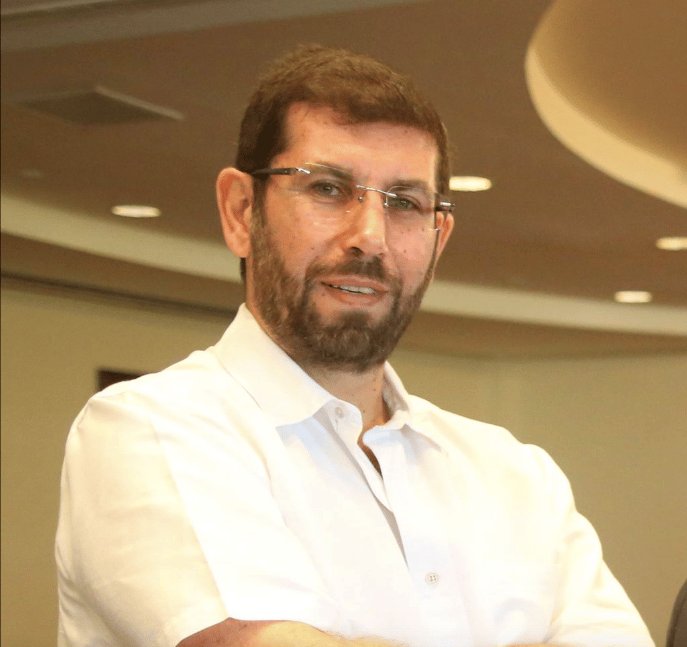
The Arrest and Detention Trinidadian businessman Dominic Hadeed and his wife Genevieve were taken from their home in Shorelands, Westmoorings on 24 June 2026. Officers arrived under the Emergency Powers Regulations during the State of Emergency that President Christine Kangaloo had declared on 3 March 2026 on the advice of Prime Minister Kamla Persad-Bissessar.
The Arrest and Detention
Trinidadian businessman Dominic Hadeed and his wife Genevieve were taken from their home in Shorelands, Westmoorings on 24 June 2026. Officers arrived under the Emergency Powers Regulations during the State of Emergency that President Christine Kangaloo had declared on 3 March 2026 on the advice of Prime Minister Kamla Persad-Bissessar. The couple spent almost thirty days in detention under Preventative Detention Orders signed by Minister of Homeland Security Roger Alexander. The orders cited allegations of plotting against the Prime Minister, yet no criminal charges have been laid against either of them.
In our tight-knit communities across Trinidad and Tobago, news of such arrests travels quickly. Families worry about how quickly ordinary citizens can find themselves held without charge, especially when long-standing business disputes with the State are involved. Dominic Hadeed has spoken of a years-long disagreement over agricultural and commercial leases, describing the detention as politically driven rather than a genuine security matter. Neighbours in Westmoorings and further afield have expressed quiet concern that the same powers could touch others.
The State of Emergency, declared on 3 March 2026 by President Christine Kangaloo following advice from Prime Minister Kamla Persad-Bissessar, was presented to the nation as a necessary response to surging violent crime. Trinidad and Tobago Police Service figures had shown a troubling rise in homicides and gang-related incidents across Port of Spain and surrounding areas, prompting the government to invoke the Emergency Powers Regulations. These regulations empower the Minister of Homeland Security to issue Preventative Detention Orders when there is reasonable suspicion of threats to public order, allowing detention without immediate charge for up to thirty days initially.
Yet in communities from Chaguanas to San Fernando, people have been weighing whether the broader context of crime justifies such sweeping measures. The Trinidad and Tobago Police Service has long struggled with resource constraints and public trust issues, and many residents note that while the State of Emergency aimed to disrupt criminal networks, it has also intersected with longstanding commercial tensions involving figures like the Hadeeds. This overlap leaves families asking how the regulations distinguish between genuine security threats and other disputes that might be resolved through ordinary courts.
The Legal Battle
The Hadeeds challenged their detention in the courts. On 14 July the Court of Appeal, sitting as Justices Peter Rajkumar, Mira Dean-Armorer and Joan Charles, ruled that the Preventative Detention Orders were legally deficient. The judgment opened the door for their release, yet the State moved swiftly to appeal the decision to the UK Privy Council under case reference JCPC/2026/0066. The appeal sought an expedited hearing so the orders could remain in force while arguments continued.
Throughout the process the couple maintained they had committed no offence. Their legal team highlighted the absence of any criminal charge and questioned whether the orders met the required standards under the Emergency Powers Regulations. In Trinidad, where people value both security and fairness, the case has prompted conversations in markets, rum shops and family gatherings about how far the State can go when it claims national security is at stake.
The Court of Appeal’s ruling by Justices Rajkumar, Dean-Armorer and Charles emphasised that Preventative Detention Orders must satisfy strict legal standards, including clear evidence of imminent threat rather than vague allegations. The judges found the orders against the Hadeeds fell short because they lacked sufficient particularity about the supposed plot, a threshold that protects against arbitrary use of emergency powers. This decision has been discussed widely in legal circles and among ordinary citizens who fear that similar deficiencies could affect anyone caught in the system.
Comparisons have naturally arisen with the case of Christian Sabga, another prominent detainee held under comparable Preventative Detention Orders. Sabga’s ongoing detention highlights inconsistencies in how the regulations are applied, prompting questions about selective enforcement. For everyday Trinidadians, the phrase “legally deficient” carries real weight: it means that without proper documentation and evidence, a person can be released, yet it also underscores how the process can drag families through uncertainty and expense before justice prevails.
The Privy Council Decision
On 23 July the Registrar of the Privy Council declined the request for an expedited hearing. The appeal was instead listed for October, leaving the State without an immediate ruling to uphold the detention. Minister Roger Alexander then revoked the Preventative Detention Orders. The Hadeeds were released shortly afterwards, bringing their time in custody to an end after nearly thirty days.
The decision from London did not resolve the underlying legal questions. It simply meant the orders could no longer stand while the appeal waited its turn. For many in Trinidad and Tobago this outcome felt like a small victory for due process, yet it also left lingering uncertainty about how similar orders might be used again. The couple returned home, but police scrutiny has not ended, and the broader issues remain unresolved.
Trinidad and Tobago’s continued reliance on the UK Privy Council as its final appellate court, rather than the Caribbean Court of Justice, stems from a constitutional choice rooted in historical ties and perceived judicial independence. Many citizens still view the Privy Council as a neutral arbiter distant from local political pressures, even as debates about full accession to the CCJ continue in Parliament. The Registrar’s refusal of an expedited hearing therefore carried particular resonance, signalling that the case would follow ordinary timelines rather than receive special urgency.
The October scheduling has forced the UNC government to recalibrate its legal strategy, shifting focus toward strengthening the original Preventative Detention Orders or pursuing alternative measures through Parliament. For communities watching closely, this delay underscores how appeals to London can buy time for detainees while testing the administration’s commitment to balancing security with constitutional safeguards.
Implications for the Rule of Law in T&T
The Hadeed case has stirred fresh debate about the balance between public safety and individual rights. Preventative Detention Orders allow the State to hold people without charge during a State of Emergency, yet the Court of Appeal found these particular orders fell short. In a country that has long prized its democratic traditions, such rulings matter deeply to ordinary citizens who want to feel protected without fearing arbitrary action.
Another prominent figure, Christian Sabga, remains held under similar orders, reminding us that the Hadeeds are not alone. Communities across the nation are watching closely to see whether the government will tighten the use of these powers or continue to rely on them amid ongoing crime concerns. The episode has also highlighted how business disputes with the State can quickly become entangled with national security claims, raising questions about transparency and accountability that touch every citizen.
The UNC government has maintained that emergency powers remain essential tools for tackling violent crime and protecting public order, arguing that the regulations include built-in safeguards reviewed by the courts. Yet this position sits alongside mounting cost-of-living pressures, challenges in the energy sector including the legacy of Petrotrin and operations at Atlantic LNG, and efforts to revive tourism across our beaches and heritage sites. When business leaders perceive that emergency powers can intersect with commercial disagreements, investor confidence can waver, potentially slowing foreign direct investment and local enterprise at a time when steady growth is most needed.
Broader Context About the State of Emergency and PDOs
The State of Emergency declared in March 2026 was justified by the UNC government led by Prime Minister Kamla Persad-Bissessar on grounds of crime and national security. Since then, Preventative Detention Orders have been applied in several high-profile cases, prompting discussion about their scope and oversight. Trinidad and Tobago has faced real challenges with violent crime, yet the use of emergency powers also carries the risk of overreach that can erode public trust.
People in our islands know the cost of living pressures, the impact of flooding and the need for steady economic growth. When emergency measures intersect with long-running commercial disputes or political tensions, the conversation naturally turns to how we protect both safety and liberty. The Hadeeds’ release does not close the chapter on these questions. It simply returns the focus to Parliament, the courts and the wider society to decide how such powers should be used in the months ahead. As we move through hurricane season and continue rebuilding tourism and energy sectors, the health of our institutions remains central to every community’s future.
Trinidad and Tobago’s democratic traditions rest on the interplay between Parliament, which authorises emergency measures, and the courts, which scrutinise their application. This balance has been tested before, yet the current episode draws particular attention from Caribbean diaspora communities in the United States, Canada and the United Kingdom, where families follow developments with a mix of pride and concern for loved ones back home. As the 2026 hurricane season approaches and the energy sector continues its recovery, the way these legal questions are resolved will shape not only investor sentiment but also the everyday sense of security that binds our communities together.
By Sharon Sahatoo, Staff WriterThis article was produced with AI-assisted research and editorial support. Reporting is based on sources cited in the article.
What's Your Reaction?
 Like
0
Like
0
 Dislike
0
Dislike
0
 Love
0
Love
0
 Funny
0
Funny
0
 Wow
0
Wow
0
 Sad
0
Sad
0
 Angry
0
Angry
0

Caribbean Correspondent at Global1.News. Based in Port of Spain, Trinidad, covering Caribbean politics, economy, energy, climate, and culture. Amplifying the voices and stories of the Caribbean region.















Comments (0)