
Gulf of Paria Widens as Diplomatic Spill Flows Between Trinidad and Venezuela
In the turquoise waters of the Gulf of Paria, where fishing boats and oil platforms have long shared the horizon, a reported spill has escalated into a full-blown diplomatic standoff between Trinidad and Tobago and Venezuela, exposing fragile ecosystems and even more fragile relations.
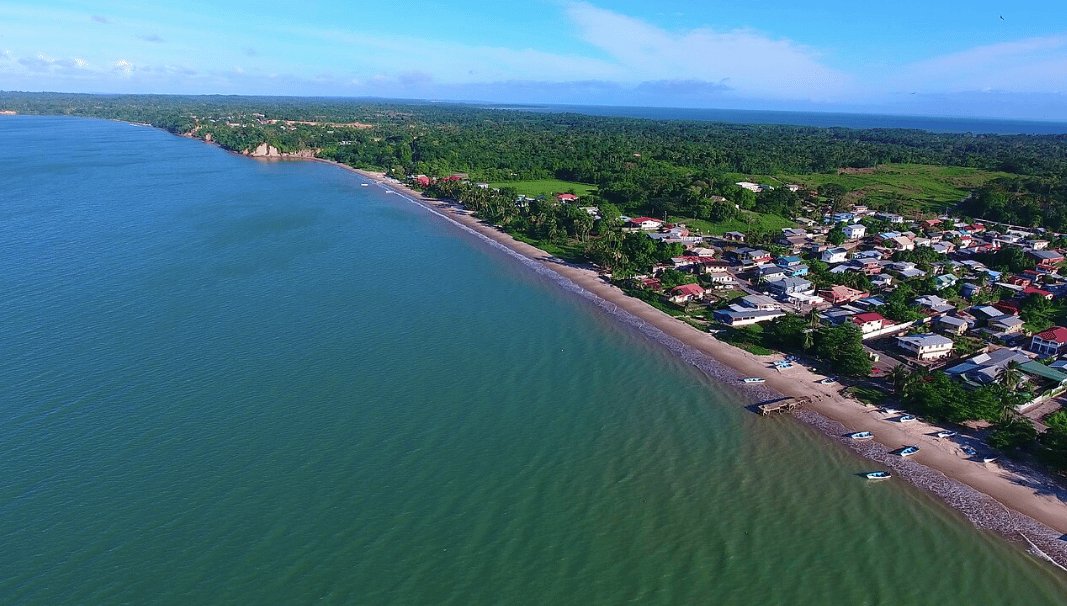
In the turquoise waters of the Gulf of Paria, where fishing boats and oil platforms have long shared the horizon, a reported spill has escalated into a full-blown diplomatic standoff between Trinidad and Tobago and Venezuela, exposing fragile ecosystems and even more fragile relations.
Gulf of Paria Widens as Diplomatic Spill Flows Between Trinidad and Venezuela
Port of Spain, Trinidad — A 10-barrel spill detected off Trinidad's south-western coast on May 1 has triggered demands for compensation from Caracas, with Venezuela claiming the slick has caused serious environmental damage to two states and four national parks.
The May 2026 spill and initial reports
The oil spill was detected on May 1 2026 off Point Fortin in Trinidad. Trinidad and Tobago's Energy Minister Dr Roodal Moonilal described the incident as a minor 10-barrel spill. Chemical dispersants received approval at 9:50am that same day. Heritage Petroleum downplayed the event as quickly contained. These details form the core of Port of Spain's position on the matter.
Heritage Petroleum, established in 2018 following the closure of the state-owned Petrotrin refinery, maintains significant offshore and nearshore operations around Point Fortin, including platforms in the Gulf of Paria that feed into the Atlantic LNG facility. These assets form part of Trinidad and Tobago’s broader energy architecture, where upstream production supports export revenues exceeding US$4 billion annually in recent fiscal years, though the sector has faced declining output since the mid-2010s. The company’s regulatory oversight falls under the Ministry of Energy and the Environmental Management Authority, which coordinate spill response protocols aligned with international conventions such as the Cartagena Convention.
Chemical dispersants remain a standard tool in Caribbean oil-spill contingency plans, yet their application in shallow tropical waters raises concerns over long-term toxicity to coral reefs and mangroves. Trinidadian authorities have historically relied on both mechanical recovery and dispersants supplied through regional agreements with the Regional Marine Pollution Emergency, Information and Training Centre in Curaçao. Economic analyses from the Inter-American Development Bank indicate that repeated dispersant use can elevate remediation costs by 30 to 40 per cent while potentially affecting tourism and fisheries yields in adjacent coastal zones.
Regional reactions from neighbouring CARICOM states emphasised the need for transparent data sharing, with Barbados and Guyana calling for joint environmental impact assessments. Analysts note that Trinidad’s energy sector structure, dominated by foreign operators alongside state entities, creates complex liability chains that can delay compensation for affected communities. This incident therefore highlights structural vulnerabilities in a nation where hydrocarbons still account for over 80 per cent of export earnings.
Venezuela's formal demands and wider claims
Venezuela has formally demanded information and compensation from Trinidad and Tobago. Caracas states the spill originated in Trinidadian waters and risks serious environmental damage to shared Gulf of Paria ecosystems. Venezuela reported the spill affected approximately 647 square miles of the Gulf of Paria. The country says the incident caused serious environmental damage to the states of Sucre and Delta Amacuro. Four national parks in Venezuela were reportedly affected. These claims were presented in May 2026.
Relations between Venezuela and Trinidad and Tobago in the Gulf of Paria date back to the 1942 Gulf of Paria Treaty, which established maritime boundaries later contested after Venezuela’s 1958 claim to a 200-nautical-mile exclusive economic zone. Subsequent negotiations in the 1970s and 1990s produced limited joint-development agreements, yet underlying sovereignty disputes resurfaced during periods of heightened Venezuelan nationalism. The current formal demands therefore echo earlier diplomatic notes exchanged in 2015 and 2019 concerning alleged incursions by Trinidadian vessels.
Previous boundary disputes have centred on the Serpent’s Mouth and the Dragon’s Mouth straits, where overlapping claims affect both hydrocarbon blocks and traditional fishing grounds. Economic data from the Trinidadian Central Bank shows that unresolved maritime issues have periodically deterred upstream investment, contributing to a 15 per cent drop in exploration expenditure between 2018 and 2022. CARICOM’s involvement adds another layer, as the regional bloc has historically sought to mediate while preserving member-state sovereignty over natural resources.
Diplomatic implications extend beyond bilateral ties, potentially complicating Trinidad’s role as a CARICOM energy hub and affecting coordinated responses to migration and security challenges in the southern Caribbean. Observers suggest that sustained tension could encourage Venezuela to deepen energy partnerships with non-CARICOM actors, thereby shifting regional power balances. Such dynamics underscore the intersection of resource nationalism and small-state diplomacy in an area where maritime delimitation remains only partially resolved.
Trinidad and Tobago's response and ongoing dispute
Trinidad and Tobago strongly disputes the Venezuelan claims. Officials describe the incident as a minor spill that was quickly contained. The government maintains that the scale reported by Caracas does not match local assessments. This disagreement has created diplomatic friction between the two nations that share the Gulf of Paria. No further operational details beyond the initial containment steps have been released by Trinidadian authorities.
A second spill adds to regional tensions
A second spill was reported by Venezuela in June 2026. This development has added to the diplomatic tensions already present after the May incident. The Gulf of Paria remains an ecologically sensitive fishing area and an important oil and gas producing zone shared by both nations. Fishing communities on both sides of the border depend on these waters for their livelihoods.
Venezuela’s June 2026 complaint referenced a second incident near the maritime boundary, reportedly originating from an ageing Venezuelan platform whose maintenance had been hampered by years of sanctions and underinvestment. The timeline shows an escalation from initial diplomatic notes in early May to formal protests lodged with the United Nations and the International Maritime Organization by mid-June, prompting Trinidad to convene an emergency cabinet meeting. Regional media coverage intensified after satellite imagery circulated showing oil sheens extending toward both coastlines.
Fishing communities on Trinidad’s south-western peninsula and in Venezuela’s Sucre state share interdependent livelihoods tied to the same migratory fish stocks. Trinidadian fishermen report reduced catches and higher fuel costs for longer voyages to avoid contaminated zones, while Venezuelan counterparts face similar constraints compounded by domestic shortages of spare parts and ice. Economic pressures in both nations have been exacerbated by post-pandemic inflation, with Trinidad and Tobago recording a 5.8 per cent rise in food prices during the first half of 2026.
The cumulative effect threatens to undermine informal cross-border trade networks that have sustained coastal households for generations. Analysts warn that prolonged restrictions on fishing could accelerate out-migration from rural areas, placing additional strain on urban social services. Regional organisations have therefore advocated for a joint fisheries monitoring mechanism to mitigate livelihood losses while diplomatic channels remain open.
Energy sector realities in the shared gulf
The Gulf of Paria plays a central role in the energy sectors of Trinidad and Tobago and Venezuela. Trinidad and Tobago continues to rely on oil and gas production through companies such as Heritage Petroleum. Neighbouring Venezuela maintains its own operations in the same body of water. Any environmental incident here carries direct implications for Atlantic LNG projects and the wider regional energy supply chain. Historical cooperation through CARICOM has helped manage some cross-border energy matters in the past.
Heritage Petroleum’s emergence followed the 2018 liquidation of Petrotrin, which had operated the Pointe-à-Pierre refinery for decades before accumulated debts and operational inefficiencies led to its closure. The transition left Trinidad with a more fragmented downstream sector, reliant on Atlantic LNG trains that process natural gas from fields shared with Venezuela under the 2016 unitisation agreement. Current production figures indicate that LNG exports constitute roughly 60 per cent of the country’s energy revenue, making any disruption to cross-border cooperation economically significant.
The ongoing dispute risks deterring new foreign direct investment at a time when Trinidad seeks to replenish declining reserves through deep-water exploration. Regional energy cooperation initiatives, such as the proposed Caribbean Energy Security Initiative, have been placed on hold pending resolution of environmental and boundary concerns. Economic modelling by the University of the West Indies suggests that a six-month delay in joint projects could reduce Trinidad’s GDP growth by up to 0.7 percentage points.
Broader landscape considerations include the government’s stated goal of diversifying into renewables, yet the immediate fiscal dependence on hydrocarbons limits policy flexibility. The spill-related tensions therefore illustrate how environmental incidents can intersect with structural economic vulnerabilities, potentially reshaping investment priorities across the southern Caribbean energy corridor.
Impacts on fishing communities and local economies
Communities along the Trinidad coast and in Venezuelan states such as Sucre and Delta Amacuro depend on the Gulf of Paria for fishing. The area also supports small-scale economies tied to marine resources. Cost of living pressures in Trinidad and Tobago make any threat to these livelihoods particularly sensitive. Post-pandemic recovery in tourism and related sectors adds another layer of concern for families who rely on stable coastal environments.
Point Fortin fishermen, many of whom operate small-scale vessels without insurance, have documented sharp declines in snapper and shrimp yields since the May incident, forcing some households to rely on government food-support programmes. In Venezuela’s Sucre state, similar pressures have compounded existing challenges stemming from hyperinflation and limited access to marine diesel. Families on both sides report rising costs for basic goods, with Trinidad and Tobago’s consumer price index showing a 4.2 per cent increase in seafood prices during the second quarter of 2026.
Post-pandemic recovery efforts in Trinidad and Tobago have been hampered by these disruptions, as tourism-linked demand for fresh seafood remains below pre-2020 levels. Community organisations have called for targeted compensation schemes modelled on earlier oil-spill funds established after the 2018 incidents, yet bureaucratic delays have left many claimants without relief. Venezuelan fishing cooperatives, operating under tighter state controls, face additional hurdles in accessing international aid.
Longer-term analysis indicates that sustained contamination could accelerate the shift toward alternative livelihoods such as aquaculture or eco-tourism, though capital constraints limit such transitions for low-income households. Regional economists emphasise that restoring confidence in shared marine resources will require transparent environmental monitoring and equitable revenue-sharing mechanisms to prevent further social dislocation in already vulnerable coastal populations.
Looking ahead with cautious regional cooperation
The Gulf of Paria situation highlights the need for careful management of shared marine resources between Trinidad and Tobago and Venezuela. Climate change impacts on small island developing states remain a standing concern for CARICOM nations. While the current dispute centres on the scale and origin of the spills, both countries share an interest in protecting the gulf's ecosystems. Further information exchanges may help clarify the facts without overstating immediate resolutions.
By Sharon Sahatoo, Staff Writer
This article was produced with AI-assisted research and editorial support. Reporting is based on sources cited in the article.
What's Your Reaction?
 Like
0
Like
0
 Dislike
0
Dislike
0
 Love
0
Love
0
 Funny
0
Funny
0
 Wow
0
Wow
0
 Sad
0
Sad
0
 Angry
0
Angry
0

Caribbean Correspondent at Global1.News. Based in Port of Spain, Trinidad, covering Caribbean politics, economy, energy, climate, and culture. Amplifying the voices and stories of the Caribbean region.











Comments (0)