
US at 250: Trump Declares 'American Dream is Back' as Nation Marks Independence Milestone Amid Division
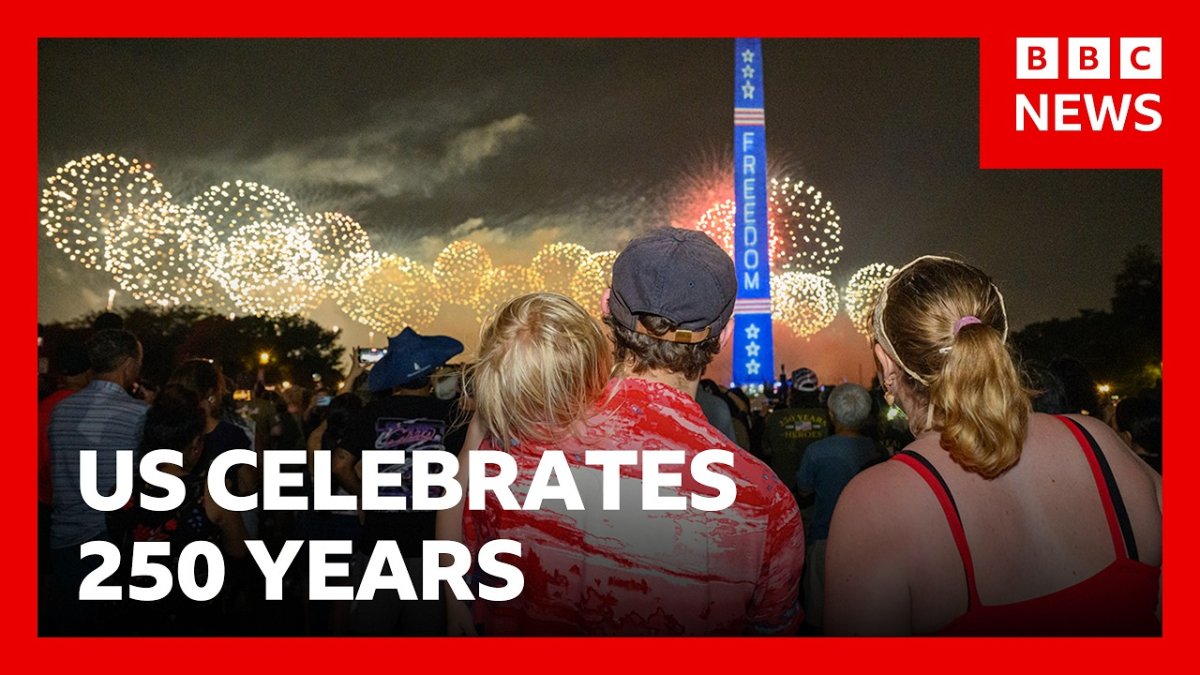
In a recent BBC News report, the United States marked its 250th anniversary of independence on July 4 with a day of celebrations, political drama, and extreme weather — as President Donald Trump used the milestone to deliver a defiant speech on the National Mall declaring that "the American dream is back." US at 250: Trump Declares 'American Dream is Back' as Nation Marks Indep
In a recent BBC News report, the United States marked its 250th anniversary of independence on July 4 with a day of celebrations, political drama, and extreme weather — as President Donald Trump used the milestone to deliver a defiant speech on the National Mall declaring that "the American dream is back."
US at 250: Trump Declares 'American Dream is Back' as Nation Marks Independence Milestone Amid Division
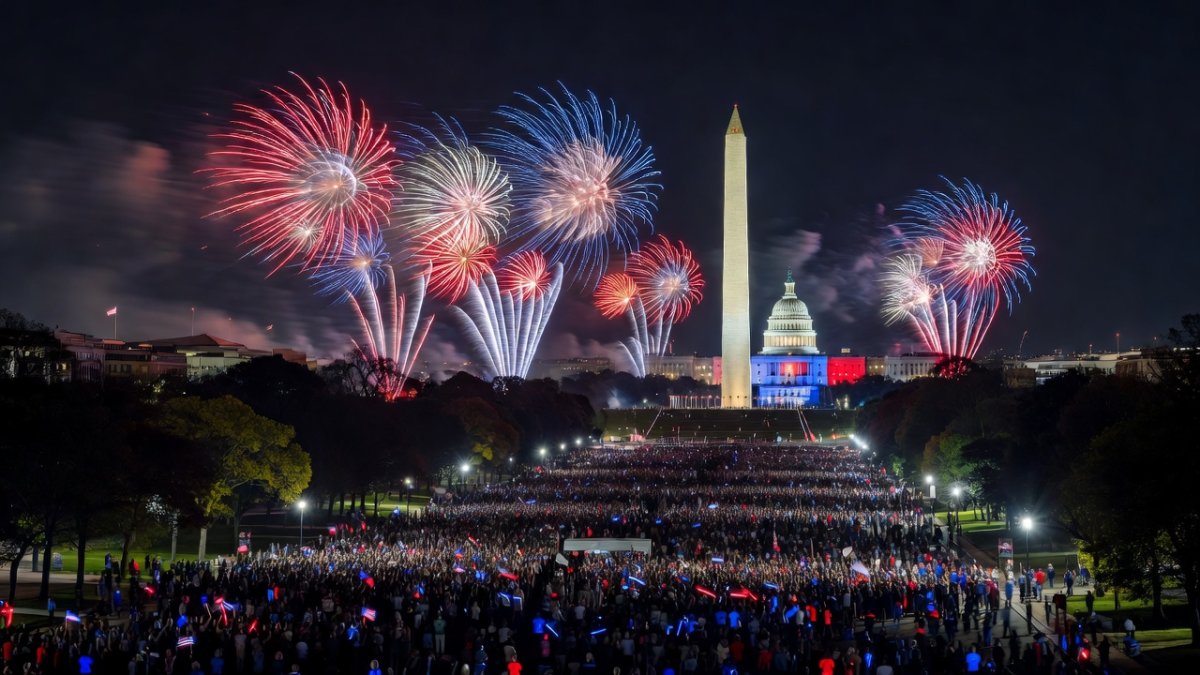
Washington DC – 5 July 2026 — The United States reached its 250th anniversary of independence on July 4 amid fireworks displays, military flyovers, and sharply competing political narratives that underscored the country's enduring divisions. President Donald Trump placed himself at the center of the National Mall events, while former presidents offered measured reflections on unfinished national work. Extreme weather disrupted plans across multiple states, and a white nationalist march added to the complex atmosphere of the day.
A Speech Delayed but Defiant
President Donald Trump’s address on the National Mall was postponed when a thunderstorm forced the evacuation of the area. BBC reporter Bernd Debusmann Jr, reporting from the National Mall, described how the event resumed after the storm passed. Trump opened with the line “The American dream is back,” drawing cheers from the remaining crowd. He rejected communism, endorsed the Save America Act, and affirmed the right to bear arms. The president called the fireworks display “the world’s largest” and closed by stating that the day marked “only the dawn of the golden age of America,” with the nation’s destiny “written by God.” He concluded with the words: “Long live the cause of independence… We will always be on top, we will never let our country fall.” The speech wrapped up just before midnight, after which a new Air Force One flyover, escorted by F-22 Raptor fighter jets, preceded the fireworks finale near 01:00 local time.
The atmosphere remained charged despite the weather interruption. Attendees had endured 100F temperatures in Washington DC earlier in the day. Tammy Wapshott, who traveled from South Carolina, told reporters she had been planning the trip since November to celebrate what she called “the best country in the world” where citizens are “free to do what we wanna do.” The scale of the production, including the late-night military flyover and extended fireworks, reflected the administration’s determination to mark the occasion on its own terms even after the storm delay.
Freedom 250 vs America 250: The Politics of a Milestone
Criticism mounted over President Donald Trump’s decision to make himself central to the 250th anniversary observances. He launched “Freedom 250,” a privately funded events committee that competed directly with the bipartisan “America 250” commission established by Congress. BBC reporting noted that Trump appeared to be politicising the celebrations at a moment when the country remained sharply divided. The existence of two parallel organizing efforts illustrated how the milestone itself became contested terrain rather than a unifying national moment.
In contrast, the official America 250 commission oversaw a time capsule burial containing a Coca-Cola bottle, a signed copy of the Constitution, and artefacts from all 50 states, scheduled to be opened in 200 years. A naturalization ceremony at Mount Vernon welcomed 150 new citizens from 50 countries. Members of Congress gathered at Philadelphia’s Independence Hall, the site where the Declaration of Independence was signed. Nationwide “America’s Block Party” community gatherings proceeded under the bipartisan framework, presenting a vision of the anniversary that deliberately avoided any single political figure.
The competing Freedom 250 and America 250 efforts underscore America's deepening partisan divide, transforming a shared historical milestone into a battleground of narratives. International observers, particularly in Moscow and Beijing, interpret this split as evidence of structural fragility within the American system, where even commemorative events fracture along ideological lines. From Russia's perspective, such divisions erode the United States' capacity to project unified global leadership, offering strategic openings for adversaries to question the durability of Western democratic cohesion. China similarly views the parallel celebrations as symptomatic of internal contestation that weakens America's appeal as a model of stable governance, potentially accelerating shifts in international alignments toward multipolar frameworks. This geopolitical dimension highlights how domestic polarization now carries direct implications for America's standing abroad, complicating efforts to rally allies around shared values.
Voices of the Former Presidents
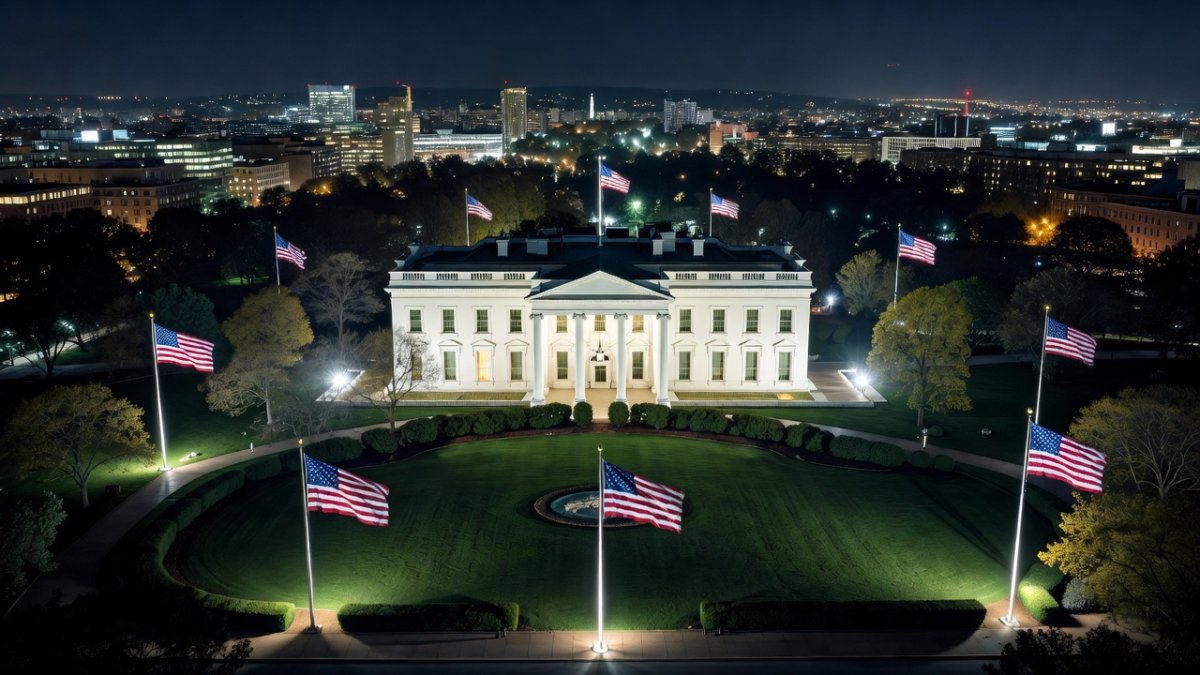
Four living former presidents offered public reflections that stood apart from the day’s political contestation. Joe Biden stated that Americans “chose that path 250 years ago but that’s where the work began, not where it ended,” describing the promise of equality as “a work in progress.” Barack Obama, speaking earlier in June at a museum opening, reminded listeners that “every generation must take up the unfinished work of the last and carry it further.” George W Bush emphasized that “the next 250 years require Americans to be citizens, not spectators.” Bill Clinton delivered the most direct warning, noting that the milestone was being celebrated “amid another period of deep division, renewed questions about America’s future and role in the world, and serious threats to our own institutions and to our democracy itself.” These statements together formed an extraordinary chorus from former leaders urging continued civic engagement.
The convergence of four living former presidents reflecting on the same milestone represents a rare historical moment of collective introspection, echoing past transitions where outgoing leaders have contributed to national continuity. Such instances underscore the resilience of America's democratic traditions, where institutional memory transcends individual administrations and reinforces the principle of peaceful power transfer. In an era of global autocratic trends, this chorus serves as a reminder of the value placed on reflective leadership, contrasting with systems that suppress dissenting historical assessments from prior rulers.
A Nation Watching Through Heat and Storm
Extreme weather tested the resilience of communities across the country. Washington DC recorded 100F temperatures, while New Jersey reached 106F and Delaware hit 101F. The National Park Service Independence Day Parade in the capital was cancelled. Events were also called off in New Jersey, Pennsylvania, Maryland, and Colorado. Power outages affected 750,000 properties across Wisconsin, Michigan, Illinois, Pennsylvania, Ohio, New York, and New Jersey. DTE Energy reported that winds exceeding 60 mph in Michigan alone left 350,000 homes without electricity. These disruptions occurred against the backdrop of planned celebrations, forcing many families to adapt or abandon traditional gatherings.
The extreme weather events parallel the political turbulence of the day, with storms and heatwaves mirroring the intensity of partisan clashes and institutional strains. Broader climate and energy implications emerge as communities grapple with infrastructure vulnerabilities exposed during peak demand, highlighting ongoing debates over resilience investments and the transition toward sustainable systems amid rising global temperatures.
Culture, Community and the American Tradition
Cultural programming continued despite the challenges. Performances featured Ne-Yo, Mary J Blige, The Smashing Pumpkins, Chaka Khan, Christina Aguilera, and Will Smith. In New York City, Joey Chestnut secured his 18th Nathan’s Hot Dog Eating Contest title by consuming 66 hot dogs in ten minutes, while Miki Sudo claimed her 12th women’s title with 38.75 hot dogs. The naturalization ceremony at Mount Vernon and the America 250 time capsule burial provided quieter, institutional counterpoints to the larger political spectacle.
Approximately 400 masked and uniformed members of the white nationalist group Patriot Front marched through Washington DC streets near the Capitol building and Union Station, carrying American flags in unison. Videos circulated widely on social media. Chris Cornell, an attendee from Maryland, rejected the notion that the day had become overly political, insisting that participants were “all just here to celebrate our country.” The juxtaposition of the march with the broader festivities highlighted persistent undercurrents that the anniversary could not erase.
The naturalization ceremony at Mount Vernon symbolizes an inclusive vision of citizenship that stands in stark contrast to the divisive political rhetoric dominating much of the anniversary discourse. By welcoming newcomers from diverse nations, the event embodies America's aspirational narrative of renewal and unity, offering a counterpoint to exclusionary messaging and reinforcing the democratic ideal of expanding the national community through shared commitment rather than division.
Analysis — A Defining Moment for America's Next 250 Years
This 250th anniversary revealed competing narratives about America’s trajectory. President Donald Trump’s framing of a “golden age” stood in contrast to Bill Clinton’s emphasis on institutional threats and global uncertainty. The parallel organizing efforts of Freedom 250 and America 250 demonstrated how even a shared historical milestone can be claimed by opposing political forces. Analysts suggest this signals a structural rather than temporary division, with implications for how the United States projects power and cohesion abroad.
The milestone ultimately transcends any single presidency. Whether the deep divisions on display this week prove durable will shape the country’s global standing in the coming years. The question facing the United States is whether the next chapter of its history will be written through renewed common purpose or continued contestation over the meaning of independence itself.
Global perceptions of America's democratic health have been tested by the visible fractures at this anniversary, with adversaries such as Russia and China actively exploiting internal divisions to advance narratives of Western decline and to court influence in regions once aligned with U.S. leadership. This dynamic amplifies questions about America's resilience against autocratic trends worldwide, where the ability to reconcile partisan differences will determine whether the nation can sustain its role as a beacon of democratic stability or cede ground in an increasingly contested international order. The 250th milestone thus serves as a pivotal indicator of whether renewed common purpose can emerge to fortify long-term global standing.
By Irina Volkov, Staff Writer
This article was produced with AI-assisted research and editorial support. Reporting is based on sources cited in the article.
What's Your Reaction?
 Like
0
Like
0
 Dislike
0
Dislike
0
 Love
0
Love
0
 Funny
0
Funny
0
 Wow
0
Wow
0
 Sad
0
Sad
0
 Angry
0
Angry
0

Russia/Eastern Europe Correspondent at Global1.News. Covering Russian politics, energy, security, and the shifting dynamics of the post-Soviet space. Provides clear-eyed analysis on one of the world's most opaque regions.












Comments (0)