
From Tripoli Home Studio to Silver Screen: Libyan Filmmaker Fights to Revive Cinema
In a dim-lit makeshift studio in his Tripoli home, Mouayed Zabtia bends over a light rig, adjusting it for the hundredth time. The 47-year-old filmmaker is not just shooting a movie — he is trying to resurrect an entire industry. Across Libya, a country that once boasted over 20 movie theatres in its capital alone, there is not a single functioning cinema today. But Zabtia refu
In a dim-lit makeshift studio in his Tripoli home, Mouayed Zabtia bends over a light rig, adjusting it for the hundredth time. The 47-year-old filmmaker is not just shooting a movie — he is trying to resurrect an entire industry. Across Libya, a country that once boasted over 20 movie theatres in its capital alone, there is not a single functioning cinema today. But Zabtia refuses to let the story end there.
Libyan Filmmaker Mouayed Zabtia Builds Cinema Dreams in a Tripoli Home Studio
Dakar, Senegal — In a country where cinema has all but vanished, one man is working to bring it back, frame by painstaking frame. Mouayed Zabtia, 47, shoots most scenes for his films in a studio he built himself inside his Tripoli home — a quiet act of defiance against decades of neglect, censorship, and public disinterest that have left Libya without a single functioning movie theatre.
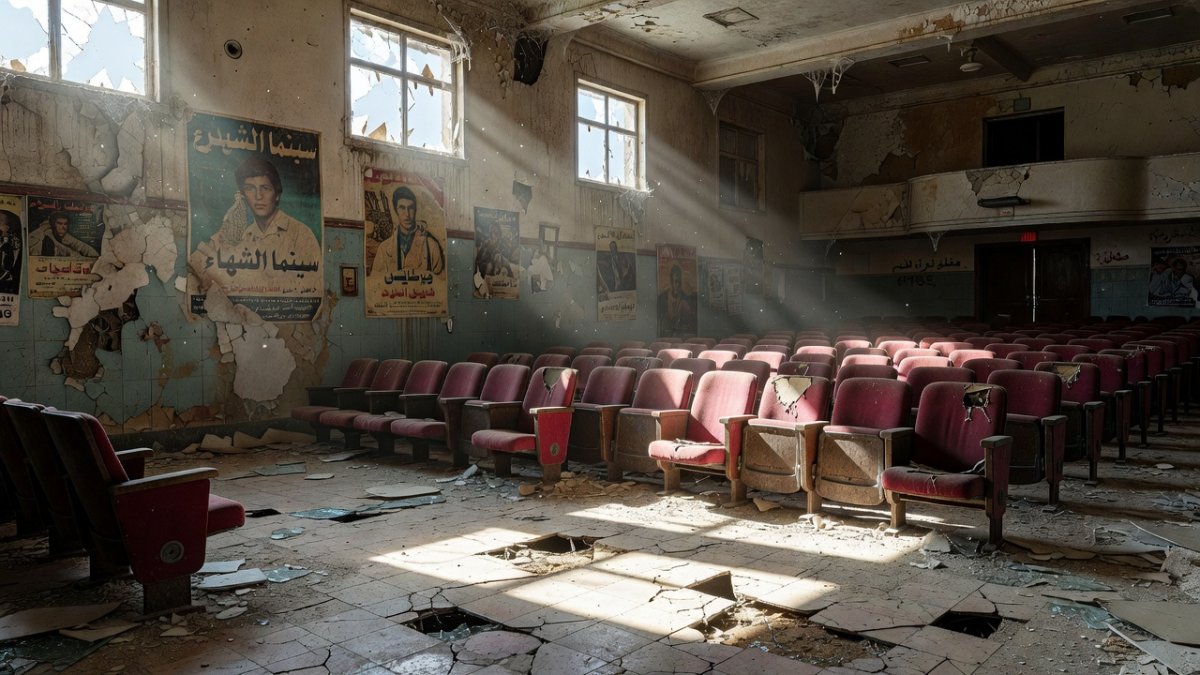
A City Without Cinemas: Tripoli's Lost Silver Screens
Tripoli once had over 20 movie theatres before the 1969 coup that brought Moamer Kadhafi to power. These venues screened films from Egypt, Italy and Hollywood, drawing families and young people into shared spaces that felt alive with conversation after the lights came up. Under Kadhafi, cinema was viewed as a tool of foreign cultural invasion, so only movies aligned with the state were funded and promoted through official channels.
Movie theatres were seen as spaces for uncontrolled gatherings that could spark dissent. Authorities closed many halls or converted them into other uses, leaving the capital's once-bustling screens silent. After the 2011 revolution that overthrew Kadhafi, many believed cinema would be resurrected with new freedom and investment from the transitional authorities.
Instability and disinterest followed instead. "Today we have none," Zabtia told AFP. "The problem is disinterest from all governments since 2011. We were expecting that they would help." The absence of public funding left independent creators like Zabtia to rely on personal resources while audiences grew accustomed to watching content on phones or abroad.
Mohammed Rizk, an actor in Zabtia's current film, says, "You have to go abroad to see films in a movie theatre." This reality hits families hardest, as parents cannot easily introduce children to the communal experience of cinema that earlier generations knew. The gap affects how Libyan stories reach local viewers and shapes what young people imagine is possible in their own country.
For Senegalese readers who remember the golden era of Dakar cinemas like the Paris or the Vox, the Libyan situation feels familiar yet more extreme. Our own screens have faced competition from television and now streaming, but the physical spaces remain. In Tripoli the buildings themselves have largely disappeared or stand empty, underscoring how quickly cultural infrastructure can vanish without sustained support.
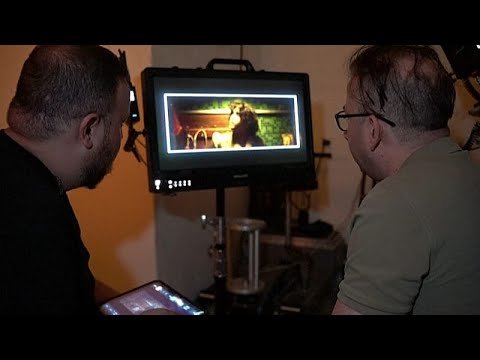
One Man, One Studio: Building Cinema from Scratch
Zabtia's makeshift home studio is where he shoots most scenes for his projects. The space contains basic lighting rigs, sound blankets and simple set pieces that he rearranges between takes. He handles everything — lighting, sound, costumes, directing — because hiring separate crew members would exceed his budget.
Self-financed from his own pocket, the work draws revenue from a production company he founded in 2001 to create television series and wedding videos. Those commercial jobs keep the lights on while he pours spare hours into narrative films. It was only after the 2011 revolution that he decided to pursue cinema — a goal since childhood when he watched Egyptian and Italian pictures in the old Tripoli halls.
"Filming outside in Libya is very tiring," he says. "We lack logistic support. You need big crews, food, drinks, help with the police for outdoor sets." Permissions, security and transport add layers of complication that turn a single day of shooting into a week of planning. The home studio removes many of those variables and lets him focus on performance and story.
His current film "1986" is inspired by true events, including pioneering singer Ahmed Fakroun's estrangement from Libya after Kadhafi cracked down on Western-influenced music. The story follows characters navigating cultural restrictions and personal exile, themes that resonate with artists who left or stayed silent during those years. Every prop and costume in the home studio carries layers of research drawn from family memories and archival photographs.
The solitary nature of the work mirrors challenges faced by early Senegalese filmmakers like Ousmane Sembène, who often worked with limited crews and self-funding before institutional support emerged. Zabtia's persistence shows the same determination that built African cinema from the ground up, one reel at a time.
Women on Screen: Libya's Hidden Stories
Portraying women on screen is particularly difficult in socially conservative Libya. Some Libyans feel cinema clashes with their moral values, leading families to discourage daughters from appearing in films. Yet Zabtia insists it is "impossible to make a film without women when it comes to telling a story."
He reveals, "We have many hidden female talents who are afraid to come forward." These women possess strong voices and presence but weigh the social cost of visibility against the desire to contribute. The director works quietly with those willing to participate, building trust through private rehearsals and respect for family concerns.
"The role of cinema — our role — is to pinpoint issues and try to address them," Zabtia says. By placing women at the center of "1986," he hopes to open conversations that might otherwise remain private. The approach echoes how African cinema across the continent has used stories to challenge taboos while remaining rooted in local realities.
Contrast this with broader North African and West African cinema where female filmmakers like Naziha Arebi have broken through. Arebi's work demonstrates that Libyan women can reach international audiences when given space and resources. Zabtia sees his studio as one small step toward creating similar opportunities at home.
The difficulty of casting women connects directly to why Libyan stories matter for African readers. When half the population remains off screen, the full texture of society stays hidden. Zabtia's insistence on including female characters pushes against that erasure and models a more complete national narrative.
From Censorship to Chaos: The Evolution of Libyan Cinema's Challenges
Under Kadhafi, censorship was the main obstacle that determined which stories could be told. Scripts required approval, and only state-aligned films received funding or distribution. Today the challenges have shifted to logistics, underinvestment, and public disinterest that make even approved projects difficult to complete.
Authorities have attempted revival through festivals and the Libyan Film Institute created in 2021. The institute maintains an online directory to connect filmmakers and lists projects in development. Despite these efforts, many creators still operate alone because grants remain small and irregular.
Despite obstacles, Libyan films have crossed borders. "Freedom Fields," a documentary by Libyan-British director Naziha Arebi about three women footballers, screened at TIFF 2018. The film introduced international audiences to stories of resilience that rarely reach Libyan screens. "Donga," by Muhannad Lamin about the 2011 uprising, shown at IDFA Amsterdam in 2023, further proved that Libyan voices can travel when given proper finishing and distribution support.
The Libya Film Institute works to unify filmmakers through an online directory that lists crew, equipment and past projects. This modest infrastructure offers hope that coordination can improve even without large budgets. For now, individual efforts like Zabtia's home studio remain the primary engine of production.
Censorship declined but replaced by logistical chaos that forces creators to improvise daily. The shift from ideological control to practical neglect requires new strategies that combine personal sacrifice with gradual institutional growth. African filmmakers in post-conflict settings recognize this pattern and watch Libya's progress closely.
Digital Horizons: From Tripoli to Netflix
While cinema "doesn't really have a market in Libya," Zabtia sees an opportunity in the lack of competition particularly with streaming platforms like Netflix and Amazon Prime. The absence of local theatres means audiences already consume content digitally, creating an opening for Libyan stories to reach them directly.
"We want to develop and highlight Libyan work, talent and skills," he says. "We want to reach audiences overseas. It's important that they hear about Libyan stories and culture, and get to know us as a people." Streaming removes the need for physical screens and lets films travel without relying on fragile local distribution networks.
Connect this moment to broader African cinema's digital transformation. Nollywood titles now appear regularly on Netflix, while African film festivals build international audiences through online premieres. Libyan creators stand to benefit from the same pathways if they can finish and package their work to meet platform standards.
The home studio model, though limited, produces material that can be refined for digital release. Zabtia's focus on authentic Libyan narratives positions his projects to fill a gap in global streaming libraries hungry for new regional voices. This matters for African readers because it shows how individual resilience can intersect with continental shifts in distribution.
Digital platforms also allow younger Libyan audiences to discover their own stories without waiting for theatres to reopen. The same technology that once threatened traditional cinema now offers a route back into visibility for countries like Libya that lost their physical infrastructure.
What to Watch For
Zabtia's "1986" stands as a landmark for Libyan cinema because it proves a complete feature can be made with minimal resources inside one home. The film's completion will test whether local audiences respond and whether international platforms take notice of the finished work.
The growth of the Libyan Film Institute offers another development to follow. If the institute secures consistent funding and expands its directory into training programs, it could reduce the isolation that currently forces filmmakers to handle every role themselves.
African streaming platforms providing new distribution channels will shape the next chapter. As more services seek African content, Libyan stories gain additional outlets beyond the major global platforms. This expansion matters for the continent's storytellers who have long navigated limited local markets.
Comparison with other African nations rebuilding cultural infrastructure post-conflict — Mali, Mozambique, Sierra Leone — shows that recovery takes decades and requires both state commitment and private initiative. Libya's path will likely follow a similar long arc, with artists like Zabtia sustaining momentum until institutions catch up.
The resilience of artists working without institutional support remains the clearest lesson. Zabtia's daily adjustments to his light rig in Tripoli represent the same quiet determination that has kept African cinema alive through every political storm. His story reminds us that cultural revival begins with one person refusing to accept silence.
By Amara Diop, Staff Writer
This article was produced with AI-assisted research and editorial support. Reporting is based on sources cited in the article.
What's Your Reaction?
 Like
0
Like
0
 Dislike
0
Dislike
0
 Love
0
Love
0
 Funny
0
Funny
0
 Wow
0
Wow
0
 Sad
0
Sad
0
 Angry
0
Angry
0

West Africa/Sahel Correspondent at Global1.News. Dakar-based journalist covering politics, security, climate, and development across Francophone and Anglophone West Africa. Tells the stories of a region undergoing profound transformation.














Comments (0)