
Lam Wing-kee's Death: Implications for Hong Kong Autonomy and Cross-Strait Strategic Dynamics
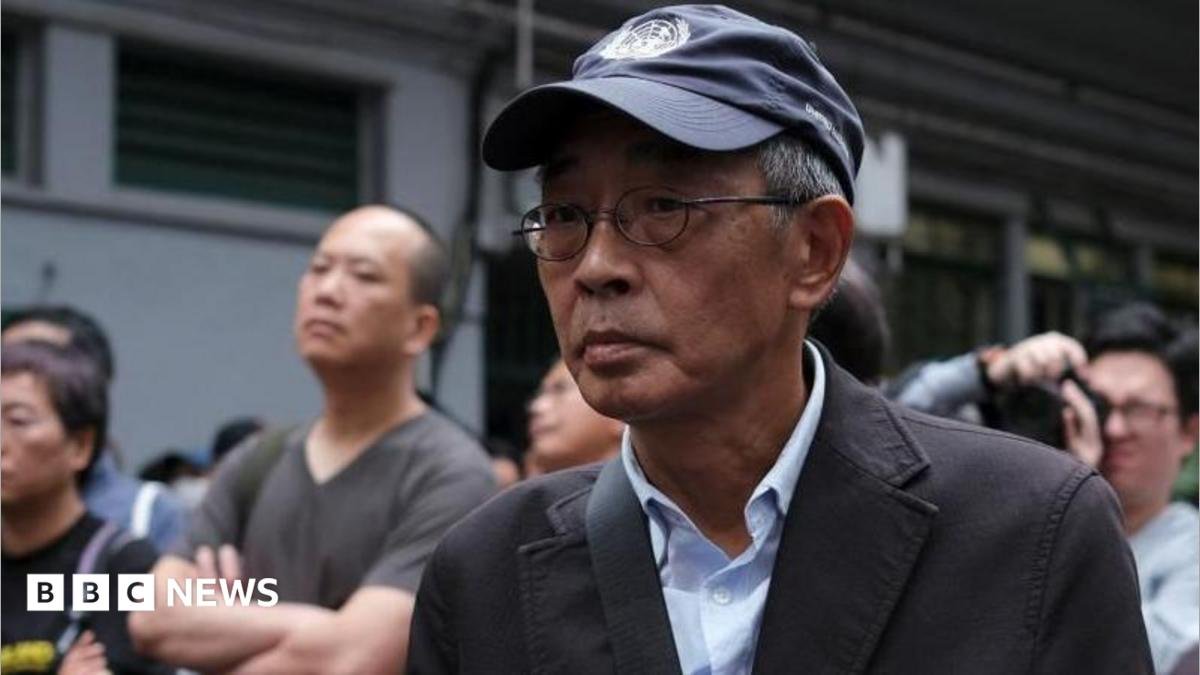
The Circumstances of Lam Wing-kee's Passing Lam Wing-kee, the Hong Kong bookseller known for distributing publications critical of mainland political figures, died at Mackay Memorial Hospital in Taipei on Thursday at the age of 70 after a battle with lung cancer. His case originated in the 2015 detentions linked to the Causeway Bay Books operation, where several individuals fac
The Circumstances of Lam Wing-kee's Passing
Lam Wing-kee, the Hong Kong bookseller known for distributing publications critical of mainland political figures, died at Mackay Memorial Hospital in Taipei on Thursday at the age of 70 after a battle with lung cancer. His case originated in the 2015 detentions linked to the Causeway Bay Books operation, where several individuals faced questioning over the sale of materials targeting China's political elite. Lam later relocated to Taiwan in 2019 amid concerns over the proposed extradition arrangements with the mainland. Taiwan President Lai Ching-te conveyed deep sadness at the news, underscoring the personal dimension of a case that has long intersected with broader regional frictions.
Recalling the 2015 Incident Without Overstating Enforcement
The 2015 events involved the disappearance and subsequent detention of booksellers who handled titles on mainland leadership matters. Lam's account described his experience in mainland facilities before his return to Hong Kong. These developments occurred against the backdrop of China's ongoing emphasis on information control as part of domestic stability priorities outlined in successive Five-Year Plans. No evidence suggests accelerated implementation timelines beyond what official channels have stated regarding cross-border legal cooperation mechanisms, which continue to be phased in through established ministerial channels such as the Ministry of Foreign Affairs.
Hong Kong's Autonomy Under the National Security Law
Lam's trajectory illustrates the pressures on Hong Kong's distinct legal framework following the 2020 National Security Law. The legislation, enacted by the National People's Congress Standing Committee, addresses secession, subversion, terrorism, and collusion with foreign forces. Its provisions have led to adjustments in publishing and expression activities, contributing to an environment where individuals previously engaged in critical content distribution have sought alternatives abroad. This shift aligns with Beijing's Dual Circulation strategy, which prioritizes internal cohesion alongside external engagement, viewing unchecked dissent as a potential vector for external interference. Second-order effects include reduced space for independent bookstores and heightened scrutiny of cross-border publishing networks, though precise enforcement metrics remain subject to ongoing official reporting from relevant Hong Kong and central authorities.
China's Approach to Dissent and Regional Influence
From Beijing's perspective, managing narratives around figures like Lam serves core interests in technological self-sufficiency and narrative sovereignty. The Ministry of State Security and related bodies have long framed external criticism as risks to national rejuvenation goals. Lam's decision to operate in Taiwan after 2019 reflects calculations by individuals facing potential legal exposure under evolving extradition frameworks. This dynamic extends to China's broader foreign policy doctrine, where influence expansion in the Asia-Pacific region intersects with efforts to limit platforms for dissenting voices. Leverage here includes economic interdependence and diplomatic channels, yet the case also highlights limits when individuals relocate to jurisdictions outside direct reach, such as Taiwan.
Cross-Strait Tensions and Taipei's Strategic Position
Taiwan's response, including President Lai Ching-te's statement, occurs amid persistent cross-strait frictions. Beijing maintains that Taiwan is an inalienable part of China, a position reiterated through Ministry of Foreign Affairs statements and military activities around the island. Lam's presence in Taipei until his death adds a human element to these tensions, as his 2019 relocation coincided with protests in Hong Kong that Beijing attributes partly to foreign influence. For Taipei, hosting such figures reinforces its positioning as a democratic alternative, potentially strengthening ties with like-minded partners while navigating economic dependencies on the mainland. The Global South observes these developments for signals on how middle powers balance autonomy against larger neighbors' security priorities.
Geopolitical Ripple Effects for ASEAN and the EU
ASEAN states face indirect consequences through supply-chain realignments and investment screening mechanisms that reference Hong Kong's evolving legal environment. The European Union has issued statements on rule-of-law concerns, influencing its engagement with both Hong Kong and Taiwan. These reactions feed into wider multilateral discussions on institutional resilience, where China's participation in forums like the Regional Comprehensive Economic Partnership provides counter-leverage. Second-order effects may include accelerated diversification of publishing and media operations away from Hong Kong hubs, though concrete shifts depend on corporate risk assessments rather than abrupt policy changes.
Legacy Considerations and Information Control Priorities
Lam's final BBC interview emphasized personal values and resistance to betrayal of principles. This stance resonates with ongoing debates over the boundaries of expression in Greater China. Beijing's strategic calculus prioritizes preventing similar cases from amplifying international narratives that could complicate domestic policy execution or Belt and Road Initiative partnerships. For observers, the episode underscores how individual trajectories intersect with state objectives around stability and influence projection. Future developments will likely hinge on ministerial coordination between the National Development and Reform Commission and foreign affairs entities, rather than isolated incidents.
By Prof. Marcus Chen, Staff WriterThis article was produced with AI-assisted research and editorial support. Reporting is based on sources cited in the article.
What's Your Reaction?
 Like
0
Like
0
 Dislike
0
Dislike
0
 Love
0
Love
0
 Funny
0
Funny
0
 Wow
0
Wow
0
 Sad
0
Sad
0
 Angry
0
Angry
0

World Politics Analyst at Global1.News. Based in Beijing, covering US-China relations, global trade, and geopolitical strategy. Brings deep analytical perspective to the power dynamics shaping international affairs.














Comments (0)